


-
APR 23, 2026

UNLOCKEDHouse approves ‘megaprojects’ bill that aims to keep Chicago Bears in Illinois
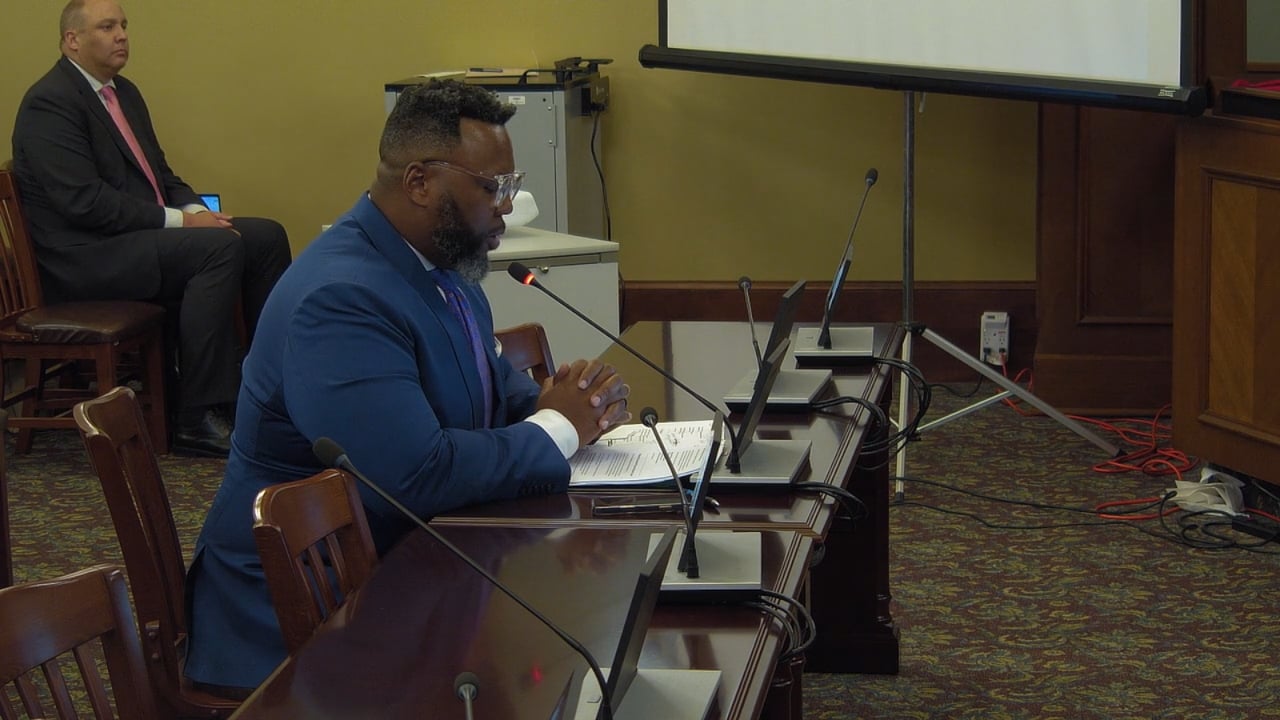
The Illinois House of Representatives advanced a bill Wednesday that would provide property tax certainty for the Chicago Bears’ proposed Arlington Heights stadium, along with myriad economic development tools that could be applied statewide.
Rep. Kam Buckner (D-Chicago) said the latest version of the measure — House Floor Amendment Three to House Bill 910 — includes five different provisions intended to spur economic development in the state.
The first is the megaprojects designation that would allow large developments in the state to freeze their property tax assessments. Those projects would pay their property taxes based on the frozen assessment and then pay an additional payment-in-lieu-of-taxes, which they would negotiate with the local taxing bodies.
That’s the language that was sought out by the Bears for the proposed Arlington Heights stadium, though Buckner made it clear that this would be available to all projects in the state that meet a certain threshold.
Read more: ‘Megaprojects bill’ to keep Chicago Bears in Illinois clears House committee
A project must invest a minimum of $100 million to be eligible for the designation. The length of the property tax freeze would be determined by the size of the investment. Projects between $100-500 million would be eligible for 25-30 years, projects between $500 million and $1 billion would be eligible for 30 years and projects over $1 billion would be eligible for 40-45 years.
The Bears previously said they would likely invest around $2 billion in the Arlington Heights stadium.
Companies must also enter into agreements with organized labor and establish a goal of having 20 percent or more of the project’s contracts be with minority-owned businesses. Buckner said the Illinois Department of Commerce and Economic Opportunity — which would be tasked with granting the megaprojects designation — would also have to consider if the project brings economic opportunity to underserved communities.
“That means we are not just asking whether the project is big,” he said. “We're asking whether it produces real benefit for communities that have been historically under-resourced.”
Buckner also clarified that the bill does not override local control in approving a megaproject.
Of the money collected from that extra payment-in-lieu, 50 percent would be dedicated to property tax relief. Of that 50 percent, 60 percent would be used for the community with the megaproject, and the remaining 40 percent would go to a statewide property tax relief fund.
A municipality that hosts a megaproject would have to file a report with the General Assembly after five years detailing the impact it had on their community.
On top of the megaprojects designation, the measure also includes updates to Sales Tax and Revenue (STAR) Bonds, which uses sales tax revenue generated from a project to fund capital investments such as infrastructure in the area surrounding it.
It includes updates to New Opportunities for Vacation and Adventure (NOVA) districts and NOVA Urban districts, which are similar to STAR Bond districts, also designating sales tax revenue back to the districts.
It also includes specific tools for downtown Springfield regarding tourism that are intended to revitalize the state’s capital. Those were previously proposed in a separate bill but brought into HB 910.
Finally, the measure includes a rail yard development tool that Buckner said is intended for abandoned railways, which he said the state could have more of if a merger between Union Pacific and Norfolk Southern is approved.
Buckner said the measure includes provisions to prevent benefit-stacking. For example, a project could not receive funding from a Tax Increment Financing (TIF) if it receives a megaproject designation.
Altogether, Buckner framed the measure as a means to attract companies to sites statewide, not just to keep the Bears from moving to Indiana.
“We know states like Michigan and Ohio and Texas all have similar mega project- type legislation in their quiver that they use to attract businesses there,” he said. “This is about making Illinois competitive, but it's also about making Illinois competitive in a way that keeps people at the center and the focus of this.”
The measure would sunset after seven years. Buckner said the sunset is so the future General Assembly can determine if the measure is working before extending it.
Buckner said he could not say specifically if the bill in its current form is supported by the Bears, the Illinois Senate or the governor, but the legislator said it is based on the conversations he has had with the various stakeholders over the past months.
Rep. Patrick Windhorst (R-Litchfield) asked what would prevent property taxes from spiking in the area surrounding a megaproject.
Buckner said that the tax certainty the bill provides should ideally keep levies at a steady level. He said other states that have similar programs have not seen large spikes in property taxes in the communities the projects are in.
Rep. Lillian Jiménez (D-Chicago) spoke in opposition to the measure, saying it does not do enough to support struggling communities in the state, particularly in Chicago.
The measure passed 78-32. It now goes to the Senate, which will return to Springfield Tuesday.
-
 Don Vincent commented 2026-04-22 22:46:40 -0500Chicago Alderman Bill Conway reflects on the Bears/Megaprojects bill: https://x.com/AldConway/status/2047144699354394946?s=20


Trending


