


-
FEB 27, 2026

UNLOCKED‘Megaprojects bill’ to keep Chicago Bears in Illinois clears House committee
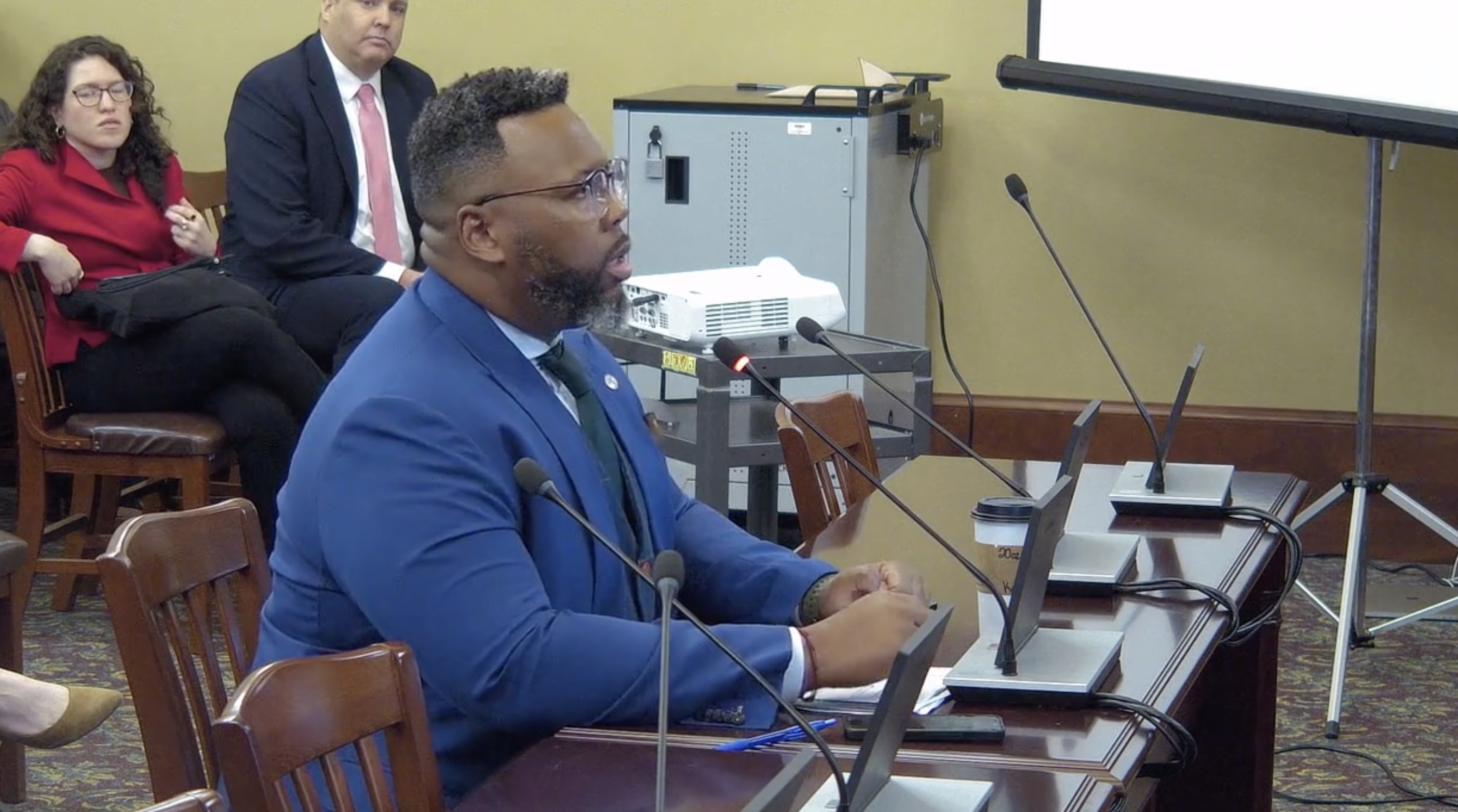
The House Revenue and Finance Committee approved the megaprojects bill that is intended to keep the Chicago Bears in Illinois Thursday, but members departed Springfield before it could be voted on by the full House.
House Bill 910 — a shell bill that has already received two of its three required readings in the House — was amended Wednesday night to include the new megaproject language.
The bill is not unique to the Bears and could be utilized for different types of developments — something that Gov. JB Pritzker has sought — but it addresses one of the main concerns the Bears have raised amid their deliberations about where to locate: property taxes.
The measure would allow companies to freeze their property tax assessment and establish a payment-in-lieu-of-taxes for up to 40 years. Negotiations on the payment would take place between the company and the local municipality.
In the case of the Bears, their property taxes would be frozen at their base year valuation, and they would negotiate their in-lieu payment with Arlington Heights, which is what the team had asked for.
The measure defines base year as either the year before the megaproject certificate is granted by the Department of Commerce and Economic Opportunity or the year before preliminary approval is granted.
Companies would have to make a minimum investment to be granted a megaproject certificate. They must invest $500,000 in eligible costs; invest $250,000 in eligible costs and create 50 permanent full-time jobs or invest $100,000 in eligible costs and create 100 permanent full-time jobs.
Eligible costs could include construction, infrastructure development and job training. HB 910 also makes building materials sales tax exempt.
Rep. Kam Buckner (D-Chicago) — whose district includes Soldier Field — presented the bill to the committee. He said “the universe of eligible projects is very small by design” because of the minimum investments.
The measure could not be used for any housing projects. It also bars the megaprojects from receiving Tax Increment Financing (TIF) benefits or from receiving any other property tax credits, exemptions or freezes.
“There's also no incentive stacking or no double dipping,” Buckner said.
Buckner said the latest version also includes a required public hearing before any payment-in-lieu agreement can be made. The public hearing must include any affected taxing bodies, such as schools and park districts. Votes would be weighted by the taxing bodies' share of the region's property taxes.
“This has guardrails that have been built in so there's a public process, and schools and taxing districts are at the table,” Buckner said. “That matters because megaprojects don't just affect the city budget, they affect classroom capacity, roads, public safety, transit and emergency services.”
Rep. Dan Ugaste (R-St. Charles) raised concerns about votes being weighted based on the share of property taxes, saying in many communities, including his own, this could give more than half of the vote to school boards.
The bill also includes union and minority business contracting requirements to be eligible for the megaproject certification.
The committee did not hear from anyone from the Bears, and Buckner did not mention the team in his opening statements, instead focusing on megaprojects in general.
“Illinois competes nationally for megaprojects, manufacturing, logistics, clean energy, entertainment districts, and when those projects show up, local governments need a lawful, transparent way to negotiate particular payments that protect schools and taxpayers,” he said.
The measure has the backing of Arlington Heights, as well as Buffalo Grove, Rolling Meadows and Barrington. It’s also supported by the Chicagoland Chamber of Commerce, Arlington Heights Chamber of Commerce, Schaumburg Chamber of Commerce and Illinois Chamber of Commerce, as well as the Illinois Manufacturers' Association, Illinois Hotel and Lodging Association, Illinois Pipe Trades Association and several labor unions and associations.
Opponents include the City of Chicago and Americans for Prosperity Illinois.
Steven Mahr, acting chief financial officer of the City of Chicago, said their desire is still for the Bears to remain in Chicago. He said the Bears leaving would have “negative long-term consequences” for the city that “has been and remains the economic engine of the state of Illinois.”
He made direct reference to the state’s willingness to assist with infrastructure at the Arlington Heights site, one of the other components of negotiations between the state and the Bears. He said if the state is willing to invest in infrastructure in Arlington Heights, they should also be willing to consider similar investments for the Museum Campus.
“With such a commitment, the City of Chicago and the park district would submit multiple viable proposals for a new publicly owned sports stadium in Chicago,” Mahr said. “The return on investment into one of the state's most popular tourism corridors will be extraordinary, helping the footprint grow by millions of visitors every year.”
Mahr’s request could come too little too late, as Pritzker suggested last week that the likelihood the team remains within the city is slim.
Rep. Maurice West (D-Rockford) asked if there were any specific mechanisms in the bill to ensure that it benefits the whole state and not just Chicagoland.
Buckner said that every county in the state would have access to the same mechanisms in the bill and that it would be up to the municipalities to utilize them. He said the state’s role in negotiations would be that of a watchdog to ensure that companies are meeting the minimum requirements to be eligible for the megaproject certification.
Rep. John Cabello (R-Machesney Park) asked that House Republicans be included in negotiations going forward, saying there’s a lot about the bill that they support but that they wanted to see more protections for taxpayers.
HB 910 passed the committee 13-7 on partisan leave. It was not taken up by the full House before their adjournment Thursday.
Indiana Gov. Mike Braun signed their bill intended to attract the Bears to the Hoosier State Thursday, leaving things up in the air about where the team will eventually land.
The Illinois House does not return to Springfield until March 18, making that date the earliest the measure could be moved to the Senate.

Trending
Housing committee to consider QAP standards changes, Missing Middle sales
Fintech entrepreneur making outsider bid for Chicago mayor
Quigley enters mayor’s race, promising to distinguish as candidate not burdened by future ambitions
Mayor responds to organizers’ call for dedicated city gun violence reduction agency
Mayor proposes $425M in TIF assistance for public infrastructure at The 78 development
What makes up the mayor’s sweeping Residential Landlord and Tenant Ordinance modernization


