


-
FEB 17, 2026

UNLOCKEDPritzker to propose budget framework amid federal funding cuts and projected $2.2 billion deficit
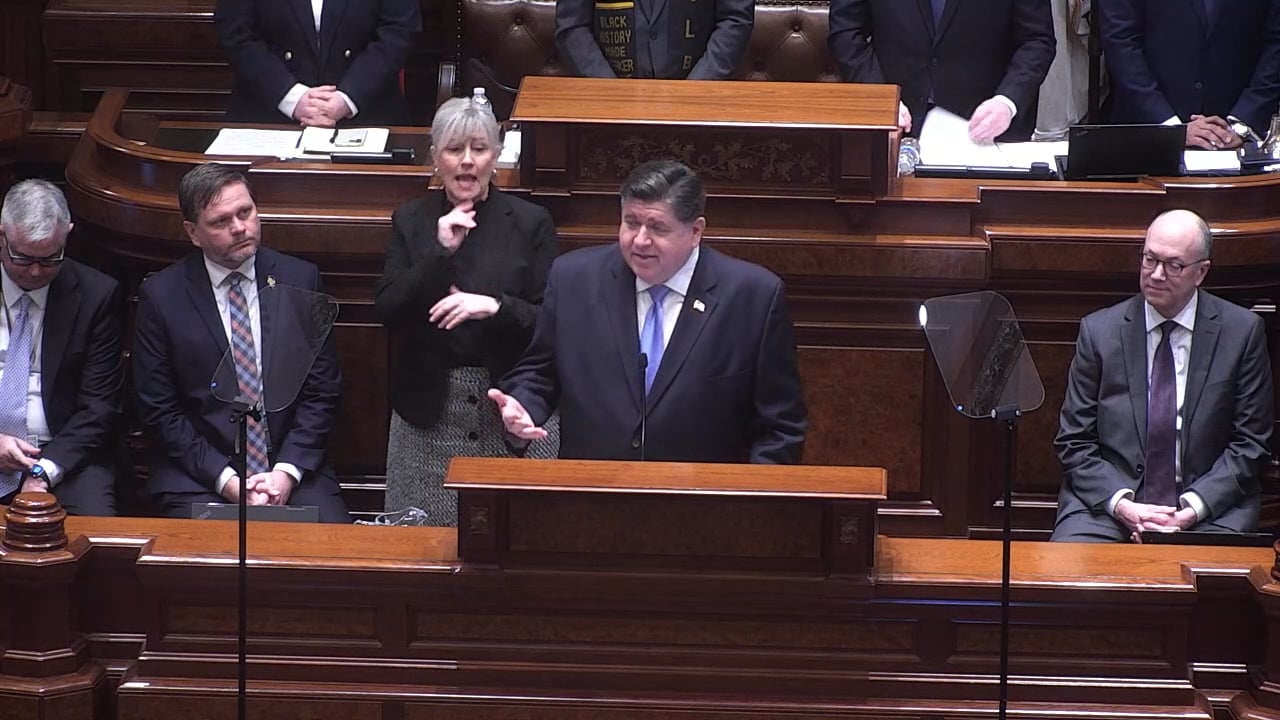
Following a year of economic and political turmoil, Gov. JB Pritzker will propose a budget Wednesday that will need to address federal funding cuts and a $2 billion budget deficit.
The governor will give his annual State of the State address Wednesday in the state’s capital, where he will introduce his budget framework for fiscal year 2027. The address comes after a year of Illinois being a primary target of the Trump administration for numerous cuts to federal funding, as well as immigration enforcement operations.
The state budget has been balanced every year since Pritzker took office in 2019. With the governor seeking a rare third term in November, that’s a streak that he will seek to continue.
But federal changes and existing state revenue struggles won’t make that an easy task. According to the governor’s office, the fiscal year 2027 budget deficit could be as high as $2.2 billion.
This won’t be the first year the governor’s budget proposal has had to account for economic turmoil. When he made his first proposal in 2019, the state was still feeling the effects of a two-year budget impasse that led to eight credit downgrades. Just last year, the state faced a projected deficit of nearly $300 million.
That enacted state budget and revenue plan is expected to close that deficit through a series of new taxes and fund sweeps, but state leaders now face an even more challenging budget gap for the upcoming fiscal year.
That $2.2 billion projected deficit is driven by a mix of existing revenue problems in the state and federal changes, many of which are the result of the budget reconciliation bill signed in July.
Illinois' largest revenue streams are the “big three” taxes, the Personal Income Tax, Corporate Income Tax and Sales Tax.
The federal budget reconciliation bill included a number of changes to Corporate Income Tax that would have seen the state lose out on as much as $830 million. The General Assembly passed legislation during the fall veto session to decouple from those taxes, bringing that number to $587 million, according to Governor’s Office of Management and Budget (GOMB).
The bill also includes a number of changes to federal programs administered by states, such as Medicaid or the Supplemental Nutrition Assistance Program (SNAP).
That includes new eligibility requirements for people enrolled in those programs, including eligibility redeterminations taking place every six months instead of annually. As a result, the state will hire additional staff and upgrade technology, which is expected to cost an additional $100 million per year.
Additionally, states will have to pay a higher portion of administrative costs for SNAP beginning Oct. 1, 2026 — the third month of FY27. Currently, the federal government pays all benefits for the program and 50 percent of the administrative costs.
That will change this October, with states paying 75 percent of the administrative costs, an expected increase of about $80 million in Illinois.
Altogether, that accounts for $767 million in extra costs and revenues lost for the FY27 budget.
That does not include hundreds of millions of dollars in additional grants being completely cut or reduced by the Trump administration and Congress. Those grants are spread across various state funds and support a wide range of programs, including violence prevention, renewable energy, agriculture support and emergency disaster and hazard preparedness.
“GOMB expects the state to have a very limited ability to replace lost federal funding for these specialized state grants and no funding to replace lost grants made directly to local governments and community organizations,” the report said.
These changes at the federal level only exacerbate existing issues in the state budget, according to a report released last week by the Civic Federation.
The report notes that the state lacks flexibility with its budget, as 64 percent of projected General Funds will go to statutorily required spending.
The fund sweeps used to help balance the fiscal year 2026 budget were also one-time fixes, meaning state leaders will have to find new revenue sources to close those gaps. On top of increases to federal programs like Medicaid and SNAP, the state also has its own budget lines that require increased spending, including education and pensions.
Looking ahead, the fiscal situation is not projected to get better. During fiscal year 2027, the state will see even larger increased costs from Medicaid and SNAP.
Beginning Oct. 1, 2027, states will be required to begin paying a portion of SNAP benefits, if their error rate is over six percent. For Illinois, which had an 11.56 percent error rate in 2024, that will lead to an additional $705 million added to the budget annually.
Changes to Medicaid will also decrease the amount the state gets through that program, with a decrease of around $750 million expected in fiscal year 2028.
These changes mean that by fiscal year 2031, the state could face a deficit of $5.3 billion.
The state’s response
Illinois has already taken steps to reduce these deficits, such as the legislation passed in October to decouple from some of the federal tax changes.
State agencies will also reserve nearly $500 million in General Funds within the FY26 budget to offset federal cuts. The Illinois Department of Human Services (IDHS) is also taking steps to decrease the state’s SNAP payment error rate, including more careful reviews of people’s applications.
Speaker Emanuel “Chris” Welch (D-Chicago) has also suggested a surcharge tax on income over $1 million as a more permanent revenue solution for the state.
As noted by the Civic Federation, the state is also in a stronger fiscal place than it was a decade ago, making it easier to manage these cuts. But, at the same time, the report says that the “margin of error” with this budget is limited.
The governor will propose his budget framework at noon on Feb. 18 in the Illinois State Capitol building.


Trending


