


-
OCT 26, 2025

UNLOCKEDOffice of the Mayor – BGA Policy 2026 Budget Snapshot
Office of the Mayor – BGA Policy 2026 Budget Snapshot
The office of the mayor contains the mayor’s administrative staff and several small offices focused on specific policy areas, such as the Office of Equity and Racial Justice, Office of Community Safety, etc.
Because there is no departmental budget hearing scheduled for the mayor’s office, the Office of Budget and Management’s first-day presentation on the overall budget is the best opportunity alderpersons will have to publicly discuss appropriations to cover the cost of operating the mayor’s office.
Departmental Highlights
Snapshot: Appropriation & Staffing Changes from 2025 Budget
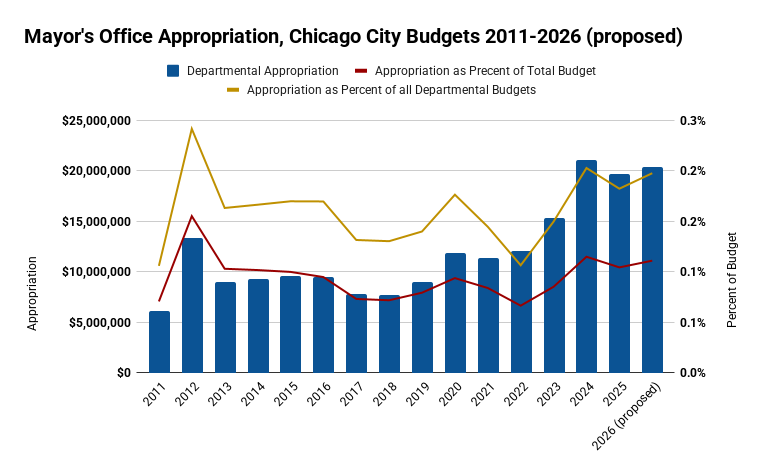
2025 Budgeted 2026 Proposed Net Change Percent Change Average Annual Rate of Change (2011-2025) Inflation-adjusted Rate of Change (2011-2024) Appropriations $19,646,654 $20,354,716 $708,062 3.6% 15.7% 12.1% Positions & FTEs 114 112 -2 -1.8% 3.3% NA - Mayoral office budgets have increased noticeably with each successive administration, rising from an inflation-adjusted average annual appropriation of $12 million under Rahm Emanuel to an inflation-adjusted $14 million under Lori Lightfoot. Under Brandon Johnson and including the 2026 proposal, the office has averaged $20.4 million in annual appropriations.
- Budgeted staff positions have seen similar increases under successive mayors, rising from an average of 84 budgeted positions in Emanuel’s budgets to 109 in Lightfoot’s and 117 in Johnson’s (including the 2026 proposal).
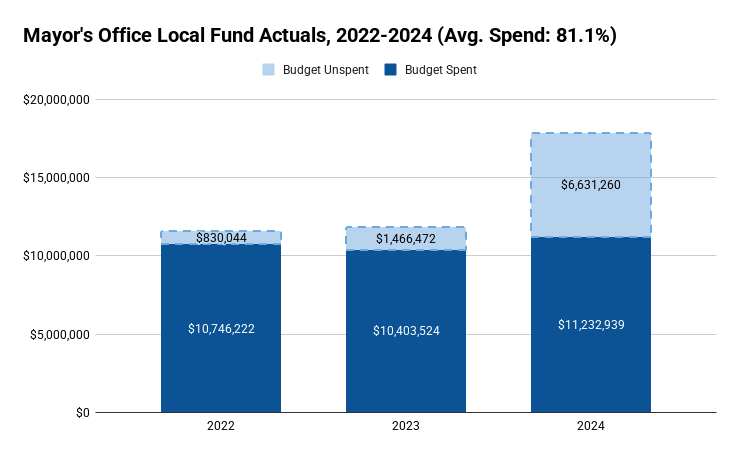
- Over the past three complete budget years for which local fund actuals/encumbrances data is available, the mayor’s office spent on average 81.1% of its budget, compared to the citywide average 86.4% local fund spend. In 2024 actual spend dropped substantially, with the mayor’s office expending only 62.9% of budgeted local funds.
- In 2024 the mayor’s office spent roughly 85.1% of its personnel services budget but only 6.5% of its contracting budget.
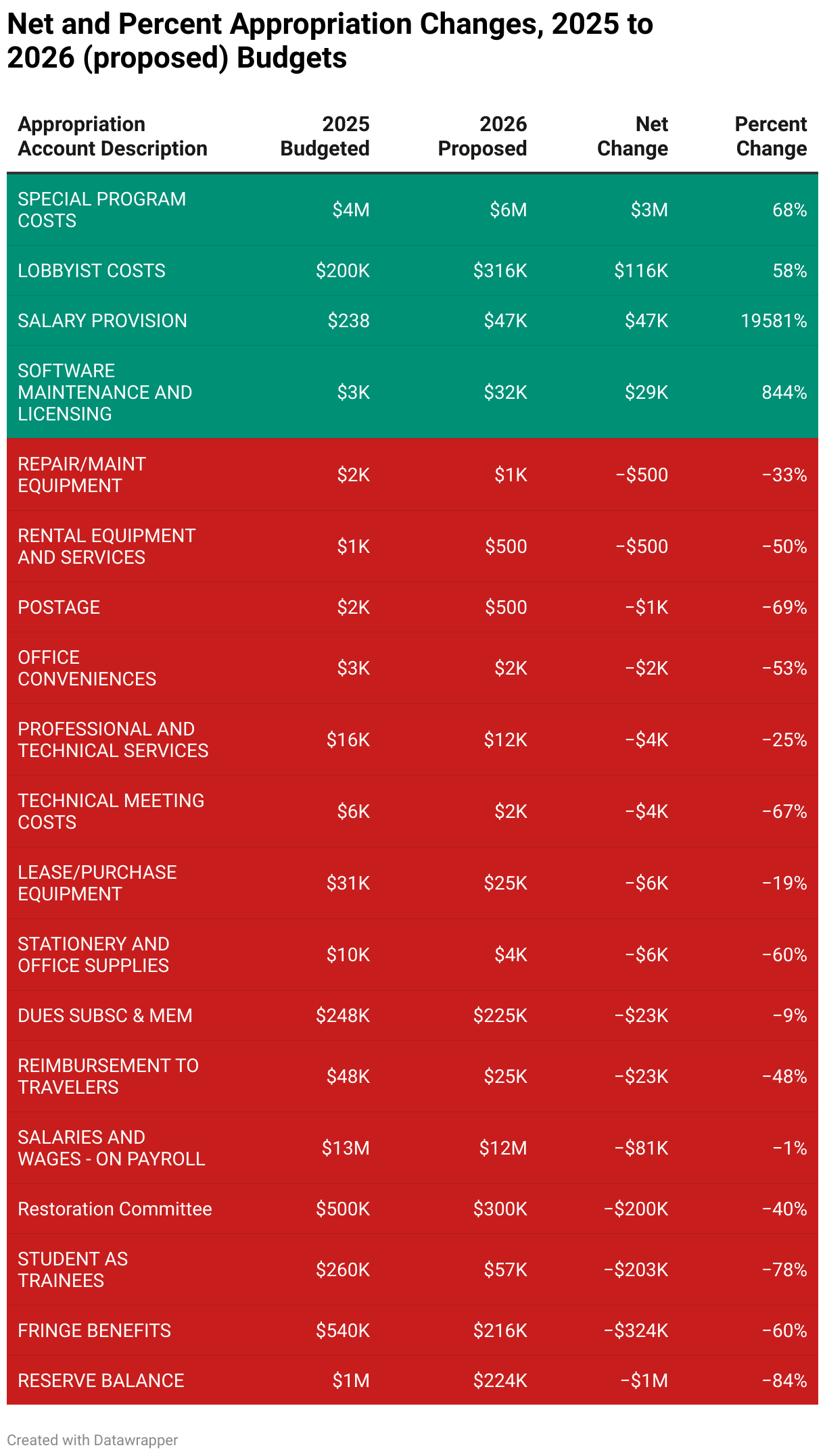
- As with most departments, the largest appropriation category in the mayor’s office is salaries and wages on payroll. The mayor’s office also has a $6.4 million appropriation for special program costs drawn from the Cannabis Regulation Tax fund.
- Appropriations for special program costs saw the largest net increase in the 2026 mayor’s office budget proposal, up $2.6 million (67.9%) from the 2025 budget.
Historical Context
Annual appropriations for the mayor’s office increased substantially during Mayor Lightfoot’s tenure and then again under Mayor Johnson, with noticeable jumps in each successive administration.
The average mayor’s office budget across Rahm Emanuel’s eight budgets (2012-2019) was $9.4 million, or an inflation-adjusted $12 million in 2024 dollars, compared to $12.6 million ($14 million inflation-adjusted) across Lori Lightfoot’s 2020-2023 budgets. Under Brandon Johnson and including the 2026 proposal, the office has averaged $20.4 million in annual appropriations.
Since 2011, the departmental budget has increased by an average of 15.7% annually, or 12.1% adjusted for inflation, compared to a citywide average rate of 8.3% (4.4% inflation-adjusted).
Over the past three complete budget years for which local fund actuals/encumbrances data is available, the mayor’s office spent on average 81.1% of its budget, compared to the citywide average 86.4% local fund spend. In 2024 actual spend dropped substantially, with the mayor’s office expending only 62.9% of budgeted local funds.
Like departmental appropriations, budgeted mayoral staff positions have increased during each successive administration, rising from an average of 84 budgeted positions in Emanuel’s budgets to 109 in Lightfoot’s and 117 in Johnson’s (including the 2026 proposal).
Overall the department’s budgeted workforce has grown at a rate of 3.3% annually since 2011. The 2026 budget eliminates two positions from the mayor’s office, a -1.8% reduction.

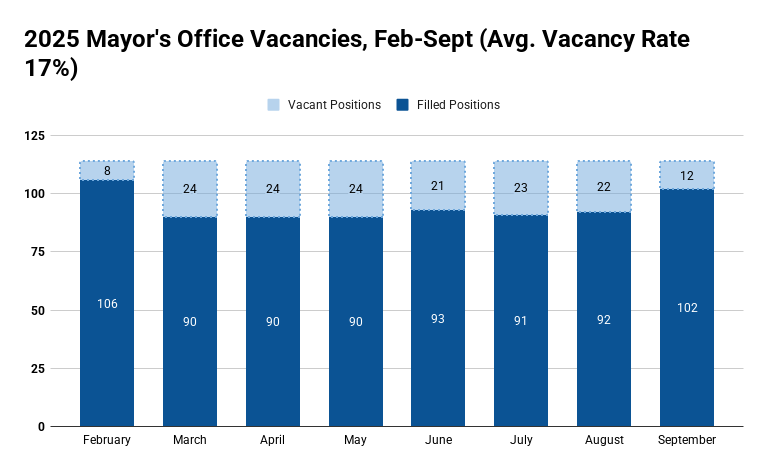
From February through September of 2025, the months for which the city released vacancy data, the mayor’s office averaged a 17% vacancy rate, compared to the citywide average of 11.2%.
None of the department’s budgeted positions were persistent vacancies (defined as the same title/division/section/subsection combination remaining vacant for all eight months of available data.)
Staffing
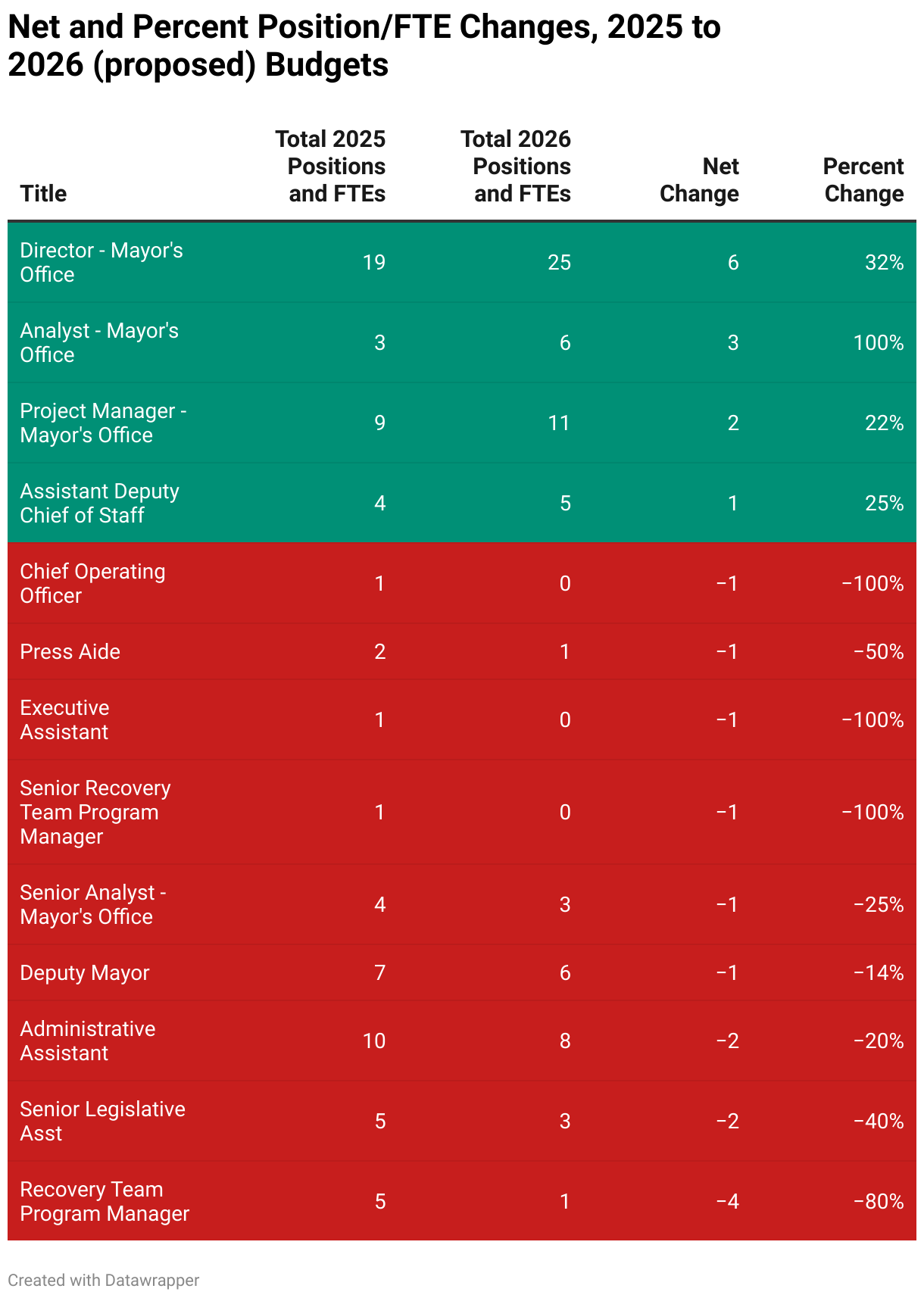
The net change of two positions in the mayor’s office in the 2026 budget results from a shuffling of multiple titles and positions.
As pandemic recovery funds are spent down, the 2026 budget eliminates the Senior Recovery Team Program Manager role and all but one Recovery Team Program Manager positions. However, six new Director positions have been added. Various assistant and analyst positions have also been shifted or eliminated:
Appropriations
The mayor’s office is almost entirely locally-funded in this year’s budget proposal, with 95.8% of appropriations coming from local funds (up from 85.5% in the previous year’s budget).
Roughly half the mayor’s office budget comes from the general purpose corporate fund, with another 36.8% coming from the cannabis regulation tax. This year’s budget also appropriates just under $1 million for the mayor’s office from the new Community Safety Fund, currently slated to be funded from a revived corporate head tax.
Fund 2025 Budgeted 2026 Proposed Net Change from 2024 Percent Change from 2025 Percent of 2026 Funding Corporate Fund $11,522,378 $10,452,747 -$1,069,631 -9.3% 51.4% Cannabis Regulation Tax $4,687,849 $7,486,762 $2,798,913 59.7% 36.8% Community Safety Fund $0 $957,425 $957,425 New Fund 4.7% Local Public and Private Grant Fund $1,010,000 $693,000 -$317,000 -31.4% 3.4% Special Events and Municipal Hotel Operators' Occupation Tax Fund $457,161 $470,873 $13,712 3.0% 2.3% Coronavirus Local Fiscal Recovery Fund $1,848,000 $169,000 -$1,679,000 -90.9% 0.8% Tax Increment Financing Administration Fund $121,266 $124,909 $3,643 3.0% 0.6% Largest Appropriations
As with most departments, the largest appropriation category in the mayor’s office is salaries and wages on payroll. The mayor’s office also has a $6.4 million appropriation for special program costs drawn from the Cannabis Regulation Tax fund. The remainder of the department’s appropriations are relatively minor, less than $350,000 each.

In 2024, the most recent year for which complete actuals are available, the mayor’s office spent roughly 85.1% of its personnel services budget (a category that includes salaries and wages, overtime, and other compensation-related appropriation accounts), but only 6.5% of its contracting budget.
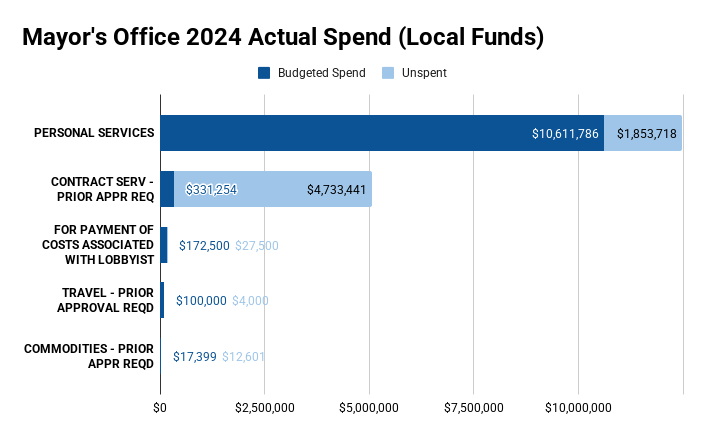
(Because the appropriation categories used in the 2022-2024 actuals datasets from the Department of Finance do not correspond exactly to the appropriation accounts used in the budgets presented by the Office of Budget and Management, an exact line-by-line comparison of real spend to budget is not possible.)
Change from Previous Year
Appropriations for special program costs saw the largest net increase in the 2026 mayor’s office budget proposal, up $2.6 million (67.9%) from the 2025 budget.
The proposed budget reduces the reserve balance appropriation from the previous year by $1.2 million (-84.1%). According to OBM responses at the previous year’s budget hearings, the reserve balance appropriation account is used for grant funds that will be rolled over into the next year, and does not represent current-year expenditures.
This article first appeared on Better Government Association and is republished here under a Creative Commons Attribution-NoDerivatives 4.0 International License.


