


-
MAY 11, 2026

UNLOCKEDIllinois lawmakers propose end to some economic development tax credits, digital ad tax as means to shore up revenue
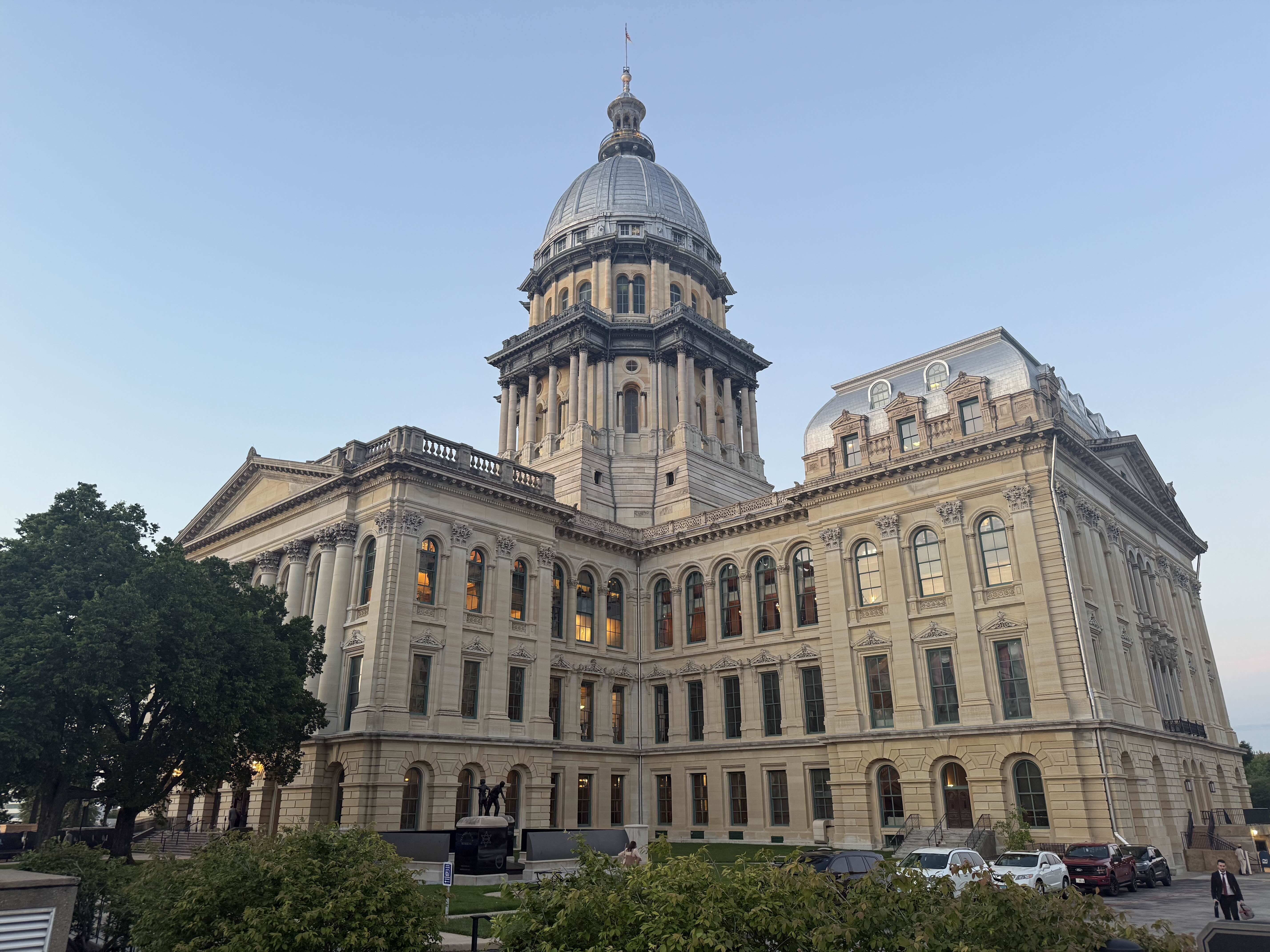
With three weeks to go until the end of the 2026 legislative session, lawmakers are discussing myriad revenue options to balance an expected $56 billion budget.
During hearings of the Illinois Senate and House’s respective revenue committees last week, lawmakers discussed proposals from the progressive caucus that they say could raise nearly $4 billion.
One proposal from Rep. Lindsey LaPointe (D-Chicago) and Sen. Lakesia Collins (D-Chicago) would end and decouple from some state and federal economic development tax credits and incentives.
Lawmakers approved a bill during the fall veto session that decoupled Illinois from the federal bonus depreciation provision, which allows companies to deduct a portion of the purchase price of business assets when they’re put in service, instead of depreciating them gradually.
The measure prevented the current fiscal year 2026 budget from ending in a deficit of more than $250 million.
House Bill 5125 and Senate Bill 3786 would end some tax credits, such as for construction jobs. It would also modify the state’s business interest deduction and the federal deduction for “domestic research or experimental expenditures.”
LaPointe said this measure, and others being proposed, aim to fix the state’s regressive tax structure and prepare the state to combat federal changes that will impact the state’s budget.
Republican lawmakers and business advocacy groups have pushed back against these proposals, saying the tax credits support job creation.
“When workers earn a good wage, they spend dollars in their communities, supporting small businesses, strengthening neighborhoods and driving up economic stability from the ground up,” said Sen. Seth Lewis (R-Carol Stream).
House Bill 5215 and Senate Bill 3376 — proposed by Rep. Theresa Mah (D-Chicago) and Sen. Karina Villa (D-West Chicago) — would tax billionaires’ unrealized capital gains.
It was an idea proposed last fall during debates on how to fill a budget deficit for Chicago- area public transit that ultimately was not pursued by lawmakers. Gov. JB Pritzker has questioned the feasibility of the proposal, saying he was not sure how or if the state could implement such a tax.
Villa said the tax is straightforward.
“Billionaires would report the value of their holdings at the beginning and the end of each year, and the increase would be subject to the same rate that everyday Illinoisans already pay on their income,” she said.
Rep. Maurice West (D-Rockford) is proposing House Bill 5318, which would require all entities operating as part of the same business enterprise to be counted in the business’ corporate tax calculation.
He said the goal of the bill is to stop companies from shifting profits offshore to avoid paying state taxes by requiring collective reporting.
“Large multinational corporations can do business right here in Illinois, make money off of our workers, our infrastructure, our communities, and then legally shift their profits offshore to avoid paying Illinois income taxes,” he said. “[Under collective reporting] if you're doing business in Illinois, you pay your fair share in Illinois, period. This is about fairness. This is about equity.”
Digital Ad Tax
House Bill 4894 would impose a 10 percent tax on a company's gross revenue derived from digital advertising in the state. It would only apply to companies who make more than $150 million from digital advertising in Illinois.
Bill sponsor Rep. Norma Hernandez (D-Melrose Park) said the tax could produce $1.1 billion in revenue.
She said the bill is targeted toward large corporations. She said these businesses profit from data collected from Illinois residents without contributing their “fair share” to the state’s tax base.
“When we talk about fairness, we also have to be honest about how these companies are making their money every single day,” she said. “Illinois residents are giving away valuable personal data without realizing the scale of it. You search for a pair of shoes online, and suddenly shoe ads follow you across every website and app you visit. That's not accidental. These massive tech corporations collect our personal information, package it and sell it to advertisers for enormous profits.”
Hernandez said the bill addresses legal concerns by narrowly applying the tax to digital ads served in Illinois.
HB 4894 defines “digital advertising services” as "banner advertising, search engine advertising, interstitial advertising and other comparable advertising services that use personal information about the people to whom the ads are being served.”
It also defines the platforms on which these ads are served as “any software that a user is able to access, including a website, part of a website or an application.”
Hernandez said she believes this specificity would help the bill survive any legal challenges that could be raised.
This tax would be separate from a tax on social media companies proposed by the governor, which would see large companies taxed per Illinois user.
Read more: Pritzker proposes $56 billion spending plan backed by social media tax
Rep. Daniel Didech (D-Buffalo Grove) raised concerns that the tax could be ruled unconstitutional, as the Illinois Constitution requires all taxes to be imposed uniformly. He said only taxing large corporations could violate this provision.
“One of the worst outcomes of how this issue could be resolved is if we pass this tax, we pass a budget relying on revenue that we think will be derived from this tax, but then it is challenged in court and ruled unconstitutional,” he said. “And now we have made promises to various other priorities of the legislature that relies on this tax revenue, which now we're not going to receive.”
Rep. Curtis Tarver (D-Chicago) said the state is projected to collect enough revenue in fiscal year 2027 to balance the proposed $56 billion spending package and asked why this tax would be needed.
Hernandez said that while the FY-27 budget is anticipated to be balanced, financial strains will continue to worsen. She said the General Assembly should approve this tax to allow time for legal challenges, so the revenue from the tax could be available when the state does need it.
Ninia Linero, executive director for Illinois at TechNet, said if the state imposes a tax on large platforms, those costs will be passed down to small businesses and consumers.
“Small businesses rely on digital advertising because it is one of the most accessible and cost-effective tools available to compete with larger companies," she said. “Increasing the cost of those services makes it harder, not easier, for Illinois small businesses to grow and compete in the modern economy.”
She said similar legislation in Maryland and Washington is also facing legal scrutiny.


Trending


