


-
FEB 19, 2026

UNLOCKEDPritzker proposes $56 billion spending plan backed by social media tax
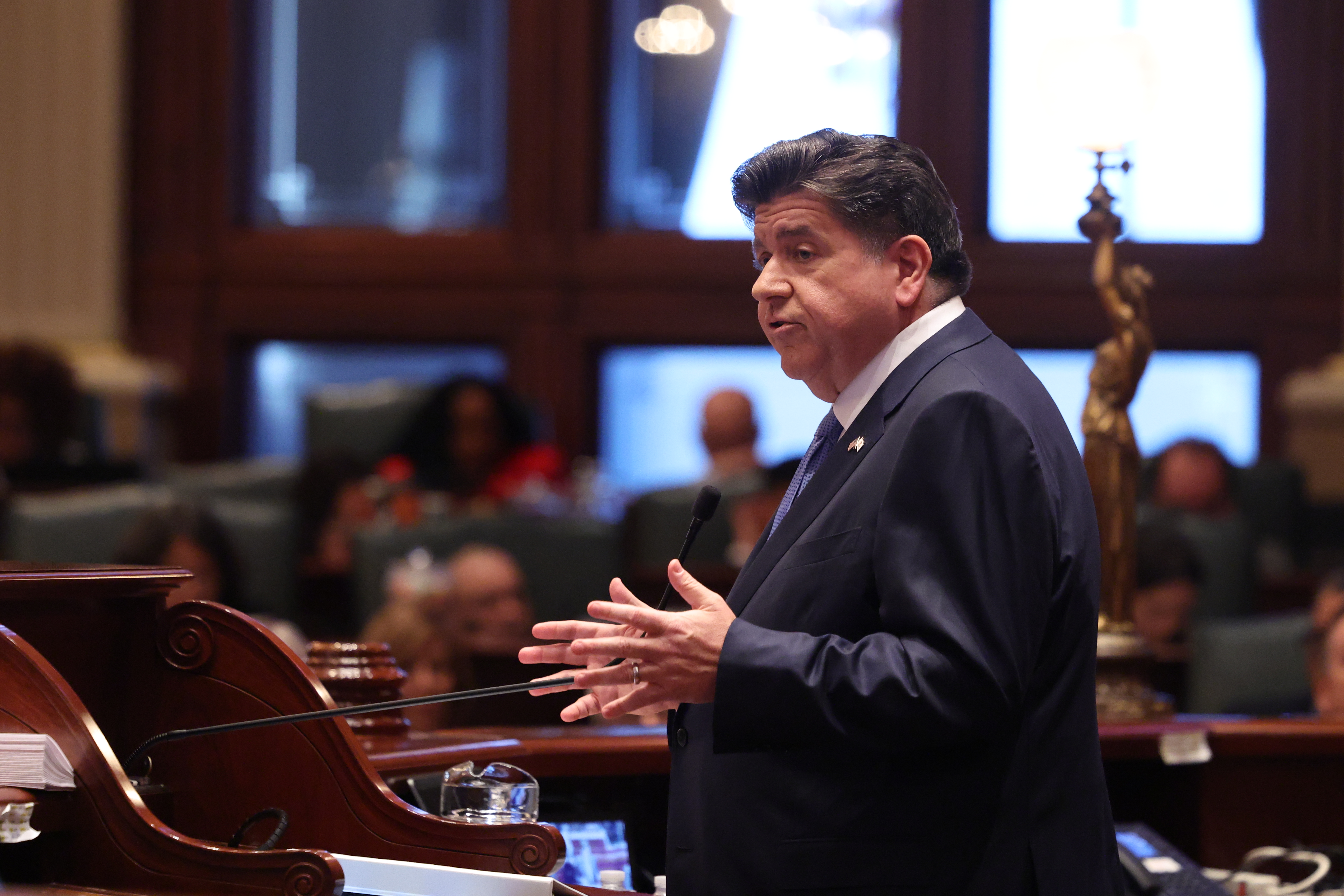
Gov. JB Pritzker gives his eight State of the State address Wednesday in Springfield. [Brian Cassella/Chicago Tribune]
Gov. JB Pritzker is proposing a $56 billion spending plan for fiscal year 2027 that includes a new social media tax but does not include a tax on millionaires proposed by some Illinois Democrats.
The fiscal year 2027 budget is an $878 million, or 1.6 percent, increase from the current budget. Most of those increases are required by statute, including education and pensions. Without the required spending, the budget proposal is an increase of just 0.5 percent.
The spending plan is backed by $56.1 billion in revenue, an $830 million, or 1.5 percent, increase from FY26 estimates.
That revenue estimate includes a new Social Media Platform fee that the governor’s office anticipates will yield $200 million in FY27, which will be dedicated to education.
The fee is part of a larger initiative proposed by Pritzker to target social media companies, which he said during his State of the State speech Wednesday have profited off Illinois consumers but have contributed “nothing to ameliorate the negative effects of their platforms.”
“Parents and kids deserve to have better funded schools,” Pritzker said. “If social media giants are going to feed off of Illinois families, they ought to support Illinois families.”
The tax would only apply to social media companies with more than 100,000 users in Illinois. Companies would be charged a monthly fee of $0.10 per user for up to 500,000 users; $40,000 plus $0.25 per user up to a million; and $165,000 plus $0.50 per user over a million. Companies would be prohibited from passing those costs onto users.
It’s similar to the recently enacted Chicago social media tax, under which social media companies must pay the city $0.50 per user each month for every user over 100,000 users.
The governor also proposes increasing the tax rate for table games at casinos to align with slot machines, which his office predicts will yield an additional $120 million.
The revenue projections also assume tax collections for the Personal Income Tax and Sales Tax will increase by a combined $1.2 billion, while Corporate Income Tax collections are expected to decrease. The corporate tax has struggled this fiscal year, and new tax exemptions at the federal level are expected to further decrease the amount the state yields.
The budget does aim to save $269 million in corporate taxes by changing how much large companies can deduct as losses.
The proposal anticipates $4 billion in federal funds in FY27, a $55 million, or 1.4 percent, increase.
The state is tied up in numerous lawsuits over cuts to federal funding by the Trump administration, which Pritzker said has cost the state $8.4 billion.
Pritzker’s proposal includes a surplus of just $24 million, leaving very little room for error if revenues do not turn out as projected.
The budget does not include a millionaire surcharge tax endorsed by House Speaker Emanuel “Chris” Welch (D-Chicago) and progressive state Democrats. Pritzker has spoken in support of the plan, but it would require voter support to go into effect.
Education
The state’s largest budget line is education, with Pritzker proposing an increase to $15.4 billion in FY27. That includes a $305 million increase for evidence-based funding (EBF), excluding for the second year in a row the approximately $50 million used for a property tax relief program. That brings total spending on EBF to $9.2 billion.
When questioned why funding for the property tax relief program was removed from the FY26 budget in May, Democratic leaders said it was withheld to evaluate the effectiveness of the program. State Supt. Tony Sanders had included the $50 million in his FY27 budget recommendation.
Pritzker’s proposal also continues the Teacher Vacancy Grant Pilot Program with $15 million and includes $1.5 million for implementation of the Illinois Comprehensive Literacy and Numeracy plans.
Public universities and community colleges will receive a one percent increase under Pritzker’s proposal, and Monetary Award Program (MAP) grants will remain flat at $721.6 million.
The FY27 will also see funding for early childhood services, including education, shift from various state departments to the newly formed Illinois Department of Early Childhood.
Health, human and family services
The Illinois Department of Human Services (IDHS) will see a decrease in its FY27 budget due to the transition of services to the new early childhood department. IDHS will receive $11.2 billion in FY27.
That proposed budget includes an extra $50 million for IDHS to hire 450 additional staff and update eligibility determination systems for the Supplemental Nutrition Assistance Program (SNAP) and Medicaid to comply with new federal standards.
The budget reconciliation bill signed by President Donald Trump July 4 includes new work and recertification requirements that are expected to increase the workload for the agency. The federal bill also establishes that states with a SNAP error rate over six percent will have to pay a portion of benefits. Illinois’ 11.56 percent error rate could ultimately cost the state $700 million annually.
In response, the department is establishing additional oversight mechanisms to attempt to lower the rate.
The IDHS budget also includes $253.7 million for Home Illinois, which supports the state’s homeless population. That funding goes to shelters and other supportive agencies, rental assistance and emergency housing.
The Department of Children and Family Services (DCFS) will receive a $74 million increase, raising its total budget to $2.5 billion.
That includes a $19.8 million increase dedicated to helping DCFS providers maintain a competitive wage for their workers, as well as $4.7 million for the department’s scholarship program. That program is expected to serve 1,381 youths in FY27.
The Department of Healthcare and Family Services (HFS) budget will include $8.8 billion in General Fund revenues and $47.4 billion in all revenues, including a new $300 million grant from the federal government to support rural hospitals.
The state will also spend $143.6 million on the Health Benefits for Immigrant Seniors program, which is flat compared to FY26.
The budget also maintains funding for the Medical Debt Relief Pilot Program, which the governor’s office announced Tuesday has erased $1.1 billion in medical debt for 500,000 Illinoisans.
Pensions
The state will put an additional $192 million toward the pension fund in FY27, for a total of $10.7 billion. That amount is required by state law.
Pritzker is renewing his push to update the Edgar Ramp pension payoff plan to aim for the system to be 100 percent funded by 2048, instead of 90 percent funded by 2045.
The state’s unfunded pension liability was $144 billion in December, according to the Commission on Government Forecasting and Accountability.


