


-
APR 20, 2026

UNLOCKEDIllinois House approves bill allowing ‘human composting’ as burial method
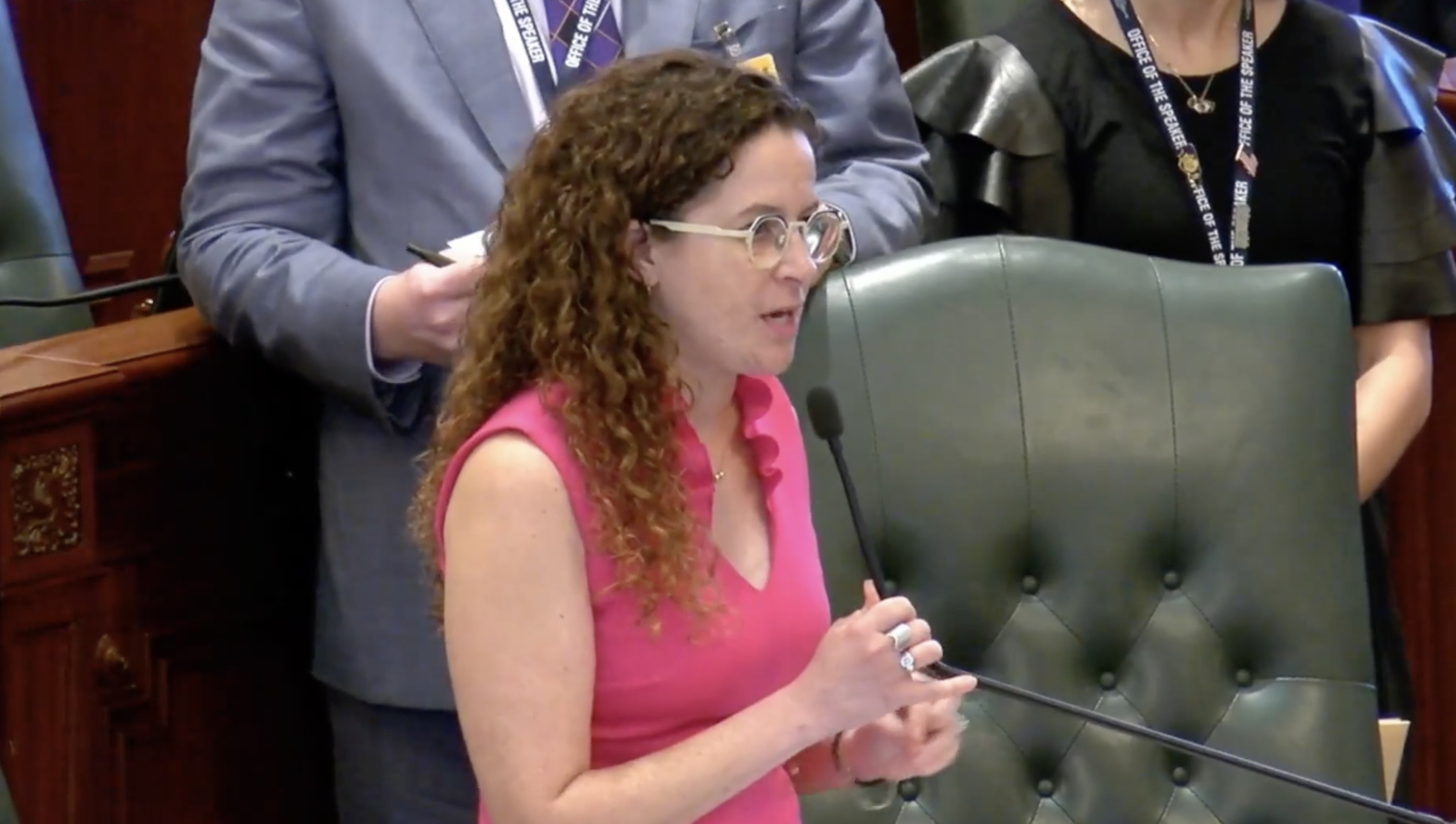
The Illinois House of Representatives sent 58 bills to the Illinois Senate Friday, including a measure legalizing “human composting” as a burial method.
House Bill 5425 would legalize natural organic reduction or “human composting” as an alternative to cremation or burial. It would create a regulatory process by which natural organic reduction facilities could be opened in the state.
“It is a safe, dignified, environmentally friendly alternative to burial and cremation,” said Rep. Mary Beth Canty (D-Arlington Heights), the bill sponsor. “Over a 30-to-45-day process, a body is gently transformed into nutrient rich soil. Families choose to take part in this option, and our funeral directors and homes choose if they would like to offer it as a service.”
Human composting avoids both the release of smoke from cremation and the leaking of embalming fluids from burial, with advocates dubbing it an environmentally friendly option.
Read more: Measure legalizing ‘human composting’ as a burial method advances in Illinois House
Fourteen states have legalized the option as of 2026.
Asked about concerns of potential groundwater contamination, Canty said the state’s regulations over the process would be the strictest in the nation and would ensure there is no contamination of the state’s water supply.
The measure grants regulation to the comptroller’s office, which Rep. Regan Deering (R-Decatur) noted differs from other states, whose health departments have a role in regulations. The Illinois Department of Public Health (IDPH) was included as a regulatory authority in the initial version of the measure but was removed in a subsequent amendment.
Canty said the measure now aligns with Illinois statute and the duties of the comptroller’s office. The comptroller licenses certain private cemeteries, funeral homes and crematories.
Deering argued the measure lacks certain consumer protections that are required of others in the death care industry, such as restrictions on misleading advertising or chain of custody protocols for the handling of remains.
She also argued against the removal of IDPH, saying the department should be involved in ensuring public health.
Canty disputed this claim, saying the measure does include a “a robust chain of custody requirement” and that the comptroller’s office can oversee the sites, as they do with others in the death care industry.
The measure passed 64-36.
Representatives also approved House Bill 624, which creates a statewide housing program for incarcerated individuals reentering society.
The program would be administered through the Illinois Housing Development Authority (IHDA), in collaboration with the Illinois Department of Corrections (IDOC). Through the program, community-based organizations would apply to the program with IHDA, who would then assist individuals with acquiring, developing and rehabilitating permanent affordable housing units and transitional housing units that would be dedicated for incarcerated individuals reentering.
Inmates would be assessed prior to their release on their housing situation and if they are eligible for the program.
Bill sponsor Rep. Maurice West (D-Rockford) said the goal is to prevent recidivism by helping individuals who lack stable housing with options. He said 70 percent of individuals that enter IDOC custody already are in unstable housing or are homeless.
He said 37 percent of individuals released from IDOC custody are reincarcerated within three years, contributing to a $1.1 billion fiscal impact on the state.
West said the bill just creates the framework for the program, and implementation would be required on the creation of a grant program as part of the state budget. He said they're asking for $50 million to begin implementation.
IHDA and the Illinois Department of Human Services are currently opposed to the legislation, which West said is due to their concerns about the budgetary impact of the legislation, which would be addressed in a subsequent measure.
HB 624 was approved 63-34.
The House also approved House Bill 917 — sponsored by Rep. Curtis Tarver (D-Chicago) — which creates a cultural district in downtown Chicago. Tarver said the measure is an initiative of the Chicago Cultural Stadium, a coalition of Chicago arts and culture institutions and hotels that aims to attract private dollars for projects in the district.
Tarver said the designation will not translate into any tax incentives or credits and is simply a designation to attract private investment.
House Bill 5264 was also approved. The measure would create a loan program through the Department of Commerce and Economic Opportunity to provide low interest loans to small businesses that have been negatively impacted by an economic shock.
The bill’s sponsor, Rep. Lisa Hernandez (D-Cicero), said the measure is in response to the negative economic impact from Operation Midway Blitz. She said the federal immigration operation negatively impacted businesses in her district and the larger Chicago area.
The measure is not solely limited to instances such as that. It instead gives the governor the ability to declare an economic shock based on criteria such as reduced foot traffic, declining sales, workforce disruptions and business closures.
She said while inspired by Operation Midway Blitz, which was largely contained to the Chicago area, the grants would be available statewide.
“There's a lot of businesses that are suffering, and we have to do what we can,” she said. “Our small businesses in particular are the engine that really keeps our economic economy going, especially in municipal areas.”
To qualify, a business would need to employ 50 or fewer people, have grossed $3 million or less in the prior year and have been materially impacted by the economic shock event.
The loans would be up to $50,000, would have a fixed interest rate of 2 percent and have a term of repayment that does not exceed five years. Repayment of the loan would not be required in the first six months.
All principal and interest repaid will be directed back into the program.
Hernandez said there are no limitations in the bill language on how many loans can be awarded but said it would be dependent on funds available.
HB 5264 was approved 63-34.
The full list of bills approved by the House Friday can be found here.
Measure changing income check requirements for people receiving housing vouchers pulled
Rep. Kevin Olickal (D-Chicago) held his measure that would require landlords to accept evidence that a person with a housing subsidy can pay their portion of the rent other than credit scores, such as check stubs.
House Bill 5394 would make it a civil rights violation for a landlord to assess eligibility based on the full rent instead of the tenants portion and to deny a person’s application based solely on a person’s credit score without providing an opportunity for the tenant to provide other evidence of their ability to pay.
Rep. Rita Mayfield (D-Waukegan) — a realtor and property owner — spoke in opposition of the measure before Olickal pulled it from the record.
She said she’s had instances where tenants have falsified documents such as check stubs and that the measure would harm smaller tenants who may rely on rent to pay the mortgage of the property. She also said the measure is unfair to tenants who do not receive housing subsidies by requiring a higher threshold to rent a unit.
Mayfield said the bill is “well intentioned” but that the state already has laws that prohibit discrimination against people who receive housing vouchers.


Trending


