


-
NOV 20, 2025

UNLOCKEDProperty value drop in Loop blamed for sticker shock on South and West side homeowners, county treasurer’s study says
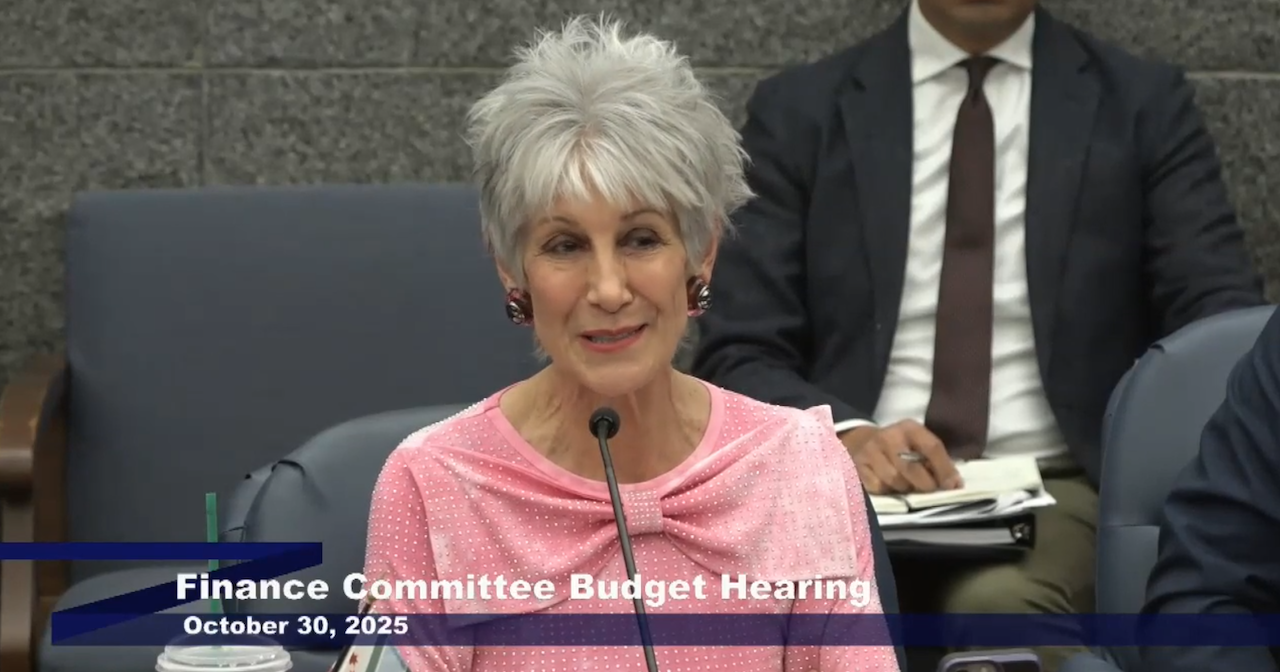
Cook County Treasurer Maria Pappas attends a county budget hearing on Oct. 30, 2025. [Livestream]
A stark drop in commercial property values in the Loop is one of the main drivers behind sticker stock for homeowners that recently received second installment Cook County property tax bills, according to a study released this week by Cook County Treasurer Maria Pappas’ office.
The increase in property tax bills hit some of Chicago’s Black communities the hardest, the study also showed.
The city was reassessed last year under the county’s triennial reassessment schedule, during a time when homeowners in south and southwest suburban Cook County were getting slapped with eye-popping bill spikes following the reassessment there in 2023.
In Chicago, total property taxes increased by $528.6 million, although that is almost entirely concentrated within residential properties. Chicago homeowners are being asked to pay an additional $469.4 million this year, a single-year jump of 11.6 percent. At the same time, city businesses are being asked to pay an additional $39.7 million, amounting to a meager 0.9 percent rise.
Among the city’s residential taxpayers, the median tax bill increased by 16.7 percent. It’s the third year in a row that the most recently reassessed area saw a median residential bill increase of more than 15 percent, with the south and southwest suburbs experiencing a 19.9 percent spike last year and the north and northwest suburbs seeing a 15.7 percent rise in 2023.
One of the primary reasons the residential and business classes in the city experienced different increases was the impact of a precipitous 7.2 percent single-year drop in property values in the Chicago Loop Community Area, which contains many high-rise office buildings downtown that have been vacant following the COVID-19 pandemic. The assessed value dropped from $1.1 billion to $992.4 million following the 2024 reassessment.
“In the Central Business District — which includes the Loop, Magnificent Mile, River North, West Loop, Far West Loop and Fulton Market neighborhoods — office vacancy jumped to 28 percent in 2025 as companies shrank their footprints and workers were slow to return to the office,” the study said.
According to the study, “the overall tax increase on businesses was minimal, despite significant increases in taxes on industrial properties and large apartment complexes, because taxes on commercial properties across the city dropped by $134.4 million.”
The biggest leaps in residential property values and tax bills were seen on the South and West sides. In those parts of the city, the study said median bills rose by more than 30 percent in 15 community areas, including a 133 percent increase in West Garfield Park, a 99 percent median bill increase in North Lawndale and an 82.5 percent increase in Englewood.
“When the Loop gets a cold, the rest of the city gets pneumonia,” Pappas said in a news release. “Homeowners across the city are paying the price. I’m particularly concerned how lower-income homeowners in struggling communities are going to be able to pay their bills.”
Across the county, property owners overall are being asked to pay $872 million more in taxes this year — nearly $19.2 billion in total. The study notes that this 4.8 percent increase is above the 3.5 inflation rate for 2024.
Homeowners across the county were charged $661.1 million in additional taxes this year, a 6.3 percent yearly increase. Business properties, which consist of commercial buildings, industrial properties and multifamily buildings with seven or more units, were taxed an additional $188.6 million this year, a 2.4 percent rise over last year.
Even though business property taxes increased, the increase was mitigated by a $70 million or 1.3 percent drop in commercial building value driven by the decrease seen in the Loop.
While the smaller increases, and in some cases declines, in business property values can be traced to trends kicked off by the pandemic, the treasurer’s office has also noted in this and in other studies how the Cook County Board of Review appeals process often shifts the tax burden from commercial properties to homeowners.
Additionally, homeowners are both less likely to appeal their assessments and, even when they do, are less likely to see their assessments reduced by the board than businesses. To compound that, homeowners in lower income, minority communities appeal at lower rates than other homeowners.
Related: Treasurer’s office study finds business appeals shift tax bill burden by almost $2B to homeowners
The north and northwest suburbs were reassessed this year following their last reassessment in 2022.


