


-
OCT 28, 2025

UNLOCKEDCity budget proposes Smart Streets expansion with larger pilot area, inclusion of street sweeping violations
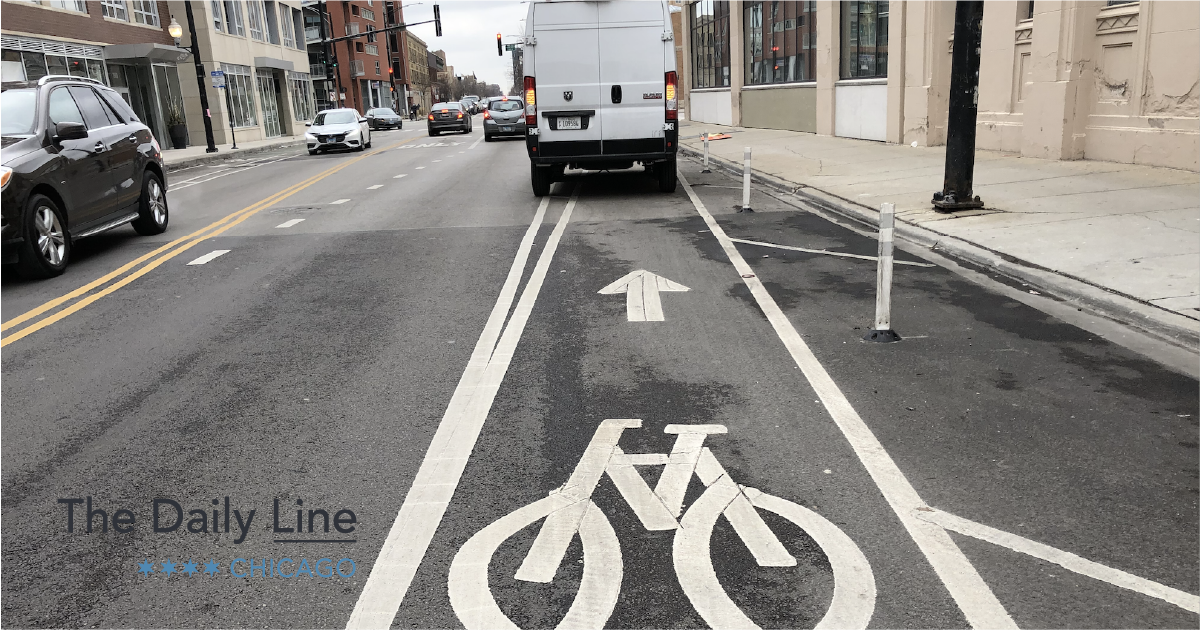
A vehicle parked in a Chicago bike lane. [Erin Hegarty/The Daily Line]
The city’s proposed expansion of its Smart Streets pilot program is estimated to net the city millions of extra dollars next year by lengthening the geographic boundaries and increasing the number of infractions that are enforced.
The pilot program, based on an ordinance passed in 2023, launched in the downtown area last year with eight city vehicles equipped with cameras to conduct automated enforcement of parking and standing violations in bus lanes and bike lanes. The pilot is set to end in December 2026.
But the program will benefit from an increase in the number of camera-equipped vehicles over the next year. Earlier this month, six Chicago Transit Authority (CTA) buses began using Automated Bus Lane Enforcement (ABLE) systems to enforce the Smart Streets pilot, adding to the existing city vehicles that were participating.
The city procured the ABLE systems from a company called Hayden AI, which also supplies the technology to the New York Metropolitan Transportation Authority, the Southeastern Pennsylvania Transportation Authority and the Washington Metropolitan Area Transit Authority.
Along with adding CTA buses as a means of enforcement, CDOT is also proposing to expand the geographic boundaries of the pilot program and has begun to expand the types of violations enforced using automated cameras under the program. For instance, enforcement of unpaid parking meters has also begun, and parking violations during street sweeping would be enforced under Smart Streets next year if approved as part of the 2026 budget.
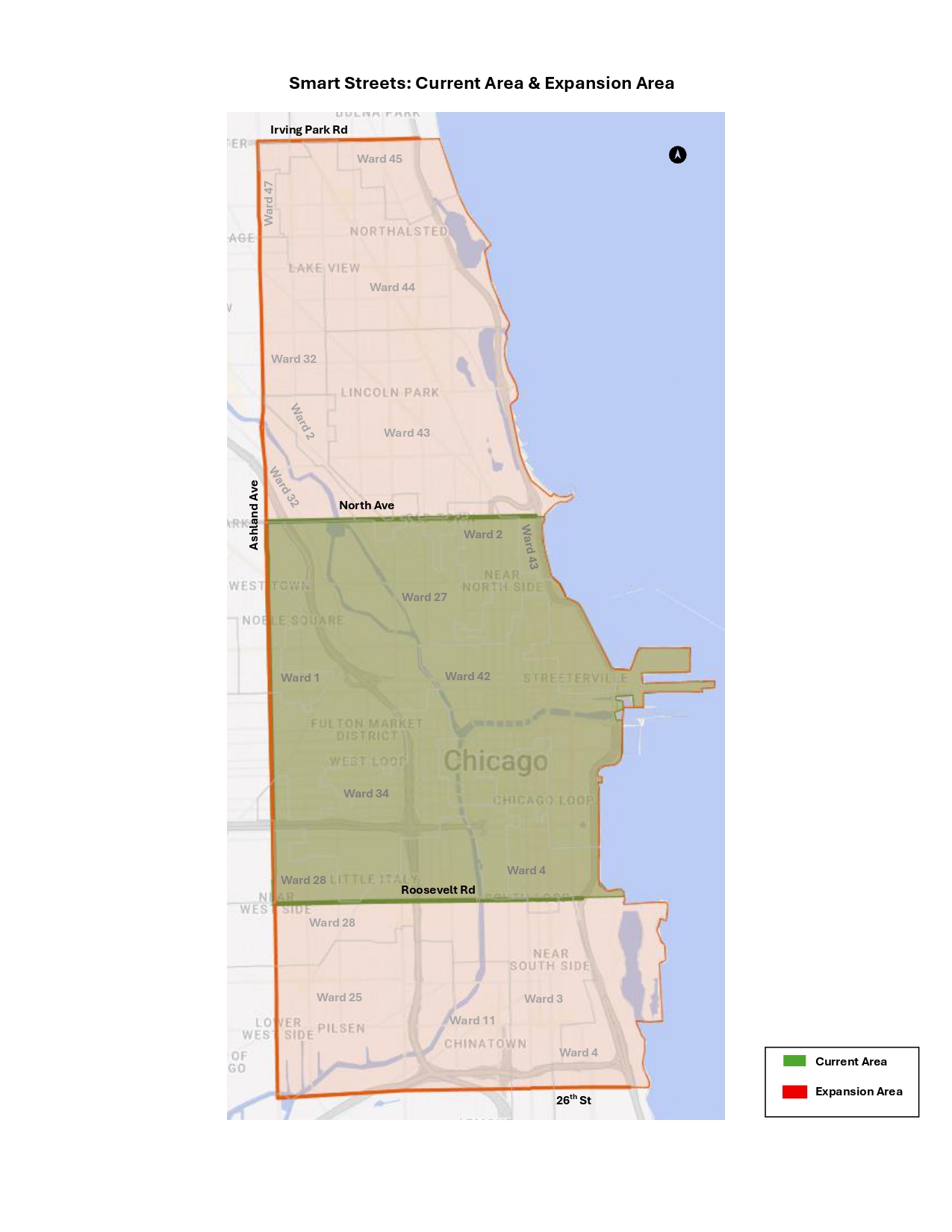
The current geographic boundaries of the pilot are Ashland Avenue on the west, North Avenue on the north, Roosevelt Road on the south and the lakeshore on the east. The eastern and western bounds of the pilot area would remain the same next year, but the northern boundary is set to expand to Irving Park Road, and the southern boundary would extend to 26th Street under the mayor’s current budget proposal.
All those changes add up to an estimated $6.64 million in gross annual revenue for the city in 2026, according to a presentation from city staff. After subtracting the $581,000 cost of operating the pilot, the city is estimated to net $6.06 million in revenue next year, a huge increase over the more than $650,000 the pilot has brought in since it launched nearly a year ago.
“By partnering across CDOT, CTA, and the Department of Finance, we’re aligning safety, service, and sound administration,” said Comptroller Michael Belsky in a news release. “The addition of CTA buses expands coverage where it’s needed most and supports faster, more reliable service.”
Still, Belsky stressed to The Daily Line the program wasn’t about revenue, as the data shows the vast majority of drivers do not incur subsequent violations after being cited. Drivers receive warnings for their first violation and are fined upon subsequent infractions. Additionally, there is a 30-day fine-free warning period when cameras are first deployed. For the CTA buses, that period went into effect Oct. 15 and will end Nov. 14.
The buses with the ABLE systems will prioritize routes that utilize Loop Link, including Washington Street, Madison Street, Clinton Street and Canal Street, as well as Dearborn Street, Chicago Avenue and “other corridors with bus lanes, bike lanes and bus stops that see a high number of violations,” CDOT said.


