


-
NOV 03, 2025

UNLOCKEDAlderpeople ask about SNAP suspension, gender-based violence spending cuts during Department of Family and Support Services budget hearing
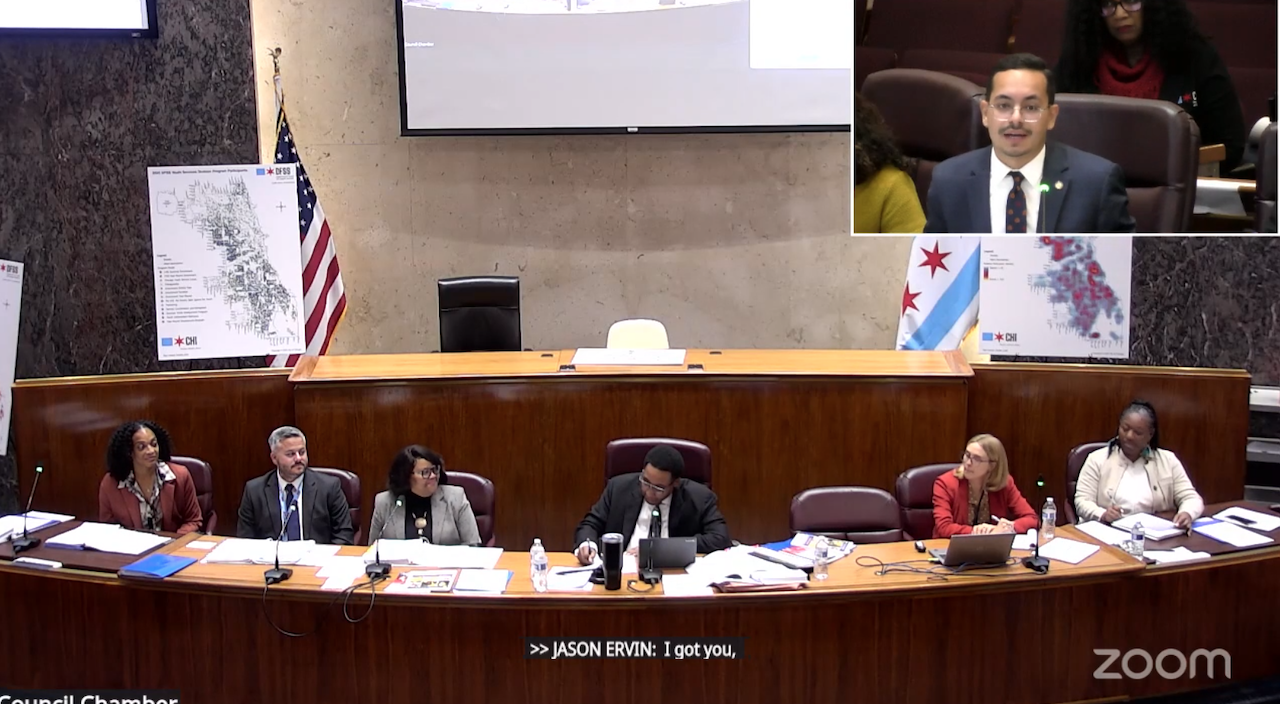
Ald. Anthony Quezada (35) questions DFSS Comm. Angela Green at a budget hearing on Oct. 30, 2025. [Livestream]
Alderpeople questioned the newly confirmed head of the Department of Family and Support Services (DFSS) on reductions in spending on gender-based violence and the impacts of the government shutdown during a budget hearing last week.
DFSS oversees many of the city’s social service programs such as homelessness prevention, reentry services for the formerly incarcerated, shelters and resources for domestic violence victims and child welfare and youth opportunities. The department issues myriad requests for proposals for social welfare programs.
Next year, DFSS’s budget is set to drop by about $72.2 million, or 10.2 percent of its revised 2025 budget, to $632.6 million under Mayor Brandon Johnson’s budget proposal. The department is also set to lose 10 full-time positions, dropping from 443 to 433 budgeted staff.
DFSS receives both federal and state grant funding and city funding, and the 2026 budget proposal estimates $439.2 million in grant funding, which is about $300 million less than what was originally budgeted for in 2025. DFSS’s grant-funded budget was revised down by more than $233 million this year, from an originally budgeted $750.3 million to $517.2 million.
The department is proposed to receive $114.1 million from the city’s Corporate Fund next year and would source the most from the new $100 million Community Safety Fund, which would be entirely sourced from the mayor’s controversial proposed corporate head tax. The department would receive $62.3 million from the proposed fund.
Still, DFSS Comm. Angela Green, whose appointment was confirmed by the City Council just last month, told the budget committee last Thursday “you will see strategic investments in this budget that will continue to help connect Chicagoans to programs and services that they need to thrive.”
“You will also see renewed evidence-based commitments to the programs our data show are transforming lives and helping reduce violence and crime in the city,” Green said. “DFSS and our partners collaborate and innovate to continuously improve upon the programming and services we offer to our clients. We pride ourselves on both providing efficient and effective services to Chicago's most vulnerable residents, working to ensure our city is just, equitable and inclusive for all.”
Ald. Rossana Rodriguez-Sanchez (33), chair of the Committee on Health and Human Relations, asked Green how DFSS was responding to the anticipated demand for food amid the ongoing government shutdown that has led to Supplemental Nutrition Assistance Program (SNAP) funding to be left in jeopardy this month, though two federal judge ruled last week that the federal government had to use emergency funds to partially cover the funding lapse. Even with the ruling, fulfilling November benefits could be delayed.
“Federal programs like SNAP provide critical support on a scale that no city can match, and I think that's critical to remember,” Green said. “This demand places a strain on all of our city support services, including our community-based organizations, our faith-based organizations, our clinics [and] our broader service array network.”
Still, Green said the city will do everything it can through existing DFSS programs that include components to fight food insecurity, such as its program providing home-delivered meals to seniors, its early childhood education program that provides nutritious food to children and its emergency assistance program, which provides funding to the Greater Chicago Food Depository.
Ald. Anthony Quezada (35) raised community organizations’ concerns about a decrease in spending on services for survivors of gender-based violence. Some of those services include rapid rehousing, a cash assistance fund and a hotline for victims.
After the release of the mayor’s budget plan, The Network, a coalition of 45 member organizations that promote services for survivors of gender-based violence, said the mayor’s proposed budget cut services by 43 percent, not just from the loss of federal pandemic relief but also due to decreases in the DFSS’s corporate budget and cuts in spending from vacation home surcharge revenue.
Green confirmed the drop, saying gender-based violence funding would decrease by $3.3 million next year. She said the fund that services were funded from, the Houseshare Surcharge - Domestic Violence Fund, built up a small reserve due to conservative spending during the COVID-19 pandemic, but the reserve had run out, and regular spending was resuming.
“Even with these reductions, we are committed to supporting all of our current programs, although they will have to operate at a reduced level,” Green said.
The commissioner also said the city’s “current $4.5 million investment from corporate funds for [gender-based violence] services remain well above the pre-pandemic levels.”
Quezada said he was still upset about the decrease.
“This is not the fault of your department whatsoever, I think that this is the reality that is being forced upon us,” Quezada said. “This forced state of unnecessary austerity and damaging cuts to essential services — of all the departments that we've heard during these budget hearings, my heart sinks to the ground the most with this department because of its role and its responsibility.”


