


Bio
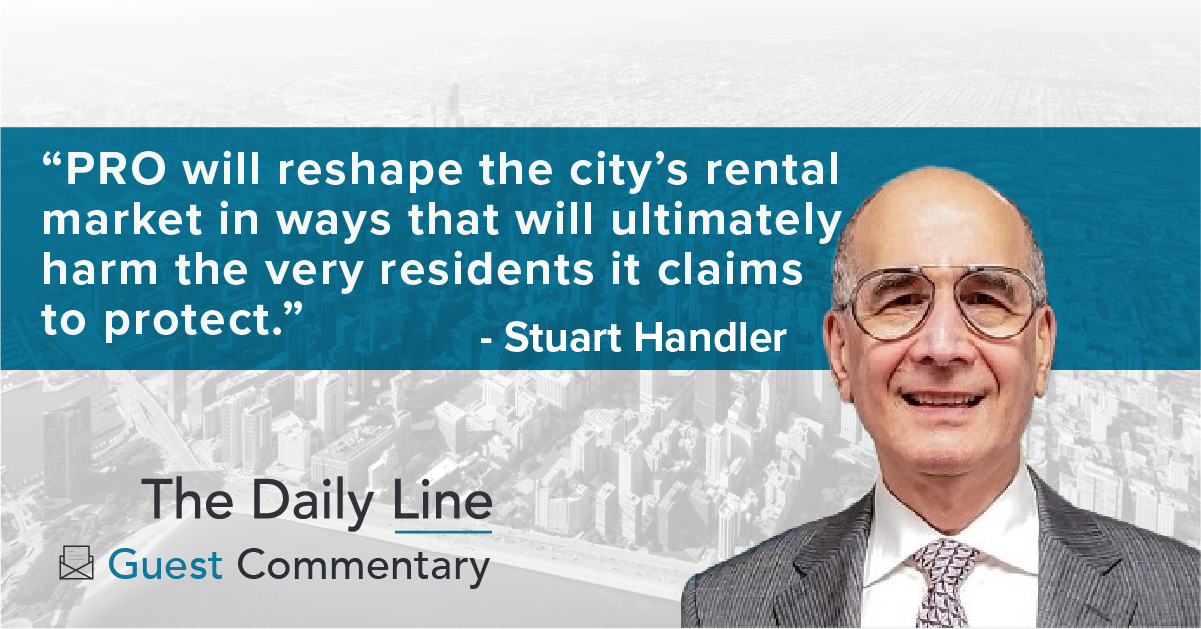
Stuart Handler is the CEO of TLC Management Co., a Chicago-based owner and manager of apartment buildings throughout the Chicagoland area. Handler also delivered the commencement address at the 2026 UIC College of Business Administration graduation ceremoMayor Brandon Johnson’s administration is about to introduce a drastic and far-reaching housing ordinance that is so wrong-headed it must be strongly challenged. Titled the Protecting Renters Ordinance (PRO), the proposal as written reads like a renter’s manifesto to completely control another person’s private property. If enacted as written, PRO will reshape the city’s rental market in ways that will ultimately harm the very residents it claims to protect.
I liken an apartment building I’ve purchased to my own home. I’ve shouldered the risk and invested my own funds. I’ve also now become responsible for the safety and stability of the people who live there. And like any homeowner, when someone refuses to follow basic rules, I should have the right to ask them to leave. Yet Chicago has spent years chipping away at these fundamental rights, expanding regulations to the point that many rental housing investors now avoid the city’s traps altogether.
Today I offer a simple challenge to every member of the City Council: try buying and managing an apartment building in Chicago yourself and experience the daily grind of operating one. See how difficult and expensive it is to remove a tenant who hasn’t paid rent in months or who is disturbing their neighbors. Watch your property taxes, utility bills, insurance premiums, staffing costs, and maintenance expenses climb year after year. Then try to keep rents affordable while simply breaking even.
Now imagine doing all of that under the new PRO proposal. The package includes a series of measures that would make it harder to maintain safe buildings, more expensive to operate them, and less appealing for anyone to invest in new housing. Most of the measures are cleverly titled to sound reasonable, but the pitfalls are plentiful, for instance:
“Just Cause Evictions.” Limiting reasonable non‑renewal options will push more disputes into court, increase formal eviction filings, and make it harder to maintain stable communities.
“Rental Registry.” Chicago already has enforcement tools and public posting requirements. A new registry would be costly, duplicative, and unnecessary.
“Right to Counsel.” These programs often prolong cases of eviction, increasing unpaid rent, legal fees, and court costs, all burdens that fall hardest on small housing providers.
“Move‑in Fees.” State and federal agencies are already implementing new transparency standards. Chicago should allow those reforms to take effect before adding another layer of regulation.
“Expanded Penalties.” The current RLTO already includes some of the strictest compliance standards and penalties in the country. Adding more punitive measures will discourage investment and shrink the city’s housing supply.
“Bureau of Rental Housing Services.” Creating another government bureaucracy which duplicates functions already handled by existing agencies and nonprofits will increase costs and slow development.
“Renters Bill of Rights.” Most of these protections already exist under federal, state, or local law. Duplicating them adds confusion without delivering meaningful new benefits.
What makes this even more troubling is that the PRO was drafted without input from the people who actually provide housing. That’s not just an oversight, but an affront to the thousands of housing providers who risk their capital, maintain their buildings, and keep Chicago’s rental market functioning.
If the Council truly wants to revisit the city’s housing laws, it should start by inviting landlords, developers, and property managers into the conversation. Collaboration is the only path to a balanced framework that protects renters while encouraging investment. With the right approach, Chicago can expand its housing supply and, thereby, lower rents.
But none of that will happen if policymakers continue writing housing laws without understanding what it actually takes to own, operate, and sustain an apartment building in this city. I’m serious alderpersons, go buy one.
Stuart Handler is the CEO of TLC Management Co., a Chicago-based owner and manager of apartment buildings throughout the Chicagoland area. Handler also delivered the commencement address at the 2026 UIC College of Business Administration graduation ceremony.
Alderpersons, Before You Rewrite Housing Policy, Try Buying a Chicago Apartment Building
Bio
Stuart Handler is the CEO of TLC Management Co., a Chicago-based owner and manager of apartment buildings throughout the Chicagoland area. Handler also delivered the commencement address at the 2026 UIC College of Business Administration graduation ceremo

