


-
MAR 13, 2026

UNLOCKEDSenate committee approves bill allowing private land use for broadband infrastructure, plug-in solar panels
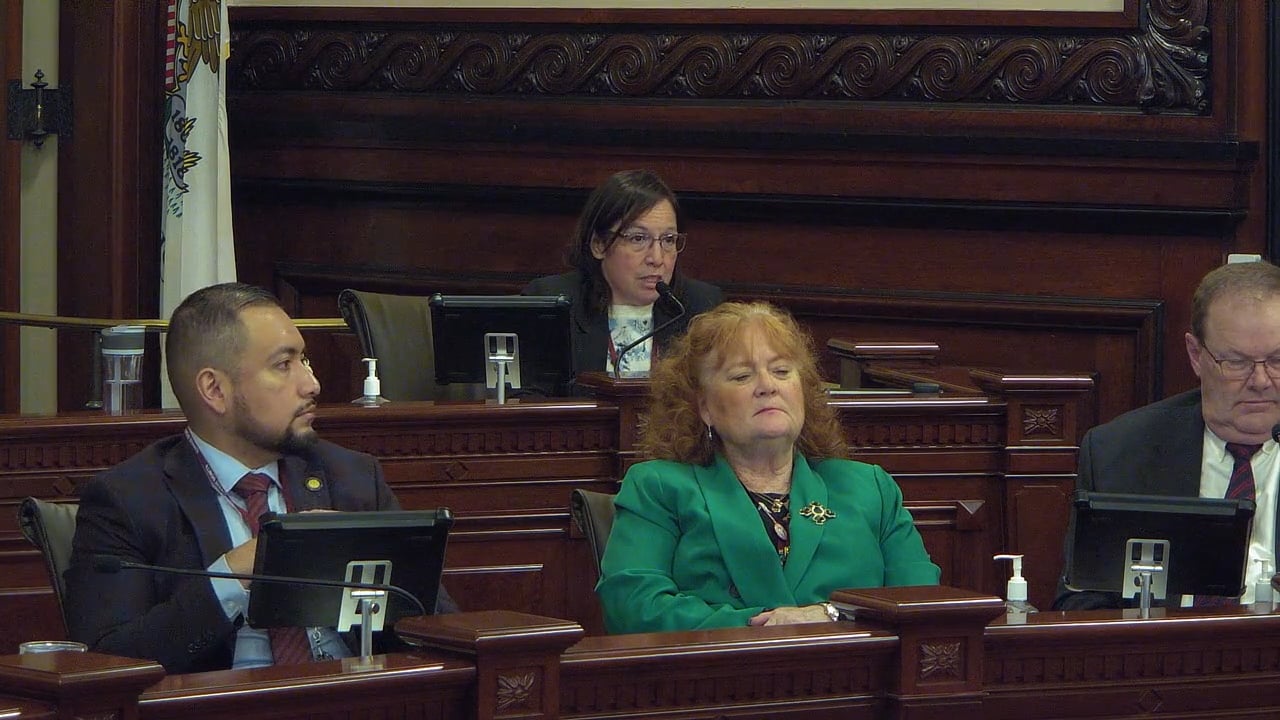
The Illinois Senate Energy and Public Utilities Committee approved myriad bills Thursday including a measure that would allow the state to use land for broadband infrastructure and a measure allowing plug-in solar panels.
Senate Bill 3838 — sponsored by Sen. Patrick Joyce (D-Kankakee) — would implement a federally funded program that aims to connect more than 150,000 households, businesses and other buildings to high-speed broadband internet.
Joyce said Illinois is slated to receive more than $1 billion in federal grants for the program over the next five years but said there are tight deadlines the state must adhere to in order to continue to receive the funding.
The measure establishes a process by which the state can use private property — primarily farmland — across the state for broadband infrastructure by simply notifying the landowner, along with a compensation process for the landowner if the value of their land is diminished in any way.
This would only apply to land in the “highway right-of-way,” which is land directly surrounding highways in the state.
Joyce said they’ve been in discussions with landowner groups but expressed how important it is for the state to remain on deadline. He said one landowner not responding to the state’s request to utilize land could be the reason the state loses the funding.
“The way farming is today, area is pretty important, and the way our kids are educated, you're almost behind if you're not getting reliable broadband,” he said. “So, what we're trying to do is find a clear path forward, so that we have a good deployment plan to take advantage of this generational funding that could really transform our state.”
Tito Quinones, deputy director of legislative affairs for DCEO, made clear that they are not trying to acquire any land but instead install equipment on it.
The measure has more than 100 proponents, including the Illinois Department of Commerce and Economic Opportunity (DCEO) — who worked on the measure with Joyce. It is opposed by the Illinois Farm Bureau and the Illinois Railroad Association.
Chris Davis, director of state legislation for the Illinois Farm Bureau, said that while they support the expansion of broadband, they oppose the measure because it undermines property rights.
“Broadband is critical to the educational needs of our residents,” he said. “It is important to effectively manage our farms, access effective communication and lifestyle tools, and there's more of a need for effective health care via broadband. However, we will not sacrifice our property rights for this purpose.”
Sen. Cristina Castro (D-Elgin) first expressed frustration that this project has taken five years to execute before suggesting adding a way for landowners to provide feedback on the program's route, such as adding a public hearing process.
Quinones said broadband providers partnering with the state on the project will have to get a permit from the controller of the highway, typically the county or township in the region.
Sen. Terri Bryan (R-Murphysboro) questioned why this measure was needed when the state already had eminent domain authority — which allows the state to acquire land for a “just price” to use for public use, suggesting that this bill was attempting to set up a “quick take” system instead of the standard process.
She also pushed back against the compensation process in the measure, in which the landowner would file a suit in civil court for the value of their damaged property, which she said was unfair to landowners who would have to pay costs up front to get their compensation.
The measure passed 10-4 but will return to the committee with an amendment.
The committee also unanimously approved Senate Bill 3222, which would prohibit commercials on streaming services from being louder than the content being streamed, beginning July 1, 2027. Sen. Doris Turner (D-Decatur) — the bill’s sponsor — said the federal government maintains similar standards for televised programming, but they don’t currently apply to streaming.
She said she is working with the Illinois Commerce Commission (ICC) and the Illinois Attorney General’s office to determine how the law would be enforced and will return it to committee when that language is added.
Senate Bill 3272 was also approved unanimously. The measure allows ICC to procure “technical and policy experts with relevant expertise and experience” for the development of its renewable energy access plan.
The committee also unanimously approved Senate Bill 3273, which sponsor Sen. Bill Cunningham (D-Chicago) said intends to "streamline" the process for schools participating in the state’s solar energy program. Cunningham said the hope is that by improving the process, more schools will participate in the program — which he said can save them as much as 30 percent on their electric bills.
The committee also approved Senate Bill 2902, which would raise compensation for members of the North Shore Water Reclamation District from $15,000 to $18,750 and raise compensation for the board president from $18,000 to $21,750. The board of trustees would have to approve the salary increases by unanimous consent for them to go into effect.
The measure also increases the district’s maximum debt repayment term from 20 years to 40 years.
Castro pushed back against the salary increase in the bill, which district lobbyist Frederick Smith said was to cover cost-of-living increases. Castro said the position is part-time and intended to be a public service and shouldn’t require the increase.
“When you raise costs, it gets passed in user fees, right? Who pays for it? Taxpayers,” Castro said. “This is a really cute way to keep raising a salary when this is supposed to be a public service and you have one meeting a month.”
Bill sponsor Sen. Julie Morrison (D-Deerfield) said she’d be willing to remove the salary increases from the bill, saying that the most important part of the legislation is increasing the maximum debt repayment term.
Castro said she’d be happy to discuss the issue, but also expressed some hesitancy around increasing the term, saying that can also have negative impacts on taxpayers.
Morrison said the increased term was because the district has a project they intend to complete with the U.S. Environmental Protection Agency. She said they brought the bill to her so they could avoid raising their tax levy by extending the repayment term.
The measure passed 11-3, with Morrison saying it will come back before the committee with an amendment.
The committee also unanimously approved Senate Bill 2907. The measure allows municipalities to more readily access certain information from public utilities when conducting an audit.
Senate Bill 3794 was also unanimously approved. The measure prohibits municipalities from regulating the installation or inspection of battery storage units, which store energy from solar panels.
Sponsor Sen. Javier Cervantes (D-Berwyn) said the bill’s intention is to simplify the battery installation process. He said he is meeting with opposition — which includes the City of Chicago and the Illinois Municipal Utilities Association — and plans to amend the legislation to address concerns.
Finally, the committee approved Senate Bill 3104 by a vote of 9-4. The measure legalizes plug-in solar panels, which are smaller panels that can be set up in yards or balconies and plug in to a regular outlet.
Sen. Rachel Ventura (D-Joliet) — the bill’s sponsor — said you can currently purchase the panels online in all 50 states and that by passing this bill, Illinois can establish safety guidelines for the panels.


Trending


