


-
APR 29, 2026

UNLOCKEDISBE presents $10.9 billion budget request to Senate committee
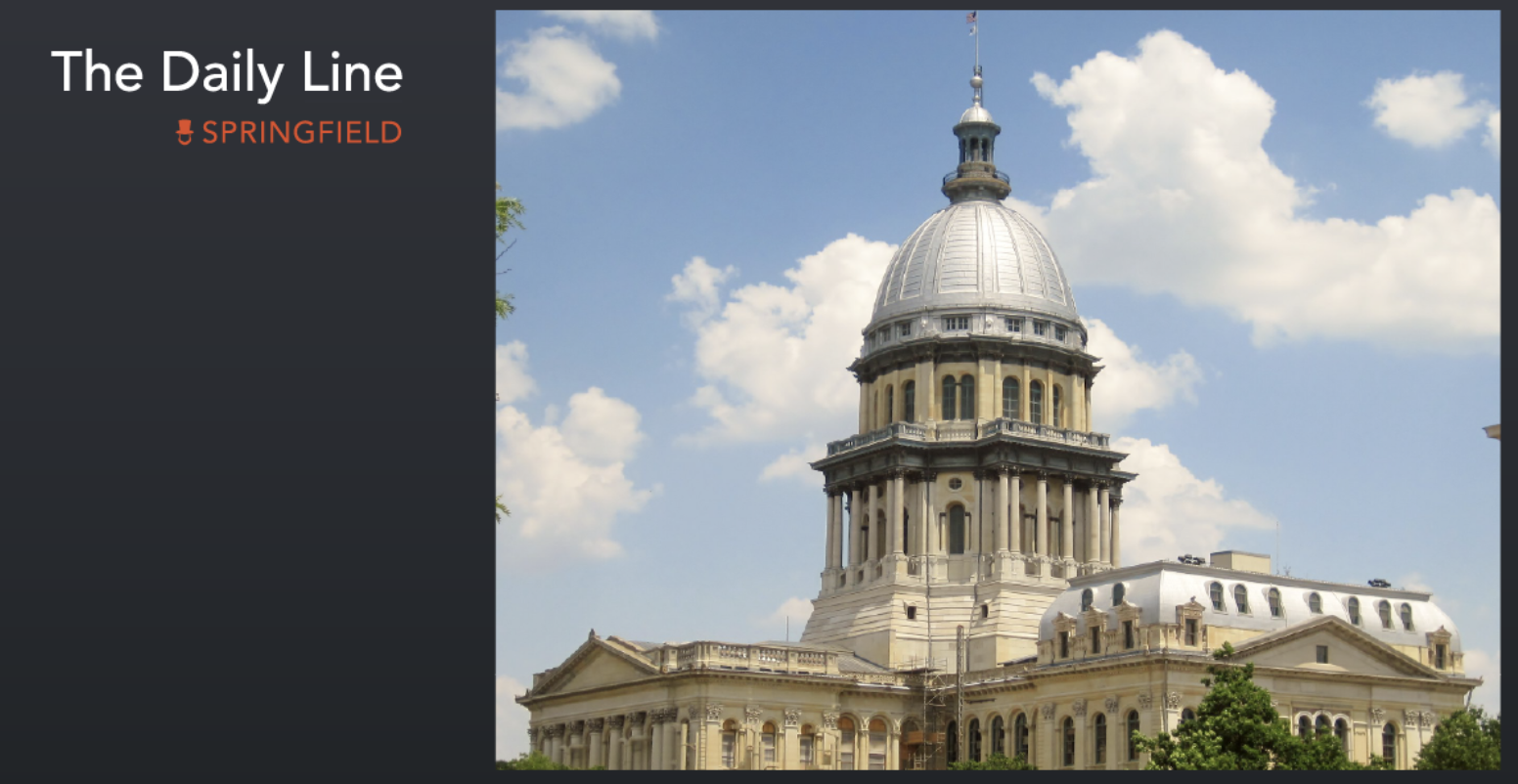
The Illinois State Board of Education (ISBE) presented their budget request before the Senate Appropriations-Education Committee Tuesday.
ISBE is requesting $10.9 billion in funding for fiscal year 2027, which goes from July 1, 2026 to June 30, 2027.
That’s a total decrease of $278.5 million from fiscal year 2026, which is due to the transition of Early Childhood Block Grants to the newly formed Department of Early Childhood.
ISBE Chair Steven Isoye said when accounting for that shift, education funding would increase by $469.7 million.
The board is requesting a full $350 million increase under evidence-based funding (EBF), consisting of $300 million for distribution to schools and $50 million for property tax relief grants. That differs from Gov. JB Pritzker’s budget proposal, which does not include the funding for the property tax relief grants.
Isoye praised the EBF funding model, saying it has provided stability that allows school districts to better plan.
“EBF has been transformative for districts, and is most likely the reason why our pandemic recovery has been faster and stronger than in other states, because school districts have been able to develop it and invest in the multi-year plans that truly drive school improvement,” he said.
ISBE’s budget proposal also includes a $151 million increase in funding for mandated categorials, which includes transportation, special education and the free breakfast and lunch program. The governor is proposing a $50 million increase.
Answering a question from Sen. Chris Balkema (R-Pontiac), ISBE Chief Financial Officer Matt Seaton said that $151 million increase is intended to keep up with the rising costs of the mandated categorials, particularly transportation.
If the state does not cover the complete cost of mandated categorials, school districts are required to make up the difference, typically through property taxes.
Seaton said the funding the state currently appropriates for the mandated programs is about $625 million short. He said the state is funding about 76 percent of transportation costs, 63 percent of special education and 60 percent of special education transportation.
Seaton said transportation costs have skyrocketed in the years following the pandemic. He said the state had fully funded special education transportation as of fiscal year 2022, but that budget item jumped from $350 million to $700 million since then. He said the state appropriation is currently about $525 million.
He said those deficits will only get worse if the state does not increase spending on mandated catergorials.
Senators also questioned a delay in distribution of funding for after-school programs during fiscal year 2025 that resulted in the appropriated $50 million not getting spent. Seaton said the General Assembly had not provided legislative intent for the funds, meaning ISBE had no direction on how the funding should be spent.
As a result, the funding was not distributed and returned to the treasurer at the end of the fiscal year.
Sen. Terri Bryant (R-Murphysboro) also questioned the timeline in which school districts are told what tier of EBF they will be in.
Seaton said school districts are told their tier in August, after the start of the school year. He said this is because the formula considers many data points from state and federal agencies, with many not getting to ISBE until after the previous school year ended.
Bryant also asked if ISBE was advocating for the return of a school construction grant program the state previously funded.
“I have a county right now where the entire county has one grade school and one junior high and high school,” she said. “Both buildings are 100 years old. Both need to be condemned and both need to be rebuilt. Is there a plan?”
ISBE Government Affairs Officer Cynthia Lund said the state currently only operates an emergency grant fund, for instances such as natural disasters, and does not have a plan to bring back the general construction grants. She said most districts have managed those issues with local tax increases.


Trending


