


-
MAY 15, 2026

UNLOCKEDCOGFA decreases revenue projection by $190 million
The budget analyst for the legislature is revising its fiscal year 2027 revenue forecast down by $190 million, a 0.3 percent decrease from original projections.
That decrease puts the revenue forecast from the Commission on Government Forecasting and Accountability (COGFA) at $55.3 billion, about $700 million short of the governor’s proposed $56 billion spending plan.
COGFA’s forecast is below revenue estimates from the governor’s budget team, as the commission does not account for proposed tax changes that the governor’s office projects would close the deficit to deliver a balanced budget, such as a social media tax they estimate would result in $200 million in additional revenue. By law, COGFA’s projections only include taxes currently enacted.
Read more: Pritzker proposes $56 billion spending plan backed by social media tax
The Personal Income Tax is expected to bring in $29.1 billion, $160 million more than originally projected. This is despite projections that employment numbers in the state will remain flat or decline in the coming months, as wages have increased.
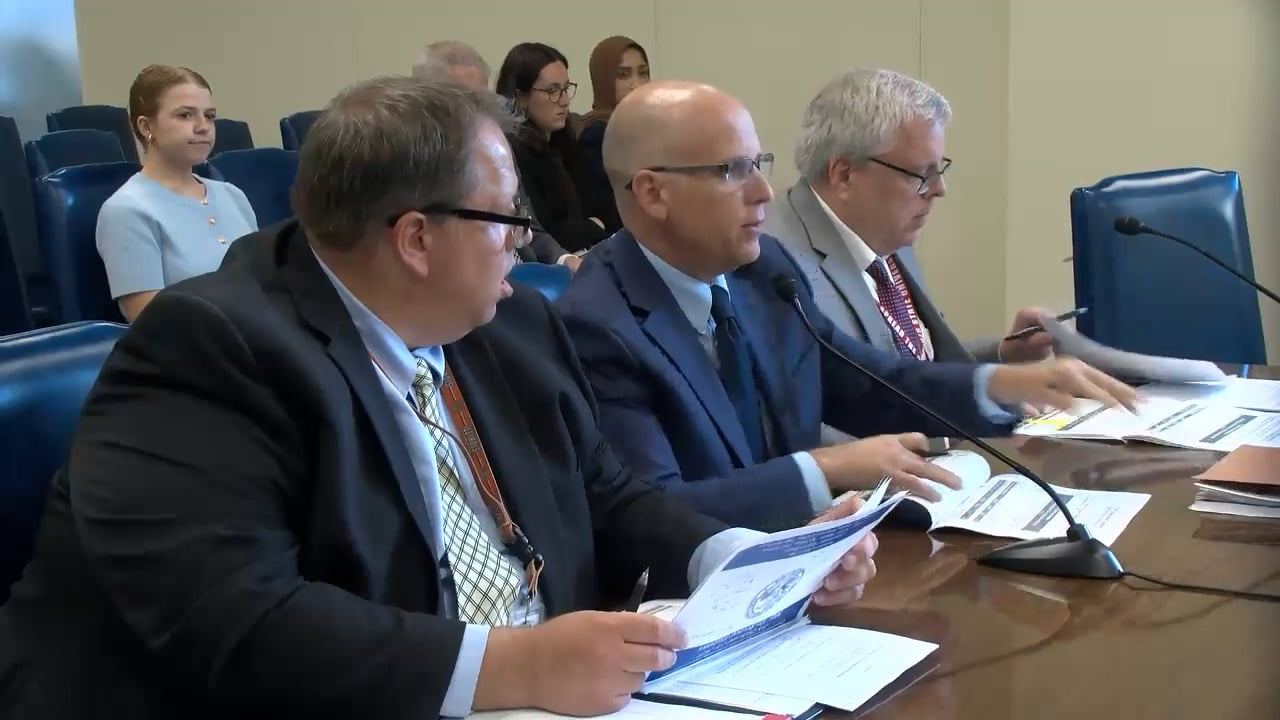
During a House Revenue and Finance Committee hearing Wednesday, Rep. Steve Reick (R-Woodstock) questioned what could be causing that trend.
“We've actually seen a decline in the labor force over the last year, so we might be seeing some lower end of the wage spectrum dropping out, firstly the young, and that could be pushing up average wage growth,” said COGFA Chief Economist Ben Varner.
Overall, the Illinois economy is slowing, Varner said. The state saw decreases in jobs in the second half of 2025, and numbers have remained relatively flat so far in 2026.
Varner said this slowing has begun to reflect in the Sales Tax, which has outperformed projections recently.
COGFA decreased their FY27 projection, dropping revenue from the Sales Tax by $67 million to $10.9 billion.
Reick noted that the recent increased revenue from Sales Tax could be due to inflation, particularly motor fuel. With base prices increased, the state collects more in Sales Tax. Varner agreed, saying inflation could lead to the tax outperforming projections again.
But people might not actually be buying more, which would be an indicator of a strengthening economy, and instead might just be spending more on their usual purchases.
Varner said the state still lags the rest of the country in economic growth, a decades-old trend. He said Gross Domestic Product for the country grew at about 2.4 percent, with Illinois at about 1.5 percent.
The commission expects the Corporate Income Tax — which has seen repeated declines during fiscal year 2026 — to bring in about $4.4 billion.
According to a report from the commission, there is still uncertainty regarding how changes in federal tax law will impact corporate profits. The projections are also more cautious as the S&P forecast projects modest growth in Illinois’ Gross State Product.
The largest contributor to the total projected decline is the Income Tax Refund Fund. The fund simply holds any remaining income tax balance from the previous fiscal year and transfers it to the current.
For example, FY26 received a transfer of about $700 million, contributing to the increase in the Personal Income Tax.
But the Illinois Department of Revenue expects the remaining balance at the end of FY26, which ends June 30, to be about $50 million. That’s $300 million short of the commission's original projection for the FY27 transfer.
Altogether, the revised report reflects another tight budget year, which isn’t a surprise for lawmakers. Some have proposed changes to Illinois tax law, such as decoupling from federal tax changes, to address these concerns.
Along with a social media tax, the governor also is proposing to change the way table games at casinos are taxed, yielding a projected $120 million in additional revenue.
His budget also aims to save $269 million in corporate taxes by changing how much large companies can deduct as losses.


