


Chicago News
-
Mayor Lori Lightfoot said Wednesday she would oppose an effort to hike the Real Estate Transfer Tax to fund efforts to fight homelessness in Chicago, saying the money was needed to fill Chicago’s yawning budget deficit.
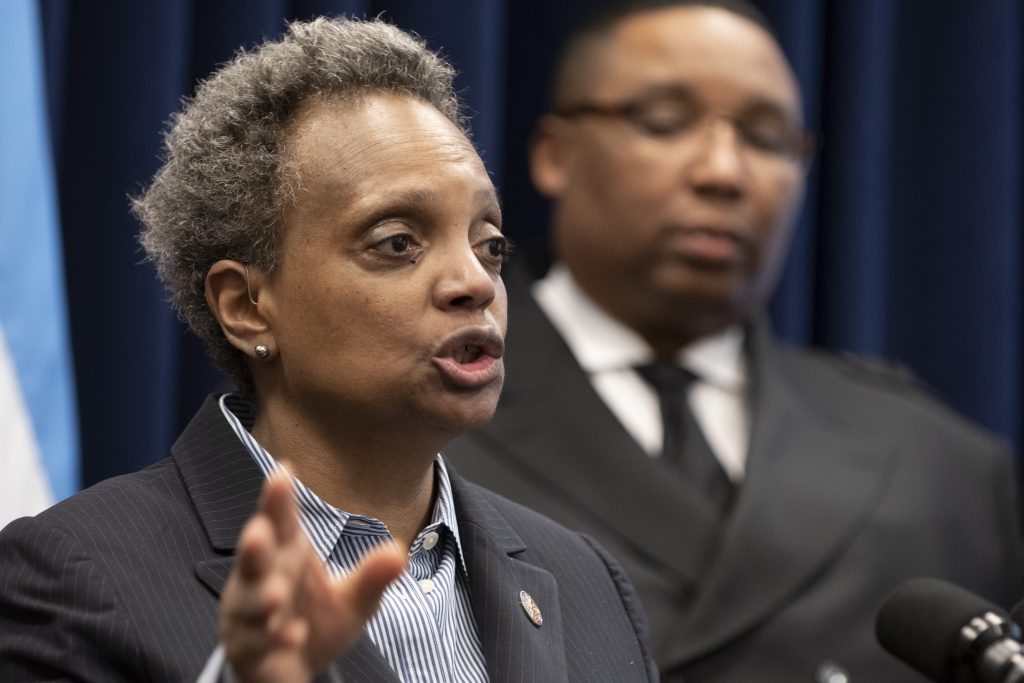 Chicago Mayor Lori Lightfoot addresses the news media. [Colin Boyle/Block Club Chicago]
-
FEB 20, 2020

 Former Ald. Danny Solis (25) did not violate state election law when he spent $220,000 in campaign funds on his personal legal defense amid a sprawling federal criminal investigation, state election officials ruled on Wednesday.
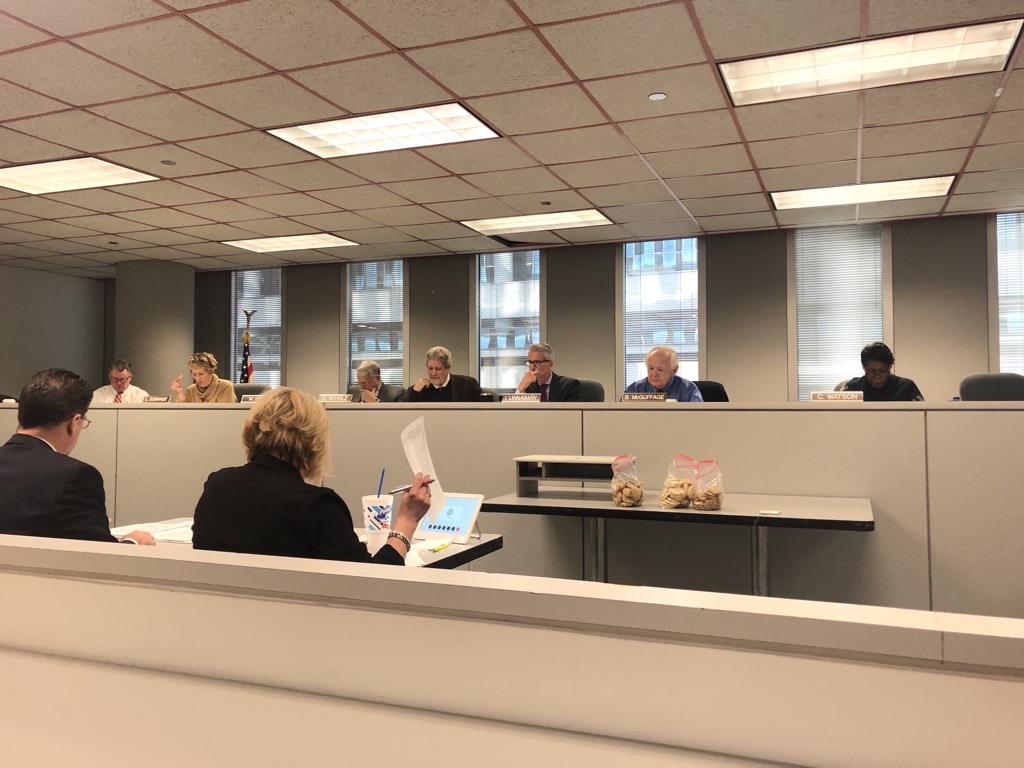 The Illinois State Board of Elections meets. [Alex Nitkin/The Daily Line]
-
Aldermen will wait at least another month before introducing an ordinance that would allow property owners to build coach houses and convert attics and basements into extra apartments, delaying a long-discussed effort to expand the city’s supply of badly needed affordable housing.
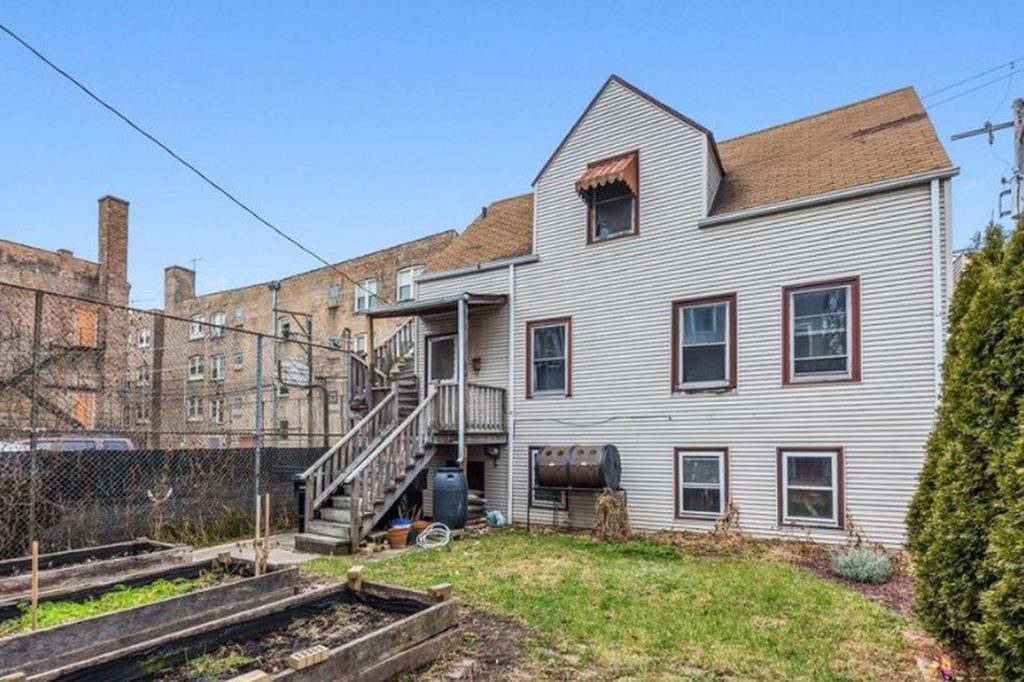 A rear coach house on Chicago’s North Side. [Coldwell Banker via Realtor.com]
-
FEB 19, 2020
UNLOCKEDBy Marie Fazio, Chalkbeat Chicago
Backers of a bill that would establish a 21-member Chicago school board say they are building momentum again, this time in the Illinois Senate.
If the bill passes the legislature, Chicago could hold school board elections starting in 2023.
The bill has supporters, including Sen. Robert Martwick, a Democrat who represents Chicago’s Northwest Side and some adjacent suburbs. But it has had its share of detractors, too, who say that a 21-person board would dwarf that of any other major urban school district’s governing body and would be too large to govern effectively.
Mayor Lori Lightfoot, who currently appoints the school board, opposed the bill last year. Speaking with reporters Tuesday in Springfield, she said she briefly discussed the bill with Martwick during her visit to the Capitol and agreed to meet “at another time” to discuss it further.
The Senate’s new president, Don Harmon, a Democrat whose district stretches west from Chicago’s Austin neighborhood to suburban Addison, has supported elected school board bills in the past, according to his spokesperson, John Patterson, but has not yet taken a stand on this particular bill.
“He looks forward to having a discussion with Senator Martwick and the rest of the [senate] caucus to move it forward,” Patterson said.
Martwick introduced the bill as a member of the House of Representatives last spring. Now as a senator he is the lead sponsor of the bill, which has yet to be assigned to a committee.
Among the country’s largest school districts, school boards tend to range from seven to nine members.
In Los Angeles Unified and the Las Vegas-area Clark County, Nevada, voters elect seven school board members each representing a geographical district. A nine-person elected board oversees Miami-Dade County Public Schools. In New York City, the nation’s largest district, the mayor controls the public schools and appoints the majority of a 13-member board that oversees contracts, school closures, and other policy changes.
In Boston and Philadelphia, the mayors also appoint a board from a list of recommendations from a citizens nominating panel. Boston has seven members, plus a student representative. Philadelphia has nine.
Elected school boards exist in 90 percent of school districts across the country, according to a Pew Charitable Trusts study. That includes the other 852 districts in Illinois.
Martwick’s bill would divide Chicago into 20 districts, each with an elected representative, with a citywide elected president. The first election would be held in 2023, following the cycle of municipal elections.
Although advocates have pushed for decades for an elected school board, they have gained legislative traction recently. In 2017 the House and Senate passed a bill to create an elected Chicago board, but then-governor Bruce Rauner vetoed it. Martwick’s bill, introduced last spring passed with 110 votes in the House before it stalled in the Senate.
The issue cropped up in Chicago’s last mayoral race, with the two candidates who entered the runoff, Lightfoot and Cook County Board President Toni Preckwinkle, each pledging support for an elected board.
Supporters of the movement, like Martwick and the Chicago Teachers Union, say that an elected board would be more accountable to residents and would give voters more say in what happens in their schools.
“This is something that we’re all promised in democracy,” Martwick said, “that you get a say when there is a government entity that has a huge impact on your life and whether you have kids in that school or not, the performance of your schools affects every aspect of your life.”
He added that he’s open to debating the size of the board.
Critics of creating an elected school board have said it diffuses accountability and it wouldn’t accurately represent Chicago’s diverse population. There are also concerns it would be influenced by outside money from powerful education groups such as the teachers union and charter proponents.
“It’s not a silver bullet,” schools chief Janice Jackson warned during a panel appearance last year at the University of Chicago. “It has to be done in a thoughtful way, and we have to get at what the ultimate goal is, which is more transparency and involvement from the community,” she said. The risk, she added, is “expensive elections that don’t benefit students” and a board controlled by private interests that creates more bureaucracy.
Dick Simpson, a former alderman who backed Lightfoot in the mayoral election, said he thinks the legislature needs to hold a vigorous debate.
“The general idea of an elected school board is a good idea but whether this is the ideal form and structure is up to the legislature,” Simpson said. “A lot of the issues are in the details. How would it be put together?”
Simpson noted that the average school board has much fewer than 21 members, but said that elections for larger districts could become expensive and run the risk of candidates becoming bankrolled by political parties or the teachers union.
“The board would work better with nine,” Simpson said. “The city council should be larger but for the school board I think there’s enough experiences around the country that we should stay with the best practice we can find.”
State Rep. Will Guzzardi, a Northwest Side Chicago Democrat, who advocated for the bill in the House, said the ball now lies in the Senate’s court. He said he believes there is enough momentum in the Senate and the general public for it to pass.
“From my perspective, we’ve done our job in the house,” Guzzardi said. “We passed a good, solid bill and we’ll leave it to the Senate to see what they can come up with and if they can get it passed.”
State Rep. Kam Buckner, a Chicago Democrat whose district encompasses parts of downtown and the Southeast Side, filed a different bill last month in the House to meet the deadline for new legislation, his spokeswoman Dulana Reese said. He submitted the bill, which outlines a similar 21-person board, in case Martwick’s bill fails to pass the Senate.
Hannah Meisel of The Daily Line contributed reporting.
Chalkbeat is a nonprofit news site covering educational change in public schools. -
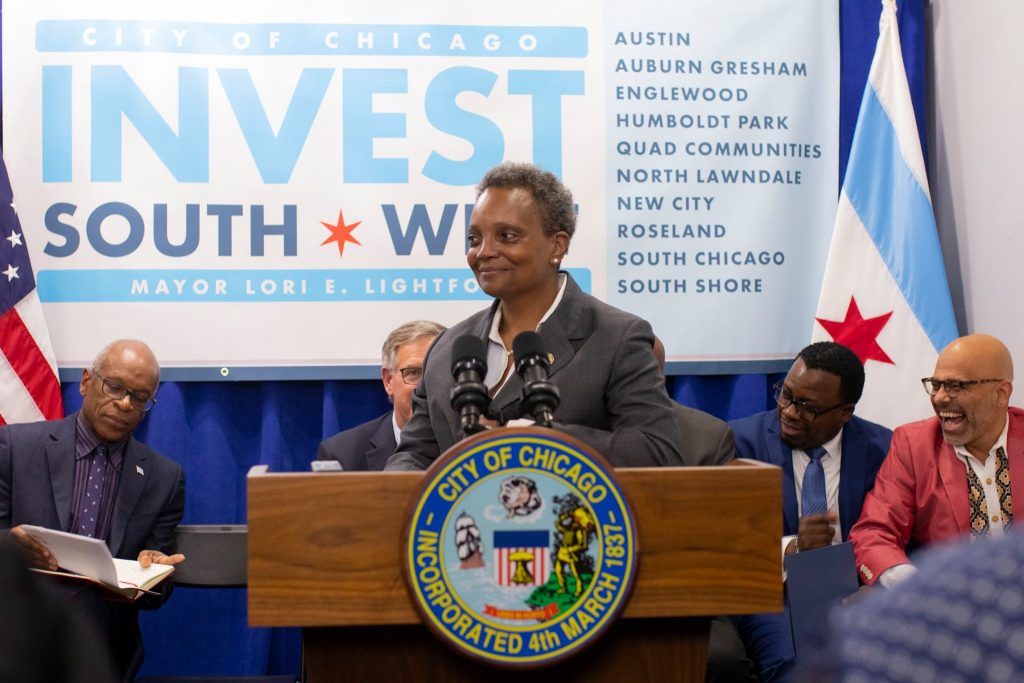 Mayor Lori Lightfoot speaks in October at an announcement of the INVEST South/West Initiative. (Provided)
Mayor Lori Lightfoot is set to claim ownership of the Neighborhood Opportunity Fund Wednesday, giving her administration an opportunity to leverage booming development Downtown and in the West Loop into help for struggling small businesses on the South and West sides.
-
FEB 18, 2020
UNLOCKED
A Chicago polling place. [Heather Cherone]
In 1995, candidates running for mayor of Chicago needed to gather 2,261 nominating signatures from residents to earn a spot on the ballot. But in the most recent election, candidates were required to collect 12,500 signatures just to be considered.
In the 2019 mayoral election, over 20 candidates vied to get the signatures within the 90-day window to secure their spot on the ballot, and many of them succeeded — at first. But then, rival candidates became embroiled in a bitter legal struggle to knock each other off the ballot by calling into question the validity of the signatures on the petitions. -
Mayor Lori Lightfoot vowed Friday to end “poverty in Chicago in a generation,” saying that government must act boldly to undo the policies it created that force tens of thousands of Chicagoans to struggle daily to find food, clothing and shelter.
 “I am called to this challenge because if I look away, I am denying a part of myself, a part of my story, my history," Mayor Lori Lightfoot said. [Hannah Alani/Block Club Chicago]
“Poverty is killing us,” Lightfoot said. “Literally and figuratively killing us. All of us.”
-
FEB 17, 2020
As many as nine new recreational cannabis dispensaries could clear a crucial regulatory hurdle during a special meeting of the Chicago Zoning Board of Appeals scheduled for March 6, potentially almost doubling the number of pot shops allowed to operate in the city, according to officials.
 The interior of the MOCA Modern Cannabis dispensary. [Provided]
-
-
FEB 14, 2020
Ald. Tom Tunney (44) said he will delay introducing more than 200 proposed edits to the Chicago Construction Code following accusations from Mayor Lori Lightfoot’s two most persistent City Council critics that the mayor intentionally tucked substantive changes into what her administration billed as “technical corrections.”
-
Brunch aficionados — and soccer fans — are one step closer to no longer having to suffer through booze-free Sunday mornings.
The City Council’s Committee on License and Consumer Protection unanimously advanced the measure (O2020-123) sponsored by Alds. Brendan Reilly (42), Michele Smith (43), Tom Tunney (44) and Brian Hopkins (2) to permit restaurants that are allowed to sell alcohol to start pouring beer, wine and spirits at 9 a.m. Sunday rather than waiting until 10 a.m.
Smith said the proposal was prompted by requests from restaurants that wanted to serve soccer fans, who are often up early on Sunday mornings to watch their favorite European teams.
The measure would prohibit restaurants from serving alcohol between 2 and 7 a.m. Mondays through Saturdays and from 3 to 9 a.m. Sundays — provided that between 3 and 11 a.m. Sundays the sale of liquor is “incidental” to the serving of food.
A spokesperson for the Hospitality Association of Chicago said the measure was a “win for Chicago brunch customers and the city’s many brunch spots.”
In October, the City Council passed a law allowing more grocery stores to start selling beer, wine and spirits at 8 a.m., rather than at 11 a.m., on Sundays.
Aldermen also advanced a measure that would allow cab drivers who have their licenses revoked by the city to appeal that decision to Business Affairs and Consumer Protection Comm. Rosa Escareno.
The proposal (S2020-101), which would also apply to chauffeurs, comes after Mayor Lori Lightfoot promised to help Chicago’s beleaguered taxi cab industry, which has shrunk as ride-hailing services have swelled in popularity.
In other action, the City Council’s Committee on Pedestrian and Traffic Safety advanced a measure (O2020-122) from North Side Alds. Michele Smith (43) and Tom Tunney (44) that would allow nonprofit groups to purchase one-day permits to allow their employees to park in zones reserved for residents.
Final votes on the measures are set for Wednesday. -
A measure that would limit the ability of city officials and employees to work outside City Hall is set for a vote Thursday, marking the second time in as many months that aldermen have considered tightening the city’s ethics laws.
 A red-light camera. [DNAinfo Chicago]
-
FEB 13, 2020
Aldermen are scheduled on Thursday to advance a proposal for what could be the city’s first-ever legally sanctioned cannabis growing site, even as applications for several new pot dispensaries remain in regulatory limbo.
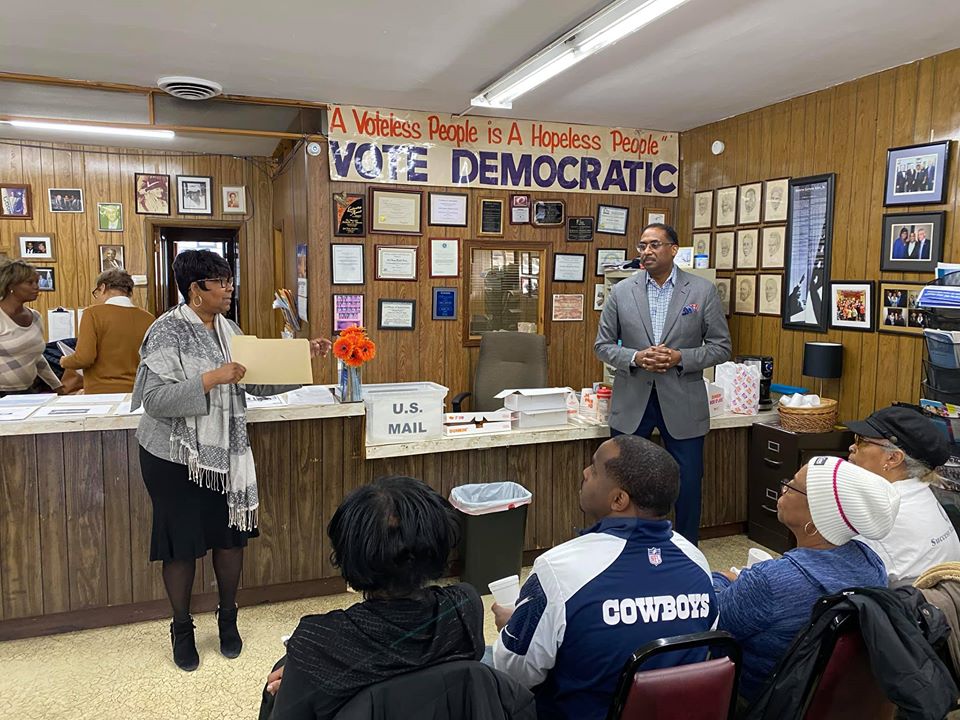 Ald. Michelle Harris (8) discusses plans for a cannabis cultivation facility in her ward at a community meeting. [Facebook]
 [ShockinglyTasty]


