


Bio
Chalkbeat is a nonprofit news organization covering education in Chicago and communities across America. 📩 email us: [email protected]Backers of a bill that would establish a 21-member Chicago school board say they are building momentum again, this time in the Illinois Senate.
If the bill passes the legislature, Chicago could hold school board elections starting in 2023.
The bill has supporters, including Sen. Robert Martwick, a Democrat who represents Chicago’s Northwest Side and some adjacent suburbs. But it has had its share of detractors, too, who say that a 21-person board would dwarf that of any other major urban school district’s governing body and would be too large to govern effectively.
Mayor Lori Lightfoot, who currently appoints the school board, opposed the bill last year. Speaking with reporters Tuesday in Springfield, she said she briefly discussed the bill with Martwick during her visit to the Capitol and agreed to meet “at another time” to discuss it further.
The Senate’s new president, Don Harmon, a Democrat whose district stretches west from Chicago’s Austin neighborhood to suburban Addison, has supported elected school board bills in the past, according to his spokesperson, John Patterson, but has not yet taken a stand on this particular bill.
“He looks forward to having a discussion with Senator Martwick and the rest of the [senate] caucus to move it forward,” Patterson said.
Martwick introduced the bill as a member of the House of Representatives last spring. Now as a senator he is the lead sponsor of the bill, which has yet to be assigned to a committee.
Among the country’s largest school districts, school boards tend to range from seven to nine members.
In Los Angeles Unified and the Las Vegas-area Clark County, Nevada, voters elect seven school board members each representing a geographical district. A nine-person elected board oversees Miami-Dade County Public Schools. In New York City, the nation’s largest district, the mayor controls the public schools and appoints the majority of a 13-member board that oversees contracts, school closures, and other policy changes.
In Boston and Philadelphia, the mayors also appoint a board from a list of recommendations from a citizens nominating panel. Boston has seven members, plus a student representative. Philadelphia has nine.
Elected school boards exist in 90 percent of school districts across the country, according to a Pew Charitable Trusts study. That includes the other 852 districts in Illinois.
Martwick’s bill would divide Chicago into 20 districts, each with an elected representative, with a citywide elected president. The first election would be held in 2023, following the cycle of municipal elections.
Although advocates have pushed for decades for an elected school board, they have gained legislative traction recently. In 2017 the House and Senate passed a bill to create an elected Chicago board, but then-governor Bruce Rauner vetoed it. Martwick’s bill, introduced last spring passed with 110 votes in the House before it stalled in the Senate.
The issue cropped up in Chicago’s last mayoral race, with the two candidates who entered the runoff, Lightfoot and Cook County Board President Toni Preckwinkle, each pledging support for an elected board.
Supporters of the movement, like Martwick and the Chicago Teachers Union, say that an elected board would be more accountable to residents and would give voters more say in what happens in their schools.
“This is something that we’re all promised in democracy,” Martwick said, “that you get a say when there is a government entity that has a huge impact on your life and whether you have kids in that school or not, the performance of your schools affects every aspect of your life.”
He added that he’s open to debating the size of the board.
Critics of creating an elected school board have said it diffuses accountability and it wouldn’t accurately represent Chicago’s diverse population. There are also concerns it would be influenced by outside money from powerful education groups such as the teachers union and charter proponents.
“It’s not a silver bullet,” schools chief Janice Jackson warned during a panel appearance last year at the University of Chicago. “It has to be done in a thoughtful way, and we have to get at what the ultimate goal is, which is more transparency and involvement from the community,” she said. The risk, she added, is “expensive elections that don’t benefit students” and a board controlled by private interests that creates more bureaucracy.
Dick Simpson, a former alderman who backed Lightfoot in the mayoral election, said he thinks the legislature needs to hold a vigorous debate.
“The general idea of an elected school board is a good idea but whether this is the ideal form and structure is up to the legislature,” Simpson said. “A lot of the issues are in the details. How would it be put together?”
Simpson noted that the average school board has much fewer than 21 members, but said that elections for larger districts could become expensive and run the risk of candidates becoming bankrolled by political parties or the teachers union.
“The board would work better with nine,” Simpson said. “The city council should be larger but for the school board I think there’s enough experiences around the country that we should stay with the best practice we can find.”
State Rep. Will Guzzardi, a Northwest Side Chicago Democrat, who advocated for the bill in the House, said the ball now lies in the Senate’s court. He said he believes there is enough momentum in the Senate and the general public for it to pass.
“From my perspective, we’ve done our job in the house,” Guzzardi said. “We passed a good, solid bill and we’ll leave it to the Senate to see what they can come up with and if they can get it passed.”
State Rep. Kam Buckner, a Chicago Democrat whose district encompasses parts of downtown and the Southeast Side, filed a different bill last month in the House to meet the deadline for new legislation, his spokeswoman Dulana Reese said. He submitted the bill, which outlines a similar 21-person board, in case Martwick’s bill fails to pass the Senate.
Hannah Meisel of The Daily Line contributed reporting.
Chalkbeat is a nonprofit news site covering educational change in public schools.
Elected school board bill to get a renewed push
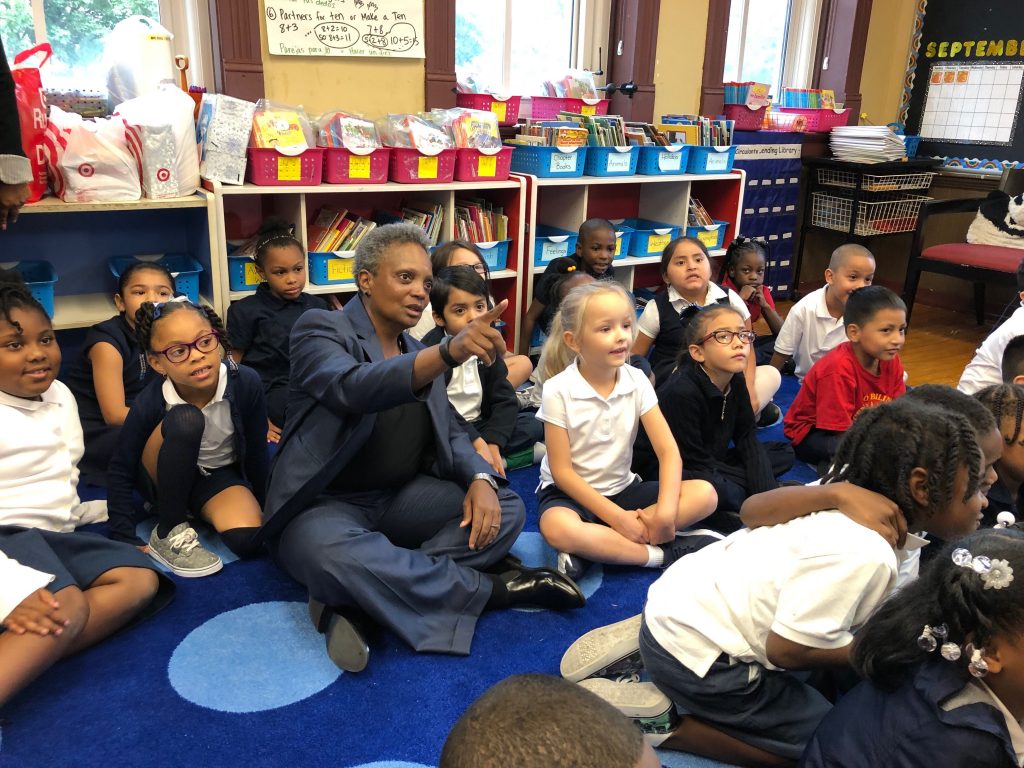 Chicago Mayor Lori Lightfoot sits with students on the first day of school at Salazar Elementary Bilingual Center. If teachers walk out this fall, some 361,000 Chicago students would be affected.
[Yana Kunichoff / Chalkbeat Chicago]
Mayor Lori Lightfoot took office vowing to chart a different course from that of her predecessor, Rahm Emanuel.
But in two key ways, Lightfoot’s first months are replaying Emanuel’s: The mayor faces a huge budget gap and a Chicago Teachers Union on the verge of calling a strike, closing Chicago schools, and imperiling her political agenda.
Rank-and-file members began voting Tuesday on whether to authorize a walkout. Their efforts are getting a jolt of national celebrity, with Democratic presidential candidate Bernie Sanders traveling to the city to rally alongside them and supportive tweets from Democratic presidential candidates Elizabeth Warren and Joe Biden.
The results of the vote could be announced as early as Thursday, and teachers could walk out as soon as Oct. 7.
Lightfoot, meanwhile, stressed on Tuesday that her message to teachers is, “We value you,” adding that her latest offer, if accepted, would be the most lucrative package in the union's history. "We have heard the response and concerns of teachers about additional supports in classrooms. We have baked those into the budget for this year."
Chicago has been here before, with a seven-day strike in 2012.
Four years later, a last-minute settlement averted another full-fledged walkout.
In some ways, 2019 has echoes of 2012 and 2016. But in other ways, events could play out differently. How can Lightfoot avoid previous pitfalls? We take a look.
The similarities
CTU’s aggressive maneuvering: Political neophyte Lightfoot has encountered a union on the move. Teachers at five charter networks represented by CTU’s charter arm went on strike last spring, winning raises and improved benefits and working conditions. And all summer, the Chicago Teachers Union has ramped up its visibility and rhetoric demanding concessions.
It all echoes the year after Emanuel first took office in May 2011.
Led by the outspoken CTU President Karen Lewis, the union honed a playbook that became a roadmap for unions across the country. By focusing on issues beyond pay and benefits, and tying them to racism, poverty and criminal justice reform, leaders crafted a broader social issue platform.
Teachers walked off the job for the first time in 25 years, even surmounting a new state threshold that required a minimum of 75% of union members to approve a strike. The strike in September 2012 was all but certain, particularly after Emanuel told Lewis “f--- you, Lewis.”
This year, the union has demanded adding case managers, nurses, mental health workers, special education services, other workers, and additional teachers — driving home the argument that it is seeking gains not just for teachers, but also improvements to benefit students.
By sharing the spotlight with the union’s No. 2, Stacy Davis-Gates, the current union president, Jesse Sharkey, has kept a lower profile than Lewis, who proved so popular she launched a run for mayor before falling ill to brain cancer. But the group has still pumped up its national profile with its victories in charter strikes and hard line in bargaining.
Reflecting last year in a radio interview for WBEZ, Emanuel said Chicago Public Schools, under his direction, "should have sat down with [teachers] and said, 'You’ve gotta be part of the solution.' I kind of said that they would never really want to do that, and we did it the wrong way."
Issues beyond pay: Lightfoot’s victory party was still thumping last spring when teachers union leaders warned that she had “her work cut out for her on day one” and issued a call for more support staffing in schools, from nurses and librarians at every campus, to counselors and social workers at recommended ratios.
Lightfoot, who had promised to boost investments in neighborhood schools, pledged to add hundreds of social workers, special education case managers, and nurses at schools over five years. But she stopped short of putting them in a contract, saying her schools budget demonstrates her commitment.
The union fired back that putting new positions in the contract would ensure that hired staff would be fully licensed, and that the work would be kept in house and not contracted out.
In 2012, a different non-wage issue derailed contract talks. Emanuel wanted to tie teacher pay to test-based performance ratings. Union leaders vehemently objected, countering that test scores didn’t accurately reflect teacher ability or effort. That was one of a host of education reform measures teachers saw themselves confronting under Emanuel’s leadership of Chicago schools.
Teachers walked out, and Emanuel went to court and argued the strike was illegal, because state law prohibits unions from striking over non-economic issues. He lost, the strike lasted seven days, and the teachers claimed victory.
They won a 17.6% raise over four years and a diminished emphasis on test scores in their evaluations.
In contrast, in 2016, when observers saw a strike as all but inevitable, district officials made several concessions, including hiring more teachers assistants for kindergarten through second grade classes with more than 32 students. Union leaders hailed the move as the first enforceable limits on class sizes in 20 years.
Fact-finders siding with the city: In August a neutral fact-finder largely sided with City Hall, much as mediators did during Emanuel’s tenure. But regardless of how much an independent agent has tried to focus the conversation on pay and benefits, the union has brushed it off and instead pushed a broad-based progressive agenda that reached far beyond schools’ front doors.
The differences
A progressive mayor: Where Emanuel took office ready to wage battle to create a longer school day and extended school year during his first term, Lightfoot won a sweeping victory after campaigning on a progressive agenda that, when it came to schools, largely echoed the union’s own platform. She championed an elected school board and pledged more resources to neighborhood schools.
While Emanuel dealt aggressively with the union in public, Lightfoot said she would sit down with union chief Sharkey and try to work out a deal.
“If my presence at the bargaining table to push forward and forge a deal is productive, I’m ready to do it. I will clear the decks on my schedule and make it happen,” Lightfoot told reporters at a news conference last week.
In response, Sharkey said that day he felt it was premature for the mayor to come in while, he claimed, the city’s bargaining team hadn’t substantively responded to teacher contract proposals.
Credibility in CPS leadership: Lightfoot also has another asset that Emanuel didn’t have: Schools chief Janice Jackson is popular with rank-and-file educators and has navigated sticky labor conflicts before.
In 2016, with the district in budget crisis mode and Illinois Gov. Bruce Rauner pressuring Chicago Public Schools to declare bankruptcy, Jackson and the union’s Lewis negotiated a last-minute deal that averted a strike. Jackson was then the district’s No. 2, under career bureaucrat Forrest Claypool. The deal awarded only small raises for teachers, but it did parcel out the payments for pension costs among new hires and veterans.
Jackson now has the top job at Chicago Public Schools, and in recent weeks she and Lightfoot have appeared publicly side-by-side to tout upgrades to neighborhood schools, expansions to arts programs, and sustained gains in its graduation rate and other academic metrics.
Financial stability: In 2012, Illinois’ budget was in the red, and by 2016, the state was in a full-blown crisis. It still has an outstanding backlog of bills, but a new education funding formula has awarded additional funds to Chicago schools, putting it on more solid financial footing.
The union has argued that the funds should go toward raises and additional staff, to the tune of nearly 5,000 teachers, professionals and aides the union asked for in its contract proposals.
Lightfoot has acknowledged the needs of schools and educators, while laying bare the budget realities facing the city and its schools.
Her latest public offer — a 16% cost-of-living raise across five years — reflects the critical role teachers play in classrooms, she has said, while also acknowledging that even added resources have limits. “The fortunes of CPS absolutely have improved,” said Lightfoot. “We feel comfortable this will fall within the resources we have.”
That begs the question: Will Lightfoot take a page from her predecessor’s playbook and raid a surplus of city funds? One of the ways Emanuel paid for the concessions he made in 2016 was to raid a city account intended to help spur the redevelopment of blighted areas. The extra $88 million helped seal the deal.
Lightfoot has a similar tool at her disposal. The mayor could sweeten the city’s offer to the union by using some of the additional $181 million that flowed into the city tax-increment financing accounts last year, a 27.4% jump as compared with 2017, according to a report from Cook County Clerk Karen Yarbrough. However, Lightfoot has so far declined to say how she will spend those funds.
Publicly, the mayor is staying confident. She said again Tuesday there was no reason for a deal not to be reached to avert a strike. "We owe that to our children to get a deal done and quickly.
If the past two contract negotiations serve as prologue for this round of talks, don’t expect a decision — if one is reached — to come long before teachers are set to walk off the job the weeks to come.
This story was produced in collaboration and copublished with Chalkbeat Chicago.
A tale of two strikes: Can Chicago learn anything from its past teacher walkouts?
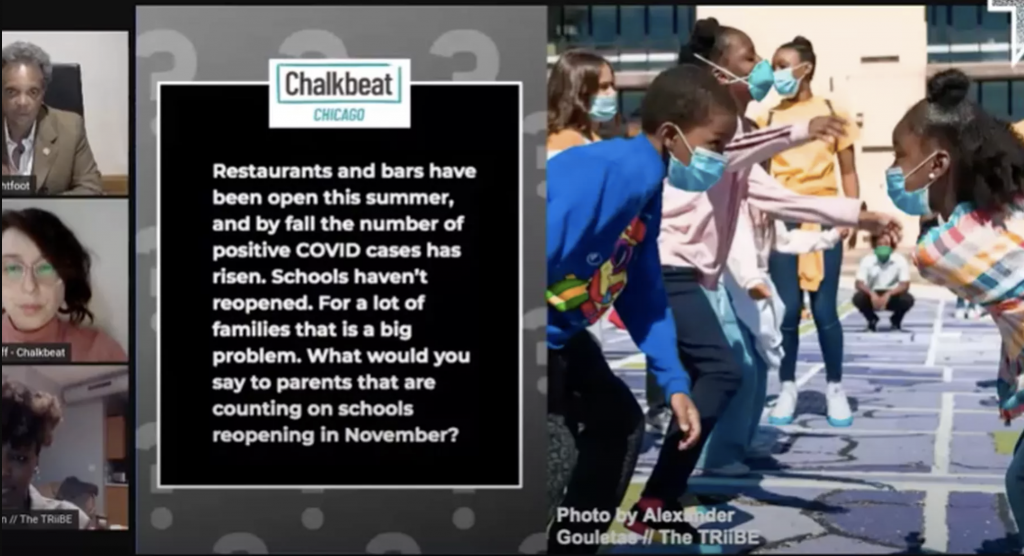 Chicago Mayor Lori Lightfoot spoke about school reopening at a virtual townhall organized by seven newsrooms on Sept. 29, 2020. YouTube
Among the factors Chicago Public Schools is weighing when deciding whether to reopen school buildings: the experience of the Archdiocese of Chicago’s 150-plus campuses, Mayor Lori Lightfoot said Tuesday.
The mayor, who oversees public schools in Chicago and appoints the schools chief and board, is expected to make the final call about reopening campuses along with city health officials. Chicago started the school year virtually three weeks ago after initially planning to begin the year with a hybrid schedule.
Meanwhile, the Archdiocese of Chicago, which is the state’s largest private school operator with 70,000 students last spring, reopened its campuses in late August. Schools are offering full-day instruction — some larger campuses have hybrid schedules where students go a few days a week — and families have the option of choosing all-virtual instruction.
“We haven’t made a decision yet on whether (reopening) is going to be possible,” Lightfoot said. “We’re following very closely the experience of Archdiocese schools, many of which have been in-person learning five days a week or in a hybrid model that includes in-person learning. There’s a lot we can learn from their experience. They are in many of the same neighborhoods where CPS schools are.”
The mayor, who stressed a decision about schools was coming “relatively soon,” spoke Tuesday night at a Lens on Lightfoot virtual town hall organized by the Triibe and six other independent newsrooms, including Chalkbeat Chicago.
In one week this month, the Archdiocese reported 16 positive COVID-19 cases among its students and staff, which is considerably less than 1% of its system, according to the Chicago Sun-Times. The archdiocese declined requests to provide a full accounting for cases since the start of school, the paper said.
At least one campus, St. Rita of Cascia High School on the city’s Southwest Side, temporarily shifted to virtual learning after two students tested positive in late August. The campus has since reopened.
Students are divided into cohorts and stay in those same small groups each day. The reopening plan also requires students and educators to wear masks and undergo temperature checks each morning before entering buildings.
The Archdiocese also published an infection protocol guide that details what happens if students or educators test positive. The plan includes contact tracing.
“There are things we can learn from them. They seem to have done a really good job keeping their school community safe,” Lightfoot said.
As virtual learning progresses, Chicago parents have begun pressuring the mayor and school district to make a decision about whether students will return to campuses in November, at the start of the second quarter. The school district has floated a plan to bring some special education students back earlier.
The mayor also said the city had made progress in closing the digital divide that has complicated the shift to virtual learning. This summer, Chicago announced a plan to provide free internet for up to four years for 60,000 households representing 100,000 students. As of Tuesday, the city had signed up 38,000 students, slightly more than a third of the goal, Lightfoot said.
She acknowledged the challenges of reaching some families, citing some households’ outstanding debt as one obstacle slowing sign-ups. “We’re working through those issues,” she said. “We’ve made significant progress in a short amount of time.”
“Part of the difficulty is that, even though it is free, it’s about making sure families feel safe signing up,” she added. “We’re really leaning into building up principals where we are seeing low connectivity among students, making sure parents know this option is available, and providing the technical assistance they may need so they can get registered and we can get them connected.”

Lightfoot on reopening CPS: We’re ‘following very closely’ the experience of Catholic schools
 The “Chicago Connected” initiative aims to provide free internet to 100,000 low-income students. Lex Photography/Pexels
Writen by
With the start of an all-virtual school year looming, Evelia Guzman got an email from her children’s school telling her she could sign up for free high-speed internet.
A sluggish home broadband had strained her family’s budget, but she didn’t even finish reading the email: She dismissed it as too good to be true.
Chicago Public Schools started the school year remotely Tuesday, and district officials say they are stepping up efforts to reach families about a new $50 million initiative, “Chicago Connected,” which aims to connect low-income students to the internet. But they have run into a “trust gap”: skepticism in some communities that they would get this service for free, no strings attached. The program has so far signed up a quarter of the 100,000 students that officials estimate can benefit from it.
“Some of the folks we are trying to reach don’t believe this is true,” said Philip DiBartolo, the school district’s chief information officer. “(They think) ‘I’m going to get a bill at the end of the month.’”
The district also is working to resolve barriers to signing up that some families and community-based groups have reported in recent weeks, including household incomes that were too high to qualify last year but have shrunk amid the pandemic.
Community-based organizations the initiative enlisted got the go-ahead to start reaching out to families two weeks ago, setting off a scramble to connect students. Meanwhile, Chicago’s teachers union raised alarms Tuesday about students who still can’t log onto classes because of technical hurdles.
Successfully ramping up participation in the program and showing that it is moving the needle on remote learning are key tests for the initiative, a project Mayor Lori Lightfoot has personally championed.
Lightfoot recently touted interest from other cities and states in replicating what officials have described as a one-of-a-kind program involving a partnership between the city, a slew of philanthropic organizations, and internet service providers.
“This program is robust and provides resources we need to fill the digital void in our students’ lives,” she said.
The national buzz “Chicago Connected” is getting is justified, says Angela Siefer of the nonprofit National Digital Inclusion Alliance, which is training the community organizations helping with outreach. The collaboration with those groups to overcome trust issues, a bid to provide digital literacy training to parents, and the four-year timeframe all stand out, she said.
Skepticism and excitement
Lightfoot’s office and school district officials unveiled the initiative after the end of the school year, following months of pressure on officials to come up with a more comprehensive, long-term response to uneven internet access for the city’s students. A study last spring by Kids First Chicago and the Metropolitan Planning Council estimated one in five Chicago students lacks access, with much higher rates in predominantly Black and Latino neighborhoods.
The first two years of the program will be funded by $5 million in federal coronavirus relief dollars and by donations from billionaire Ken Griffin, Crown Family Philanthropies, the Pritzker Traubert Foundation, and others. Former President Barack Obama and his wife, Michelle Obama, have chipped in as well. Chicago Public Schools is slated to cover the costs of the program in years three and four.
Since the announcement, more than a dozen cities and states have reached out to Chicago as they explore similar public-private partnerships, the city’s chief financial officer Jennie Bennett said at an event in August.
“We’re really excited about where the program is,” she said. “It has been an absolute success.”
Roughly two months after its launch, about 25,000 students have gotten free internet from Comcast or RCN through the initiative. The city and school district have not said how many households that represents.
Daniel Anello of the advocacy group Kids First Chicago, which helped spearhead the effort, said its architects did not expect to close in on the 100,000-student goal by the fall. The initiative was bound to be slower going at first, he said, as the city identified eligible families, tracked them down, and convinced them the program is legitimate.
More recently, the district shared lists of students eligible for the program with principals, who have been reaching out directly to families like Guzman’s. The city is also starting a marketing campaign, with commercials, public service announcements, and billboards.
But the key allies in overcoming skepticism about the program are the community-based organizations the city enlisted to help with sign-ups.
At the Gads Hill Center, Maricela Garcia, chief executive officer, said that she and her staff have put in long days and weekends to reach out to families since organizations were cleared to start making calls two weeks ago — what felt like a late start with the school year about to start.
She says even with the center’s deep ties on the Southwest Side, it’s still running into some disbelief about the program, so staff members often have to follow up on initial calls.
“Some families have responded they have to think about it,” Garcia said. “And some have said, ‘No, I don’t believe this is free. What’s the catch?’”
She said immigrant families, especially those with undocumented members, are reluctant to provide personal information over the phone or sign up for a program they might incorrectly perceive as a form of public assistance. Recent immigration policy changes can make it harder for those receiving such assistance to apply for citizenship.
But she said many families are enthusiastic to learn about the program, which addresses the “horrendous digital divide the families we serve experience.”
Joel Rodriguez of the Southwest Organizing Project says his organization is also running into skepticism but also excitement.
“Our community is one of the hardest hit by COVID,” he said. “The financial impact has been tremendous. This has been welcomed with open arms.”
Guzman, who has three children at Shields Schools on Chicago’s Southwest Side, said last spring she chipped in for her brother-in-law’s internet bill because the families share a home. But with several generations using the connection, it was often slow. After she ignored the school’s email about “Chicago Connected,” a friend persuaded her to take a second look.
“Are you going to charge me something?” she pressed the Comcast rep who helped her enroll.
Now she does outreach to other families at the Gads Hill Center.
Stepping up outreach
Officials say a key focus now is removing barriers for eligible families who are trying to enroll in the program.
Community-based organizations such as the Southwest Organizing Project have discovered that families who currently have a Comcast internet plan other than the company’s low-cost Internet Essentials program cannot readily sign up for “Chicago Connected.” On the Facebook page of the advocacy group Raise Your Hand, some parents said that because the eligibility criteria include qualifying for subsidized lunch in 2019, they were not able to sign up — even though the pandemic has worsened their families’ financial situations.
One parent, Melissa Ferguson said she was furloughed indefinitely when the coronavirus outbreak brought to a standstill her company, which provides audiovisual services to live events. Her internet was disconnected last month, and her son used her cell phone Tuesday to connect to his high school classes. Ferguson said her family income has shrunk to a third of what it was before last spring, but there was no way to reflect that on the “Chicago Connected” web site.
“The site didn’t ask me, ‘Have you been laid off? Have you been affected by the pandemic?’” she said.
Anello said he is reaching out to Raise Your Hand to encourage parents to contact the school district’s family and community engagement team to help them get around that hurdle. He said one community organization also reported a small number of would-be participants in the program being turned away because of unpaid past bills — an issue Lightfoot has been adamant should not be a stumbling block. Anello said officials are reaching out to internet providers about it. A spokesman for Comcast stressed that past debt is not a barrier to signing up for Internet Essentials, the plan available through “Chicago Connected.”
Bennett, the city’s CFO, recently stressed families will not have to provide a social security number, undergo background checks or pay installation fees to participate in the program.
Organizers say the stepped-up outreach and the community organizations’ more recent involvement are paying off: The pace of new enrollments picked up sevenfold during August, and the district is expecting even more sign-ups as the school year gets underway this week. They’re also bracing for possible service bottlenecks.
“We want folks to get through on the first try,” DiBartolo said. “We don’t want folks on hold for a long time.”
In the coming weeks, community-based organizations will also start offering training for parents about how to navigate the district’s digital platforms and guide their children during remote learning — an issue for some during the spring.
“We see this as a great opportunity to fill some of the gaps we see with digital literacy in our community,” Rodriguez said.
In the meantime, officials are eyeing an expansion of the program down the road to include families without school-age children, so they can use “one of the greatest equalizers,” as Bennett put it, to access healthcare virtually, apply for jobs, and more. At the August event, she put in a plug for further donations to the program.
“In the grand scheme of things, I am really proud of where we are,” Anello said. “If there’s anything that keeps me up at night is that Chicago Connected is only hitting households with kids in school. There’s way more we need to do.”
This story was published as part of a collaboration of seven Chicago newsrooms examining Mayor Lori Lightfoot’s administration. Partners are the BGA, Block Club Chicago, Chalkbeat Chicago, The Chicago Reporter, The Daily Line, La Raza and The TRiiBE.

Chicago is spending $50M to get low-income students online. What if parents don’t trust a free deal?
With a whirlwind summer of police votes coming to an end, the future of Chicago’s school police program now goes to the board of education.
The future of school police is up to the Chicago board this week
 The federal government will open up competition for Chicago’s Head Start grants in September. Scott Elliott
Left alone on a bus somewhere on Chicago’s South Side last January, a 4 year old contracted frostbite on a foot. The weather was “very cold,” a report would later read, and the child was “unattended on the bus for an undetermined period of time.”
At a different child care center on the West Side, a master teacher slapped a child, leaving a red mark. Elsewhere in the city, a preschool teacher hit a toddler and pulled the child’s hair.
The federal government says Chicago has not done enough to correct health and safety problems in the child care programs it oversees for some 11,000 children. That has sparked a chain of events that could curtail Chicago’s early learning powers and threaten its universal prekindergarten expansion, Chalkbeat has learned.
After parents and teachers reported seven serious incidents across the past 16 months in Chicago’s child care facilities, the U.S. Department of Health and Human Services notified the city that it will rebid $176 million in grants that previously went straight to City Hall. The grant posting says the government will open up competition in September.
At stake is the city’s largest chunk of early childhood dollars — money that currently funds programs for low-income children, mostly on the South and West sides. The amount could end up getting divided among up to 29 grantees, the agency says.
“These are pretty serious issues,” said Lauri Morrison-Frichtl, the executive director of the Illinois Head Start Association, a membership organization of providers statewide. “The city based its new structure on Head Start funding and now they are going to lose some of those dollars and some of those children. It now throws a wrench in their planning.”
The federal government’s move could potentially carve up Chicago’s largest early education funding source. If that happens, it would be just the latest disruption to the city’s early childhood system, which has been poised for broad expansion under an ambitious universal prekindergarten plan. Under the original plan, developed by former Mayor Rahm Emanuel’s administration, the city intended to create a program that would provide every 4-year-old in the city a free, full-day spot in a prekindergarten classroom by 2021.
Community providers were a core part of the strategy. Predicting many would lose 4-year-olds to schools, the city said it would help fund more seats in community day cares for children 3 and under, effectively creating a high-quality education pipeline for thousands more families.
 That didn’t exactly happen. The architects of the original plan departed City Hall after Mayor Lori Lightfoot took office, a funding shake up sowed distrust between providers and the new administration, schools and community providers did not coalesce around a single path forward, and now two lawsuits take aim at how the city decided whom to fund and for how much.
A spokeswoman for the city Department of Family and Support Services, which oversees community-based early programs, said that Chicago “takes very seriously its role in supporting community-based organizations to provide high-quality services and care.”
It is primed to respond and implement corrective action, if needed, she said.
“Upon learning of any infractions, (the agency) immediately responds and partners with (the federal Head Start administration) to implement the best possible corrective action,” she wrote, adding that Chicago provides supplemental training and technical assistance for the organization when incidents occur.
Chicago says it will rebid for the grant. It’s possible it could edge out potential competitors and receive the full amount.
The power flickers
Cities like New York and Los Angeles used to have more control over early learning, but in recent years, the federal government similarly carved up Head Start funds, spreading the grants among multiple agencies.
Head Start programs are among the most respected in the child care world. They are regularly monitored for quality, require teachers to have certain classroom credentials, and must involve parents in the program.
By cutting out cities as the sole middlemen, some argued, more dollars went directly to agencies that operate programs for children and families, instead of bureaucracies. But there were downsides: By losing a monopoly over early learning money, cities also lost valuable leverage that they used to set high-quality benchmarks and to steer ambitious initiatives such as universal pre-kindergarten, which can require buy-in from both community providers and school districts.
In New York, the carve-up affected “what level of planning the city can do,” said Gregory Brender, the director of children and youth services at United Neighborhood Houses in New York City. “Because there’s no guarantee that any neighborhood that has high need has a high quality provider. There are organizations that have developed excellent programs but there’s not a system behind it that ensures that every low income neighborhood would have it.”
While each city is still responsible for the care of thousands of children, more agencies now share that role, which means they can determine how many seats they offer — and where — by deciding which centers receive funding and how much.
The impact of the grant shakeup on Chicago’s universal pre-kindergarten rollout remains to be seen. If agencies are able to contract directly with the federal government to provide services, they may have less incentive to serve younger children, as the plan originally intended, and continue to compete with schools.
Last school year, Chicago had about 1,800 preschool openings in school-based programs but more than 6,000 children on waitlists, a mismatch that can partly be explained by geographic demand in some neighborhoods exceeding that of others and by a high demand for seats for 3-year-olds who technically only qualify for limited seats.
In all, about 23,000 children were enrolled in programs across community centers and school prekindergarten classrooms — but experts have said that’s only a fraction of those who qualify. And if the system faced challenges before the pandemic, coronavirus has made it doubly hard by threatening the livelihoods of child care centers and school district budgets. The CEOs of 14 Chicago child care organization recently wrote a letter to the mayor asking for a financial injection as they battled rising costs and declining enrollment.
The school district, meanwhile, is moving ahead with a scaled-back preschool expansion. Chicago’s $8.4 billion school budget proposal, which will go before the Board of Education for a vote Aug. 26, says the district will invest $100 million in opening new classrooms and that 43 additional rooms are on the docket for the coming year.
Lightfoot has so far said she’s still moving ahead with universal pre-kindergarten. As for concerns that the city’s reshuffling of early money has been characterized by delays, technical glitches, poor communication, and a lack of transparency, City Hall earlier this summer released the results of an audit by a prominent law firm that concluded the city’s last funding process was “appropriate, fair, and unbiased.”
Parents at some centers that lost money in the shake-up, meanwhile, have had to face classroom closures and educator layoffs. In June, a few hundred parents gathered at City Hall to protest the city’s decision making.
Asucena Gaona marched with her three children, ages 10, 3, and 1, and said she was worried about finding an alternative day care center as hers faced closure. “Without them, how do I find education for my kids?”
Fallout from ‘deficiencies’
The federal government, however, appears to be using a different lens to re-evaluate Chicago’s ability to steer early childhood funding. The question, simply, is whether Chicago can sufficiently oversee a program that spans many sites and thousands of children.
“The City of Chicago is currently forecasted to need to compete for continued funding, because of the deficiencies identified,” according to a federal administration spokesman.
According to federal Head Start records, the program flagged at least 7 major infractions at city-funded agencies dating back to January 2019. The most egregious — accounting for 5 of the cases — were leveled at an All About Kids center in Chicago’s Greater Grand Crossing neighborhood on the city’s South Side. A child there was left on a bus “in very cold weather” in January 2019, according to reports, and a pediatrician subsequently diagnosed frostbite.
A few months later, the same child was injured in a bus accident, and center staff did not immediately administer medical treatment or notify the mother.
The reports say no one followed proper protocols for reporting the incidents to the authorities — not the center, nor a delegate organization overseeing the center, nor the city itself, which was supposed to alert the federal Head Start agency.
“The grantee did not report, as appropriate, to the responsible Health and Human Services official immediately or as soon as practicable, any significant incidents affecting the health and safety of program participants,” the report reads. “Therefore, it was not in compliance with the regulation.”
If Chicago loses any part of its federal grant, it would change the landscape of early learning in the city, said Morrison-Frichtl, of the Illinois Head Start Association.
“Things have been turned upside down,” she said.
What happens next remains to be seen. Dana Garner, a Chicago child care advocate, said that whatever happens next, children need to be at the center of the conversation.
“At this moment, our children deserve everything we can give,” said Garner. “These children have been traumatized enough in the City of Chicago. We need a stable early childhood system that our families can trust and where our children can grow.”
This story was published as part of a collaboration of seven Chicago newsrooms examining Mayor Lori Lightfoot’s administration. Partners are the BGA, Block Club Chicago, Chalkbeat Chicago, The Chicago Reporter, The Daily Line, La Raza and The TRiiBE.
After string of safety problems at Chicago early childhood centers, feds take notice
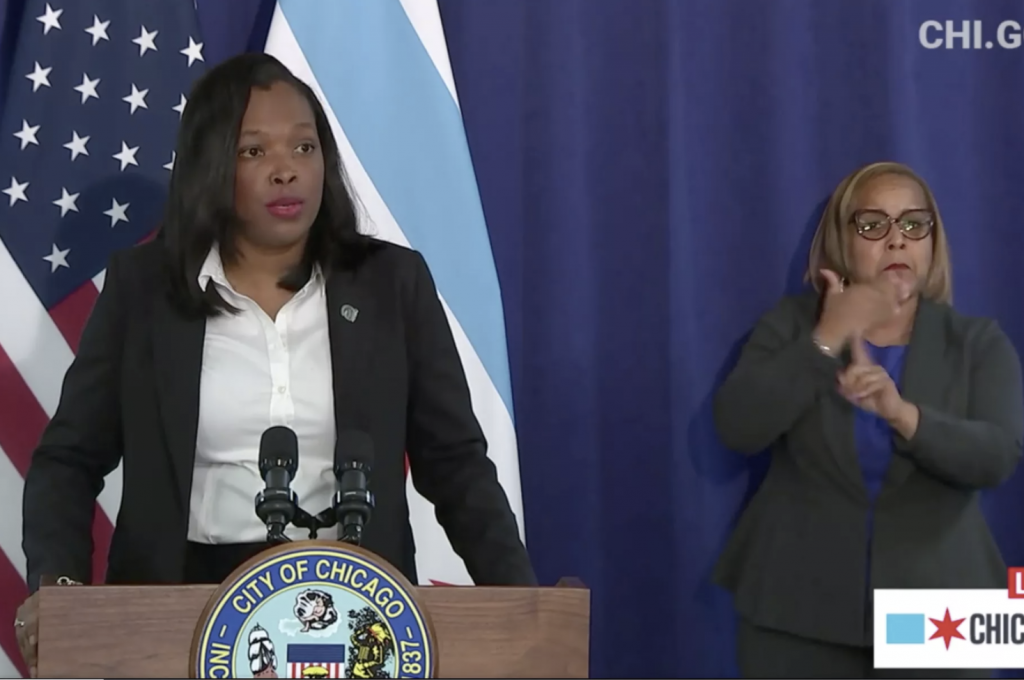 Chicago schools chief Janice Jackson said student activism helped fuel some of the changes announced on Aug. 19.
By Cassie Walker Burke
With Chicago’s school police program under the microscope during a tense summer, Mayor Lori Lightfoot says the city now will put more strict protocols on which police officers serve on campuses and pull out school-based computer terminals that previously connected officers with centralized criminal databases.
Those changes are part of a slate of proposed new reforms announced Wednesday, nearly a year after Chicago Public Schools and the Chicago Police Department began complying with a federal mandate to address long-standing problems in the program. Officers last school year served on more than 70 campuses, with more mobile officers in cars assigned to schools.
A Chalkbeat Chicago investigation in February showed that six months after school police reforms were initially supposed to be implemented, they were still a work in progress, with many items on the list incomplete. Concerns over the program, and a perceived lack of oversight, helped fuel heated school council meetings this summer over whether or not to keep police on campus. In all, 55 councils voted to keep police and 17 voted to remove them.
Lightfoot and schools chief Janice Jackson now say they are working with the city’s police department to address unresolved issues. Principals will now have the explicit power to hire or reject candidates for the jobs on their campuses — an authority that had been promised earlier but not uniformly delivered — and the city will partner with the Center for Childhood Resilience at Lurie Children’s Hospital of Chicago and the student-focused organization Mikva Challenge to better train officers in how to work with youth.
Chicago will also set up a more formal complaint process that parents, students, and educators can follow in case of concerns about officer wrongdoing.
At several youth-led protests throughout the summer, several students described often fraught relationships with campus officers and how the presence of police made them feel targeted and brutalized in buildings where they were supposed to be learning.
“We have heard our students loud and clear. The reforms today are a direct result of their tenacious spirit,” said Jackson.
But one prominent organization of student activists said the reforms announced Wednesday fell short.
“What students need most is support not criminalization,” said Derrianna Ford, a rising senior and youth leader in the group VOYCE. “In order to truly create a safe environment in all of our schools, we need trauma-informed approaches that support students’ mental health such as social workers, counselors, restorative practices. We cannot expect the same police officers who brutalize us on the streets to be our mental health workers inside our schools.”
The new slate of reforms comes on the same day that Chicago publicly released student arrest data. While the data show an 80 percent decline in the number of arrests on school campuses from 2012 to 2019, the numbers show that Black students are still disproportionately detained on campuses. Last school year, of the 651 students that the district reported as arrested on campus, 526 of them — or 80 percent— were identified as Black, 107 were Latino, and 16 were white.
Community leaders and parents have long voiced concerns about the “school-to-prison pipeline,” an issue Jackson addressed directly on Wednesday.
“Rates of arrests among Black students remain unacceptably high, and we must remain focused on addressing this as a school district,” she said. “We will do that.”
Perhaps the most sweeping change: The city will more closely examine misconduct allegations for officers who serve on campuses and raise the bar on the disciplinary record on who can serve. No officers with sustained allegations of excessive force in the past five years will be allowed to serve on campuses, nor will officers who’ve had sustained complaints about verbal or physical alterations with youth.
A Chalkbeat review of school-based officers who served last year showed that 96 percent faced allegations of misconduct, according to the Citizens Police Data Project, a database of police disciplinary records.
Those allegations range from excessive force, searches without a warrant, and physical domestic altercations to more minor accusations like traffic violations. The alleged violations were sustained — found to be true — for 41 percent of officers serving in schools this year.
“A lot of feedback we received during (the reform) process was that we need to strengthen our selection criteria. This year we are moving to excellent disciplinary history — we are tightening those parameters,” said Jadine Chou, chief of safety and security for Chicago Public Schools.
As for whether Chicago can implement the latest round of reforms in the next three weeks before school starts, Chou said the all-virtual start to school gives the school district and police department more time for additional training.
Leaders also said they plan to put authority over school police officers under the third in command at the police department. Previously, the system was decentralized, with district commanders largely making decisions about who serves on campuses, oftentimes with little input from schools.
Chicago last year began embarking on the biggest overhaul of its school policing program in a decade as part of broader police reforms. In 2014, the cover up of the fatal shooting of teenager Laquan McDonald provoked widespread outrage and protests, which culminated in a civil rights lawsuit that the city ultimately settled. Schools were included in a resulting federal consent decree.
However, many of the promised reforms had not materialized by the time school campuses shut down in March amid the coronavirus pandemic. Officers did undergo a 40-hour training program, and a formal $33 million contract was signed between the school district and the city’s police department — a contract that will now likely be cut in half, once the school board votes on a new budget proposal next week.
But despite a formal requirement to screen officers, nearly half had misconduct allegations sustained against them. Schools still lacked a system to register complaints. Some principals remained confused about which situations in which police can and can’t get involved. And some students, teachers, and Local School Council members said they knew little to nothing about any overhaul in school policing.
Exactly who had responsibility and oversight over the program and vague details about the officers’ backgrounds and responsibilities still left parents, students, and educators worried.
Then summer brought a significant sea change, with a wave of youth-led activism following the killing of George Floyd in Minneapolis at the hands of a white police officer. Scrutiny of school police became a central theme in Chicago. And as the mayor and schools chief pushed the decision-making down to school councils, the local groups took votes. In the end, the majority voted to keep officers, though many community members said the process was flawed and too many councils lacked enough membership to take a formal vote. About 1 in 4 schools voted them out.
Asked about transparency problems and reported violations of the Open Meetings Act that were documented during the votes — a review of multiple meetings by Block Club Chicago and Chalkbeat showed some councils didn’t follow the rules governing public access and participation — Jackson said Wednesday that the district had begun tracking the meetings and votes centrally and was helping ensure councils be more publicly accountable.
Some community organizers say the district’s efforts to build more transparency within councils have not gone far enough and that too much responsibility suddenly was thrust upon the public bodies made up of parents, educators, and community members.
In addition to cutting back the budget for the police program, the city’s school board will vote next week on the proposed reforms, part of a broader revised agreement between the district and the police department.
This story was provided by Chalkbeat Chicago, a nonprofit news organization committed to covering the effort to improve schools for all children, especially those who have historically lacked access to a quality education.
Under pressure, Chicago unveils more reforms to school police program
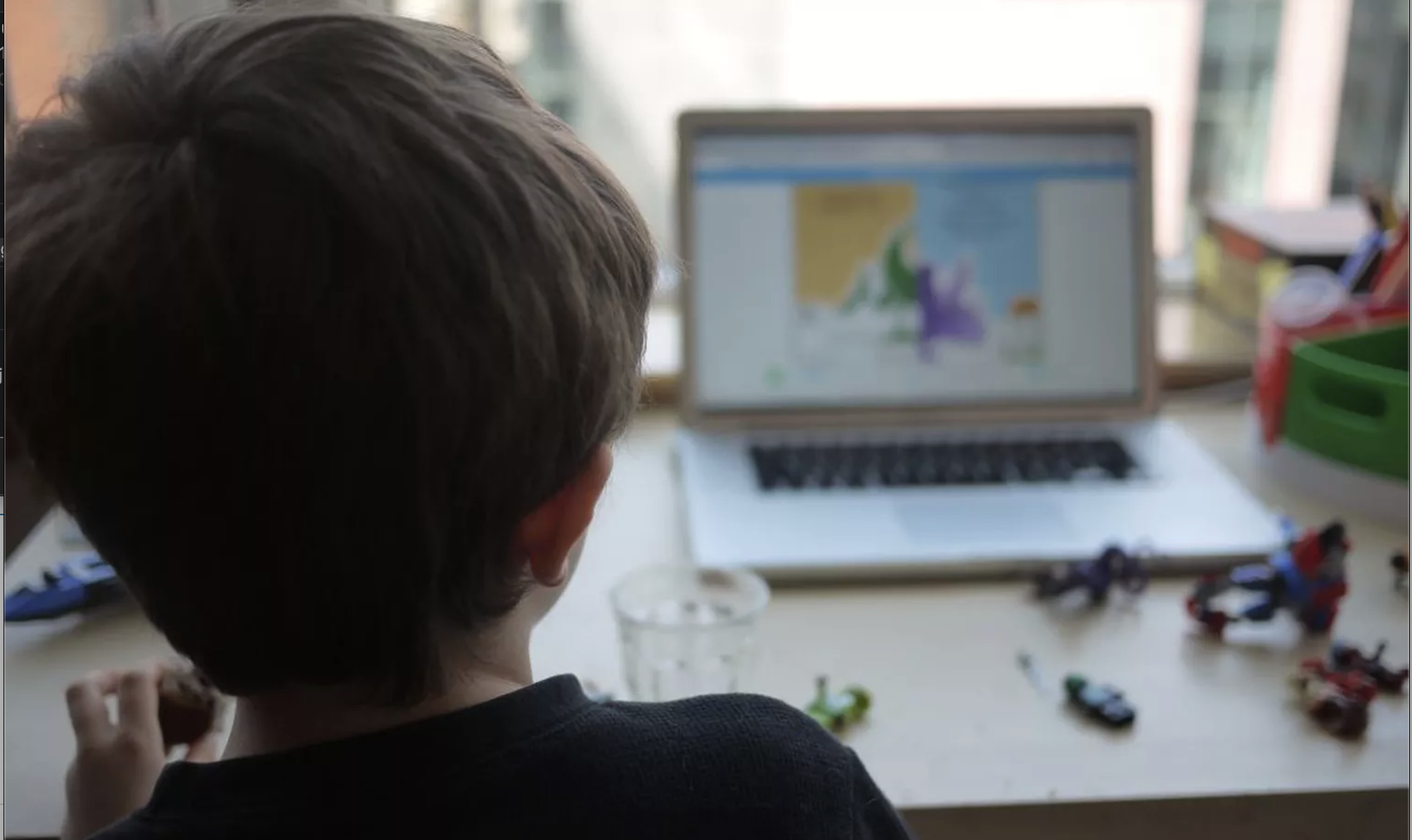 A young boy participates in an online lesson for his kindergarten class while schools remain closed to help slow the spread of COVID-19, Chicago, Illinois, April 3, 2020. Interim Archives/Getty Images
By
Even before federal COVID-19 rescue checks arrive, Illinois schools spend tens of millions on technology
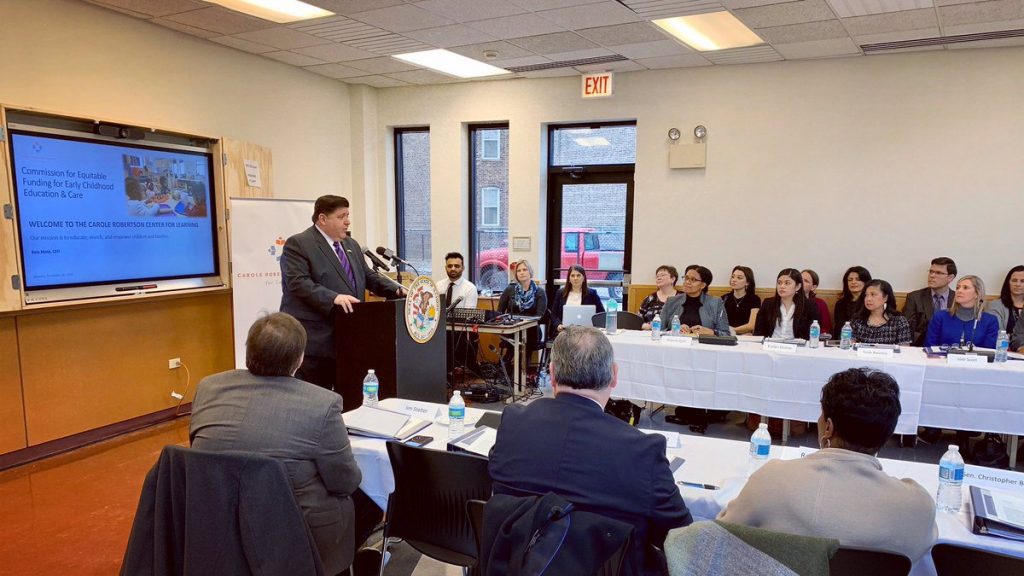 Gov. JB Pritzker named a 29-person commission to rebuilding the state’s fragmented early education system. [Twitter/@GovPritzker]
After spending much of his first year in office trying to stamp out Illinois’ chronic budget fires, Gov. J.B. Pritzker is moving toward rebuilding the state’s fragmented early education system.
On Monday, the governor named a 29-person commission tasked with tackling the billion-dollar question in state education: How to have the biggest impact with limited funds. Illinois spends an estimated $1.5 billion in state and federal money on children under 5, but those dollars are not spent evenly around the state and reach only a fraction of babies, toddlers, and preschoolers.
Pritzker also said Monday he plans to raise reimbursement rates by 5 percent for a child care program used by low-income working families to subsidize the cost of infant care, day care, and some extended after-school programs for older children. The program lost providers and children during the administration of his predecessor, Bruce Rauner.
Pritzker plans to direct even more dollars — to total a 20% rate increase — to providers downstate who’ve been hit with a staffing crisis and have closed classrooms.
The financing commission has its work cut out for it. The issue of early childhood financing will likely prove a tough question to answer in a state that spends $1 on infants, toddlers, and preschoolers for every $5 it spends on K-12. How to streamline the disbursement of state and federal dollars to reach more children — and, more important, to ramp up child care spending in a state grasping for revenue — is the central question facing the group.
Dominated by state senators and representatives whose buy-in would ultimately be needed to legislate significant changes, the commission also includes providers, advocates, district superintendents, and policymakers. The four co-chairs are Barbara Flynn Currie, the former state House Democratic majority leader; George Davis, the former executive director of Rockford Human Services Department; Andy Manar, a state senator who helped lead the charge to revamp the state’s funding formula for K-12 in 2017; and Jesse Ruiz, the deputy governor for education and a former vice president of Chicago’s school board.
Pritzker told Chalkbeat in March that, despite encountering a significant structural deficit when taking office, he still planned to pave a path to statewide universal pre-K in his first term, a pledge he made during his campaign.
Illinois has long been recognized for its emphasis on quality early education. But it has struggled to build a system that reaches enough low-income children and even backslid in recent years with how many families it serves. A report released in October from the policy group Advance Illinois showed that only about half of low-income children under age 5 in Illinois were enrolled in any sort of publicly funded early education program, and some pockets of the state had no programs at all.
A similar sobering statistic has become a cri de coeur among early childhood advocates since Illinois began tracking kindergarten readiness. Only 1 in 4 children showed up in 2019 for kindergarten prepared for school, based on three critical benchmarks.
“Illinois will become the best state in the nation for families raising young children, with the nation’s best early childhood education and child care,” the governor said Monday in a statement. “My promise is this: our work won’t be complete until every child in this state enters kindergarten with the cognitive skills to think, learn, read, remember, pay attention, and solve problems, but also the social emotional skills to communicate, connect with others, resolve conflict, self-regulate, display kindness and cope with challenges.”
“These are the skills that high-quality early learning programs help young children develop, and I’m proud to say that many of the modern standards and model programs were conceived and developed right here in Illinois.”
One thing to watch will be whether the commission addresses the universal pre-K rollout happening now in Chicago. The state spends slightly more than a third of its early childhood dollars on Chicago’s early childhood programs. The city recently changed how it distributes those dollars, and several longtime providers who lost funding have criticized the process.
In addition to the co-chairs, here are the other commission members named Monday.
- Emma Ahiable, prekindergarten teacher, Springfield District 186
- Carmen Ayala, superintendent, Illinois State Board of Education
- Christopher Belt, Illinois state senator, D-Centreville
- Thomas Bennett, Illinois state representative, R-Gibson City
- Kristin Bernhard, senior vice president, Ounce of Prevention Fund
- Patricia Chamberlain, retired educator
- Will Davis, Illinois state representative, D-Homewood
- Donald DeWitte, Illinois state senator, R-St. Charles
- Shauna Ejeh, senior vice president for programs, Illinois Action for Children
- Craig Esko, senior vice president, PNC Bank
- Phyllis Glink, executive director, Irving Harris Foundation
- Rochelle Golliday, executive director, Cuddle Care
- Rey Gonzalez, president and CEO, El Valor
- Christina Hachikian, executive director, Rustandy Center for Social Innovation, University of Chicago Booth School of Business
- Grace Hou, secretary, Illinois Department of Human Services
- Lori Longueville, director, Child Care Resource and Referral, John A Logan College
- Cathy Mannen, union professional issues director, Illinois Federation of Teachers
- Bela Mote, Chief Executive Officer, Carole Robertson Center
- Evelyn Osorio, Child Care Field Coordinator, SEIU Healthcare
- Aaron Ortiz, Illinois State Representative, D-Chicago
- Elliot Regenstein, Partner, Foresight Law + Policy
- Trish Rooney, Director of Early Childhood Initiatives, Fox Valley United Way
- Jodi Scott, Regional Superintendent of Schools
- Robin Steans, Executive Director, Advance Illinois
- Jim Stelter, Superintendent, Bensenville School District 2
Here’s who will try to solve the billion-dollar funding question in Illinois early education
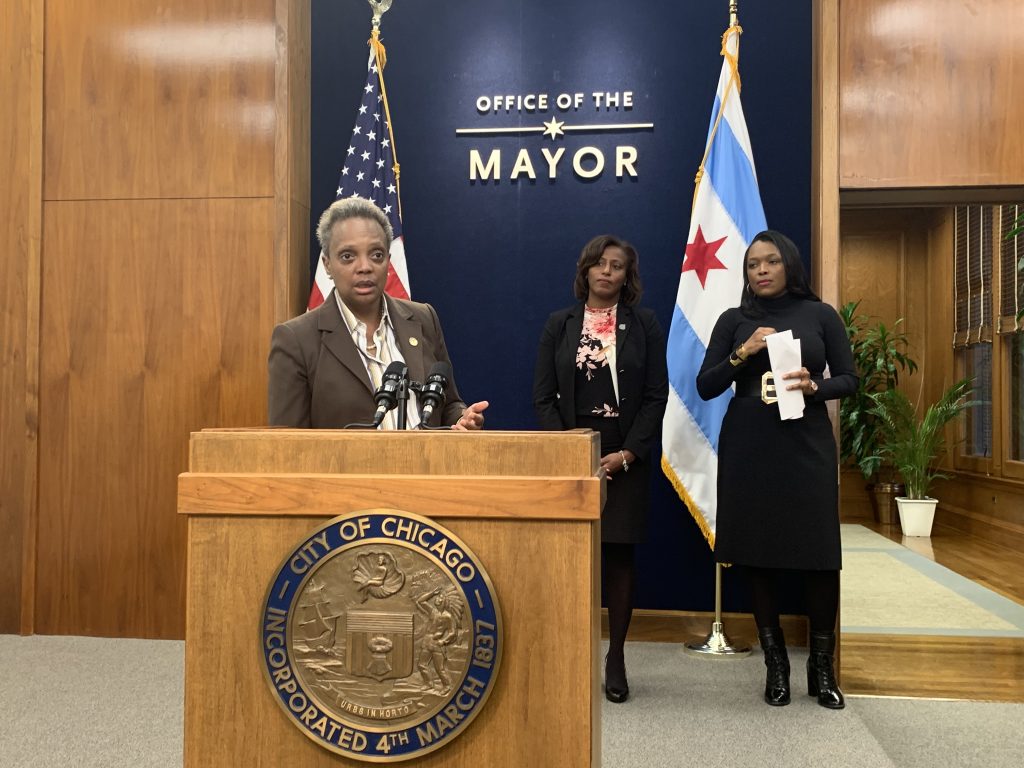 Mayor Lori Lightfoot and her two top schools officials CEO Janice Jackson and Chief Education Officer LaTanya McDade field questions from the news media. [Heather Cherone/The Daily Line]
Mayor Lori Lightfoot is making moves to reexamine the way Chicago budgets its billions for schools, starting with a new working group tasked with leading the charge.
The working group, which will gather information from the community engagement sessions and then propose recommendations, includes several formidable players in Chicago education policy, though in some cases the members are rarely on the same side of the table.
Members of the city’s appointed school board and its teachers union are on the committee. Find the full membership below.
The plan, announced by Chicago Public Schools on Thursday, builds on a key promise from candidate Lori Lightfoot to revisit school funding and consult the public about how to do that.
Chicago’s weighted school funding formula has come under fire for unequally distributing resources between schools that advocates argue need more resources, as well as pushing schools who are losing students into a funding loss spiral that makes it difficult to recover.
Related: Change could be imminent in how Chicago approaches spending low-income students
Any proposed changes yielded from the working group proposals and community engagement process wouldn’t come in all at once, the district said. Potential changes would be implemented over a multi-part timeline.
In a shift in recent practice, the school board is also leading committees around critical issues of diversifying the teacher pipeline and early childhood education. The first meeting about workforce diversity is next week.
Along with district network chiefs, board members and members of mayoral committees, the group includes leadership of local charter networks and teachers union researchers.
Here is who’s on the list:
- Sendhil Revuluri, vice president, Chicago Board of Education
- Elizabeth Todd-Breland, member, Chicago Board of Education
- Carlos Azcoitia, former CPS principal and board member, and professor emeritus National Lewis University
- Krystal Burns, parent representative and member of the Harold Washington Elementary School Local School Council
- Bogdana Chkoumbova, chief schools officer, Chicago Public Schools
- Maureen Delgado, principal, Clinton Elementary School
- Vanessa Espinoza, parent representative and member of the Gunsaulus Elementary School LSC
- Rachel Garza Resnick, retired CPS administrator
- Kurt Hilgendorf, Chicago Teachers Union
- Pavlyn Jankov, Chicago Teachers Union
- Josh Long, principal, Southside Occupational High School
- Sybil Madison, deputy mayor for education, City of Chicago
- Matt McCabe, chief of staff and public affairs, Noble Network of Charter Schools
- Cameron Mock, chief of staff and senior fiscal adviser to the deputy governor
- Candace Moore, chief equity officer, City of Chicago
- Robin Steans, president, Advance Illinois
- Maurice Swinney, chief equity officer, Chicago Public Schools
- Ricardo Trujillo, deputy chief of Network 5, Chicago Public Schools
- Two students from the CPS Student Voice and Activism Council
- One teacher representative from the Teacher Advisory Council
The district plans to get feedback from the public through a series of meetings starting in late January. Here’s the full list of community meetings, which kick off Jan. 29, 2020:
- Wednesday, Jan. 29, 6 p.m. – 8 p.m. at Amundsen High School, 5110 N. Damen Ave.
- Thursday, Jan. 30, 6 p.m. – 8 p.m. at Michele Clark High School, 5101 W. Harrison St.
- Saturday, Feb. 1, 11 a.m. – 1 p.m. at Corliss High School, 821 E. 103rd St.
- Wednesday, Feb. 5, 6 p.m. – 8 p.m. at Hammond Elementary, 2819 W. 21st Pl.
- Thursday, Feb. 6, 6 p.m. – 8 p.m. at Dyett High School, 555 E. 51st St.
- Saturday, Feb. 8, 11 a.m. – 1 p.m. at Roberto Clemente High School, 1147 N. Western Ave.
Here’s who will be leading Mayor Lori Lightfoot’s charge to reexamine Chicago school budgeting
Chicago Mayor Lori Lightfoot sits with students on the first day of school at Salazar Elementary Bilingual Center. [Yana Kunichoff / Chalkbeat Chicago]
Sullivan High School in Rogers Park has been nicknamed “Refugee High” for its student body. Often students come in speaking little English and sometimes far below grade level, while many students, both newcomers and others, suffer from the mental and emotional wounds of violence, perilous journeys, and family separation.
But with a budget that gives Sullivan roughly the same amount per student as it does for a student at Whitney Young Magnet High, a large selective-enrollment high school where fewer students live below the poverty level and parents are more involved in school fundraising, Principal Chad Adams has found himself facing what feels like an impossible choice: pay for a trauma counselor or a literacy coach, but not both.
This year, Adams chose a counselor.
“I think about all the trauma my kids see,” Adams said. “Their trauma may be more impactful to their learning. But it’s a complex jigsaw puzzle.”
Schools with more students who face learning challenges, language barriers, or other difficulties need more resources to educate them. But for six years Chicago Public Schools has budgeted the same per-pupil amount for schools, regardless of students' needs and background.
Granted, the district does give additional sums to campuses based on their count of students living in poverty or requiring special education. But the dollars often fail to cover the cost of hiring counselors and specialists.
Advocates with differing politics have assailed that budget uniformity.
As a candidate, Mayor Lori Lightfoot promised to revamp school funding and to consult the public about how to do that. Now she appears ready to fulfill her promise.
After bringing increased transparency to school board meetings and boosting staffing for high-needs schools when pressed by teachers contract negotiations, Lightfoot will start the long and complicated process of tackling one of the most technical items on her education agenda.
According to her office, by the 2021-22 school year, Chicago could shift how it hands out funds to schools. But the mayor hasn’t provided details on when, how, or who will lead the charge, which promises to be a Herculean undertaking. School officials have said an announcement is imminent. They also promised an “engagement process” related to next school year’s budget, and details on soliciting public opinion.
As to whether an initiative would be led by City Hall or the school district, a city spokeswoman said in a statement that “Mayor Lightfoot and CEO [Janice] Jackson have both made it clear that promoting greater equity in our schools is a top priority, and both the City Hall and CPS teams are focused on this effort.”
This project is the third story in the Lens on Lightfoot series, a collaboration of seven Chicago newsrooms examining the first year of Mayor Lori Lightfoot's administration. Partners are Chalkbeat Chicago, the Better Government Association, Block Club Chicago, The Chicago Reporter, The Daily Line, La Raza and The TRiiBE. It is managed by the Institute for Nonprofit News.How school budgets work is wonky, but they get at the heart of questions about priorities, values and investments. In a recent poll of 2,500 Chicagoans developed by a coalition of community organizations including Grassroots Collaborative and Chicago United for Equity, the second most-suggested need was to adopt a more equitable school funding formula, after increased staffing of nurses and social workers.
State funding and local property tax proceeds, along with some federal funding targeted at poor students and special education students, provide the core base for public education. The state doles out money based on some student needs, but for the most part doesn't dictate how school districts spend the bulk of its dollars.
Chicago then distributes operating funds to the 632 district-run and charter schools it funds. This year, the total operating budget is $6.32 billion, with just over half going to individual schools.
Under a five-year-old formula, about 60% of a typical school’s district grant is based on how many students it has. In fiscal year 2020, that was an average of nearly $4,500 per student. Those funds pay for a school’s core instructional needs.
The district also pays additional sums for special education students and for programs like after-school activities. Schools also receive additional dollars for low-income students and for English language learners.
Sometimes the district will award supplemental grants. Last school year it held an application process that granted $32 million to neighborhood schools for popular academic programs, in order to help recruit more students. A similar competition has been announced for this school year.
How Chicago funds schools is in line with many other urban districts around the country, said Marguerite Roza, director of the Edunomics Lab research center at Georgetown University.
And while Roza said she understands community interest in considering different funding models, she warns that without additional funding into a new system, a new model may not make huge changes. “The district doesn’t get any more money if it moves to another budgeting model,” she said, adding that, at the same funding level, directing more money to schools with higher needs would mean less for others.
Critics say Chicago’s current way of budgeting locks schools into a downward spiral. As schools lose enrollment, they get less money, which then dooms non-core classes and extracurricular programs, which further erodes enrollment, in turn shrinking the budget even more. A September report from Roosevelt University found that the schools with the smallest budgets were concentrated in black neighborhoods that had seen precipitous population declines, contributing to racial inequality across the district.
Chicago last overhauled its funding structure in 2013, moving from a budget that allocated teacher positions at each school based on enrollment quotas, to student-based budgeting. That move gave principals more autonomy to decide how to use the per-pupil funding they received, calculated according to the number of students they had during the 20th school day of the year.
But critics said budgeting by student count doesn’t address schools’ reality.
The district has promised to consider school funding as a key part of the mayor’s five-year investment in schools, announced this summer. And the district’s new equity framework, released last month, names “resource equity” as one of its four pillars. The teachers union contract, approved in November, also includes a side letter promising the district will review school funding.
Since Lightfoot took office, a band of unlikely allies, including education reform organizations, parent groups, and the teachers union, have pressed her to overhaul school funding, to promote educational equity and bring more dollars into schools.
Some groups have been sharing ideas.
Ralph Martire from the Center for Tax and Budget Accountability, a policy research group, suggests the district scrap its current budgeting formula and instead follow the state’s “evidence-based” approach, which allocates more money to certain needy populations like homeless students, refugees, and students facing other challenging life circumstances affecting learning.
The education reform group Kids First has developed an “equity index” budgeting tool, which weighs the incidence of trauma and violence and the concentration of single-parent households in communities.
The Chicago Teachers Union has also been pushing for a more nuanced funding formula that considers student and community need. The union won a side letter in its recent contract agreement that promised the district would review school funding.
Chicagoans may get a sense of what’s on the table from the equity framework published in November by Chicago Public Schools’ year-old Office of Equity.
The framework, drafted by the district’s equity chief, Maurice Swinney, says it’s unfair to assume students from different backgrounds and facing a variety of challenges have the same needs. That will “maintain the status quo of unequal achievement,” it says, and it suggests progressive spending patterns and schools sharing resources as possible solutions.
“Tools coming soon in 2020,” the framework says.
Will Chicago redistribute current dollars or seek new funds to distribute based on student need?
That may depend on whether the district can find more dollars. During her campaign, the mayor promoted such lifelines as redistributing tax-increment financing (tax proceeds intended to finance city development projects) and boosting the district’s credit rating to secure better rates on borrowing — but in her first budget as mayor, she directed tax surplus funds only to plug spending holes in the new contract with the union. If Gov. J.B. Pritzker’s graduated income tax rate passes, it could produce more revenue and offer more financial stability for Chicago schools.
Alternately, the district could divvy up its financial pie differently — but that could drain funds from schools with fewer high-need students, a move that could set off a political firestorm at schools with more politically savvy parents, whose influence makes this option unlikely.
Effective reform requires deft political maneuvering. School funding may be an important need, but the topic is complicated and dry, even for people in the know. Lightfoot will face a challenge in both laying out the rationale and logic of a new way of budgeting and, from groups long pushing for a change, the blowback if they feel it doesn’t impact their school communities.
How the district handles budget talks with residents could affect plans.
Jianan Shi, executive director of parent group Raise Your Hand for Illinois Public Education, said, “that conversation should be centered around communities most affected: underenrolled schools, schools with a history of change, and not just a closing but any kind of school action,” such as merging campuses or redrawing attendance boundaries.
At least another full school year likely remains before a new budget system is fully in place.
At Sullivan High School, that means another year of struggling to balance the needs of a diverse student body within the school budget. Adams, the principal, is hopeful for a change.
“This is where equity could come in — you are going to have to really listen to the community needs.”
Mayor Lori Lightfoot promised to spend more money on students in need. Could 2020 be the year?
Enrollment in Chicago Public Schools has shrunk further, down 1.7% this school year from the previous year. In all, the district lost 6,158 students, according to numbers released Friday.
The district’s final student tally for 2019-20 is 355,156. Click here to see enrollment numbers by school.
But the year-over-year declines slowed considerably compared to past years, when annual drops topped 10,000 or more. The district credited higher numbers of students enrolling in pre-kindergarten and kindergarten.
The city still holds on to the title of the nation’s third largest school system, behind New York City and Los Angeles and ahead of Miami Dade, which also saw its student population decline this fall to 347,069.
Student enrollment counts are important, because they determine how much money the district gets from the state, and how much individual schools get from the district. At the school level, per-student funding determines how many teachers a principal can hire, whether or not there are librarians and arts teachers, and how many programs are offered.
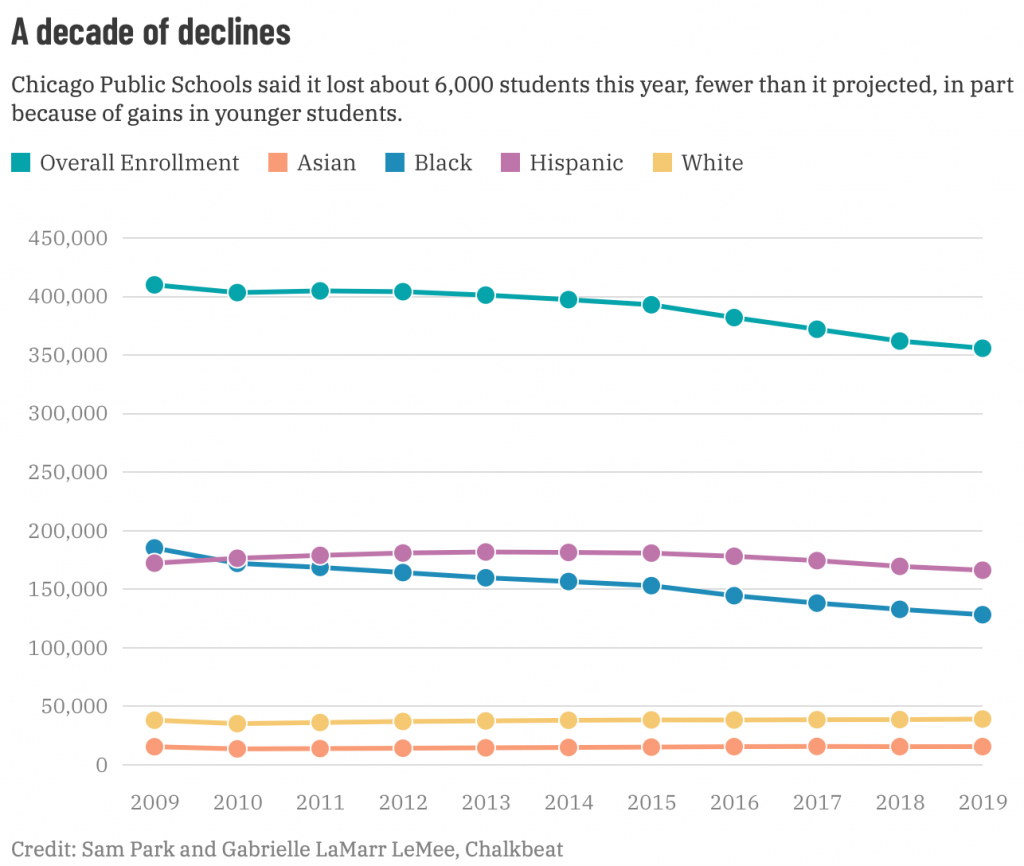
The figures reflect enrollment as of Sept. 30, the 20th day of school. That’s the official school census day throughout the state.
By race, the district saw 2% decrease in the largest student demographic — Latino students — but larger declines in the number of black students, continuing a decades-long trend. Black students dropped 3.5% from the year prior and a full 30% from a decade ago. Meanwhile, the number of white and Asian students inched up slightly.
Overall, the new enrollment figures show slight changes in the racial demographics of the district: Chicago Public Schools is now 47% Latino, 36% black, 11% white, and 4% Asian.
Chicago isn’t the only district shrinking. Statewide, Illinois schools lost 17,010 pupils — roughly 1% of enrollment — in the past year. The new statewide student tally is 1,984,519, according to new data from the Illinois Report Card. To blame are a declining birth rate, a slowdown in immigration, and population declines overall.
In Chicago, when schools gain students from the previous year, they get more money from the district in the form of mid-year adjustments. This year, those mid-year adjustments will total $13 million, the district said Friday.
When schools lose students, they don’t immediately lose funding, but they can lose it the following school year.
“While there are signs of encouragement,” said Chicago Public Schools CEO Janice Jackson, “we are fully committed to supporting school communities that are struggling with enrollment by providing additional resources through equity grants and a budgeting approach that promotes stability.”
The district announced in the spring a small school grant program that will disburse $31 million among 219 elementary and high schools with struggling enrollment.
Amid a district-wide expansion of preschool for 4-year-olds, the district reported 1,421 more 4-year-olds to total 14,300, offsetting a similar-sized drop in the number of 3-year-olds. As part of its universal pre-K expansion, the district has reduced the number of half-day classroom slots for 3-year-olds in lieu of expanding the number of full-day seats for 4-year-olds.
The number of students enrolled in charters declined slightly, from 54,569 last year to 53,415 this fall. Similarly, the number of high schoolers enrolled in alternative or “options” schools also dipped, from 2,317 last year to 2,176, the district said Friday.
Chicago closed 50 schools in 2013 because of low enrollment, then district leaders agreed to a moratorium on school closings for five years. Once the moratorium lifted, the district announced a plan to shutter 4 high schools in Englewood and open a new $85 million high school to replace them. The new high school, Englewood STEM, opened this fall with an inaugural freshman class of 414.
National statistics tend to lag behind local ones, but public school enrollment was still growing, albeit slowly, according to the most recent data from the National Center on Education Statistics.
Here’s how the five largest districts in the country stack up: New York City schools latest public count was 1,126,501 for last school year, followed by Los Angeles Unified (557,560 for K-12). Chicago comes in third, followed by Miami Dade at fourth (347,069), and Clark County, Nevada, at fifth (320,703 for K-12).
Some districts include pre-K in their tallies, while others don’t. Chicago includes pre-K in its final numbers.
Chicago reports another year of enrollment declines — but holds on to title of third-largest district in U.S.
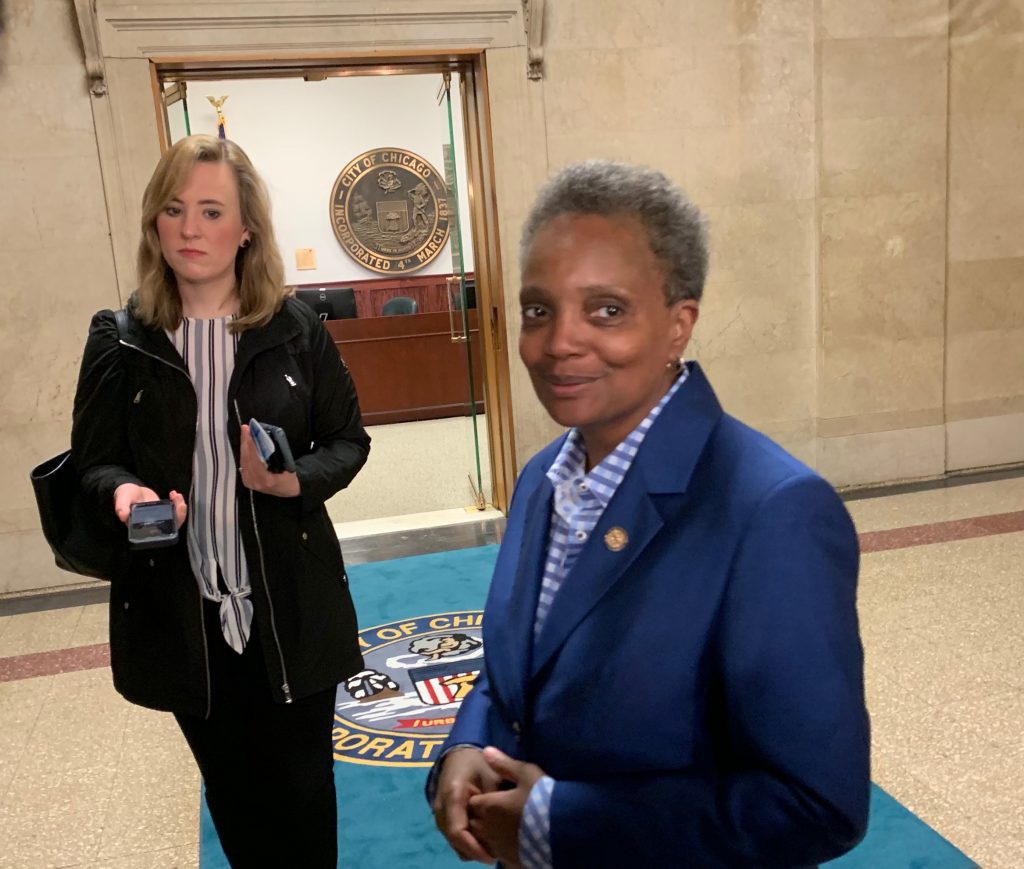 Flanked by a staff member, Mayor Lori Lightfoot tells reporters she has disbanded the Chicago school board. [Heather Cherone/The Daily Line]
Chicago’s new mayor, Lori Lightfoot, said Wednesday she is disbanding the city’s seven-member school board, moving quickly to set up what is likely to be a dramatic transformation of how the 361,000-student school district is governed.
Lightfoot, who was sworn in Monday, campaigned on a promise to support a switch from a school board appointed by the mayor to one selected by the public.
Speaking to reporters at City Hall Wednesday afternoon, she said none of the current board members would remain in place. But since the move to an elected body requires legislative approval, Lightfoot said she would appoint an interim board and would announce the names of those selected soon.
During this period, she said, “we want to make sure we are doing what we could to bring diversity into the process.”
As for selecting interim replacement, Lightfoot said, “My first priority is placing an emphasis on people who have children in the system or have themselves been a part of the CPS system, whether as administrators, teachers or principals.”
News that the school board would be disbanded came just prior, at the end of a four-hour and otherwise pro-forma school board meeting, when the board’s president, Frank Clark, announced: “It’s our last meeting. Really truly thank you, it’s been an honor.”
The seven board members, all appointed at some point over the past eight years by former Mayor Rahm Emanuel, oversaw and, in many cases, supported some of the most landmark changes in Emanuel’s tenure, including a 20-percentage point climb in graduation rates and the nation’s largest single round of school closings.
Schools chief Janice Jackson thanked Clark for his service, and said working alongside the board had made her a better leader. “I have felt both challenged and supported in this role. You all have served with integrity, and pushed us to be better,” she said.
As Clark made his announcement, district staff filed into the room and, at one point, gave a standing ovation to the outgoing board members.
Board member Mahalia Hines, who was chosen by Emanuel in May 2011, thanked Clark for his work, and thanked the former mayor for appointing her to the role. Hines also had a special message for the parents who use the public comment section at each board of education meeting to press the board for more resources and, sometimes, to make the outright case that their children’s schools should stay open.
“I want to say thank you to all of the parents who come and take their time to be here. You have helped me to grow,” said Hines. She also commended Jackson, who will continue in her role as schools chief under Lightfoot. “You’re not just saying you are putting children first, you live it.”
During her mayoral campaign, Lightfoot, a former federal prosecutor, spoke often about how her mother served on the elected school board in her Ohio hometown, and said she supported a move to an elected board in Chicago.
In advance of Wednesday’s meeting, vocal members of a parents’ group that supports a state bill that would establish a 21-person elected school board began posting on Twitter that they were disappointed that Lightfoot had not overhauled the existing board during her first few days in office.
Lightfoot was sworn in Monday. In her inauguration speech, she spoke about education as one of four priority pillars for her incoming administration. On Tuesday, she said she officially planned to retain Jackson.
Meanwhile, a bill that would establish a 21-member elected school board has stalled in the Illinois Senate after passing the House. A coalition of legislators, teachers’ union representatives, and parents groups support the measure. But Lightfoot has described the proposal as a “recipe for chaos and disaster” because of its size and has asked for time to study the issue more.
Heather Cherone of The Daily Line contributed to this report.
Chalkbeat is a nonprofit news site covering educational change in public schools.
‘It’s our last meeting’: New mayor Lori Lightfoot moves to disband Chicago’s school board, setting up major shift
Bio
Chalkbeat is a nonprofit news organization covering education in Chicago and communities across America. 📩 email us: [email protected]

