Chicago News
-
Minimum wage workers in Illinois will see more money in their pockets starting Wednesday when the state increases their hourly wage.
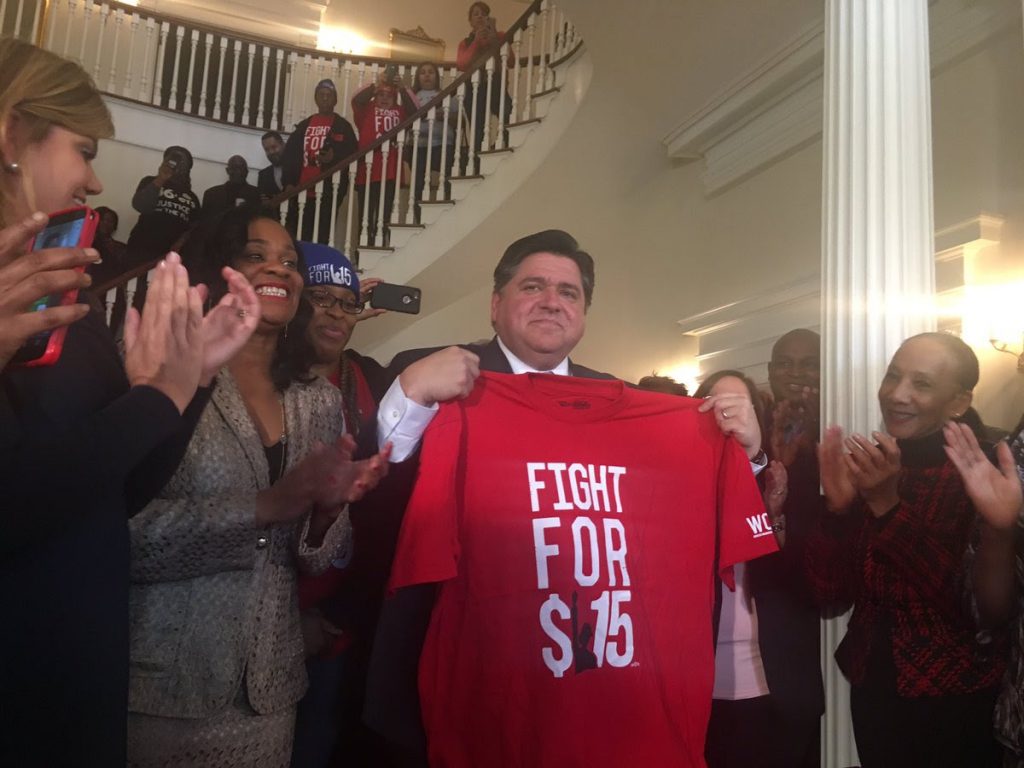 JB Pritzker with allies on the day he signed Illinois’ $15 minimum wage bill into law at the Governor's Mansion in Springfield on Feb. 19, 2019. The state's minimum wage will increase to $10 an hour on Wednesday. [Hannah Meisel/The Daily Line]
 -

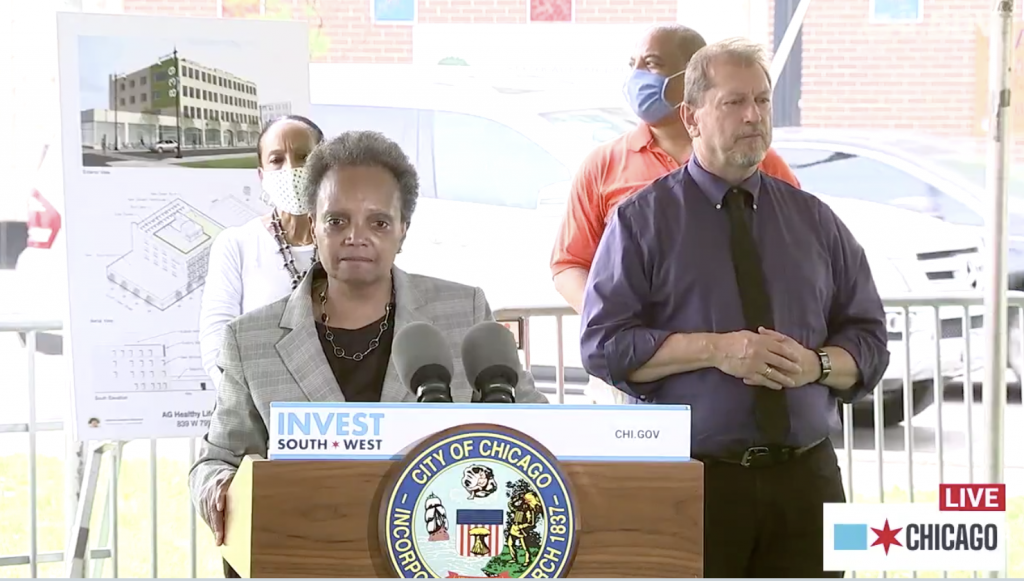 Chicago Mayor Lori Lightfoot address President Donald Trump at an event Monday.
Chicago Mayor Lori Lightfoot called on President Donald Trump Monday to stop politicizing violence in the city and to support it through a litany of efforts, including greater access to healthcare. -
-
JUN 29, 2020


-
JUN 26, 2020
UNLOCKED
Several times in recent weeks 33rd Ward Alderman and democratic socialist Rossana Rodriguez-Sanchez has tweeted out about having City Council conversations regarding policing reform.
Yet, conversations vary in type and quality and can range from exceedingly delicate engagement to something a bit more one-way. Whatever conversations are undertaken by Chicago’s six democratic socialist City Council members, though, it will be a major clue at what we can expect from them in years to come.
In theory, the community measures that prominently featured in the last municipal election cycle could have sparked wide-ranging conversations about civic transformation: Reinvestment in Chicago Public Schools, reopening mental health clinics, and changing policing to better help people experiencing mental health crises. These all enjoy sizeable support from across the city, a strong indication that other ideas for a more just and equitable municipality could also be as welcome.
In practice, though, these measures were often collapsed into #NoCopAcademy, frequently creating a false and highly-charged dichotomy that reduced the space in which people of good faith could discuss everything from ways to support and lift up youth to the finding of the 2017 U.S. Justice Department report that better Chicago Police Department training would reduce misconduct. Although this partitioning of issues rallied some voters, it also masked otherwise widespread agreement and narrowly channeled Chicagoans’ attention and dialogue.
In our current civic moment, the quality of conversation will affect the quality of any eventual reform. If a lightning rod policy position like #NoCopAcademy develops, it risks limiting the scope of discussion and making Chicagoans disengage from the process, although it likely will not derail reform altogether; the broader public is committing itself to addressing long-festering systemic problems, and that alone should further spur on Mayor Lightfoot and a wide swath of City Council to pass some sort of measures.
Beyond today’s conversations, though, is the larger question of what type of profile and presence will Chicago’s democratic socialist aldermen establish.
On the one hand lies the path associated with the Democratic Socialists of America, where touchstone issues forge intense internal solidarity but also create strong in group/out group boundaries.
For example, #NoCopAcademy has had a long afterlife, leading to continuing social media professions that “Lightfoot’s a cop.” To the extent that an alderman chooses this path, they may strain and sacrifice political relationships, but they can continue to put issues on the radar and push them as they prioritize movement-building. But, their ability to jump offices will be limited to what any given district will bear. City and statewide positions will also be out of reach for the foreseeable future, as Alderman Carlos Ramirez-Rosa found out when his unbreakable adherence to the Boycott, Divestment, and Sanctions approach to the Israeli-Palestinian conflict cost him his position on Daniel Biss’s gubernatorial ticket.
On the other hand lies the more traditionally tactful electoral politicking increasingly evident in DSA superstar Alexandra Ocasio-Cortez. She diplomatically responded to charges of a toxic online presence by some Sanders supporters with a judicious reminder that organizing involves listening and inclusion. Her crossover appeal is still not so strongly constrained by her commitment to standard socialist causes, despite her perpetual demonization by the Rupert Murdoch media ecosystem.
Either path is possible, and the choice is up to each of the aldermen. For the rest of us, the question is what kind of texture will city politics have, and how soon will we see democratic socialists viably contend for a broader range of offices in Chicago and Illinois.
David Mihalyfy has a Ph.D. in the History of Christianity from the University of Chicago, and his writing has appeared in the Atlantic online, Religion Dispatches, Contingent Magazine, Jacobin, and Inside Higher Ed. He ran against 11th Ward alderman Patrick Daley Thompson in the 2019 municipal election cycle. -
JUN 26, 2020
-
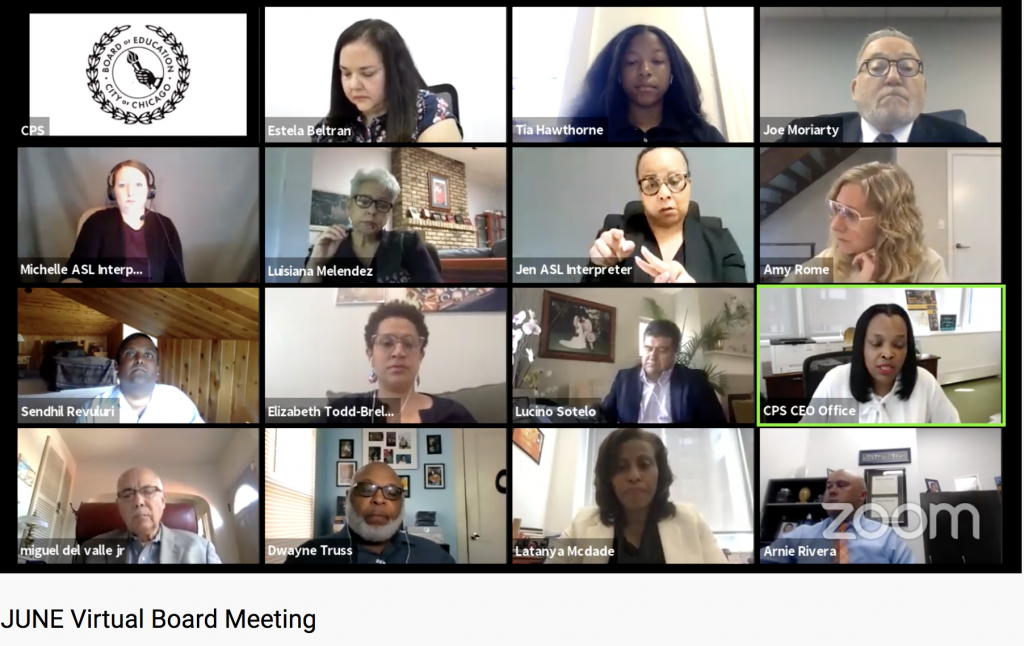 The Chicago Board of Education held a narrow vote Wednesday to keep a police presence in schools that requested on.
The Chicago Board of Education narrowly rejected a motion Wednesday to cancel the annual $33 million contract between Chicago Public Schools and the Chicago Police Department. -
JUN 25, 2020
-
JUN 25, 2020
UNLOCKED
By Kiannah Sepeda-Miller , Better Government Association.
Mayor Lori Lightfoot’s naming of an urban planner to guide her environmental agenda is receiving positive reactions from activists and community leaders. Nevertheless, they remain wary about whether the city’s new chief sustainability officer will be given enough power and resources to make meaningful change.
As a candidate, Lightfoot promised to revive a fully operational city department of environment to tackle pollution after former Mayor Rahm Emanuel disbanded the unit to cut costs. While Emanuel said environmental enforcement would be dispersed to other city agencies, a 2019 Better Government Association investigation found inspections and citations plummeted during his tenure. -
When the Chicago Board of Education meets Wednesday morning, it will face one of the most contentious issues to emerge during the street protests in recent weeks: Whether to cancel the $33 million contract between the city’s public school system and the Chicago Police Department.
-
JUN 24, 2020
-
JUN 24, 2020

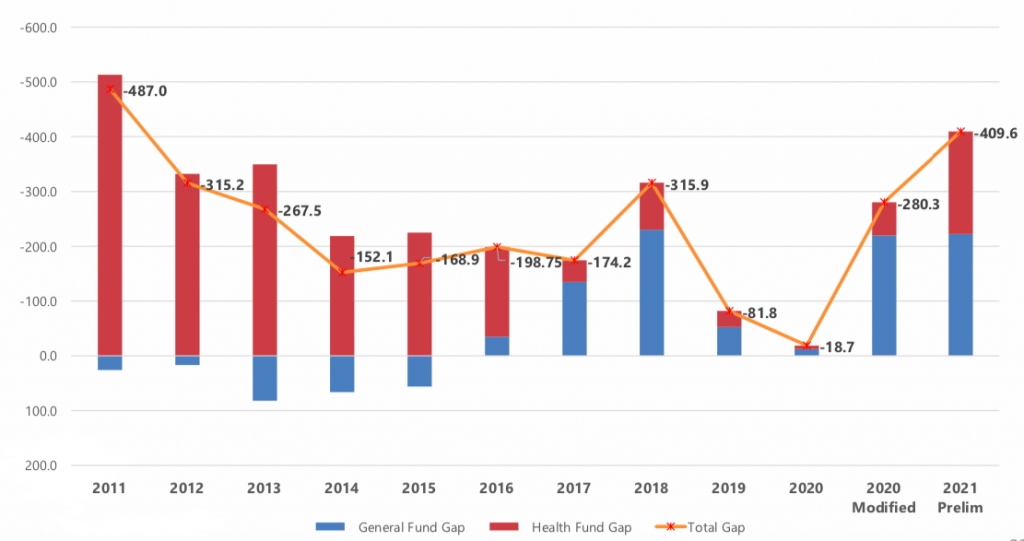 The preliminary budget deficit for 2021 is the highest Cook County has faced since 2011.