


Chicago News
-
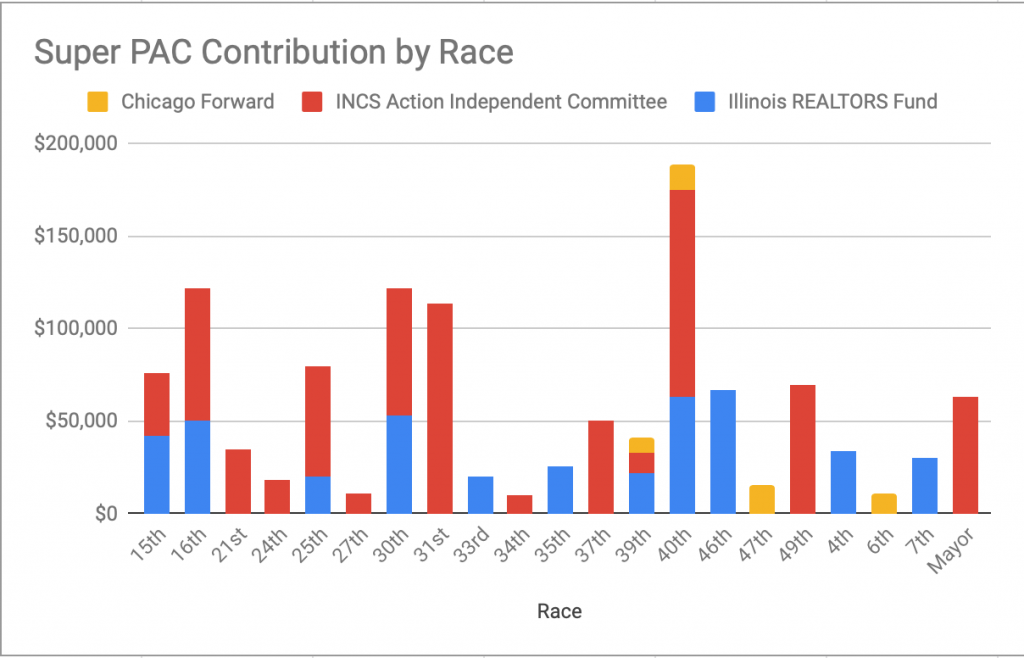
Three Super PACs — which are aligned with Mayor Rahm Emanuel, charter schools and real estate interests — are on track to spend at least $1.5 million in a runoff in an effort to elect supportive aldermen on Tuesday as Chicago enters a new political era after Emanuel’s retirement.
State law defines independent expenditures as any payment made to expressly advocate for or against a candidate. That spending cannot be made in coordination with a candidate, their committee, or the independent organization’s own political action committee.
Super PACs, known as independent expenditure committees in the Illinois Election Code, may raise unlimited sums of money from corporations, unions, associations and individuals, according to Reform for Illinois, a campaign watchdog group. Those committees can spend unlimited amounts to oppose or support candidates and issues — but are prohibited from donating money directly to political candidates, according to the watchdog group.
Two independent expenditure committees made big plays in the first round of voting.
Fight Back for a Better Tomorrow, which was aligned with IUOE Local 150, spent $1.2 million on ads against mayoral candidate Bill Daley in the campaign's waning days. The ads might have struck a chord — Daley unexpectedly came in third place, missing a shot at the runoff.
The Economic Freedom Alliance spent more than $200,000 on mail and a digital ad campaign against incumbent Ald. Tom Tunney in the 44th ward, but proved unsuccessful — the business owner won another outright.
Emanuel Allies
The resurrected Chicago Forward spent heavily defending Emanuel and his allies in 2015. Even with Emanuel out of the race, it’s back, supplementing hundreds of thousands in contributions from the mayor and longtime allies Michael and Cari Sacks to allied aldermen as Emanuel’s tenure winds down.
Related: Chicago Forward PAC is back
The group received $59,000 in seed funding from another Emanuel-supporting political action committee, Progress Chicago, on Monday, followed by a $75,000 infusion on Tuesday. Emanuel and the Sacks have also been personally contributing hundreds of thousands of dollars to allied aldermen and those in close races.
Ron Holmes, a spokesperson for Chicago Forward, said the political action committee had come back from the dead because there is “so much on the line for everyday Chicagoans” in the April 2 election.
“We’re confident that each of these candidates will fulfill Chicago Forward’s goals of creating high-quality school choices for families, safer neighborhoods, opportunities for businesses to grow and more good-paying jobs,” Holmes said in an emailed statement.
Although Chicago Forward’s new chair, Michael Forde, has fundraised for mayoral candidate Lori Lightfoot, the group will stay out of the mayoral race, Holmes said.
Instead, it will focus on television, digital, and mail in aldermanic races in the home stretch of the campaign, Holmes said.
The group has already disclosed nearly $50,000 in digital and television spending opposing Andre Vasquez in the 40th Ward, who is running against Emanuel’s floor leader Ald. Pat O’Connor, Matt Martin in the 47th Ward, who is challenging former Emanuel aide Michael Negron, 39th Ward candidate Samantha Nugent who is facing Robert Murphy and Ald. Roderick Sawyer (6), who voted more frequently with Emanuel as his second term progressed.TFW you're up twenty points and Rahm Emanuel's Super PAC comes after you. pic.twitter.com/SSOA5zU3gW
— Matt Martin (@MattMartinChi) March 26, 2019
Charter Interests
The INCS Action Independent Committee, the Illinois Network of Charter Schools’s political action committee, has taken in $1.45 million from Wheels, Inc. CEO Jim Frank and $1.7 million from Walmart heirs Alice and Jim Walton, according to the Illinois Sunshine database. The fund has more than $1.9 million on hand, according to the database.
Frank is also the chairman of the Intrinsic Network of Charter Schools, which operates a high school on the Northwest Side.
INCS has two funds active in the 2019 election — INCS Action PAC, which donates directly to campaigns, and the INCS Action Independent Committee, the Super PAC dedicated to independent expenditures.
INCS Action Independent Committee has spent more than $725,000 in the 2019 cycle so far on phone banking, mail, television and digital communications. INCS President Andrew Broy estimates independent expenditures alone will top $1 million by the end of the 2019 cycle.
After the general election, it celebrated helping “pave the way” for victories or runoffs for 11 of its 12 endorsed candidates — Ald. Joe Moore (49) was its only outright loss.
After dipping its toes in the 2015 race by spending in only two wards, the group plans to dive in fully in 2019.
“Stakes are high,” Broy said.
Neither of the two mayoral candidates — Toni Preckwinkle nor Lori Lightfoot — “could be deemed wholly supportive” of charter interests. Both have called for a charter freeze. Preckwinkle has the support of the Chicago Teachers Union, which is unionizing several charter networks citywide.
Charters depend heavily on the local aldermen to usher zoning changes through and to support for new locations with the Chicago Board of Education.
INCS has three different categories for races, Broy said — incumbent protects, incumbent persuades and replacements.
Ald. Pat O’Connor (40) and Ald. Ariel Reboyras (30) are in the “protect” category, and both are locked “in very tough races,” he said.
INCS is also looking to persuade voters to retain Education Committee Chairman Ald. Howard Brookins (21) and Ald. Raymond Lopez (15).
Ads opposing Vasquez and Lopez challenger Chicago Police Officer Rafael “Rafa” Yañez make no mention of charter support.
Several Vasquez mailers quote rap lyrics from his time in the underground hip-hop scene, describing them as “homophobic,” “offensive,” “just wrong,” “shameful,” and glorifying the domestic abuse of women. Vasquez has apologized and added a “regarding attacks” section to his website with commitments to fight for women and the LGBTQ community.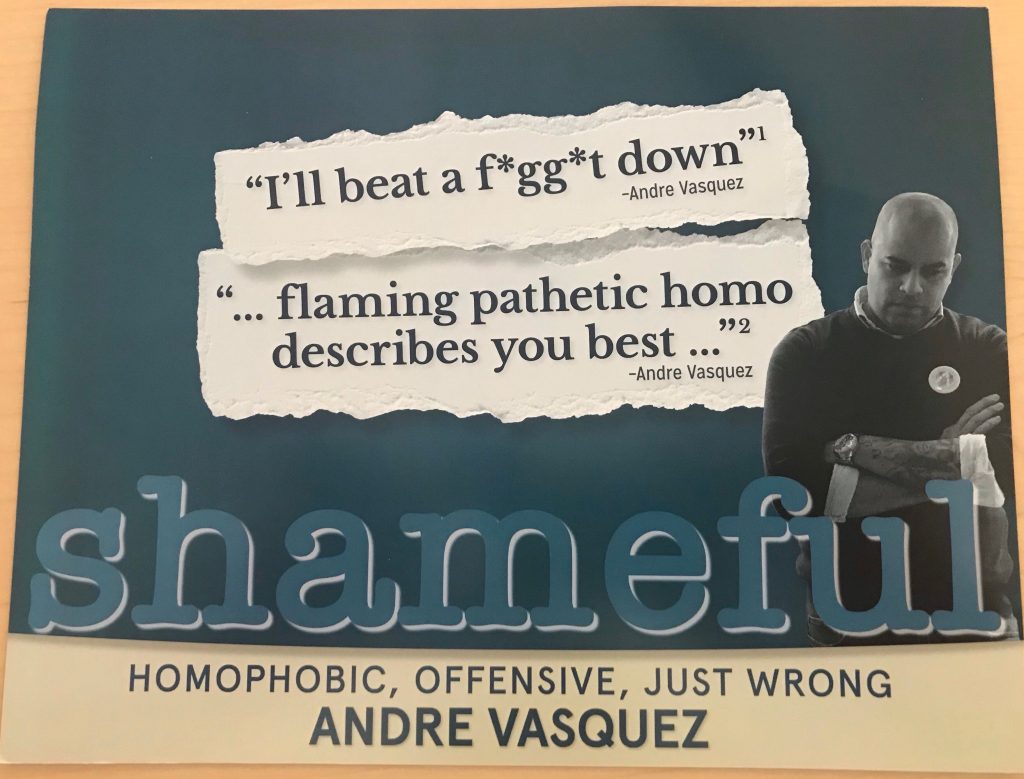
The Yañez mailers highlight comments Yañez has made against the police academy and his history as an officer. He received four complaints, including two related to illegal search. The department found those complaints either not sustained, exonerated or unfounded and no action was taken, according to the Invisible Institute's database of complaints. Yañez was not disciplined.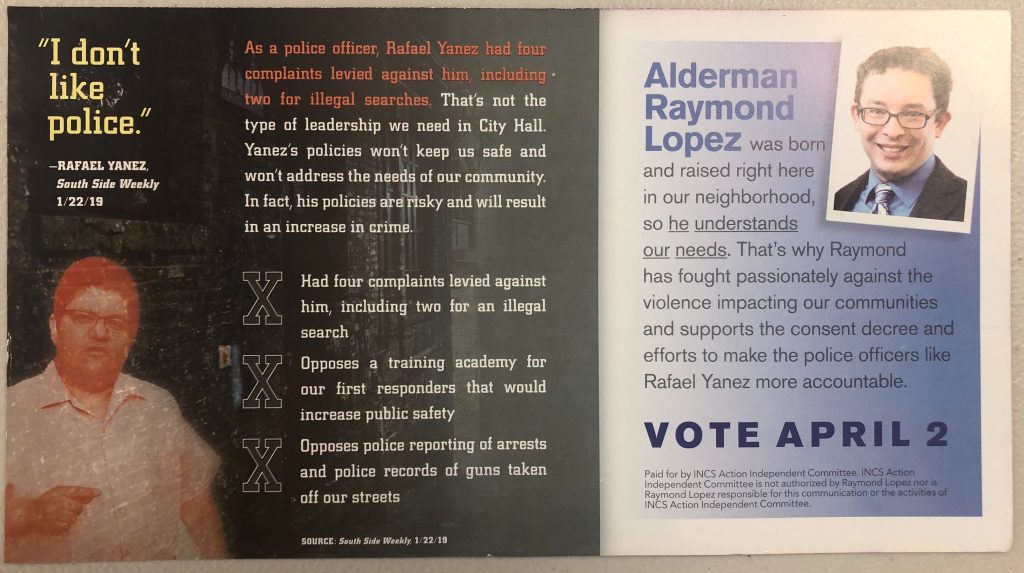
Broy acknowledged these issues do not relate to charter policy.
“I think we’re trying to influence the election,” Broy said. “We poll in these races, we look at what will move voters.”
In three other races, they are looking to flip or win open seats by electing Stephanie Coleman in the 16th Ward, Felix Cardona in the 31st Ward and Alex Acevedo in the 25th Ward.
Alds. Toni Foulkes and Milly Santiago are “bad on charters historically,” Broy said.
More than 100 canvassers will hit wards in three- or four-day shifts, Broy said.
The three “take out” race candidates are “almost all charter alums and charter parents who understand the power of a great public school,” Broy said, adding INCS will often microtarget charter households in those wards with canvassers or direct mail.
Among its questions for aldermen on this year’s endorsement questionnaire, INCS asked whether candidates would oppose future City Council resolutions on charter moratoriums.
Broy said his organization was preparing for big changes.
“Regardless of who wins, it looks like Lightfoot would win, we’re looking at weaker mayor vis-a-vis City Council,” Broy said. “We’re going to see some Council changes affecting that dynamic, that’s one big trend. Secondly, we’re fairly pragmatic in terms of what we’d like to see done by the City Council. We want to see progress made, high quality new options in schools built… we want centrists who will make the city work well for families.”
The INCS Action Independent Committee spent:- Approximately $115,000 in the 31st Ward supporting Cardona and opposing one-term Ald. Santiago. While Cardona supports an elected school board and has sent all four of his children to Chicago Public Schools, he told the Sun-Times he is “a strong supporter of giving parents the options to take their children out of under performing schools and allowing them to use tax dollars to send them to better schools. It is a fundamental platform of my campaign. And I feel even better about that since charter school teachers are now allowed to unionize.”
- More than $110,000 defending Ald. Pat O’Connor (40) and opposing challenger Andre Vasquez. O’Connor said he does not “blindly” support charter schools, but will not turn away any good school that wants to move to the ward.
- More than $70,000 supporting Stephanie Coleman (16) and opposing incumbent Ald. Toni Foulkes (16). Coleman attended both private and public schools and pledged to “fight to make sure our youth receive the high level education they deserve.”
- Approximately $70,000 supporting Ald. Ariel Reboyras (30) in his bid to hold on to his seat against Jessica Gutierrez.
- Approximately $70,000 supporting Ald. Joe Moore (49), who ultimately lost to challenger Maria Hadden.
- Approximately $60,000 supporting Alex Acevedo in the 25th Ward and opposing Byron Sigcho Lopez in the open race.
- $50,000 defending Ald. Emma Mitts (37) against Tara Stamps, a member of the Chicago Teachers Union. INCS helped Mitts in 2015 as well.
- Approximately $35,000 supporting Ald. Raymond Lopez (15) and opposing Rafael Yañez (15).
- More than $34,000 supporting Ald. Howard Brookins (21) in his bid against frequent competitor Marvin McNeil.
Real Estate Interests
The Illinois Realtors Fund — a state fund that operates with advice from Chicago members — has spent approximately $425,000 on aldermanic races this cycle, likely double what it has spent in past municipal elections, representatives said.
Its funding comes from the state, national and Chicago associations of Realtors and has roughly $725,000 on hand, according to the Illinois Sunshine database
The group opposes efforts to lift the statewide ban on rent control and a citywide proposal to increase the real estate transfer tax to pay for more affordable housing or services for the homeless, said Michael Scobey, the director of local advocacy for Illinois Realtors.
Preckwinkle supports lifting the ban on rent control, while Lightfoot has said there are other ways to address the city’s affordable housing shortage.
Realtors want city officials to allow property owners to turn garden units into affordable housing and to amend the city’s building requirements to “keep the costs down for new construction or renovation for housing that could be affordable.”
The group also supports state legislation from Rep. Sara Feigenholtz to provide a property tax incentive to owners of multi-family properties who have between 15 percent and 35 percent of units that are affordable.
Neither rent control nor a real estate transfer tax were prominent on mailers in aldermanic races, Scobey said.
The committee’s materials stick to “the issues that would be most salient or most interesting to voters in those wards,” he said. In most cases, that means mailers with positive messages and information about aldermen's biographies.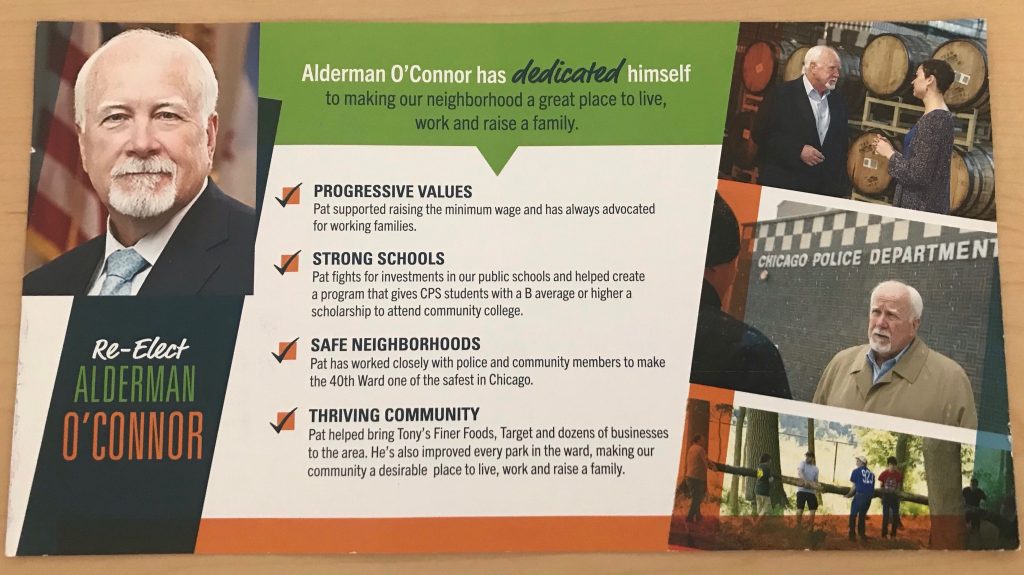
Brian Bernardoni, the senior director of government affairs and public policy at the Chicago Association of Realtors, said the group is “looking for [aldermen] we can communicate with that weren’t going to hardline, that were open to conversations on those policy matters.”
Its 2019 aldermanic questionnaire is extensive.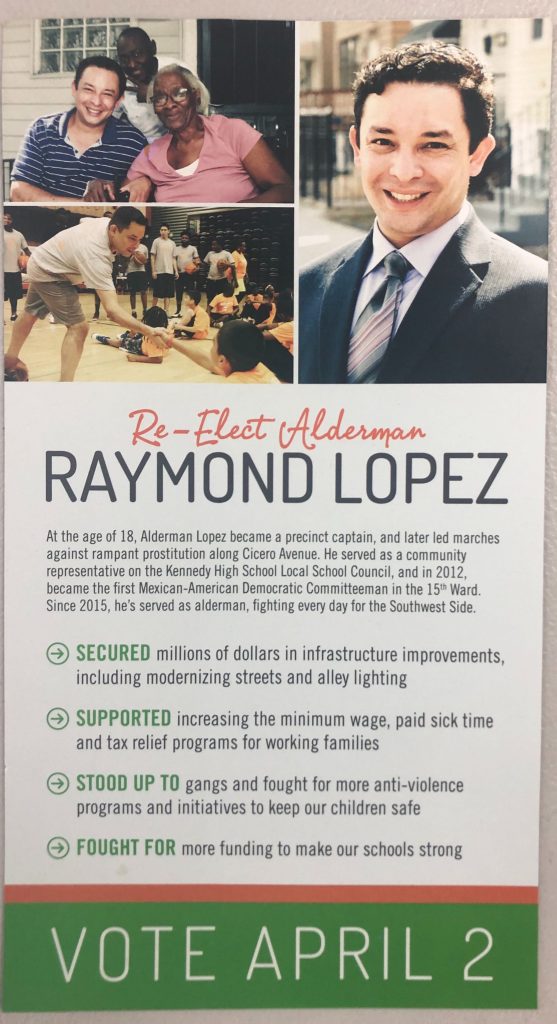
While the Chicago Association of Realtors PAC and independent expenditure fund operate independently of each other, Bernardoni said “there’s a level of alignment of trying to make sure we were concerned – as many business groups were – on the rise of Democratic Socialists, progressive types who were very very clear about being anti-real estate, pro-rent control. When you start off a conversation that we’re the bad guy for no reason, we’ve got to do what we can. I think it’s reflected in our spending.”
Compared to 2015, Scobey estimates Realtors “might’ve even doubled” their independent expenditure spend this year.
“I think some of the issues that have come up, candidates that we’re not supporting who favor things like rent control, there’s more of them this time around, and who favor a really steep increase in the real estate transfer tax, more of them are challenging incumbents,” Scobey said. “Some even identify as Democratic Socialists.”
The Illinois Realtors Fund spent:- More than $65,000 defending Ald. Pat O’Connor (40) and Ald. James Cappleman (46) each before and after the runoff election.
- More than $50,000 on mailers for Ald. Ariel Reboyras (30) and supporting Stephanie Coleman in the 16th Ward.
- Between $30,000 and $35,000 supporting failed 4th Ward candidate Ebony Lucas, as well as Ald. Gregory Mitchell’s (7) successful re-election bid and for Ald. Raymond Lopez (15).
- Spent between $20,000 and $26,000 supporting Alex Acevedo in the 25th Ward, Ald. Deb Mell in the 33rd, Amanda Yu Dietrich in the 35th Ward and Samantha Nugent in the 39th Ward.
-
The only Chicago Republican in the General Assembly said Tuesday he plans to introduce a bill that would yank state tax credits from any production that employs Jussie Smollett as the political firestorm over the Cook County State’s Attorney’s decision to drop all charges against the actor reached Springfield.
 State Rep. Michael McAuliffe [Twitter]
-
MAR 26, 2019

UNLOCKED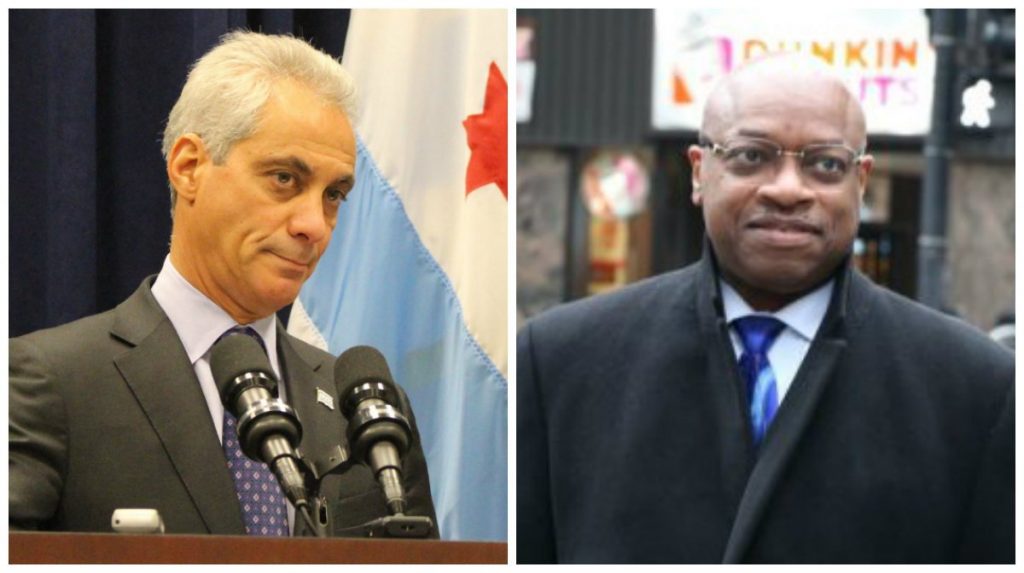
Mayor Rahm Emanuel will not ask the City Council to appoint a replacement for convicted Ald. Willie Cochran (20th) before the April 2 election.
TED COX/DNAINFO; KELLY BAUER/DNAINFODespite rumors in the 20th Ward, Mayor Rahm Emanuel will not ask the City Council to appoint a replacement for convicted Ald. Willie Cochran (20) before the April 2 election, sources in his office said Monday.
But Emanuel has not ruled out replacing Cochran before the mayor leaves office May 20. -
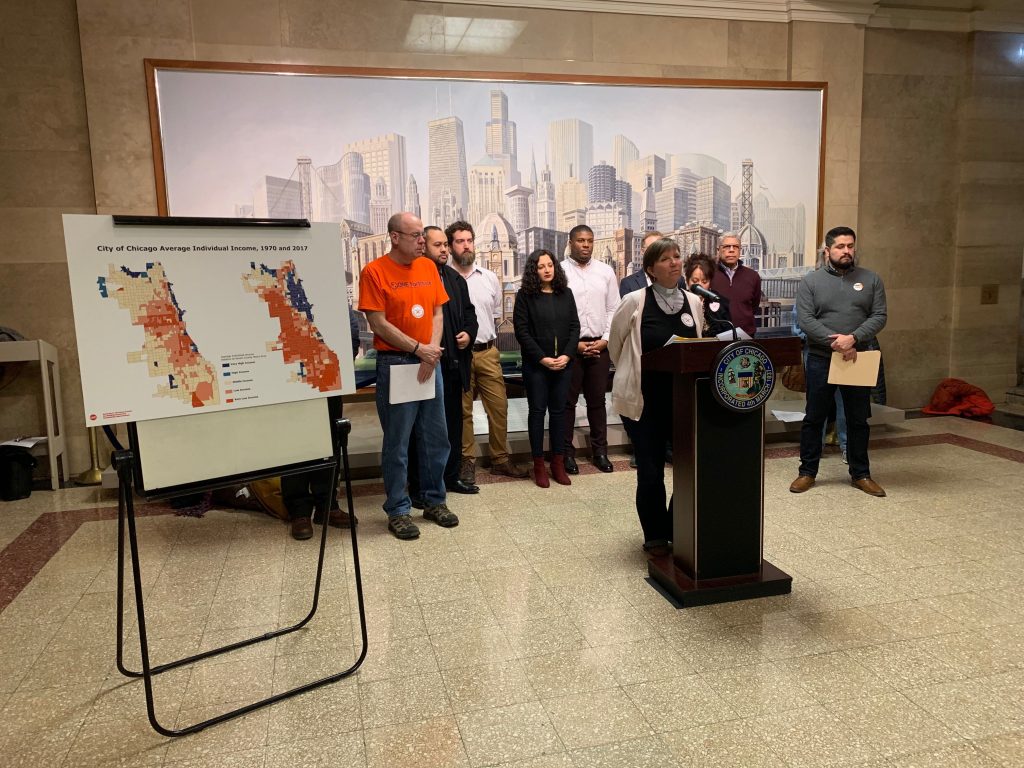 The Rev. Liala Beukema, the pastor of LakeView Lutheran Church, said the area between Bucktown and Lincoln Park slated to become Lincoln Yards is “hardly blighted and not in need of a city subsidy.” [Heather Cherone/The Daily Line]
A coalition of groups Tuesday called for city officials to delay plans to fuel two massive developments that will transform Chicago’s landscape with 16,000 new apartments and condominiums. The coalition wants to pause a vote on $1.6 billion in city subsidies until a study can determine whether it would “deepen inequity” in Chicago.
Sterling Bay’s Lincoln Yards, a $6 billion, 6,000-unit mega-project along the North Branch of the Chicago River relies on $900 million to be used for infrastructure from the proposed 168-acre Cortland and Chicago River Redevelopment Area (F2018-72).
Related Midwest’s plans for a new neighborhood between the South Loop and Chinatown dubbed “The 78” relies on $700 million to be used for infrastructure from the proposed 141-acre Roosevelt/Clark Tax Increment Financing Redevelopment Area (F2018-71).
The 78 and Lincoln Yards have been approved by the City Council.
Votes to create both tax-increment financing districts are expected to take place at the April 8 Finance Committee meeting, and the full City Council could act as soon as April 10 at Mayor Rahm Emanuel’s last regular City Council meeting as mayor.
The Rev. Liala Beukema, the pastor of LakeView Lutheran Church, said the area between Bucktown and Lincoln Park slated to become Lincoln Yards is “hardly blighted and not in need of a city subsidy.”
However, the Community Development Commission and the Chicago Plan Commission endorsed a report from the Department of Planning and Development that found the area was blighted with vacant buildings and a defunct steel mill.
The Racial Impact Equity Assessment would be conducted by Chicago United for Equity, a nonprofit group, that would compile data and hold community meetings.
Chicago United for Equity Executive Director Niketa Brar said the assessment would be similar to a traffic study or environmental impact report.
“Leaders and community members should understand the consequences before making a decision,” Brar said.
Related: Affordable housing becomes flashpoint in fight over Lincoln Yards, The 78 subsidies
Grassroots Collaborative organizer Marcos Ceniceros said the study is needed to determine whether the project will “lessen or exacerbate the divide.”
Only Ald. Roberto Maldonado (26) joined the coalition’s news conference. He was one of 14 aldermen to vote against approving Lincoln Yards earlier this month.
Related: Lincoln Yards approved 33-14 as aldermen get personal during debate
Supporters of the projects hope their approvals will signal the final transformation of Chicago from an industrial behemoth to a city poised for growth in the 21st Century, while critics contend the projects offers only “crumbs” to the rest of the city.
During the debate during the City Council meeting March 13, aldermen who voted against the project said it would but barely put a dent in Chicago’s affordable housing shortfall or reduce the economic or racial segregation plaguing the city.
“This is the rich getting richer,” Ald. Harry Osterman said during the debate. “The North Side getting north-er.”
Both Toni Preckwinkle and Lori Lightfoot have called for both projects to be delayed until after the new mayor and City Council are sworn in May 20. -
Spending by Mayor Rahm Emanuel and his big money allies, the Sacks family, are roughly the same levels as in 2015, but with the resurrection of the mayor-aligned PAC, Chicago Forward on Monday morning, more is certain to come in the campaign’s waning days. Plus — we’ve mapped aldermanic endorsements and have the latest on TV spending.
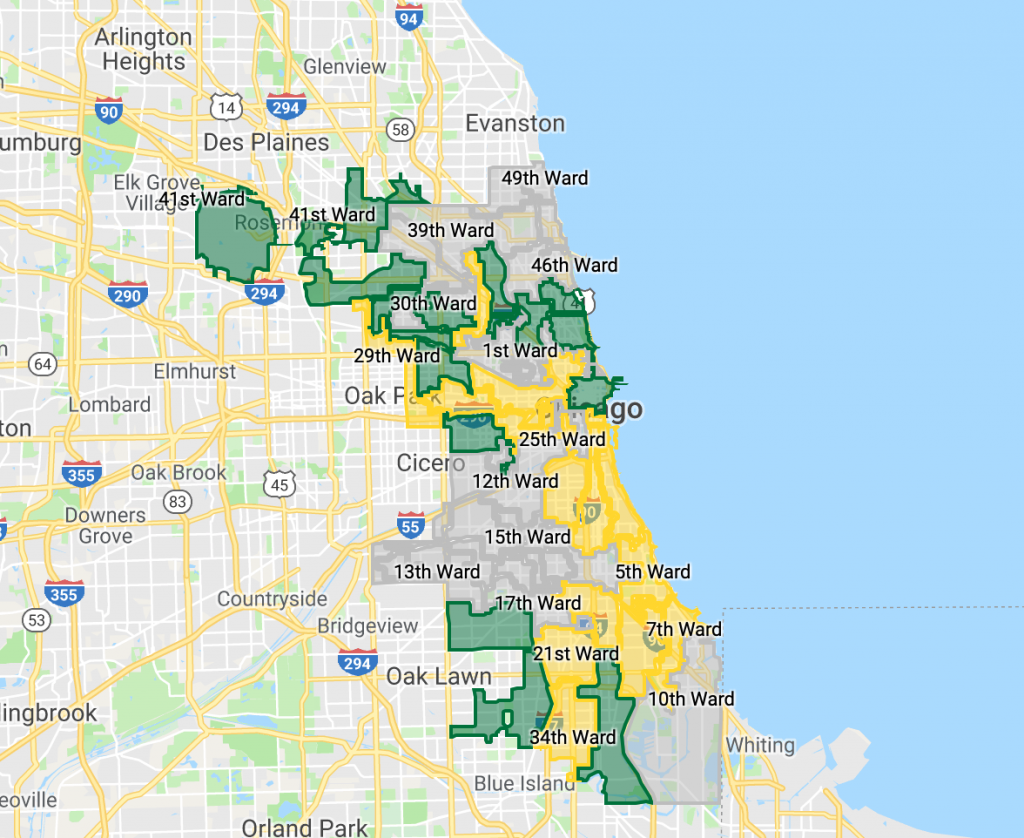 A map of aldermanic endorsements. Lori Lightfoot is in green, Toni Preckwinkle in yellow. [A.D. Quig]
- Emanuel & Sacks, big spenders once again — A recent Tribune analysis of Mayor Rahm Emanuel’s 2019 spending found the mayor’s committee, Chicago for Rahm Emanuel, made at least $620,000 in campaign contributions to 28 sitting aldermen, an average of about $22,000 per candidate. But when combined with the more than $200,000 his political allies, Michael and Cari Sacks, have personally contributed to sitting aldermen since early 2018, the average spending is boosted to just more than $29,000 per race in the 2019 cycle. Chicago Forward, a Super PAC Emanuel allies including the Sacks helped fund, spent $1.1 million on 37 aldermanic races in 2015 — averaging out at just under $30,000 per race. Emanuel allies lost 11 of those races. The PAC was resurrected Monday evening with a $42,143 digital and television ad campaign against 47th Ward candidate Matt Martin and 40th Ward candidate Andre Vasquez and supporting Ald. Roderick Sawyer (6) and 39th Ward candidate Samantha Nugent. Some funding came from a $59,000 transfer from Progress Chicago PAC, a now-inactive group that ran ads touting Chicago’s educational progress before Emanuel dropped out of the race. Donors to that PAC included Michael Sacks, IBEW Local 134, IUOE Local 150 and LiUNA Chicago Laborers’ District Council.
-
Where aldermanic loyalties lie in the mayor’s race — Ald. Deb Mell (33) added her name to the list of aldermen supporting Lori Lightfoot’s mayoral bid on Monday. Prefer a map? Here’s ours – Lightfoot is in green, Preckwinkle is in yellow.
- With Lori Lightfoot – Ald. Anthony Beale (9), Ald. Derrick Curtis (18), Ald. Matt O’Shea (19), Ald. Michael Scott (24), Ald. Milly Santiago (31), Ald. Scott Waguespack (32), Ald Deb Mell (33), Ald. Gilbert Villegas (36), Ald. Emma Mitts (37), Ald. Nicholas Sposato (38), Ald. Anthony Napolitano (41), Ald. Brendan Reilly (42), Ald. Michele Smith (43), Ald. Tom Tunney (44)
- With Toni Preckwinkle – Ald. Pat Dowell (3), Ald. Sophia King (4), Ald. Leslie Hairston (5), Ald. Roderick Sawyer (6), Ald. Greg Mitchell (7), Ald. Michelle Harris (8), Ald. Patrick D. Thompson (11), Ald. Howard Brookins (21), Ald. Walter Burnett Jr. (27), Ald. Jason Ervin (28), Ald. Chris Taliaferro (29), Ald. Carrie Austin (34), Ald. Carlos Ramirez-Rosa (35)
-
Television ad roundup — In addition to the money Chicago Forward plans to spend in aldermanic races, here are other updates:
-
State Rep. Melissa Conyears-Ervin is hitting the airwaves hard in the final week of the race for treasurer. A source familiar with the campaign’s spending says she will spend approximately $400,000 on an ad hitting Ald. Ameya Pawar (47) for his attendance rate at City Council. The ad, which follows a bio spot that ran in the general election, cites a joint analysis of attendance records from The Daily Line and WBEZ. Conyears-Ervin has spent $190,000 on TV since the beginning of the runoff, and the next buy begins Tuesday. Pawar’s campaign did not respond to a request for information about his ad strategy in the final days of the campaign. His ad, “Noise”, can be viewed here.
-
Related: Dueling polls shows close race for treasurer; Candidates for treasurer offer different visions for office that has operated behind the scenes
-
Related: Dueling polls shows close race for treasurer; Candidates for treasurer offer different visions for office that has operated behind the scenes
- The 43rd Ward candidates’ battle continues in one of the city’s most expensive races and one of few wards where aldermanic hopefuls are on television. Ald. Michele Smith (43) has a new ad up on cable focused on capital improvements made to schools throughout Lincoln Park. Challenger Derek Lindblom is spending $60,000 to air two of his ads on cable: “Disruptor,” about his work in the tech sector, with Sen. Chuck Schumer, and in Mayor Rahm Emanuel’s office; and “Politics as Usual,” about Smith’s vote for a property tax hike.
- Lori Lightfoot’s campaign made a $90,000 buy on Univision and Telemundo for her new Spanish-language ad featuring and narrated by Congressman Jesus “Chuy” Garcia. “Ella es el cambio que restaurara la seguridad en las calles, la excelencia en la educación y la prosperidad a todos los barrios de Chicago,” Garcia says. Translated: “She is the change that will restore safety to our streets, excellence to education, and prosperity to all Chicago neighborhoods.”
-
State Rep. Melissa Conyears-Ervin is hitting the airwaves hard in the final week of the race for treasurer. A source familiar with the campaign’s spending says she will spend approximately $400,000 on an ad hitting Ald. Ameya Pawar (47) for his attendance rate at City Council. The ad, which follows a bio spot that ran in the general election, cites a joint analysis of attendance records from The Daily Line and WBEZ. Conyears-Ervin has spent $190,000 on TV since the beginning of the runoff, and the next buy begins Tuesday. Pawar’s campaign did not respond to a request for information about his ad strategy in the final days of the campaign. His ad, “Noise”, can be viewed here.
- Early voting behind 2015 — Precisely 49,661 Chicagoans have voted early in the runoff election, with 6,444 casting ballots as of 5 p.m. Monday. With a week left of voting remaining, early voting is up, as compared with this year’s general election, but down from the runoff election in April 2015. At this point in 2015, 82,507 people had participated in early voting. The 19th, 41st, 47th, 4th, and 34th wards currently lead in early voting. The wards with the lowest turnout are the 22nd, 12th, 35th, 14th and 26th. Exactly 57,743 mail in ballots have been requested, but just 6,357 have been returned so far.
-
Ald. Margaret Laurino’s (39) looming retirement from the Chicago City Council will close the books on one of the most enduring Chicago political dynasties — and usher in a new era of politics on the Far Northwest Side.
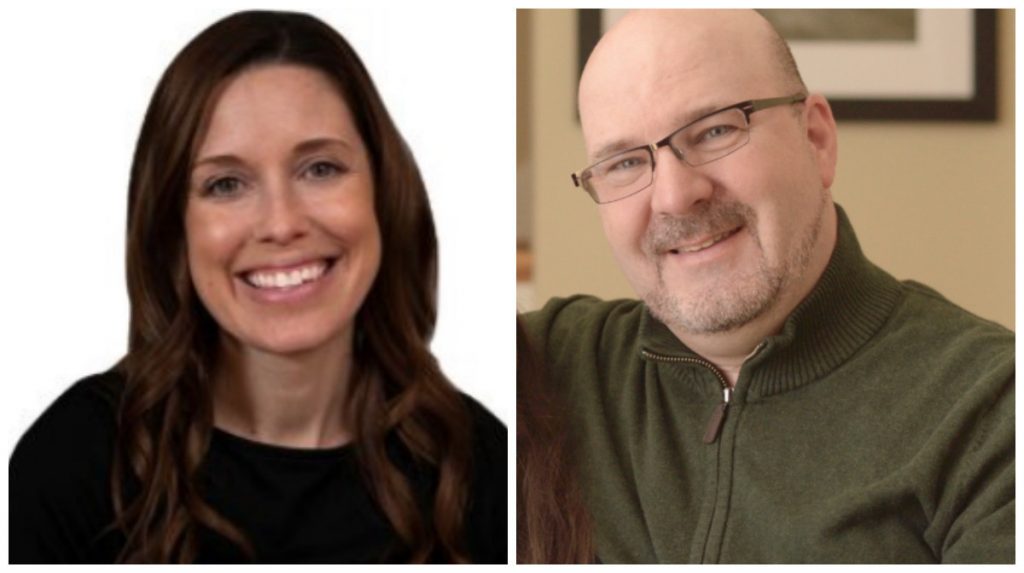 Samantha "Sam" Nugent and Robert Murphy. [Submitted]
Laurino will leave the City Council along with Mayor Rahm Emanuel, who tapped her to serve as president pro tempore of the City Council in 2013 and to helm the Legislative Reference Bureau, which was designed to help all 50 aldermen craft ordinances and resolutions with “impartial research.”
But come May 20, the 39th Ward will be represented by a rookie alderman for the first time since 1994, when Laurino was appointed by former Mayor Richard M. Daley to replace her father, former Ald. Anthony Laurino (39). He was elected to the City Council in 1965.
In 1995, Anthony Laurino was indicted by federal investigators on a ghost-payrolling scheme. He died before his trial ended, but his wife, Bonnie Rhein Laurino; another daughter, Marie D'Amico; and her husband, John D’Amico, were convicted.
Robert Murphy, who ran against Laurino in 2015 and fell 350 votes short of forcing her into a runoff, had expected a rematch with the veteran Chicago politician. Instead, he faces Samantha “Sam” Nugent, an attorney and former chief of staff for the Cook County Department of Homeland Security, who was the top vote-getter in the first round of voting on Feb. 26, finishing with 33 percent of the vote. Murphy won 29.56 percent.
In 2016, Murphy was elected the 39th Ward’s Democratic committeeman over Patrick Molloy, who is now the director of government and public affairs for the Chicago Public Library. Molloy was Laurino’s pick to replace her husband, Randy Barnette, who stepped down as committeeman rather than run for re-election.
Murphy said he was running to put an end to one-family control of the ward, which includes Sauganash, Edgebrook, Old Edgebrook, Mayfair, Gladstone Park, Indian Woods, Hollywood Park, North Park and Forest Glen.
“I’m running to make sure people have a real voice,” Murphy said.
Murphy has been endorsed by several leaders of the progressive wing of the Chicago Democratic Party, including U.S. Rep. Jesus “Chuy” Garcia, D-Chicago, and Cook County Assessor Fritz Kaegi, former Cook County Clerk David Orr and 32nd Ward Ald. Scott Waguespack, the chairman of the City Council’s Progressive Caucus.
Murphy pledges to hold mobile ward nights in all parts of the large ward, and launch a participatory budgeting process, which would allow residents to vote on how to spend his $1.3 million discretionary capital fund, known as menu money.
“For a lot of 39th Ward residents, the city’s not working for them,” said Murphy, an architect who lives in Forest Glen with his wife and daughter, who attends a Chicago Public School.
The two other candidates in the first round of voting — Casey Smagala, director of community engagement at the Albany Park Community Center, and Chicago Police Officer Joe Duplechin — have endorsed Nugent.
Nugent also won the endorsement of the Tribune, while Murphy won over the Sun-Times editorial board.
Nugent worked as a fellow at City Hall during the administration of former Mayor Richard M. Daley and for former Attorney General Lisa Madigan’s 2006 campaign. Nugent has the support of U.S. Rep. Mike Quigley, D-Chicago, as well as state Rep. John D’Amico, D-Chicago, who is the nephew of Ald. Margaret Laurino.
Nugent lives with her husband and three children, who attend a Catholic school, in Sauganash.
While the alderman has not endorsed either Murphy or Nugent, D’Amico’s support indicates that the Laurino family is behind Nugent, Murphy said.
Nugent said she was proud to have D’Amico’s endorsement, adding he was just one of several area elected officials she asked for their endorsement. It did not mean she would be a carbon copy of Ald. Laurino. “I’m Sam Nugent,” she said.
Concerned with an uptick in violent and property crimes, Nugent said public safety would be her top priority as alderman. “We’re hitting a tipping point,” Nugent said.
Murphy agreed that more officers need to be assigned to patrol the 16th and 17th police districts, which cover some of the city’s safest neighborhoods.
“We don’t see the kind of patrols that we used to,” Murphy said, adding that he would also work to bring more resources to the 39th Ward in addition to more officers. “I will take a much more holistic approach.”
Neither Murphy nor Nugent have endorsed a candidate in the mayoral contest, and both have vowed to focus on the ward’s roads and other crumbling infrastructure while preparing for a disaster or emergency.
In addition, the rivals are both open to the legalization of marijuana as well as the creation of a casino in Chicago to raise revenue to cover the city’s looming pension bills.
But while Nugent is open to Mayor Rahm Emanuel’s proposal to borrow $10 billion to start paying down that debt, Murphy said that would be an “irresponsible use of money.”
But while Murphy and Nugent agree on some issues, Murphy said the “contrast is very stark” between the two.
Murphy’s campaign slammed Nugent on Monday for accepting a $4,800 contribution from Anchor Mechanical on Jan. 14.
That violates the city’s campaign contribution limits, since Anchor Mechanical has a city contract to maintain heating and cooling units. City vendors are limited to $1,500 contributions.
Nugent’s campaign refunded the excess to Anchor Mechanical. The company has given money to aldermanic campaigns dating back to 2002, according to records filed with the Illinois State Board of Elections — with a $3,300 check dated Friday.
“Our city has been ‘For Sale’ for far too long,” Murphy said in a statement. “Large donations like this are precisely why politicians put corporate profits above community interests.”
Murphy supports efforts to expand the authority of Inspector General Joseph Ferguson to include aldermen and the City Council’s committees.
Nugent returned the excess campaign contribution after an anonymous Twitter account that has criticized her and other aldermanic candidates flagged the contribution.
Nugent’s campaign manager Morgan Macfarlane said Murphy and his supporters “continue to sling mud” rather than focusing on “the actual issues facing the residens [sic] of the 39th Ward. Samantha's positive campagin [sic] focused on public safety, improving our community, and economic development will continue and she'll remained focused on that.” -
MAR 26, 2019
UNLOCKEDIn the campaign to succeed Rahm Emanuel, candidates Lori Lightfoot and Toni Preckwinkle talk neighborhoods and look for votes.
ProPublica Illinois reporter Mick Dumke looks at the state’s political issues and personalities in this occasional column.
Lori Lightfoot was running early. Most political campaigns struggle to stay on schedule, especially as Election Day speeds closer. But in the final stretch of the runoff election for Chicago mayor, Lightfoot appeared to be rolling with such confidence that her campaign started holding rallies well ahead of their announced start times.
Meanwhile, Toni Preckwinkle, fighting the perception that Lightfoot had all the momentum, showed flashes of the candor and personality many voters wish they had seen from her throughout the mayoral race.
“This has been an —” Preckwinkle paused during our interview last week before finishing the sentence: “interesting campaign.”
Chicagoans don’t have much experience with open mayoral elections — this is the first in decades that doesn’t include an incumbent or anointed heir. But it turns out that all sorts of things can happen when democracy moves in. After Mayor Rahm Emanuel announced in September that he wouldn’t seek a third term, 14 candidates made the ballot to succeed him.
Because none received a majority in the first round of voting in February, the top two finishers — Lightfoot and Preckwinkle — went into the April 2 runoff.
Whoever wins will become Chicago’s first black woman mayor.
On many issues, they share nearly identical positions. Both Lightfoot, an attorney and first-time candidate, and Preckwinkle, the Cook County Board president, present themselves as progressives who will focus on safety, schools and jobs in the city’s neighborhoods. Both say they'll address the needs of South and West side communities desperate for investment as well as rapidly gentrifying areas extending from downtown where housing costs are soaring.
But voters are demanding a change after eight years under Emanuel and 22 years under his predecessor, Richard M. Daley. In response, the two candidates have tried to cast each other as part of the city’s political machine. Lightfoot has hit Preckwinkle for chairing the Cook County Democratic Party and receiving fundraising help from Ald. Ed Burke (14), who was charged in federal court in January with attempted extortion of a Burger King franchisee in his ward. For
her part, Preckwinkle calls Lightfoot “the ultimate insider” for accepting appointments in the Daley and Emanuel administrations.
To get an up-close glimpse of how the race was unfolding, I asked both campaigns if I could hang out with them for a bit. Aides to Lightfoot invited me to follow her to several get-out-the-vote stops, while Preckwinkle's team scheduled me for an interview at her campaign headquarters.
When Lightfoot arrived early for a rally at her campaign field office on West 47th Street, in the working class Brighton Park neighborhood, her volunteers and supporters were ready. As Lightfoot strode into the storefront office in a flash of green — wearing the emerald coat and green-checked fedora she’d put on for the St. Patrick’s Day parade earlier that day — dozens of her backers chanted “LO-RI! LO-RI! LO-RI!”
“We have the opportunity to do something really special,” Lightfoot told the group crowded around her, most of them Latinx younger than 30, as an aide translated her remarks into Spanish. “It’s really clear that black and brown communities are not getting their fair share of resources.”
Lightfoot then led the room in a chant of “Sí Se Puede,” or “Yes, it can be done,” a longtime activist and civil rights rallying cry.
Lightfoot’s critics on the left say her record is anything but progressive. A former federal prosecutor, Lightfoot was appointed by Daley to lead the Office of Professional Standards, which oversaw police accountability from within the department, and then was picked by Emanuel to preside over the police board, which reviews police discipline cases. She repeatedly failed to hold officers accountable for misconduct, her critics charge, with some going so far as to say she’s essentially a cop herself. Lightfoot counters that she worked to change the system from within.
“We can’t just yield the floor to people whose views we don’t agree with,” she said in a recent interview. “We’ve got to be in the room, because if we’re not, our people are always going to get screwed.”
None of that came up when Lightfoot greeted potential voters on the 1600 block of West 47th Street in the Back of the Yards neighborhood. As Lightfoot bought tamales from a street vendor, a beaming young mother nearby turned to her curious daughter and said, “It’s Lori Lightfoot — in our neighborhood!”
Lightfoot stepped into a supermercado, where shoppers and employees stopped what they were doing while she introduced herself and shook hands. A cashier explained who Lightfoot was to her customers.
“She’s going to be the next mayor of Chicago,” the cashier said. She laughed, then added, “Well, she might be.”
Right. This being an actual election, the voters have to weigh in first, and Preckwinkle vows it’s not over.
During much of the mayoral race, Preckwinkle has seemed defensive, evasive and scripted, even reading talking points from her notes during candidate forums. But when I sat down with her last week at her River North campaign headquarters, Preckwinkle resembled the blunt, confident politician I’d interviewed in the past — including her first two terms as county board president, when she focused on repairing county finances and addressing racial disparities in the criminal justice system.
I suggested she had been playing defense since the revelations about Burke and his fundraising effort for her, and the campaign had not gone as she’d expected.
“That is an understatement,” she said, and then laughed.
Preckwinkle noted, as she has before, that when she served as an alderman from 1991 to 2010, she had an independent record. She was not friends or allies with Burke, who helped advance Daley’s agenda while Preckwinkle often opposed it.
But it’s not clear if that part of the story ever sunk in with voters.
“I don’t know,” she said, though “it’s what I always say.”
Voters have other concerns, Preckwinkle said. “When I go out in the communities, what people are really talking about are their neighborhoods. In Logan Square, Humboldt Park and Pilsen, I hear people say, ‘We’ve lived in this community for generations, and I’m not sure we can afford to stay here.’ On the West Side, all you hear is, ‘There’s never any investment in our communities.’ Both of those challenges have to be addressed.”
When I asked how the city would find the resources to rebuild areas in need, she — like Lightfoot — didn’t have specific answers. But Preckwinkle said her record as alderman and county board president shows she can get things done.
Both Lightfoot and Preckwinkle have said they’re opposed to current proposals for a taxpayer subsidy of as much as $1.3 billion for Lincoln Yards, a development along the North Branch of the Chicago River with 6,000 planned housing units.
Lightfoot vowed in a recent interview to hold up payments for the project if the City Council approves the subsidies before the new mayor takes office in May. Preckwinkle said she too would like to slow the project.
For now, she said, “I’m focused on April 2.”
And that’s when things get truly interesting: After months of visiting neighborhoods around the
city, the new mayor will have to start showing she can fix them, too.
ProPublica Illinois is an independent, nonprofit newsroom that produces investigative journalism with moral force. Sign up for The ProPublica Illinois newsletter for weekly updates.
-
In Illinois politics, no woman is an island.
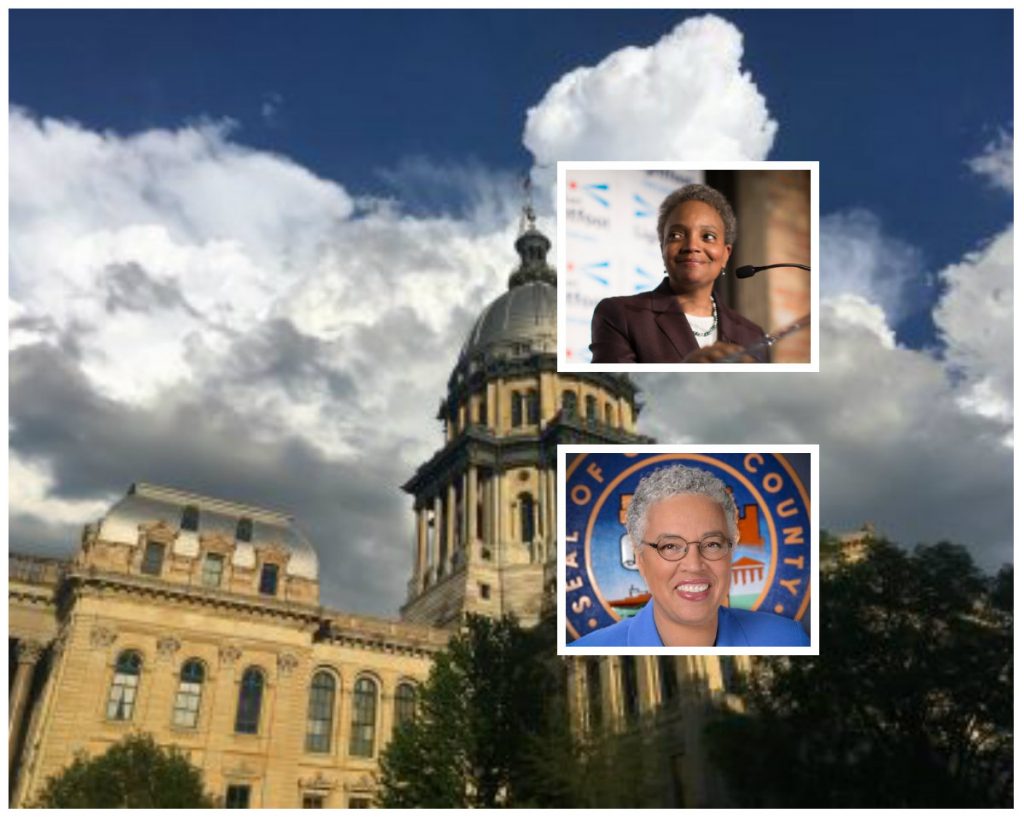 The next mayor will need a little help from her friends in Springfield. [Hannah Meisel/The Daily Line; Submitted]
Even if she is the mayor of Chicago.
Whether the April 2 runoff election results in a Mayor Lori Lightfoot or a Mayor Toni Preckwinkle, neither woman will be able to accomplish all of her priorities for Chicago without the help of Springfield.
What’s possible, however, remains to be seen.
-
A Lake County judge ruled that Deerfield officials violated state law with a 2018 ordinance banning semi-automatic firearms, delighting the Illinois State Rifle Association. Meanwhile, Gov. JB Pritzker and Mayor Rahm Emanuel — on crutches after knee surgery — joined forces to announce an expansion of preschool classroom in some of Chicago’s highest-need communities, long a shared passion for the two politicians.
 Gov. JB Pritzker and Mayor Rahm Emanuel have long a shared passion for expanding easily childhood education. [Chicago Mayor's Office]
-
While Cook County Board President Toni Preckwinkle was presiding over what could be one of her last county meetings as president, Chancelor Bennett, better known as Chance the Rapper, was across the building, offering his endorsement of her mayoral bid as the most qualified candidate who will “account for the police for victims of gun crime, victims of economic crime.”
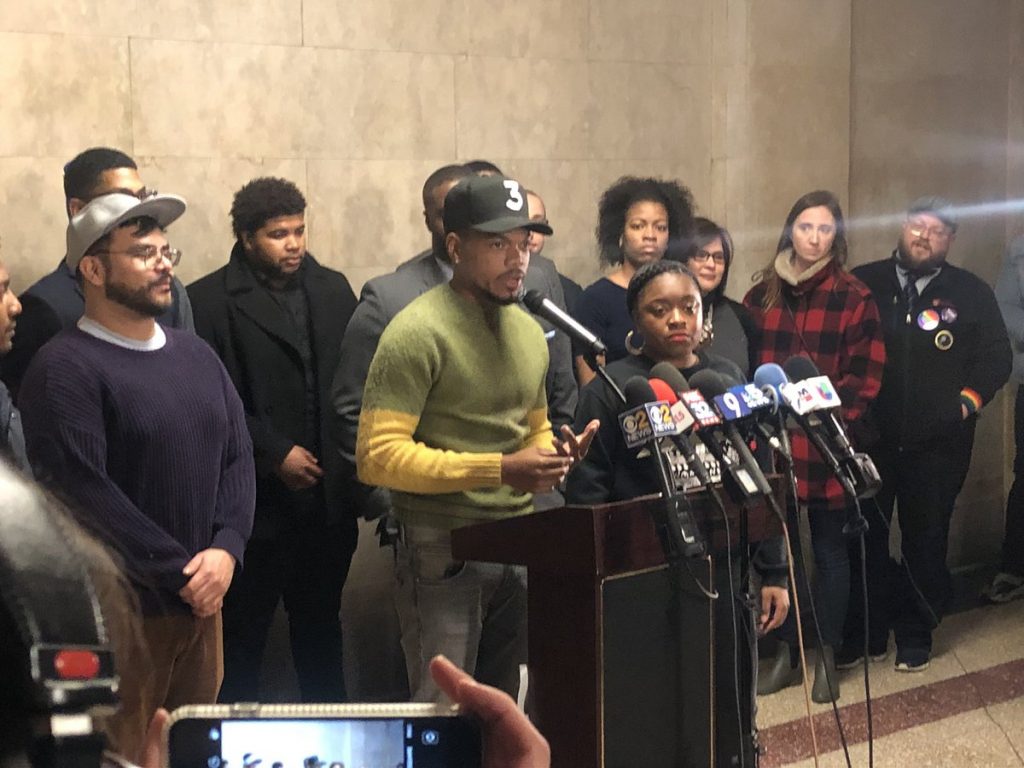 “The resounding voice has been that they don’t necessarily feel comfortable or safe going into a city where Lori Lightfoot sits on the 5th Floor,” Chance the Rapper said. [A.D. Quig/The Daily Line]
-
MAR 22, 2019
 Cook County Board President Toni Preckwinkle responded Thursday to the results of a survey that found only half of her employees were confident that an allegation of sexual harassment would be fully investigated by officials as she continued her run for Chicago mayor. Comm. Bridget Gainer mourned her father, a veteran of the Daley administration, who died Saturday.
-
-
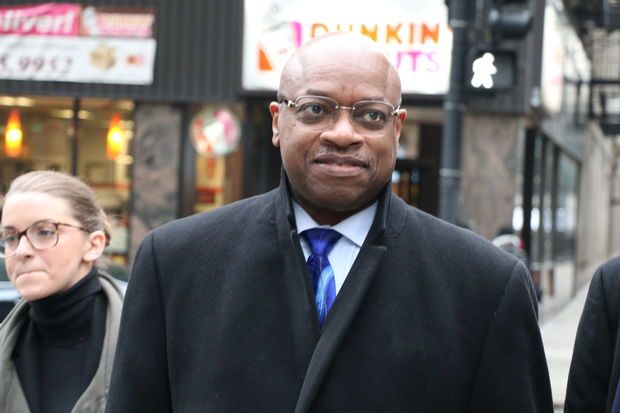 Indicted Ald. Willie Cochran (20th) pleaded guilty Thursday.
KELLY BAUER/DNAINFO
Ald. Willie Cochran (20) reluctantly pled guilty Thursday to one count of wire fraud, telling U.S. District Court Judge Jorge Alonso that he deposited a $2,000 check into a bank account he opened to fund charitable events in his South Side ward and took out $489 in cash at an Indiana casino.
Cochran, 66, a former police officer, is the 30th Chicago alderman to be convicted of corruption since 1973 as well as the third alderman of the 20th Ward to plead guilty after being charged with crimes.
Read the full plea agreement here.
Cochran’s conviction removes him from the City Council under state law. After deciding not to run for re-election while under indictment, he will be replaced by Nicole Johnson or Jeanette Taylor, who are set to face off in the April 2 runoff.
Cochran is set to be sentenced June 20. Under sentencing guidelines laid out by Alonso and agreed to by Cochran, the former alderman could face between a year and a year and a half in prison.
Had Cochran been convicted on all the counts he faced, he could have been sentenced to 10 years.
Cochran stumbled several times while Alonso asked him routine questions as part of the plea hearing. Cochran said he had taken medication for anxiety and his “health could be better” when quizzed by the judge.
The agreement the alderman reached with the U.S. Attorney’s Office nearly derailed during Thursday morning’s hearing, when Alonso asked if Cochran admitted that he had participated in a scheme to defraud donors to the 20th Ward Activities Fund, a charity he set up, between 2010-14.
Assistant U.S. Attorney Heather McShain laid out a series of events that began when an unnamed donor, identified in court as individual I, gave Cochran $2,000 for the activities fund, which the alderman said would fund back-to-school picnics, holiday parties and other community events.
Cochran deposited that check into the activity fund’s bank account. But then he withdrew $489 at a casino for his personal use, McShain said.
Alonso asked Cochran whether that was accurate.
The hearing ground to a halt after Cochran responded, “for the most part.”
When the judge asked Cochran to clarify what part of McShain’s statement was not accurate, his attorney, Christopher Grohman, asked for a recess. Alonso could have rejected the agreement if he was dissatisfied with Cochran’s admission of guilt.
When the hearing resumed more than 20 minutes later, Alonso said he wanted to hear from Cochran directly — noting the “circuitous route” the case has taken since Cochran was indicted during the Dec. 14, 2017 City Council meeting on 15 counts of wire fraud, bribery and extortion.
Prosecutors said he took $25,000 to support a gambling habit and $5,000 to pay his daughter’s college tuition from a 20th Ward fund he set up to help kids and other local residents. Cochran also shook down a lawyer for $1,500 and a local liquor store owner for $3,000 in exchange for helping them in the ward, prosecutors said.
As alderman, Cochran earned $116,208 annually in addition to his $60,280 yearly police pension, records show.
In November, Cochran rejected a plea agreement that would have required him to plead guilty to one count of wire fraud — a deal substantially similar to the one finalized Thursday.
At the time, the indicted alderman said he “could not stomach” admitting that he defrauded donors to the activity fund, Grohman said.
After another recess, Cochran returned to read a prepared statement in front of the judge that sought to clarify that he had not personally solicited the donation from Individual I.
“Does that cover it?” Cochran asked Alonso.
The judge agreed, and the hearing ended shortly afterward.
Cochran and his attorney declined to speak with reporters after the hearing, instead releasing a statement saying that the now-former alderman was gratified that all of the counts of bribery and extortion had been dismissed.
“Cochran has always steadfastly denied taking any bribes and continues to do so,” according to the statement.
However, Cochran admitted taking $14,285 from that fund for his own personal benefit. The statement said he “looks forward to repaying the $14,000 in monies” and notes that he paid taxes on that income. “Alderman Cochran looks forward to putting this saga behind him, and moving forward by focusing on his family and continuing to serve his community.” -
 Flickr/Joselito Tagarao; Inset: @AldermanWBC/Twitter
The last time Ald. Willie Cochran (20) appeared before U.S. District Court Judge Jorge Alonso, his attorney said the indicted alderman “could not stomach” pleading guilty to charges that he shook down a local business owner and stole $30,000 he collected to help people in his ward.
Instead of accepting a plea that would have required the South Side alderman to admit to one count of wire fraud, but face no mandatory jail time, Cochran asked Alonso to set a date for a trial that could result in the former police officer facing a five-year prison sentence.
That trial was scheduled to start June 3. Instead, Cochran will be back in front of Alonso Thursday morning to write the latest chapter of a saga that began during the Dec. 14, 2017 City Council meeting, when Ald. Ed Burke (14) showed Cochran an online newspaper article announcing his indictment while reporters looked on.
 [Flickr/life_chasing]
 Cook County Comm. Brandon Johnson (D-1)

