


-
MAY 21, 2026

UNLOCKEDCouncil freezes phase-out of tip credit, delaying elimination of subminimum wage by 2-5 years
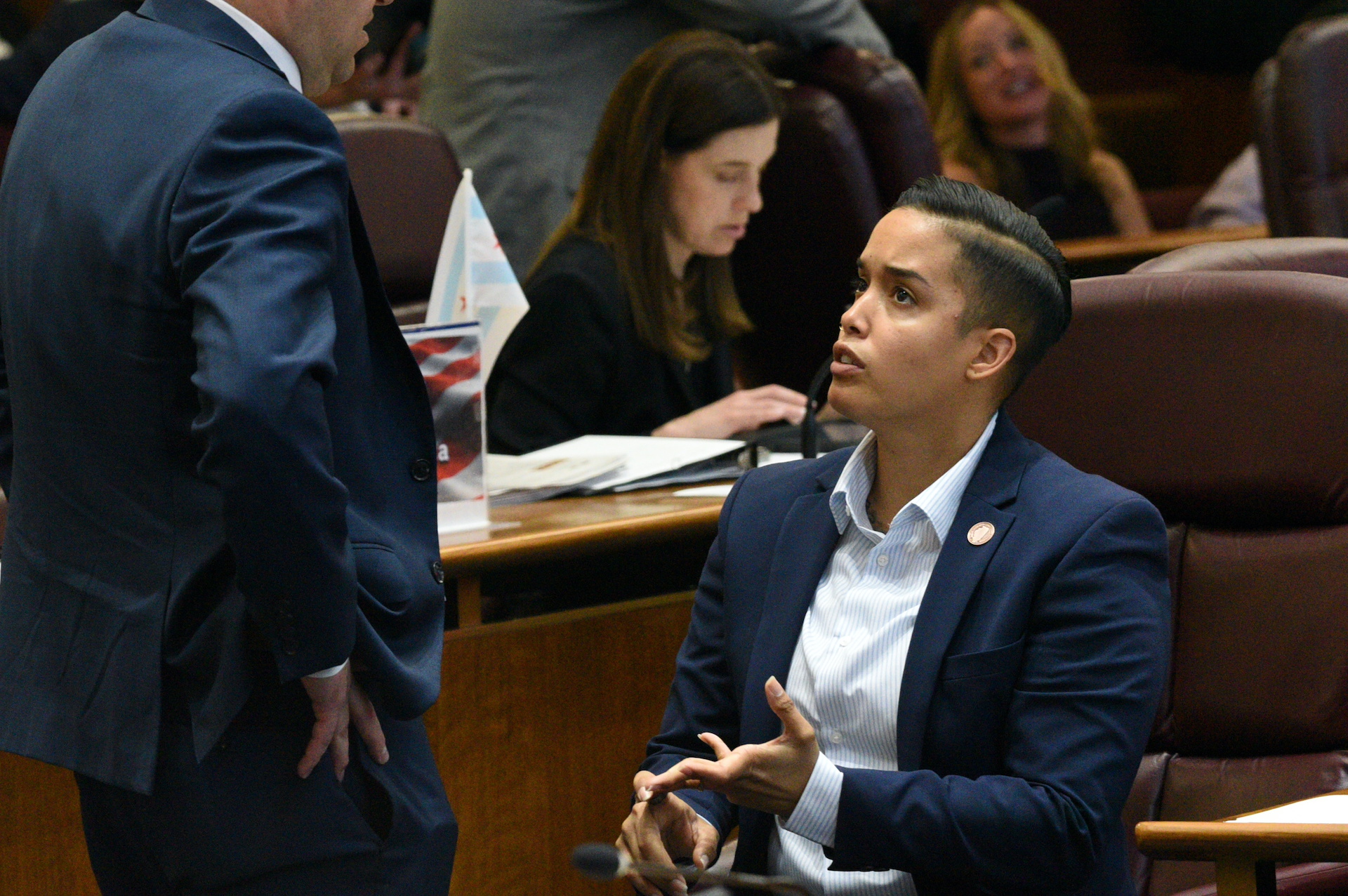
Original One Fair Wage Ordinance sponsor Ald. Jessie Fuentes (26) is pictured at a City Council meeting on April 15, 2026. [Don Vincent/The Daily Line]
In the latest chapter of the saga over the elimination of a separate wage for tipped workers, alderpeople approved a measure Wednesday that will temporarily pause the One Fair Wage Ordinance, as well as give a more gradual phase-out of the tipped wage for small businesses.
Under the One Fair Wage law passed in 2023, the subminimum wage for tipped workers has been gradually phased out on an annual basis every July since 2024 until full elimination by 2028, when tipped workers will make minimum wage before any tips.
The city’s tipped wage has been 76 percent of the minimum wage since last summer and was set to rise to 84 percent of the minimum wage in a month and a half.
Since at least last spring, some on the council have pushed to abandon or slow the elimination of the tipped wage, citing rising costs to businesses. The Illinois Restaurant Association has been particularly vocal, blaming the One Fair Wage Ordinance on hundreds of closures and reduced staff numbers and hours in their industry.
One Fair Wage advocates argue the tipped wage makes workers rely on a volatile income and forces workers to endure harassment from customers to avoid losing out on their pay.
While the law stipulates that employers must make up the difference if their tipped workers’ pay does not equal what they would have made under the minimum wage, One Fair Wage advocates say that’s tough to enforce.
The compromise ordinance (SO2026-0024043), pitched by Ald. Walter “Red” Burnett (27) and approved by the Committee on Workforce Development last week, will pause the phase-out for two years for businesses with 21 or more employees and pause it for four years for smaller businesses — freezing that 76 percent ratio in place.
Both the restaurant association and the One Fair Wage advocacy group said they could live with it.
Businesses with 21 or more workers will eliminate the tipped wage by 2030 after the phase-out resumes in 2028, and small businesses will eliminate it by 2033 after receiving an additional two years with the tipped wage ratio paused.
Mayor Brandon Johnson vetoed an ordinance about two months ago that would have frozen the One Fair Wage law indefinitely, and his office has presented data showing the restaurant industry has grown. The council was unable to overturn the veto last month.
Alderpeople won’t have to fear a veto this time, as just Ald. Jason Ervin (28) voted no.
Ald. Marty Quinn (13), who had pushed to slow One Fair Wage, praised the compromise.
“Many hours, discussions and negotiations have gone into this compromise ordinance, and I feel good about the work that was done collaboratively with all sides,” Quinn said. “The compromise makes sense for the city of Chicago, for our restaurant owners and for our servers.”
Ervin said the move represented a betrayal to the city’s working class.
“I know that the art of compromise is one thing, but there's a difference between compromise and caving in,” Ervin said. “This is a cave-in on the people on the South and West sides of Chicago, and I don't see how people can support not letting people get to a basic minimum wage.”
Come July 1, the tipped wage will only rise in relation to the inflation-based adjustment for the minimum wage.


