


-
MAY 22, 2026

UNLOCKED‘Fair Access to Democracy’ ordinance passed by City Council even as some criticize insufficient Board of Elections input
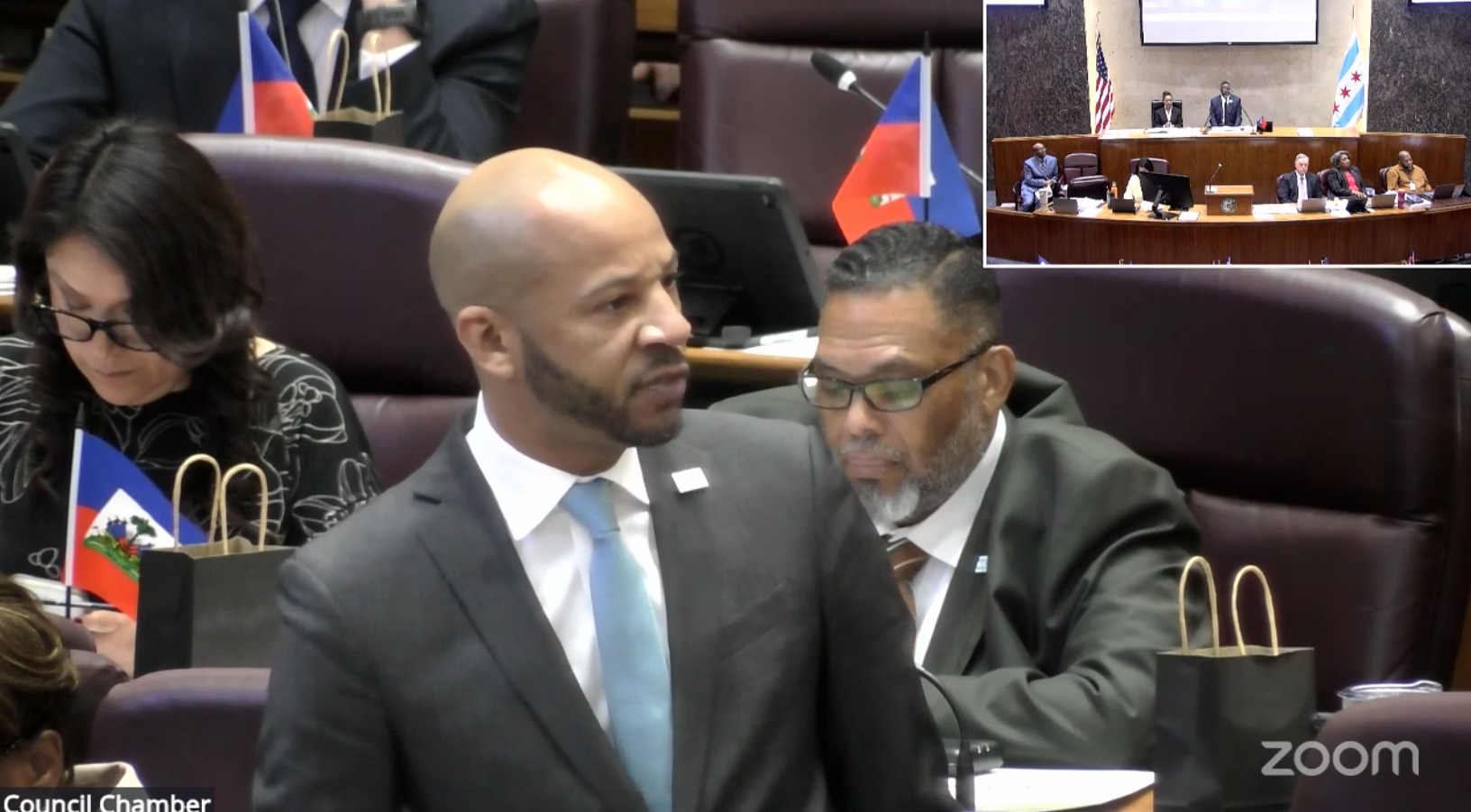
Ald. Lamont Robinson (4) voices support for the Rev. Jesse L. Jackson, Sr. Fairness in Democracy Ordinance at a City Council meeting on May 20, 2026. [Livestream]
The City Council on Wednesday approved an ordinance (SO2026-0024036) backed by Mayor Brandon Johnson and pushed by voting rights groups to enact and study policies to safeguard and improve access to the ballot box and protect rank-and-file election workers from targeted harassment.
The ordinance is named after the late Rev. Jesse Jackson, Sr., a champion of the protection and expansion of voting rights, and was spurred by fears about intimidation or from the Trump administration that could restrict access this November.
While some opponents said they thought the measure, despite its intent, duplicated some existing powers of the Chicago Board of Elections and wasn’t fully thought through, both the mayor and other advocates said threats to voting rights from the federal government and U.S. Supreme Court necessitate action, even if that action is imperfect.
The ordinance passed 42-8.
The vote tally is below

“What you heard from people today was … people mad at the temerity and the audacity of my leadership in this moment,” the mayor said of critics at a press conference Wednesday. “People talking about, they know how to honor the legacy of Rev. Jesse L. Jackson Sr., while capitulating to the very concepts that he fought for.”
“The [U.S.] Supreme Court’s recent decision to gut the Voting Rights Act is an affront to everyone who marched, bled, died, to make that law possible,” said Ald. Lamont Robinson (4) in a passionate speech on the council floor. “Colleagues, have you not been watching TV? Have you not been listening to the radio? Where have you been? We have made some strides since the 1970s, but if we don’t get our act together, we’re going back.”
Before passing the ethics committee Tuesday, Chief Strategy Officer Sheila Bedi told alderpeople the ordinance is meant to formalize some of the election board’s “ad hoc” work, such as educating the public about voter registration and upcoming elections and improving language access at the polls, which sometimes occurs in partnership with outside nonpartisan groups.
Ethics Chair Matt Martin (47) said Wednesday the elections board was neutral on it.
Related: Ethics committee approves mayor’s ballot access ordinance
Ald. Matt O’Shea (19), one of the no votes, said the ordinance adds bureaucracy without adding any functions that aren’t currently under the purview of the Board of Elections.
“We continue to add to government. We continue to make up fancy platitudes that make it sound like we're doing something,” O’Shea said. “Nobody who’s part of this panel [that testified Tuesday] could answer basic questions as to who from the damn Board of Elections they’ve been working with.”
Martin told the council that the board’s top attorney had communicated the ordinance did not fall within the election board’s current statutory functions.
Little Village Ald. Byron Sigcho-Lopez (25) also gave a fiery speech in defense of the ordinance.
“This federal government is going to rig the elections in November,” the 25th Ward alderman said. “Make no mistake about it. So, choose a side. You’re on the side of history, when Rev. Jackson was fighting to encourage voting rights and protect them, or you’re on the side of the fascists taking those rights away.”
Though he voted yes on the final measure, Ald. Scott Waguespack (32) said he had issues with the construction of the ordinance, insufficient Board of Elections input and disregard for work the board does.
“There clearly was a poorly drafted and contradictory ordinance put before us that did not meet the level needed to make sure that we have an ordinance that will do what it says,” Waguespack said. “What my opinion is, is on this actual ordinance, which doesn't meet the standards of a good ordinance, to say that the Board of Elections, which we have voted for to have a budget of $7 million, plus tens of millions more for other elections, aren't doing their job.”
Ald. Andre Vasquez (40) said the council frequently passes ordinances that aren’t perfect but argued that ordinances are “living documents.” He further said there’s definitely areas where the board can improve.
“[The] Board of Elections does come before [our budget committee] every single year, and every single year we talk about what they're not doing,” Vasquez said. “So, to act as if those conversations have never happened, and it's brand new to talk about trying to improve the current board of elections, is just being oblivious.”
Johnson said after the meeting that the council critics’ arguments were “disingenuous” and said this moment demands action.
“It is always worthwhile moving us closer towards justice, and these individuals who believe that they have the answer of perfection, then explain to me why Black folks in this country are now under the gun because of right-wing extremism that undermines something that people fought and died and bled for,” the mayor said.
The ordinance bars the publication and dissemination of any temporary or full-time city government, Chicago Public Schools or Chicago Board of Elections worker’s private information, such as addresses, personal phone number or social media accounts or other personal identifying information, when the person knows the information could be used to target the worker or their family with violence, threats or intimidation.
That personally identifiable information also includes links to private video conference meetings, private sexually intimate photos or videos and personal consumer, medical or financial information.
The anti-doxxing provision does not apply to elected officials or appointed officials that receive legislative confirmation.
A worker will have the right to bring a civil suit against someone who doxxes them. The ordinance also sets fines between $500-5,000 for each offense.
The measure also requires apartment building owners to ensure that residents’ mailboxes are secure in line with U.S. Postal Service regulations to protect vote-by-mail access.
Building Comm. Marlene Hopkins told alderpeople Tuesday noncompliant building owners will be given a cure period but could be fined $500 if eventually found in violation, similar to other building code violations.
Lastly, the ordinance creates an 11-member Advisory Council on Access to Democracy to “study and make recommendations regarding policies and practices that promote safe, fair and accessible participation” in Chicago elections.
The council will look for both the physical and informational barriers that interfere with a Chicagoan’s ability to cast a ballot. Those could include insufficient election information and voter registration messaging strategies, unavailability of materials in certain languages, poorly maintained sidewalks around a polling place, the lack of a wheelchair ramp or signage at a polling location or the proximity of polling places to public transit.
Once it’s set up within the next few months, the council will meet quarterly and submit an annual report with findings and recommendations every June. The mayor said Wednesday he hopes to get recommendations as soon as possible.
The body will also have the power to hold community meetings to get input from Chicago residents.
The advisory body will consist of two ex officio members — the mayor’s chief of policy and a member of the Board of Election Commissioners — and nine mayoral appointees subject to City Council approval, who will have staggered terms.
Appointees will be required to have experience in one or more of these categories: “civil rights, disability access, community organizing, election protection, language access or voter engagement.” At least one appointee will have to be between 18-24 years old.
The ordinance says council members are bound by the city’s governmental ethics ordinance and its prohibitions on political work and advocacy on city time.
The mailbox component of the ordinance will take effect Sept. 1. The rest will go into effect immediately.


