


-
JAN 05, 2026

UNLOCKEDAs historic city budget goes into effect, coalition that crafted it vows to stick together
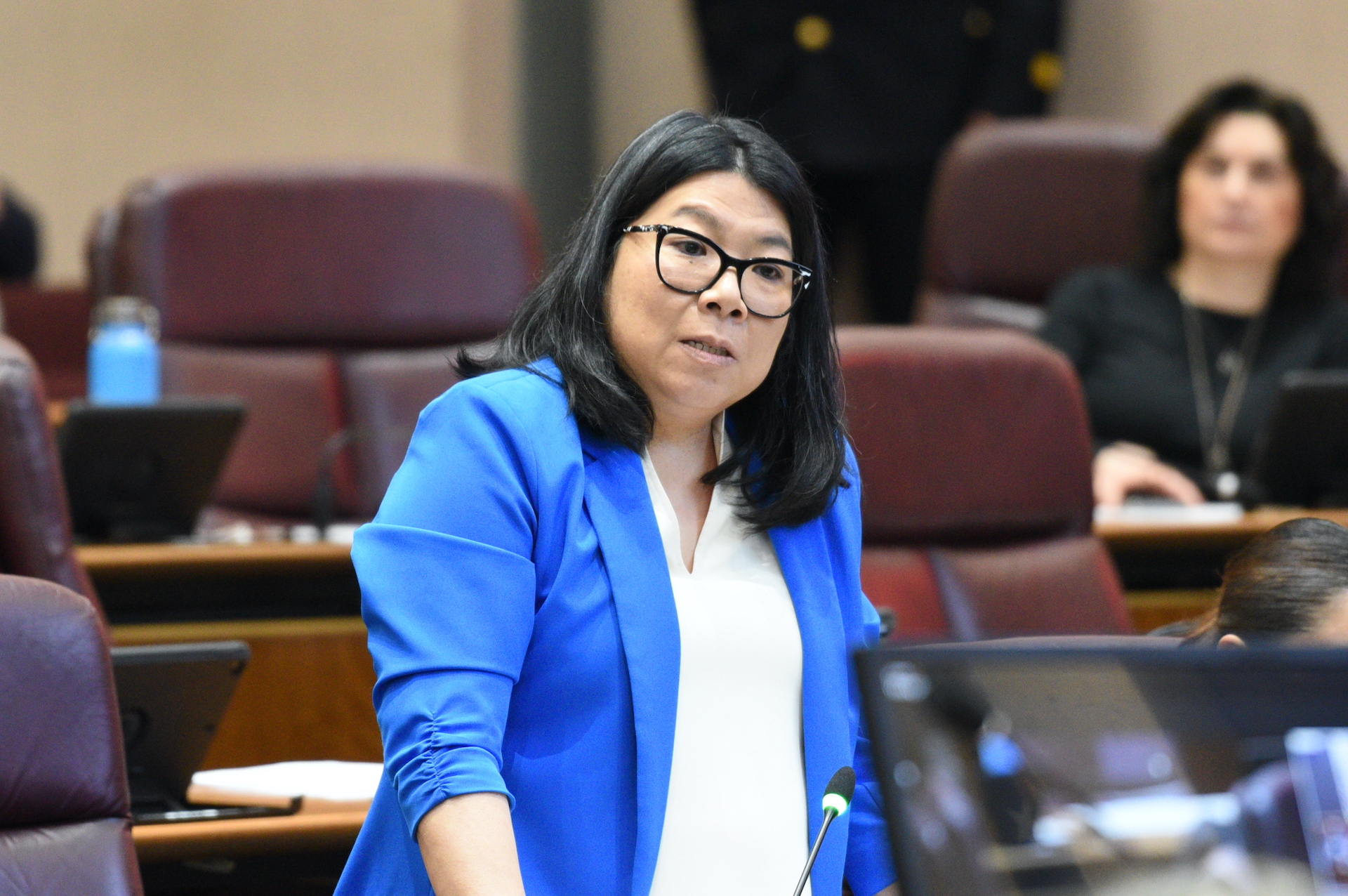
Ald. Nicole Lee (11) speaks at a special City Council meeting on Feb. 26, 2025. [Don Vincent/The Daily Line]
In a historic moment Thursday, a Chicago budget went into effect that was driven and passed by a coalition of alderpeople opposed to myriad aspects of Mayor Brandon Johnson’s proposal. The mayor neither vetoed nor signed the budget, allowing the extraordinary act of City Council independence to stand.
Just under two-thirds of the council supported the final budget for 2026, and it remains to be seen if the revenue projections from the authors of the alternative budget plan will fully pan out. But ahead of the 2027 budget season, the coalition has vowed to stick together, and some prominent members said they hope to use that leverage in the next budget season.
For Ald. Nicole Lee (11), the vice chair of the Committee on Budget and Government Operations and one of the leaders of the alternative budget coalition, the process was an example of how democracy is supposed to function.
“I think for a very long time the City Council, for better or for worse, had a reputation of being a rubber stamp,” Lee told The Daily Line. “I won't say that that's always been the case, but I think that other mayors have managed relationships in a different kind of way.”
The coalition had 27 members upon introduction of their revenue package and picked up additional votes by the time the budget passed. Ald. Ronnie Mosley (21) flipped to a yes after a proposed hike in the garbage collection fee was axed; Ald. David Moore (17) voted no on the revenue ordinance but yes on the spending portion of the budget; and Alds. Stephanie Coleman (16) and Ruth Cruz (30) also ended up voting yes.
Related: Council-driven budget plan clears chamber, setting up mayoral veto decision
Ald. Gilbert Villegas (36), another member of the group, agreed with the historic nature of the moment and what it meant for the council.
“It is historic that a body that has traditionally went along with the mayor on budget votes went ahead and took over the budget process,” Villegas said.
While Lee said she was proud to work with her colleagues to ensure that the council passed a budget that she believed made financially responsible decisions and is happy with the emergent independence of the body, she’s not hoping to replicate the recent budget standoff next season.
“I don't think we should ever go through what we just went through again,” Lee said.
Instead, she said she hopes the recent process sparks more engagement and collaboration among the council and encourages more collaboration from the mayor’s office.
“I would love to see more collaboration at the end of the day,” Lee said. “The interest of Chicago shouldn't be a competition.”
While Johnson argued for months that his office was regularly collaborating with the council and open for communication with all alderpeople, members of the coalition argued that they had been shut out of some parts of the process or not taken seriously.
Johnson and the city budget office have voiced doubts about many of the revenue projections the coalition put forward and have warned about mid-year cuts if the estimates fall short. The mayor’s office did not respond to requests for comment.
Ald. Samantha Nugent (39), another coalition member, told The Daily Line that the onus is both on the administration as well as the council to do everything it can to ensure that the new taxes, fees and programs bring in the necessary revenue.
“At the end of the day, it’s going to require partnership from the administration and City Council to work together to ensure we effectuate within the revenue and the management ordinance because it’s the right thing to do for the city,” Nugent said.
Last month, Finance Chair Pat Dowell (3), another member of the coalition, told The Daily Line that she expected the group to “stay together and grow in size” throughout 2026.
Nugent said that one of the ways the coalition will be able to hold the administration accountable during the year is through new, mandatory reports the council must receive every other month on the implementation of various efficiencies, revenue-generating and cost-reduction measures.
The annual management ordinance requires the first report on Feb. 5, and reports must include details about fleet modernization, special event cost recovery, city real estate consolidation and land sales, staffing consolidation and procurement reforms.
Though he voted against the final budget, Ald. Andre Vasquez (40), who wasn’t part of the coalition but has put forward legislation to give the council more tools and information to better equip it during budget season, thought the process was more positive than negative.
“It's good to see the council actually empowering itself to do this,” Vasquez told The Daily Line. “So although I didn't agree with the end product, I do believe the process was a good one for the larger evolution of what the city government's going to be.”
Vasquez, the co-chair of the City Council’s progressive caucus, also said he hopes the council builds upon the precedent that has been set while learning from this budget.
“I think once you flex a muscle, you try to flex it again, right?” Vasquez said. “I think what makes it more challenging is you're heading into reelection, which is going to make it a lot more challenging for anyone to want to take ownership of the budget.”
Vasquez also added that this recent budget continued to demonstrate the need for an independent budget office that alderpeople could utilize, a notion Villegas also agreed with.
“It's good to have an independent body that can be a check and balance on the executive branch,” Villegas told The Daily Line. “The only problem we have right now is that we don't have the bandwidth that we need as it relates to a budgeting software or budgeting staff to help us put forward and be able to … counter the administration.”
Ald. Scott Waguespack (32), a former chair of the finance committee and another one of the primary voices of the coalition, said he doesn’t foresee any big change in the crafting and introduction of the budget by the mayor this fall, but he hopes it at least changes the mindset of the mayor and budget office going forward.
“Hopefully the relationship is one where they realize that we can put the pressure on to get the information that we need,” the 32nd Ward alderperson said, referencing the council’s push last fall to get access to the Ernst and Young budget report and hold a hearing on it.
Ald. Matt O’Shea (19) said the coalition has no intention to shut the mayor’s office out of the budget process, but he added that it’s evident the council can go around them.
“It’s all of our hope, those of us that worked on this as part of the coalition, that we can have true collaboration and partnership throughout 2026 with the administration,” O’Shea told The Daily Line. “But if there’s not, we’re prepared to do exactly what we did the past 10 weeks.”


