


-
DEC 29, 2025

UNLOCKEDMayor declines budget veto, signs executive orders to prohibit sale of medical debt, cap police overtime
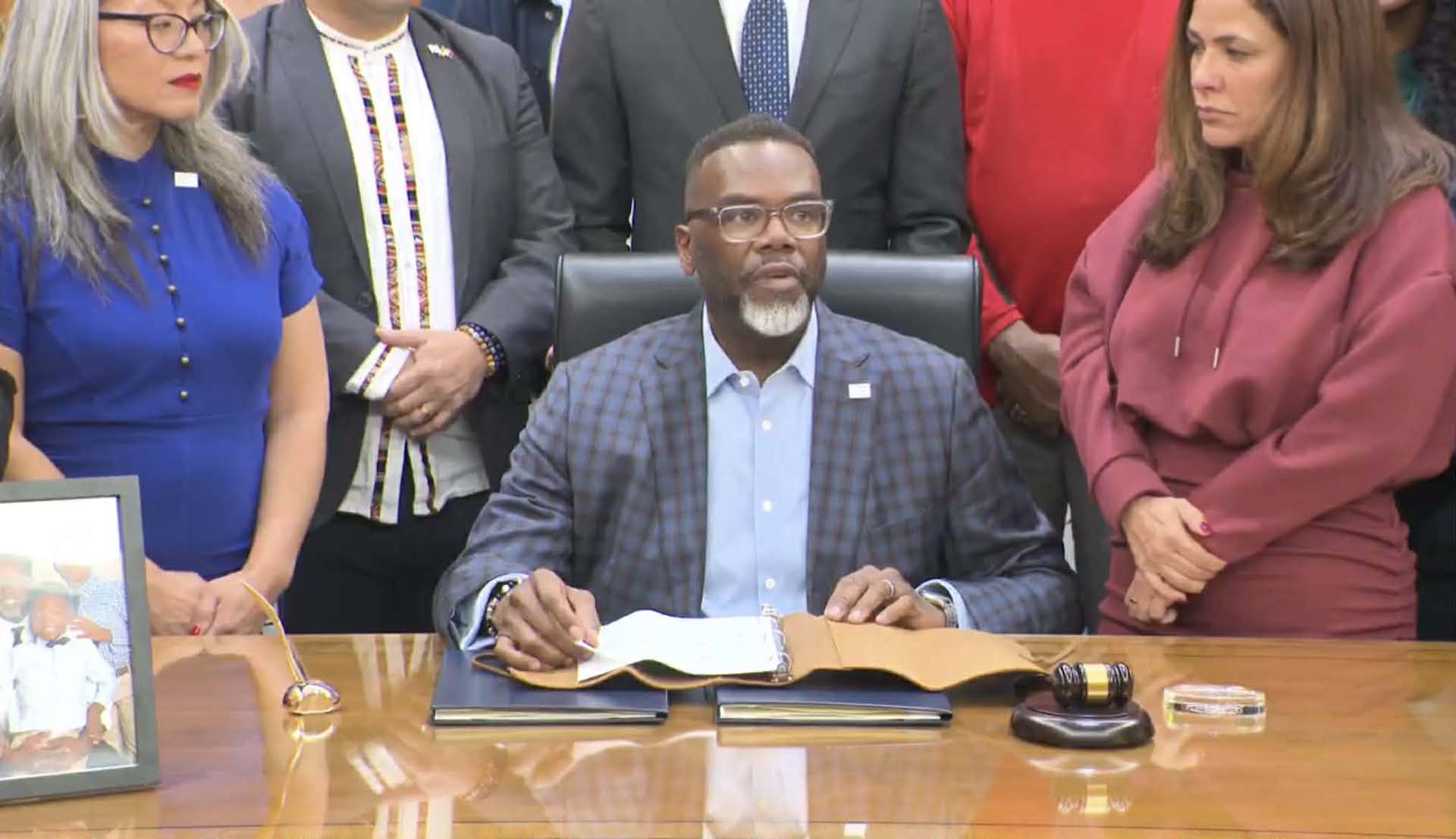
Flanked by Ald. Leni Manaa-Hoppenworth (48) on the left and Ald. Rossana Rodriguez-Sanchez (33) on the right and among other progressives, Mayor Brandon Johnson signs two executive orders at City Hall on Dec. 23, 2025. [Mayor's Press Office]
Mayor Brandon Johnson signed two executive orders last week before allowing the adoption of an annual budget crafted and passed by a coalition of alderpeople opposed to various components of his initial budget proposal.
Both executive orders are aimed at mitigating the effects of parts of the budget. The first executive order would place guardrails around the sale and collection of municipal debt to protect consumers from predatory practices, as the alternative budget plan includes a proposal to sell about $1 billion in uncollected debt owed to the city to a private party, a sale that was estimated by the alternative caucus to bring in at least $89.6 million.
The second executive order would restore a cap on Chicago Police Department overtime spending that was in Johnson’s annual management ordinance proposal but omitted from the substitute version passed by the City Council.
Johnson declined to veto the approved budget, averting an unprecedented city shutdown. But his office said he also would not formally sign the plan, even as he and allies celebrated components of it.
Related: Council-driven budget plan clears chamber, setting up mayoral veto decision
“We added the largest [tax increment financing (TIF)] surplus in the history of the city to go to our schools, our parks, our libraries, to water reclamation, to county government … We protected youth employment, we added the SMART tax to support mental health,” Johnson said. “We added some taxes to the largest corporations, along with new safeguards, and we ensured that the [personal property lease transaction tax] was increased, so we have a lot to be proud of, and we still have a lot of work to do.”
He added that he and his coalition stopped the alternative budget caucus from doubling garbage collection fees or reducing the TIF surplus and celebrated the plan for avoiding a grocery tax increase or property tax increase, although the council did hike the public library property tax levy by $9 million to support Chicago Public Library collection costs.
“Those are all wins, and you can still call out the wins while also calling out the most egregious aspect of what these individuals put forward, which is morally bankrupt,” the mayor said, referring to the municipal debt sale he opposes.
When asked why he wouldn’t veto a plan that his budget team believes is unbalanced, the mayor said he wouldn’t “make light” of the discrepancies he believes exist in the budget but “the work continues.” But he said he did worry about potential midyear cuts if revenue estimates fail to meet minimums.
Johnson also said to expect additional actions to “clean up” the budget through the end of the year and into January.
“We all agree that the budget is a living document,” the mayor said. “So, there are elements of this budget that we already have flagged that will start to go through a process to ensure that the numbers are matching.”
Ald. Gilbert Villegas (36) reacted to the mayor’s decision on social media by posting, “By not signing or vetoing the budget which he has called ‘morally bankrupt,’ [the mayor] has proved to Chicago that this whole show was nothing more than the first steps in his re-election campaign. It also demonstrates that our math was correct.”
Finance Committee Chair Pat Dowell (3), one of the alderpeople that backed the alternative budget proposal, told The Daily Line that heading into 2026, “I think that the coalition that advanced this budget will stay together and grow in size.”
A statement issued on behalf of the coalition said the alternative budget better prepares the city for Fiscal Year 2027.
“This coalition is not going anywhere,” they said. “We are united by our obligation to safeguard the financial well-being of Chicago’s residents, families, workers, and businesses. We will continue to hold this Administration accountable for implementing the budget passed by the City Council and for doing its job, which is transparently executing the plan now in place.”
Dowell also said the coalition will keep a close eye on revenue coming in as regular updates are made to the finance committee throughout next year.
Even without the mayor’s signature, the budget will automatically become effective by the end of the year. Johnson said the executive orders will add in safeguards against components of the final budget he disapproves of.
The first executive order (EO 2025-10) prohibits the sale of city-administered medical debt, such as costs incurred by people who have utilized city emergency medical response services or ambulance transports, to private debt collection firms. The mayor said that encompasses about $800 million of city debt.
The executive order also sets “clear” standards for “transparent and stable” debt collection by which both the city and private debt collectors in possession of municipal debt must operate.
I’ve been clear from the beginning of this debate that I will not allow the sale of debt to lead to the use of predatory and immoral tactics against the people of Chicago,” Johnson said in a statement. “This order affirms that the city will manage this debt in a manner that protects [the] dignity of our residents, advances equity, and preserves public trust in our city government.”
The standards for collection of municipal debt must include compliance with all applicable federal, state and local consumer-protection laws and may not include any behavior that could be considered harassment, coercion or intimidation. People who owe debt must also always be provided with clear notice, easy access to adjudication processes and transparent accounting, according to the order, and the city and debt collection firms must prioritize “long-term resident stability over short-term extraction.”
The second executive order (EO 2025-11) would not allow CPD to “unilaterally” exceed its overtime cap.
Similar to the original management ordinance, CPD’s overtime budget will be capped at a little over $200 million, and if CPD anticipates exceeding that overtime budget, it will need to request additional funding and receive City Council approval after the mayor’s authorization.
It also carves out an exception for blowing that overtime cap without council consent during “legitimate emergencies,” the mayor’s office said. In those instances, the mayor would have the authority to allow additional overtime after consulting with the superintendent.
“This executive order brings added discipline and accountability to the overtime process which has been long overdue,” Johnson said in a news release. “By creating a structure that emphasizes fiscal discipline and modernized workforce practices, we're protecting the mental health and well-being of our officers and ensuring the people of Chicago can trust that taxpayer dollars are being spent responsibly and transparently.”
Under the executive order, Chicago Police Supt. Larry Snelling must first submit an excessive overtime request to the Office of Budget and Management (OBM) at least three months ahead of time. After receiving authorization for the additional overtime from both OBM and the mayor, the superintendent could submit the authorization to the council.
Overtime requests must include details of the operations requiring overtime, the affected districts, units and job titles, the funding source from the department’s budget that’ll be utilized for the additional overtime and steps take to mitigate overtime and ensure officer wellbeing.
Johnson told reporters last Tuesday that the executive order effectively puts CPD’s overtime procedures on par with the procedures other departments also follow.


Trending


