


Springfield News
-
The Illinois Supreme Court Tuesday heard arguments in a case about whether a 14-year-old boy was “aggrieved” when Six Flags Great America took his fingerprints in 2014 without the consent of a parent — the first of a number cases filed against companies under Illinois’ Biometric Information Privacy Act to make it to the state’s highest court.
 The "Superman" rollercoaster at Six Flags Great America. [Courtesy of Wikimedia Commons]
 -
Nov. 6 was a rough day for the Illinois Republican Party — the state GOP lost races up and down the ballot, including the all-important governor’s mansion and seats in both the General Assembly and in Congress.
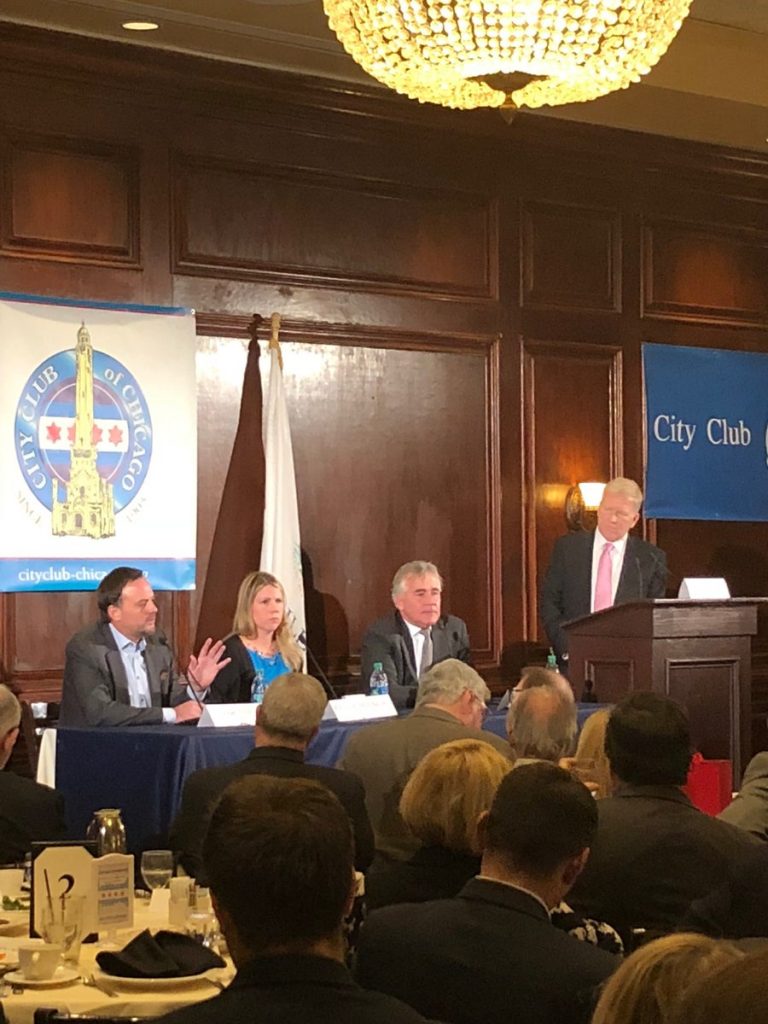 Conservative talk radio host Dan Proft, Chicago Tribune columnist Kristen McQueary and former Illinois GOP Chairman Pat Brady sit for a panel at the City Club of Chicago on Monday, moderated by former Illinois House GOP Leader Tom Cross (R-Oswego). [Photo courtesy of @CityClubChicago]
In the two weeks since, there has been much hand-wringing, speculation and self-reflection on what the party did wrong, and how much can be chalked up to a “Blue Wave” that party officials and candidates couldn’t do much to avert. The autopsy continued Monday at the City Club of Chicago, where Republicans gathered to hear takes on the party’s past and future strategies, and what comes next for the Illinois GOP.
The panel, which was moderated by former Illinois House Minority Leader Tom Cross (R-Oswego), also included former Illinois GOP Chair Pat Brady, conservative talk radio host Dan Proft and Chicago Tribune columnist Kristen McQueary. Though the three represent various wings of the party, they agreed that the state GOP could begin its rebuild by exerting influence in a race much closer than the 2020 elections: the February Chicago mayoral race.
“Don’t you think we have an opportunity now in this mayoral race with everybody besides you and I not filing to run for Chicago mayor today?” Brady asked Proft. “If we got organized in Chicago and the organization is there and actually stayed together, we might have 8 or 9 percent is a big chunk of what’s going to win the mayoral race. I think it’s an opportunity to reassert ourselves in a real down time.”
Proft replied that it’s a “shame” that Republicans aren’t organized enough to mount a GOP candidate in the “wild west” mayoral race.
“Even if they couldn’t win a runoff, they could get to it,” Proft said. “Even if they couldn’t get to a runoff, they establish a beachhead in Chicago and start to change the conversation in this state. So it’s another failure of the Republican Party, if we’re being honest with ourselves, it’s a failure of the Republican Party to not be in a position to elevate somebody in this mayor’s race with this historic opportunity of this open seat.”
But Brady said the party can still make lemonade out of the situation, saying the lack of a candidate doesn’t equate to the lack of a voice, as there are still a constituency of Republican voters in the city of Chicago.
“These people need to come before the Republicans and say, ‘Hey, if you want our nine percent or whatever we can deliver, this is what we demand. A sugar tax is a bad idea. A 10 percent sales tax is a bad idea,’” Brady said.
Proft, who backed 22 far-right legislative candidates with money from his Liberty Principles PAC, only won a handful of those districts, where most of the candidates were also incumbents and relied more upon the party’s infrastructure than Proft money. Proft said Monday that he nearly stepped away from the election cycle back in August when he first saw polling evidence of a Blue Wave.
“I’ll tell you something i haven’t said publicly: I looked at these races…that my little group supported pre-Labor Day,” Proft said. “And the numbers I saw coming from suburban races — I had a conversation internally with our group: “should we sit this election out?” Because they were that bad.”
Proft didn’t end up pulling his support, but acknowledged he did not do particularly well on Election Day. However, Proft said he wasn’t about to change his methods.
McQueary said that when candidates are vetted by the Tribune’s Editorial Board, she looks for candidates “who are independent thinkers” and “aren’t looking to make friends” in Springfield.
But despite all three panelists’ agreement early on in the conversation that an opposition to longtime House Speaker Mike Madigan (D-Chicago) shouldn’t be the party’s only message, McQueary closed the conversation saying that the party doesn’t necessarily have to move to the center in order to win elections.
“If these two sides can constantly focus on what the real opposition is, and that should be the Democrats — look at what they’ve done to the state, you don’t need me to go through all the numbers,” McQueary said. “That should be the focus of every conversation that these two gentlemen have and party should have going forward.”
Brady broached the subject of President Donald Trump several times, receiving audible groans from the back of the room when he mentioned the drag Trump had on the party. He also mentioned GOP attorney general candidate Erika Harold as the future of the state’s Republican party, saying she was charismatic and young. Harold is also African American, which many in the Illinois Republican Party pointed to as an asset throughout the campaign.
Proft, on the other hand, decried “identity politics” as “anti-intellectual,” and said he refused to “play the game” of picking ideal candidates by characteristics, rather saying that the party needed to be more aggressive about its conservatism. -
In April 2014, then-gubernatorial candidate Bruce Rauner called a news conference in a Springfield warehouse, where he stood behind a 67,976-page petition containing 591,092 signatures to force an initiative putting term limits on Illinois elected officials.
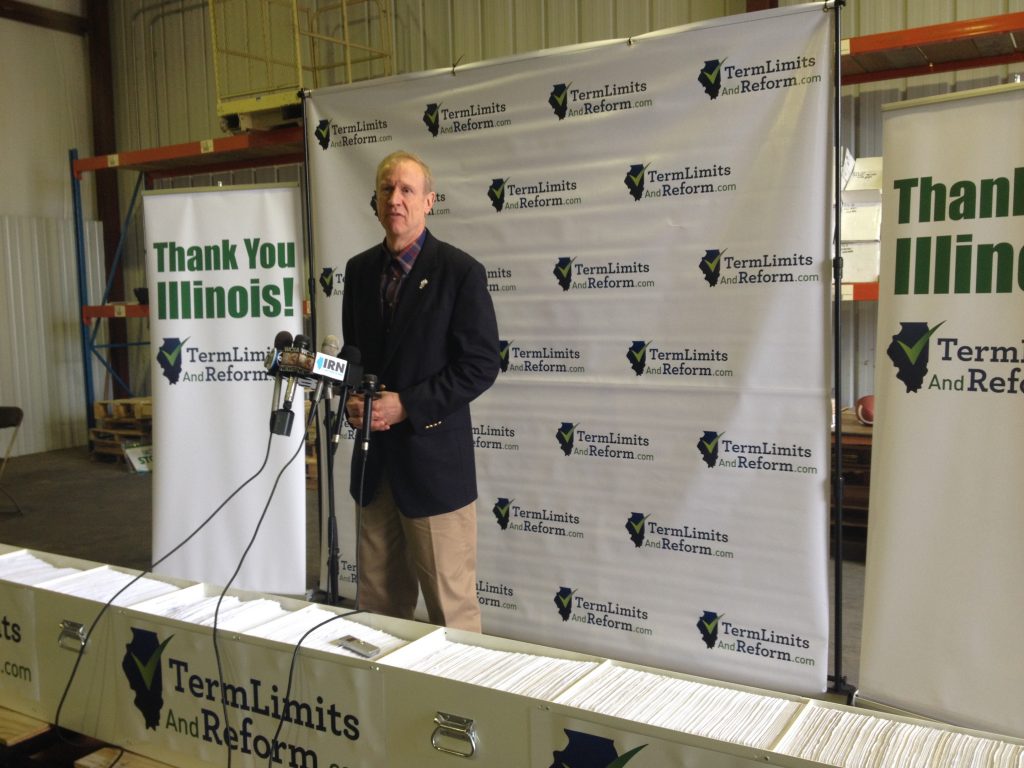 Then-candidate Bruce Rauner tells reporters he believes term limits will eliminate corruption in Illinois, as he delivers a 67,976-page petition containing 591,092 signatures for the ballot initiative in a Springfield warehouse on April 30, 2014. [Hannah Meisel/The Daily Line]
 -
The leading sector in job growth during the past year in Illinois has been government, according to new figures out Thursday from the Illinois Department of Employment Security.
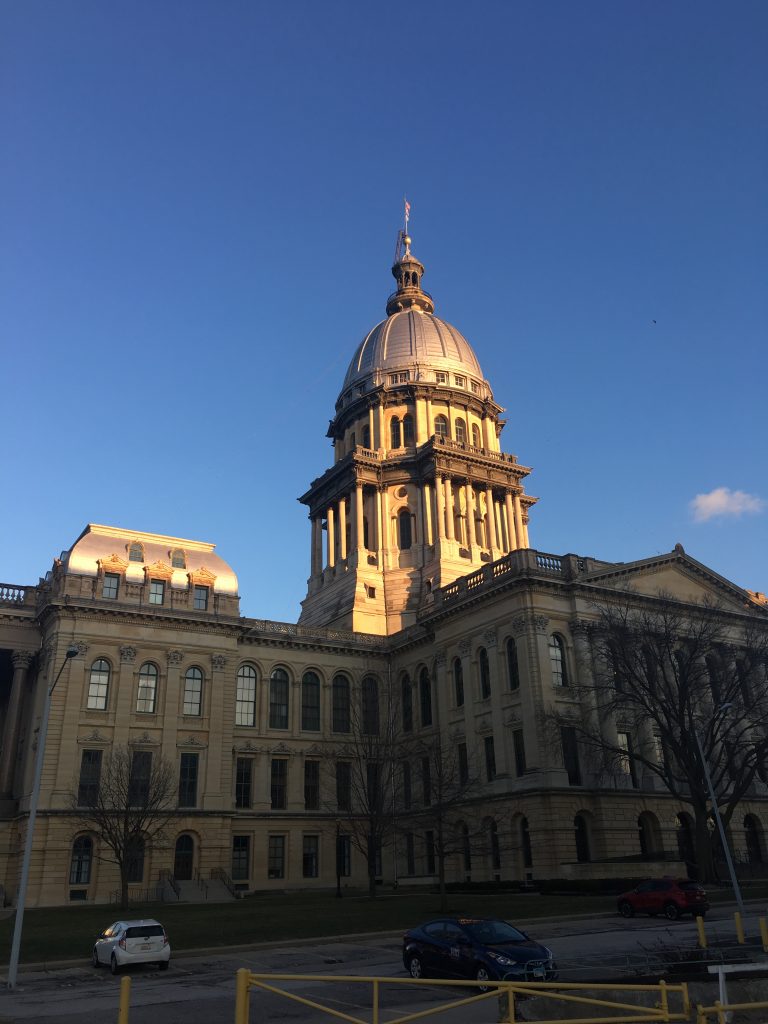 The Illinois State Capitol. [Hannah Meisel/The Daily Line]
 -
The Illinois Republican Party Thursday reported receiving a $100,000 contribution from Citizens for Rauner Inc. dated Nov. 8, two days after Gov. Bruce Rauner lost his re-election bid and the ILGOP lost several seats in both the Illinois House and Senate.
-
The Illinois House Senate blew through dozens of bills Wednesday, overriding outgoing Gov. Bruce Rauner’s vetoes on nearly all of the legislation. Three key bills made it out of the Senate, including a measure to ban selling tobacco products to those under 21, one regulating the peer-to-peer car sharing industry and a third that raises the maximum amount the state can pay out to families of those who died at the Quincy Veterans’ Home from $100,000 to $2 million.
-
With a little help from Republicans, Democrats in the Illinois Senate overrode Gov. Bruce Rauner’s veto on a bill that would speed up the process for undocumented immigrants who’ve been victims of violent crimes to begin filing for visas.
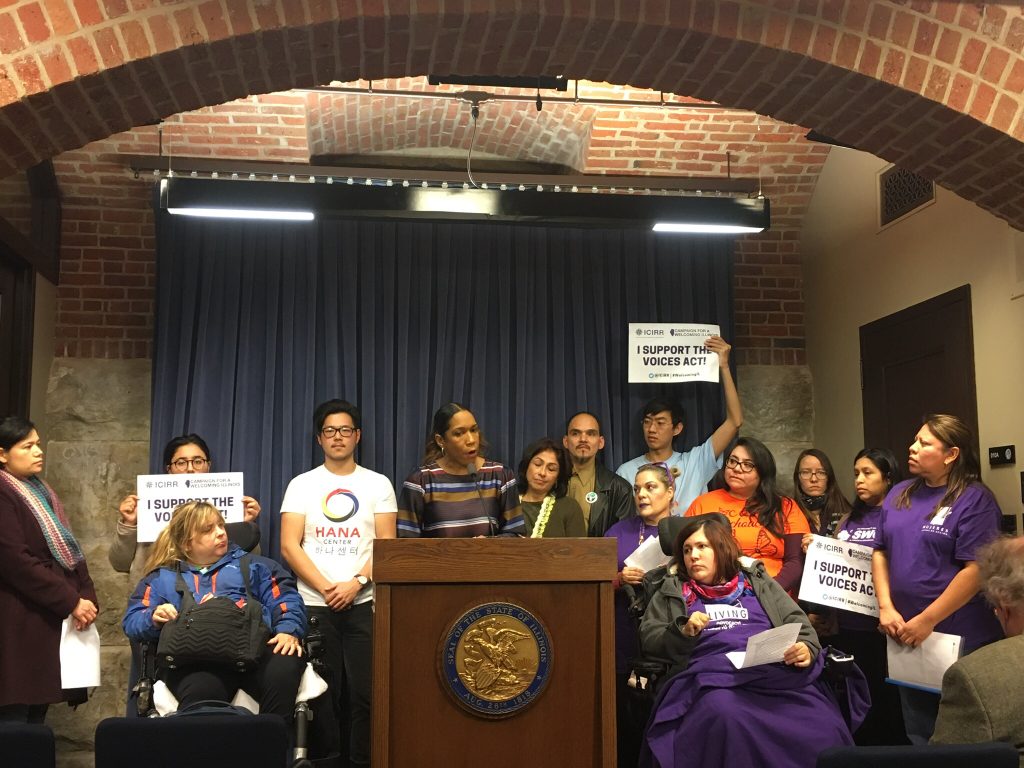 Lt. Gov.-elect Juliana Stratton speaks in favor of the Voices Act at a Wednesday press conference. [Hannah Meisel/The Daily Line]
 -
Sponsors and proponents of a bill to regulate peer-to-peer car sharing companies like San Francisco-based Turo said Tuesday they have the votes to override Gov. Bruce Rauner’s amendatory veto of the legislation, which would require Turo and competitors to pay state and local taxes on rental transactions and would mandate more safety regulations.
-
In the wake of a “Blue Wave” election last week, State Rep. Will Guzzardi (D-Chicago), is in the final stages of planning for the General Assembly’s first Progressive Caucus, set for a rollout in January with the inauguration of Gov.-elect JB Pritzker and the swearing-in of a new class of Democratic lawmakers.
-
On the 4700 block of north Kenmore Avenue, in the heart of Chicago’s Uptown neighborhood sat a collection of cars all owned by “Michael O.” — the city’s most successful auto lender on car-sharing platform Turo.
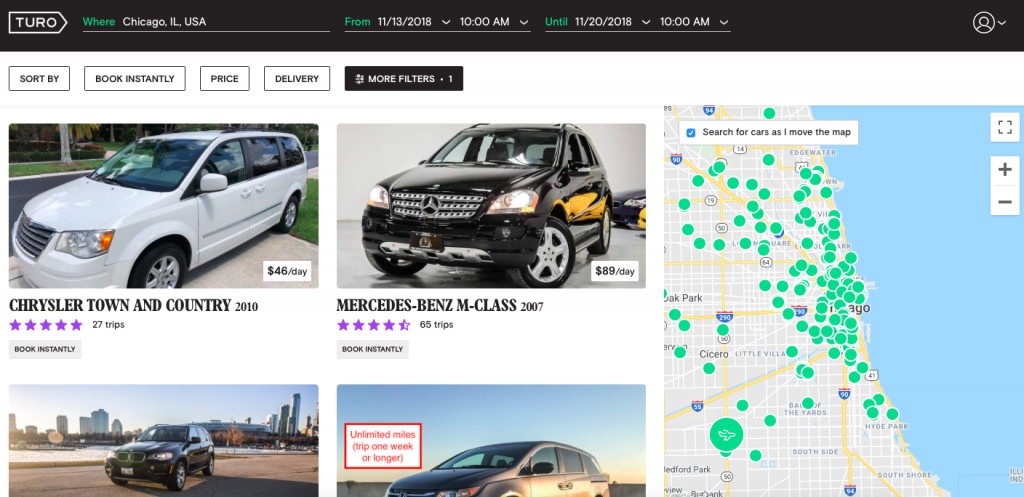 The Turo platform.
Michael O., who is actually Michael Anthony Oates, according to city paperwork, owns as many as 40 vehicles that he leases out for short-term stints using Turo, a Silicon Valley-based startup that promotes itself as the future of the car rental industry, just as Airbnb has disrupted the hotel and motel industry.
Though many of Oates’ cars appear to be mid-range sedans, Turo has gained popularity in part by offering flashy cars for rent for as little as $100 a day. Luxury car brands available via Turo in Chicago include Mercedes Benz, BMW, Maserati, Porsche, Land Rover, Tesla and Jaguar.
But Oates’ fleet of mid-line vehicles he rents out on Turo caused major parking headaches in Uptown, where he once parked a portion of his 40 vehicles on a street just two blocks away from the Aragon Ballroom and the Riviera Theatre, and where many residents frequently struggle.
Ald. James Cappleman (46), who also lives on Kenmore, found out about Oates’ cars a little more than a year ago, when residents began to complain that lock boxes containing keys to the cars began showing up on fences outside of apartment buildings on the street.
Oates could not be reached for comment.Eventually, the city’s Department of Business Affairs and Consumer Protection sent a cease and desist letter to Oates last December at Cappleman’s request, but Cappleman said that in response, Oates just moved the lockboxes down the block. Now, the lock boxes are stored in the vehicles’ wheel wells.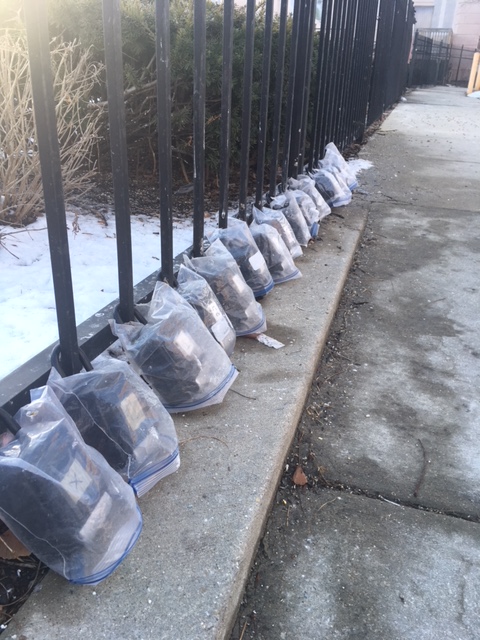 Turo lock boxes in Uptown. [46th Ward Office]
A representative of Turo said that was inaccurate.
"These parking issues were addressed months ago and there are no cars associated with Turo parked on that street," said Turo Government Relations Vice President Michelle Peacock. "However, several cars identified were parked with no parking zone sticker or the wrong sticker. The Alderman can simply solve this problem by enforcing existing parking regulations with a single call to have these cars ticketed and towed."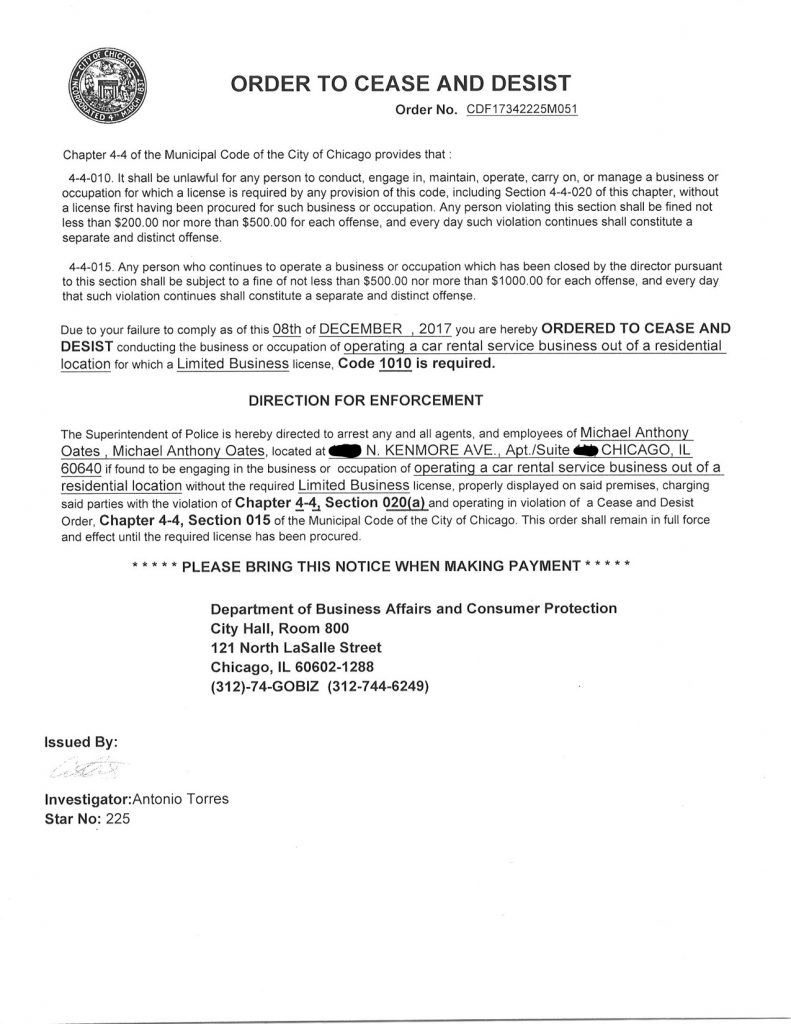
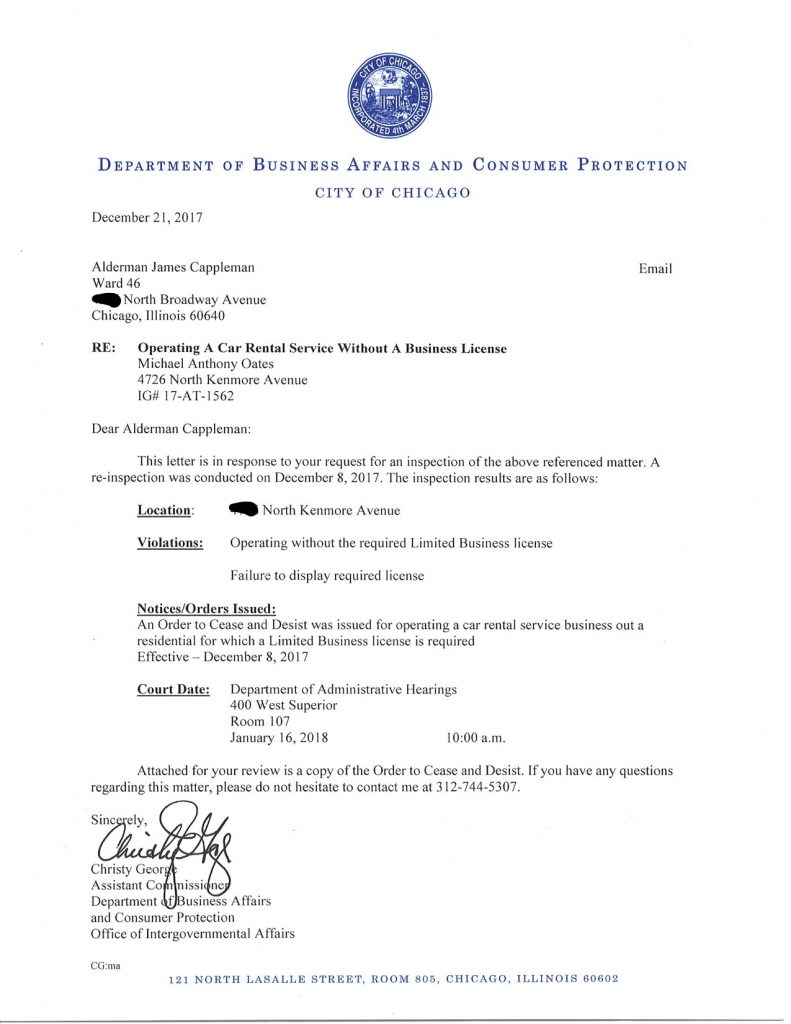
Cappleman told The Daily Line that his office has received complaint after complaint about Oates’ cars, and said parking has become the No. 1 issue in his ward.
“This person ranks far and above having more cars than anyone,” Cappleman said. “Every good thing that surfaces, someone comes up and takes it to the extreme. [Oates] took it to the extreme in the 46th ward and the residents are furious. So am I.”
Cappleman faces a tough fight to win re-election in February, with four challengers already announced, including Chicago teacher Erika Wozniak Francis, who has the backing of U.S. Rep.-elect Jesus “Chuy” Garcia, D-Chicago).
Cappleman said his attempts to resolve the issue by enforcing city law ground to halt, after Chicago’s Law Department told the aldermen that lawmakers in Springfield would first have to pass a bill regulating the car-sharing industry before they could take action against Oates.
Now Cappleman is counting on lawmakers to override an amendatory veto from Gov. Bruce Rauner on just such a bill, SB 2641, which was heavily negotiated and passed in the waning days of Spring legislative session in May.
Rauner’s late August veto of the bill came as a surprise to chief sponsor State Rep. Art Turner (D-Chicago), who told The Daily Line he wasn’t aware the governor’s office had any issues with the bill.
“I never had a formal conversation,” Turner said. “I read the governor’s veto message and figured out the strategy from there.”
Rauner’s official veto message objected to the “sweeping” nature of the legislation, and contained dozens of specific recommendations for change in order to let car-sharing businesses like Turo thrive in Illinois.
“Oversight of this new industry is important to protect consumers; however, we should be careful not to unintentionally smother its growth before it has a chance to get off the ground,” Rauner’s veto message said.
But Turner and his co-sponsors, including State Rep. Grant Wherli (R-Naperville), aren’t paying any mind to any of the governor’s suggestions, and on Tuesday will hold a news conference about the bill and vow put it on the House floor at some point this week.
“I think there’s support for the bill,” Turner said. “Every day without regulation in this industry could be safety concern for citizens of Illinois.”
Some of those safety concerns include peer-to-peer car sharing’s lack of oversight when it comes to the onus of replacing recalled vehicle parts. According to the National Transportation Safety Board, 25 percent of cars on the road have an unfixed recall notice.
“We have the opportunity in Illinois to set the standard for safety,” sponsor State Sen. Antonio Muñoz (D-Chicago) said in a statement late last month. “Millions of vehicles across the nation are currently operating with unsolved safety recalls. Renting these vehicles out to customers creates hazards for everyone on the road.”
Muñoz’s colleague and co-sponsor, State Sen. Sue Rezin (R-Morris) said in that same statement that she will not bend to Rauner’s amendatory veto.
"I voted in favor of this legislation last spring because I believe it will protect consumers and includes important safety measures,” Rezin said. "My position has not changed."
The legislation would also regulate insurance and liability concerns for peer-to-peer car sharing, much like traditional car rental companies are regulated. Giants in this area like Enterprise and Hertz have spent millions of dollars and many hours over the last few years lobbying states to regulate these sorts of startup companies that have turned into competition.
Turner also said he had heard about Oates’ 40-car fleet, and said his bill could help deal with “nuisance situations” like that of Oates’ Turo business.
“As it stands right now, there’s nothing the city or police or local law enforcement can do to even address the situation,” Turner said.
Cappleman said he hopes that if Turo begins to be regulated more like a traditional car rental company, including having to pay taxes on the transactions, one consequence of the new law would be Oates winnowing his fleet.
If the legislature overrides the bill, Cappleman also said that he would introduce an ordinance in City Council that would limit the number of street parking permits one person could buy.
Cappleman emphasized that he isn’t trying to shut down Turo or similar companies, saying it’s “a great idea, but it’s been horribly abused.”
In late October, lobbyists pushing for the override of Rauner’s amendatory veto on SB 2641 put out a statement describing the bill as “common sense legislation,” and pointed out that local governments could also stand to gain from regulation of car-sharing companies.
"Municipalities have watched their funds be depleted in recent years, which is why it is imperative that the state not prevent them from collecting this revenue, particularly since it falls in line with industries already being taxed," Illinois Municipal League Executive Director Brad Cole said.
**Editor's note: This story, originally published Nov. 13, has been updated on Nov. 16 to include a response from Turo.**


