


-
The road to reform in Chicago is never smooth, but sometimes leaders with courage and foresight clear a path forward. That’s why we’re grateful to the 39 City Council members — three-quarters of the council — who voted to advance an ordinance safeguarding the independence of inspector general investigations to the Council’s Ethics Committee, where it will get a hearing on Monday.
Initially opposed by the mayor’s law department, which called the ordinance “legally deficient,” the bill now seems to be gathering support.
The substance of the ordinance is straightforward. Back in February, Inspector General Deborah Witzburg sent a memo to city council outlining various ways in which the city’s corporation counsel “selectively acts in opposition to [Office of Inspector General]’s investigative work when OIG’s work may result in embarrassment or political consequences to City leaders.”
At issue were three Department of Law practices: assertion of attorney-client privilege to withhold records and communications from OIG investigations, insistence that law department lawyers attend OIG investigatory interviews at the corporation counsel’s discretion, and conditioning law department enforcement of OIG subpoenas on OIG’s willingness to share details about the relevant investigation with department lawyers.
Dry as they might sound on paper, those are fundamental questions of independence for an office charged with investigating government wrongdoing. Corporation counsel, at the end of the day, works for the mayor and at the mayor’s discretion. The temptation to put a thumb on the scale when an investigation could potentially embarrass the mayor’s administration is obvious, and is why robust public inspector general offices typically have protections from these forms of interference.
Chicago is an outlier, and it’s attracting notice: the national Association of Inspectors General, which sets best practices and facilitates independent reviews of IG offices, issued a pair of pointed memos this April that reiterated the need for unobstructed interviews and access to investigatory materials. A separate peer review of Chicago’s Office of Inspector General in May highlighted the practice of city lawyers sitting in on OIG interviews as a specific threat to the office’s independence.
Martin’s proposed reforms are not radical proposals, and there is no evidence they are unlawful. An independent legal analysis commissioned by the Better Government Association found “no legal obstacles” to the proposed language.
Former Ald. Ed Burke was just released from federal prison after being convicted on extortion and other corruption charges. He was just the tip of the iceberg — nearly forty Chicago aldermen have been imprisoned over the last half century, and former Illinois House Speaker Mike Madigan was just sentenced for his role in bribery and other schemes. Chicagoans deserve better. Now is not the time to hobble our watchdogs and twiddle our thumbs on basic, common-sense reforms like this.
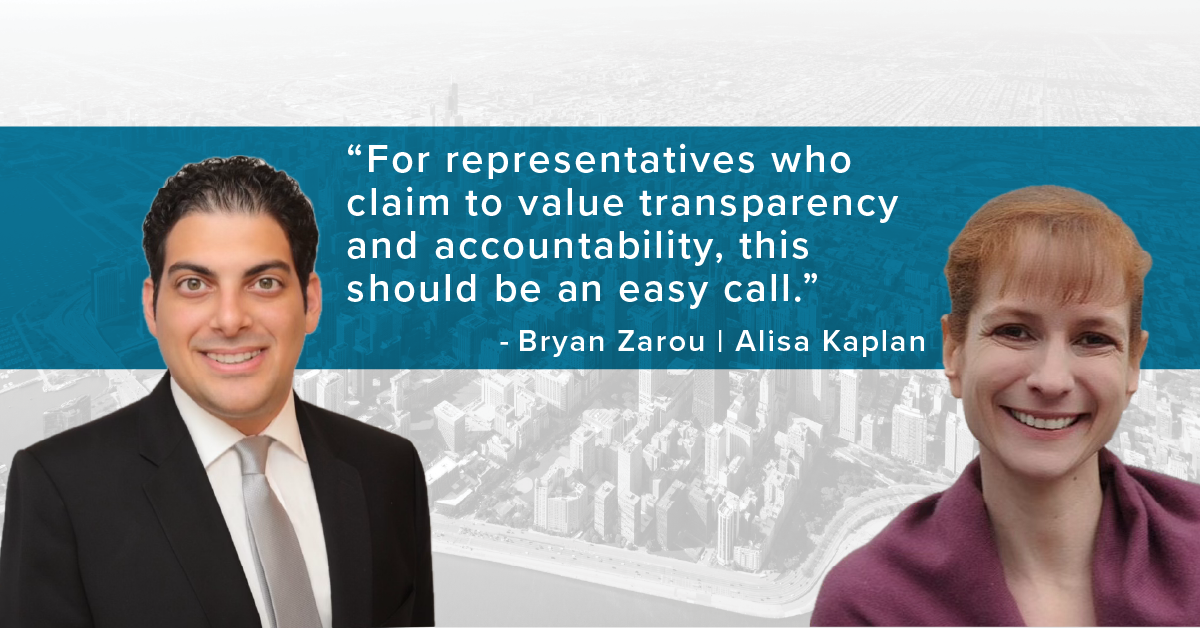
For representatives who claim to value transparency and accountability, this should be an easy call.
Bryan Zarou is the Vice President of Policy at the Better Government Association and Alisa Kaplan is the Executive Director of Reform for Illinois


