


-
As football season is fully underway, a new Chicago tax proposed by Mayor Brandon Johnson is doubling down on a bad idea for sports fans. The mayor’s budget includes a city of Chicago tax on sports betting companies that would be delivered on top of a brand-new state tax – which added a 50-cent tax on each bet customers make. That state tax, which was fully implemented by the sportsbooks on September 1, is already making every bet placed in Illinois more expensive for customers. As an expert in responsible gaming, I have been advocating for legal sports betting laws that empower bettors with information about their spending and avoid impulsive betting before it begins. But these new taxes push the state in the opposite direction, pushing bettors to make more expensive bets or seek out cheaper, tax-free illegal betting options that don’t have any of the protections of Illinois’ legal market. Ultimately, these changes will add more pressure to push gamblers back towards the black market.
Higher Bet Requirements Equal More Risk
Sportsbooks have implemented the new Illinois tax by raising bet minimums – some as high as $10 a bet– while others added a tax per bet of 25 to 50 cents. Casual bettors often bet in very small amounts – sometimes as low as 25 or 50 cents per bet. Currently, a 25 or 50-cent tax on that bet means that a small bet will cost the consumer double to make that bet. Now Chicago is doubling down with another tax.
Illinois’ lawmakers should strive for a legal sports betting framework that encourages responsible play at comfortable stakes for the bettor. But these taxes raise the price of participation, pushing customers to place higher bets that could be out of their comfort zone. I can envision situations where this required higher spending increases the chance of harm for those who might encounter problems – the exact opposite of what we should want from a legal, regulated market.
Pushing Illinoisans to the Black Market
Illegal sports books are located offshore and pay no taxes. Instead of paying the new additional fees and bet minimums that legal sports books now require to comply with the Illinois tax, these illegal operators are already aggressively advertising to Illinoisans that bets placed illegally are tax-free. These illegal sites ignore age verification, problem gambling education and support, and have every incentive to encourage risky betting. They are still widely available in Illinois. These entities will profit from this new per-bet tax and stand to benefit even more if the city of Chicago adds its proposed tax on top of it.
Unregulated offshore websites allow users to skirt age and identity checks with a single click. They do not provide problem gambling programs, real-time monitoring, or self-exclusion tools. And they certainly do not contribute to the state’s revenue or fund treatment and prevention programs like the legal operators.
The new fees and taxes may incentivize those who bet often to migrate offshore, where they will encounter none of the protections of the legal market. In particular, those who may be experiencing problem gambling are ripe for exploitation by illegal operators. Legal operators have worked closely with problem gambling researchers to develop tools that empower customers to make informed decisions about their spending. In the last year, many major legal sportsbooks have launched important partnerships with leading mental health treatment providers to provide resources and support for any customers who may be experiencing problem gambling. In my 30 years working on gambling issues, I’ve yet to hear of an illegal offshore site promoting limits or providing a referral to treatment.
Conversation and Cooperation
For decades, I’ve worked with regulators, researchers, clinicians, and people in recovery from gambling addiction, regulated gambling operators– especially online sports betting companies– to ensure online gambling platforms meet high standards for responsible gambling. A regulated market works best when operators are incentivized to invest in consumer protections. There is an opportunity for a dynamic dialogue between regulators, operators, and advocates that promotes cooperation in the pursuit of better programs and services to minimize gambling-related harm. That is happening now in Illinois – it’s not with illegal sports books that operate offshore.
You see that in the Illinois sports betting market. Legal sportsbooks in Illinois already meet a high threshold for responsible play. State regulators enforce a wide range of regulations, including those on responsible gambling. A portion of gambling taxes is dedicated to publicly funded treatment and public awareness programs like the “Are You Really Winning” campaign. Groups like the Illinois Council on Problem Gambling train counselors, promote prevention and recovery. Several Illinois operators voluntarily meet best-practice guidelines, like those developed by the National Council on Problem Gambling (NCPG), promote informed decision-making, responsible marketing, and support for at-risk players. These safeguards are possible only because Illinois created a viable, regulated system. Undermining that system with excessive taxes would be a step backward.
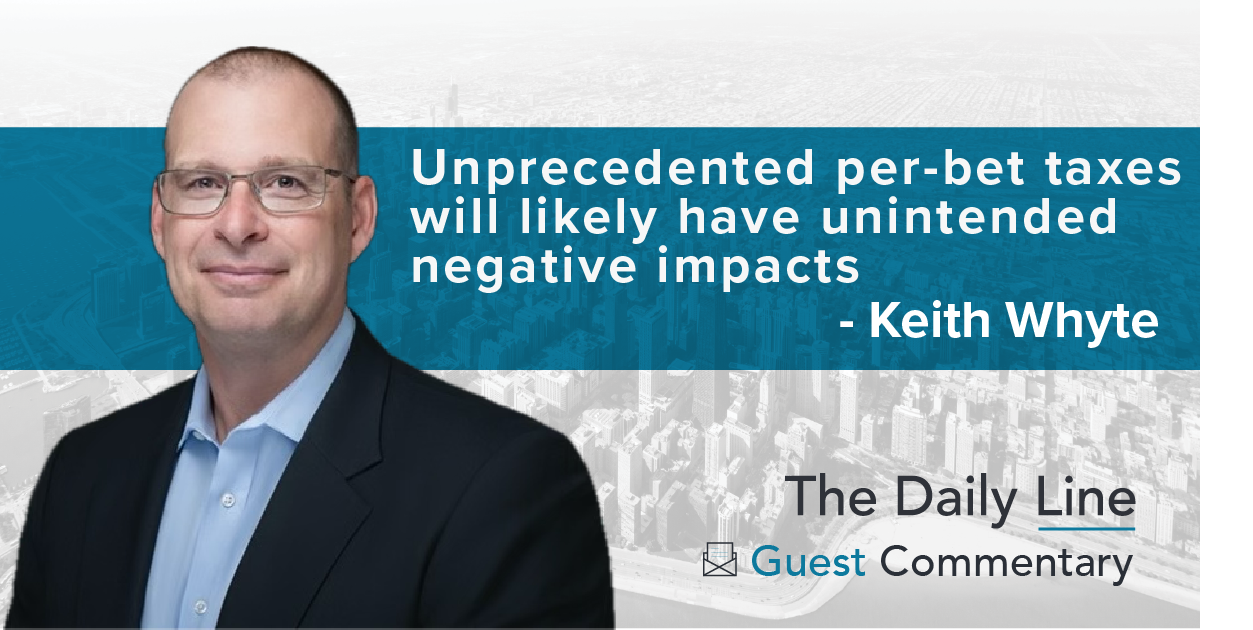
The choice is clear: Illinois can preserve a stable, regulated marketplace by maintaining a tax structure that keeps operators and players in the legal market. Pushing players to bet more and shifting them to the black market are not desirable outcomes for anyone. Unprecedented per-bet taxes will likely have unintended negative impacts.
Keith Whyte, a preeminent national problem gambling expert, served 26 years as executive director for the National Council of Problem Gambling. He now leads problem gambling advisory firm Safer Gambling Strategies, where Whyte advises organizations such as Sports Betting Alliance on responsible gaming.
-
 Jay A. Keller followed this page 2025-10-23 08:27:01 -0500
 -


