


-
APR 23, 2026

UNLOCKEDPresumptive District 10 county board member to focus on housing, healthcare access in office
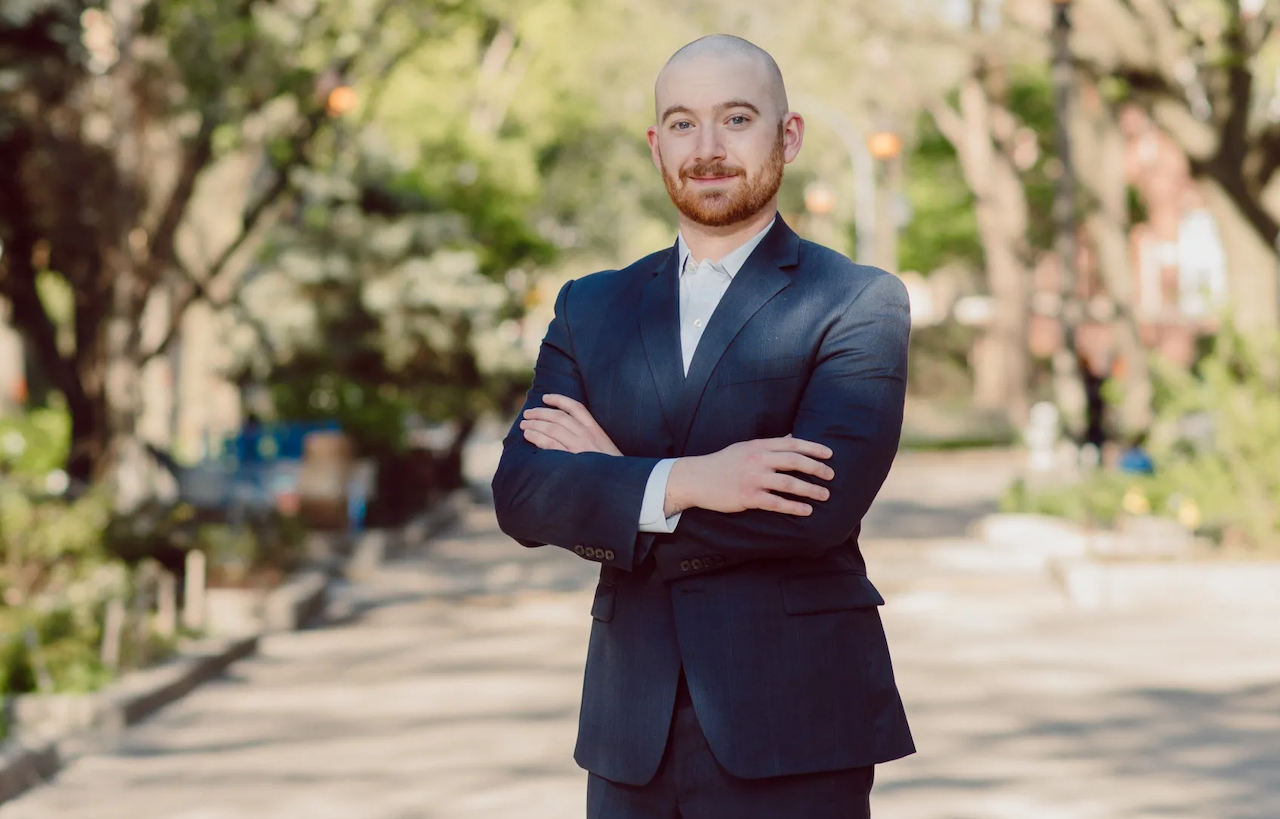
Drake Warren is the Democrats' nominee for Cook County Board of Commissioners in District 10. [Campaign]
The likely next Cook County commissioner to represent District 10 hopes that his recent victory opens the door for more urbanists and candidates from non-traditional backgrounds to pursue politics.
Drake Warren, an industrial engineer who previously worked as a consultant for West Monroe and a first-time candidate, unseated Comm. Bridget Gainer (D-10) with his March 17 Democratic Party primary victory, denying Gainer a fifth term on the board.
Cook County’s 10th District is located almost entirely within the city of Chicago and includes the city’s neighborhoods of Uptown, Edgewater, Andersonville, Buena Park, Bowmanville, Budlong Woods, most of Lake View, North Park and Norwood Park, portions of Park West and Ravenswood and all of Jefferson Park and Forest Glen.
No other major party candidates are running in the race, making Warren the presumptive winner in the general election this fall. Between now and then, he said he’ll be educating himself as much as possible on county government to fill in any gaps that remain as well as talking to voters in areas that didn’t vote for him.
Gainer told The Daily Line that she hopes the next commissioner focuses on making county government work better for people in practical ways.
“Less talk, more action,” she said. “It’s an incredible opportunity and I know he’ll do a great job.”
In his campaign, Warren emphasized his firsthand connection with some of the issues he put at the center of his platform. He’s a renter and a public transit user, his website notes.
Warren credited his campaign success to his strategy of crafting his platform through conversations with voters, but he also said he thinks voters liked that he was young and didn’t have an extensive political background.
“I am somewhat of an outsider, and I think being an engineer helped a lot, because one, it's a non-traditional background for elected office. You don't see that many elected officials who have engineering or STEM backgrounds,” Warren said. “Two, it's a background that I was able to communicate the utility of it and how transferable systems engineering is to public office.”
For instance, Warren described the county government as a “huge system” to which he could apply his existing skills of monitoring and evaluating implementation of various policies and programs.
“I stressed to people that I'm going to involve folks who are actually responsible for implementing policy [and] folks who are impacted,” Warren said. “I think I was able to communicate that I care about what a policy does on the ground, not just how it looks on the books.”
Warren stressed that some of the biggest priorities he sees for himself on the county board is the protection and expansion of health care coverage for low-income residents who use the county’s Medicaid plan, CountyCare, as well as passing legislation to protect immigrants from additional federal operations from the Trump administration.
But where the prospective county commissioner stands out is his connection to the local urbanism movement, whose policies focus on making it easier and faster to build housing to reduce cost of living, improving walkability, bike friendliness and public transit and reducing car dependency.
Warren was the only non-incumbent county candidate backed by the Chicago Growth Project to win his primary race. The organization also backed Comm. Jessica Vásquez (D-8) over her opponent in the primary.
Warren was also backed by the statewide Abundant Housing Illinois, another urbanist group that Warren is a member of. The group told The Daily Line that it thinks it was Warren's priorities and "unwavering team" that led them to endorse him and canvass on his behalf.
Abundant Housing Illinois said that "the proven housing policies we espouse — that will allow more housing and bring prices and rents down now — will have a new ally in Cook County government" with Warren's win. "Drake's nomination win shows that being in favor of growing Chicago matters in an election."
Chicago Growth Project members endorsed Warren and others after a candidate questionnaire process. Organization leaders donated thousands to Warren’s campaign as well. The organization currently has about 27 voting members.
Though Vásquez also won her race, Chicago Growth Project President Adam Drakulic told The Daily Line that Warren’s win was a proof of concept.
“[Drake] winning, to us, we looked at it as a much more impactful result than any of the other races that really were people that do ideologically align with us, and we do very much support, but we looked at [Drake] as kind of being really the most important litmus test of what our organization is about and what we’re trying to do,” Drakulic said.
Warren, who was once a member of the Growth Project’s steering committee, said that urbanist policies can help address some of the financial challenges facing the Chicago area, such as a shrinking tax base, by adding new housing to drive down and mitigate rent growth and spur population growth and retention instead.
Since a lot of Chicago’s zoning and housing policy is decided at the city level, Warren would have less impact on the county board than on the City Council. But Drakulic did say the county board’s control of how properties are assessed and how taxes are levied is an area where Warren could affect significant change.
For instance, Drakulic said implementing a land value tax in Cook County — a system under which land is taxed at a uniform rate regardless of the types of buildings on the land — instead of the current property tax classification system could help reduce vacant land speculation and boost development.
Drakulic said his organization plans to stay in touch with Warren once he takes office to try to craft and push legislation that conforms to their goals. Abundant Housing Illinois said it hopes Warren pursues a county policy to establish a revolving loan fund to finance new three-flats and courtyard buildings.
Warren told The Daily Line that while he supports either a land value tax or a split rate tax, where land and improvements are taxed differently, for Cook County, the state would need to enable that, so it’s more of a long-term goal for him. In the short-term, Warren said both speculation and residential and business tax burdens can be reduced by raising the rate at which vacant land is assessed in the county.
He also said permitting and zoning reform should be pursued in tandem by municipalities to make those changes more effective.
The prospective commissioner hopes his victory encourages other candidates from unconventional backgrounds to run for office.
“Outside the official scope of the office, I really want to welcome more people into the urbanist movement, as well as to having a voice in politics, and that's something I'm going to be doing deliberately with staff choice as well,” Warren said, noting that his hiring process will cast a wide net and be open to recruits who may not have the typical background for a county commission staffer.
One major point Warren hit Gainer on during the campaign was her holding a second job outside of her commission role. He said he wouldn’t do that and plans to be a full-time commissioner. He already left his industrial engineering role prior to his campaign and said he may only take a job in the leadup to his likely swearing-in later this year.


