


Chicago News
-
City officials faced an increase in long-term liabilities of $996.6 million as they begin to craft a spending plan for 2020, according to the city's annual financial report for 2018 released Friday.
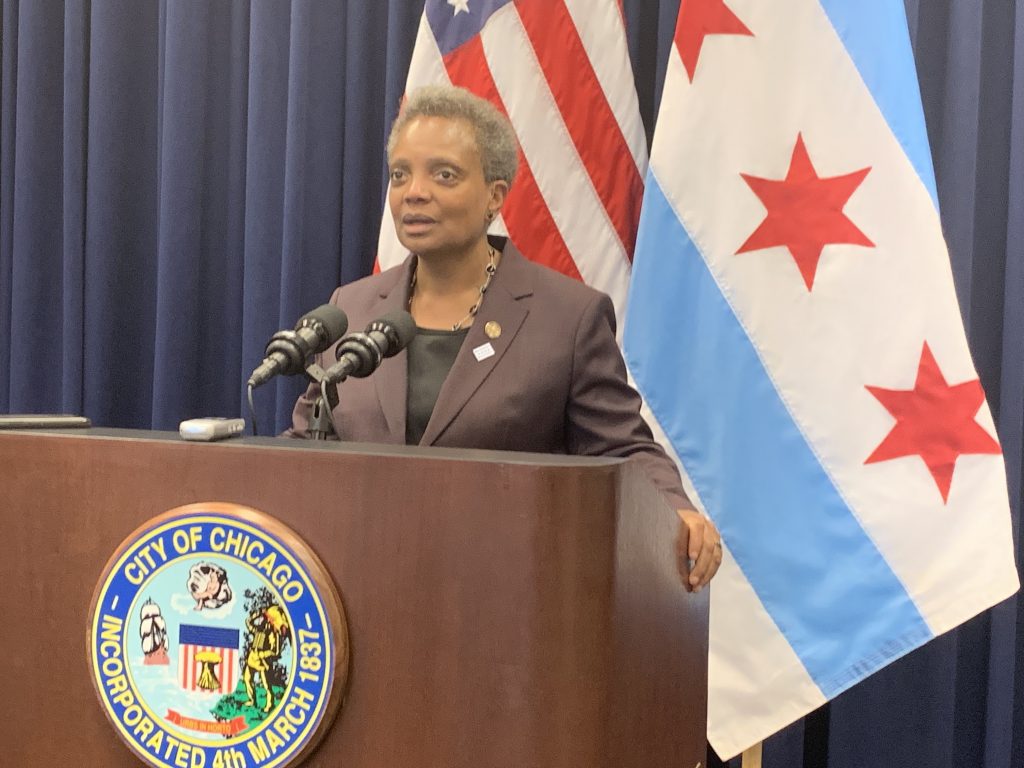 Mayor Lori Lightfoot addresses reporters. [Heather Cherone/The Daily Line]
-
“My kids say their dad makes people smile and I take care of dead people,” Dr. Ponni Arunkumar, Cook County’s Chief Medical Examiner, jokes in her office in late June. Her husband, an internist, chose to care for the living, while she chose pathology after a rotation in the medical examiner’s office on Chicago’s near West Side.
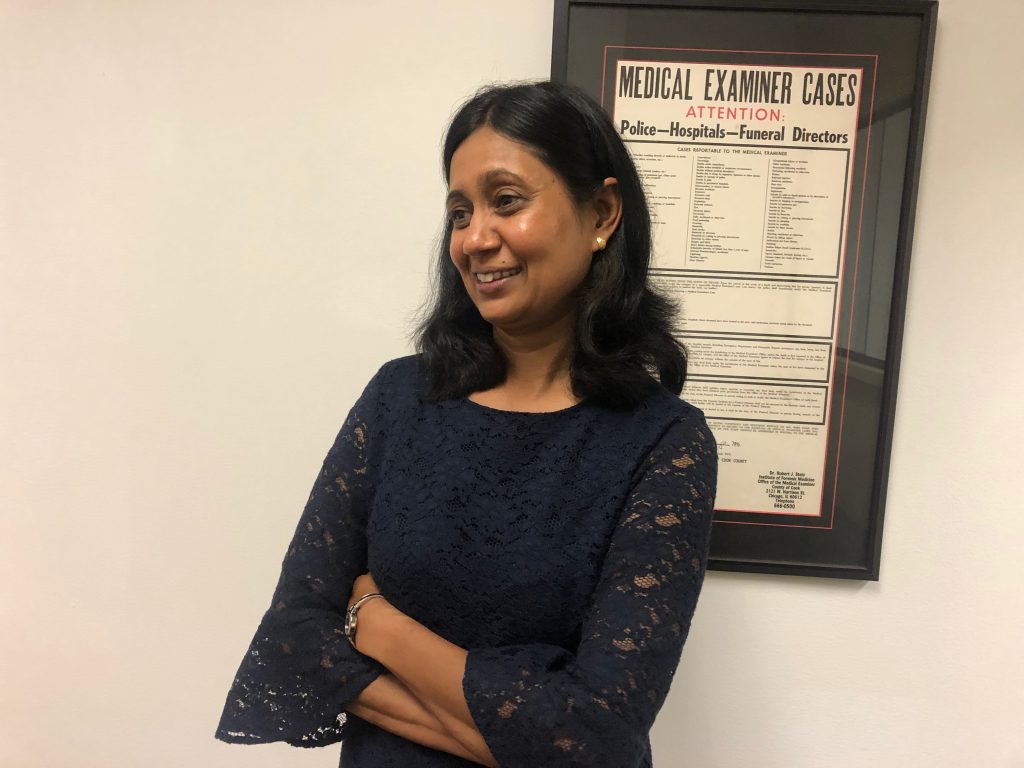 Dr. Ponni Arunkumar, Cook County Chief Medical Examiner [Submitted]
The job is notoriously difficult. There is a nationwide shortage of pathologists. “You see sometimes the worst of society, you’re dealing with people who are in their worst day, they’re grieving,” Arunkumar said on The Daily Line's Aldercast, but “I really like the field because you’re involved with every aspect of pathology. You’re also explaining to a jury what happened to a person, so you’re teaching, as well. I did my fellowship training program in forensic pathology in the Cook County Medical Examiner’s Office and have stayed here ever since.”
[audio mp3="http://thedailyline.net/wp-content/uploads/2019/07/arunkumar-aldercast_mixdown.mp3">[/audio]Podcast: Play in new window | Download
Subscribe: Apple Podcasts | Android | RSS
Arunkumar was promoted to medical examiner three years ago, after her predecessor, Dr. Stephen Cina, won the office a seal of approval from the National Association of Medical Examiners and promptly resigned, citing the stress of the job. The accreditation was especially monumental because of a 2012 crisis at the office that saw dead bodies piled on top of each other and coolers “overflowing with corpses.”
While past eras for the office have been characterized by mass disasters like the 1995 heatwave, the crash of American Airlines Flight 191, the Tylenol poisonings, and John Wayne Gacy’s murders, Arunkumar said 2012 was the most significant hurdle she’d faced in her time at the office.
The county’s morgue cooler is now the largest in the country, able to house 250 bodies. The day of the interview, the morgue’s census was 160, which can include storage from nursing homes, hospitals and funeral homes. Adding storage capacity was just part of the turnaround.
“We’ve built a new cooler where we house our bodies,” Arunkumar said. “We have an indigent coordinator, we have increased staff in the office, we’ve introduced an electronic case management system whereby any case or any body that enters the office is tracked wherever it goes. All the samples that are taken are also barcoded and tracked, our case reports are also in this case management system. We have the support and the funding that is needed… we meet not only national standards but international standards as well.”
Arunkumar’s office has also been in the spotlight for its review of fired pathologist Dr. John Cavanaugh’s determinations. Cavanaugh was fired after an internal review found he botched autopsies, the Sun-Times reported, including a missed homicide. Of the 219 cases he handled, 92 have been reviewed, and 18 have had their cause or manner of death changed, ME spokesperson Natalia Derevyanny says. That’s an uptick since December 2018. Three of the latest cases changed were natural deaths, but with the cause of each adjusted.
“We’re still going through the review process,” Arunkumar said, estimating the office is roughly halfway through its review and plans to finish it by the end of 2019. “We trying to triage such that the more child deaths and homicide deaths are looked at, then all the other case types… taking care of more difficult cases first.”
The office’s own quality assurance was “the reason these errors were first noticed. We’ve also started reviewing cases for a pathologists who come to the office, such that for the first three months, their cases are randomly reviewed by the deputy chief and the chief medical examiner to improve the quality assurance process that’s already in place,” Arunkumar said.
Her face also became nationally known when she testified during Chicago Police Officer Jason Van Dyke’s trial on the 16 gunshots that killed Laquan McDonald, one of Arunkumar’s highest profile cases. She did not perform the autopsy, but said it was one of roughly 10 cases where she’d explained that many bullet wounds in a single victim.
“It was stressful, but as long as I remembered that my job is to explain to the jury what happened to Laquan… I agree in the beginning there was the stress of all the cameras pointing at you,” Arunkumar said. “After a little bit, I was just looking at the jury and explaining to them what happened to Laquan and it was no longer stressful.”
Other takeaways from the interview:- What the office does for the living – The public health aspect of the job gives Arunkumar hope, she says. Its organ and tissue donation program helps hundreds – one body can produce seven organ and 30 tissue donations. The office is also working to hire an epidemiologist to spot trends in deaths earlier. The ME likely saved lives when it found deaths due to synthetic marijuana being mixed with rat poisoning and advises the county’s health and hospital system on how opioid deaths are changing, Arunkumar said.
- How death has changed here during her career — “We’ve seen the opioid epidemic affect Chicago and all the neighboring suburbs. In 2016, we saw a 70 percent increase in deaths due to opioids, this number has continually increased,” Arunkumar said. “We’ve also seen an increase in our number of gun homicides. There was a 50 percent increase in gun homicide deaths in 2016, this number has reduced in 2017 and ‘18, but the number of gun homicides our office deals with is more than what New York and LA office see put together… We’re seeing people getting shot multiple times and also we’re seeing them more often in automobiles, whereby the gunshot wounds have some– we have to deal with bullets going through glass or through the car door, changing the characteristics of the wounds.”
- On why Cook County’s stands alone — Cook County is the only county in Illinois with a medical examiner, which is an appointed position requiring pathology experience. Other counties elect coroners. Cook County owes this distinction in part to the long controversy surrounding Black Panther Fred Hampton’s death in 1969 at the hands of Chicago police. “There was a scandal where when Fred Hampton was killed, the coroner at the time determined a number of gunshot wounds that was different from an independent pathologist who was hired by Fred Hampton’s family,” Arunkumar said. Four autopsies took place on Hampton’s body, and also examined whether he was under the influence of barbuates. By referendum, county voters established a Medical Examiner’s office in 1972, and the Coroner’s office was abolished in 1976.
- Advice for the living from someone surrounded by death — “I think appreciating everything that you have, even the simple fact that you’re alive, your family is healthy is what I would say. Sometimes you forget to appreciate the simple things one has. Dealing with this field for a long time makes you appreciate the simple things.”
-
JUL 03, 2019

UNLOCKEDThis story was originally published by ProPublica Illinois, an independent, nonprofit newsroom that produces investigative journalism with moral force. Sign up for their newsletter to get weekly updates.
Thousands of Chicago motorists may be able to get their cars and trucks out of city impound lots immediately after filing for Chapter 13 bankruptcy following a federal appeals court ruling that the city could no longer hold onto the vehicles.
The 7th U.S. Circuit Court of Appeals said the city’s aggressive strategy, aimed at discouraging motorists whose vehicles had been impounded over unpaid tickets from filing under Chapter 13, violated the basic protections of bankruptcy, and the city was doing so mostly to generate revenue.
“This allows Chapter 13 to accomplish its intended purpose, which is to put the property that a debtor needs to go on with the debtor’s life in the hands of the debtor,” said Eugene Wedoff, a retired chief bankruptcy judge for the Northern District of Illinois who argued the appeal on behalf of the debtors.
The opinion, which upholds orders issued by judges in four cases in the U.S. Bankruptcy Court in Chicago, draws on reporting by ProPublica Illinois last year that showed how debt from unpaid parking and automated traffic camera tickets has led thousands of mostly black and low-income drivers to file for Chapter 13 bankruptcy.
This kind of bankruptcy allows for ticket debt forgiveness and what’s known as an “automatic stay,” a protection that gives debtors the opportunity to regain their financial footing and repay their creditors. For years, what that meant for indebted motorists in Chicago was the ability to quickly reinstate drivers’ licenses suspended over unpaid tickets and retrieve impounded vehicles without having to first pay fines or fees.
Chapter 13 bankruptcy is also cheaper, at the onset, than enrolling in a city ticket payment plan.
Many law firms will file cases without a retainer, spreading legal fees over the life of the bankruptcy. A city payment plan can require a down payment of up to $1,000.
Filing for bankruptcy is rarely a long-term solution, however; impoverished debtors frequently fail to make required monthly payments, leaving their bankruptcies to collapse without debt relief, ProPublica has reported. When that happens with cases involving ticket debt, the city recovers little if any money.
Hoping to stem the flood of bankruptcies and bring in more revenue, city officials in 2017 began claiming that the city had liens on impounded vehicles and that it didn’t have to return them immediately after motorists filed for bankruptcy. Instead, the city held onto the cars until motorists agreed to prioritize paying off ticket debt in their bankruptcy payment plan, a process that often took months and left many people unable to get to work. This assured the city it would get paid back more of what it was owed; typically, debtors pay just pennies on the dollar for unpaid tickets in bankruptcy payment plans, which can last up to five years.
Officials would not say how many vehicles the city refused to return after launching its lien policy. But in 2016, the city returned close to 3,800 impounded vehicles to debtors who had filed for bankruptcy.
The federal appeals court said the city’s claim that it had liens on the impounded vehicles was valid, but that it still needed to return the vehicles to their owners immediately after they filed for bankruptcy.
“At bottom, the City wants to maintain possession of the vehicles not because it wants the vehicles but to put pressure on the debtors to pay their tickets,” a three-judge panel wrote in its opinion last month. “That is precisely what the [automatic] stay is intended to prevent.”
A spokesman for the city’s Law Department declined to comment on the ruling.
The court’s ruling means the city must go to court on a case-by-case basis if, for example, it believes the bankruptcy was filed in bad faith or wants assurances it will get paid more of what it’s owed.
“The City’s argument that it will be overburdened with responding to Chapter 13 petitions is ultimately unavailing; any burden is a consequence of the Bankruptcy Code’s focus on protecting debtors and on preserving property of the estate for the benefit of all creditors,” the judges wrote. “It perhaps also reflects the importance of vehicles to residents’ everyday lives, particularly where residents need their vehicles to commute to work and earn an income in order to eventually pay off their fines and other debts.”
The court also rejected the city’s argument that it needed to hold onto impounded vehicles to keep bad drivers off the road. The judges wrote that the kind of violations that typically lead to impoundments are “for parking tickets, failure to display a City tax sticker, and minor moving violations. Even tickets for a suspended license, a seemingly more serious offense, are often the result of unpaid parking tickets and are thus not related to public safety.”
ProPublica Illinois has reported on how violations for not having vehicle city sticker — which can grow to $488 with late penalties and collections fees — are the biggest source of ticket debt in Chicago.
It’s unclear whether Mayor Lori Lightfoot’s administration will ask the U.S. Supreme Court to take the case and fight to continue a legal strategy crafted during Rahm Emanuel’s tenure as mayor. Lightfoot’s office did not respond to requests for comment.
During her mayoral campaign, Lightfoot said she would look for more progressive revenue alternatives to tickets,
saying “our regressive, extractive ticketing system has forced thousands of motorists of color into bankruptcy, which imposes its own costs on our city budget.”
Even before Lightfoot’s election, city officials were looking for other ways to steer motorists away from Chapter 13, the only kind of bankruptcy in which ticket debt can be wiped out. In November, the city approved a proposal from the Law Department to forgive old ticket debt for motorists who file for bankruptcy under Chapter 7, which almost always end with debt relief.
The city’s “Fresh Start” program wipes away unpaid tickets, fines and fees issued more than three years before debtors file for a Chapter 7 bankruptcy, as long as they complete a city payment plan for more recent ticket debt. Late penalties and collection fees are also forgiven.
The Law Department said 605 people have signed up for the program since it went into effect in January. If they successfully complete the program, the city could waive almost $4 million in ticket debt, or about $6,500 per person.
Melissa Sanchez is a reporter at ProPublica Illinois. -
Ald. Ed Burke (14) returned to federal court Tuesday for an update on the 14-count indictment he faces that alleges he repeatedly — and brazenly — used his powerful position at City Hall to force those doing business with the city to hire his private law firm.
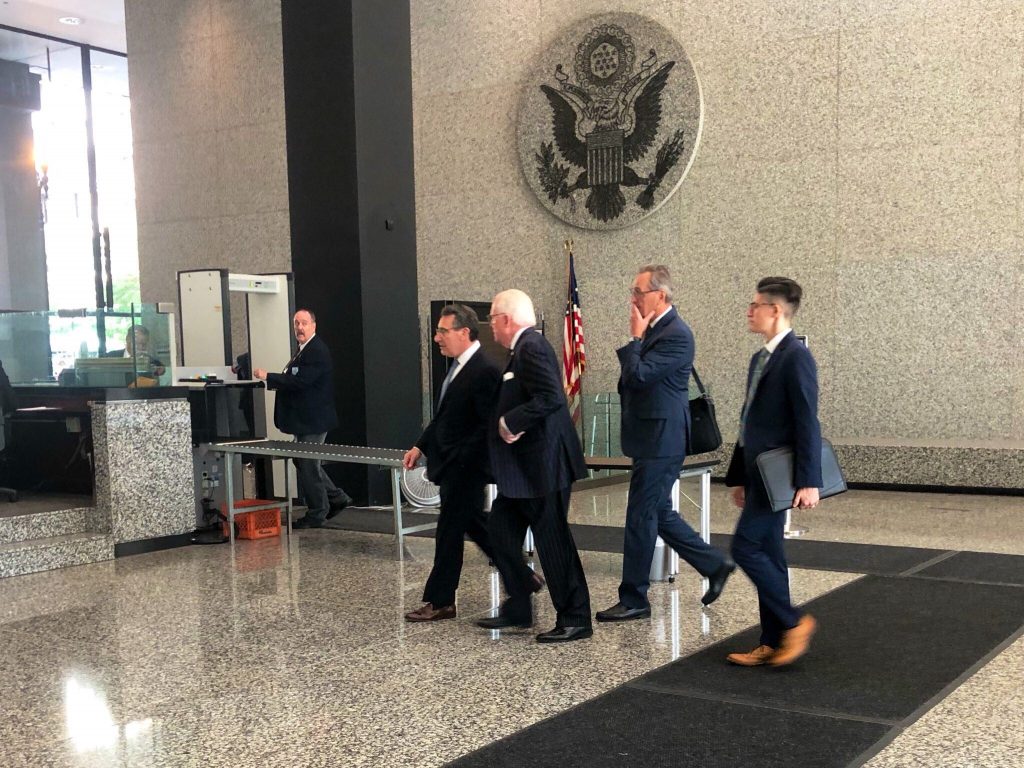 Ald. Ed Burke (14) leaves the Dirksen federal courthouse without speaking to reporters. [A.D. Quig/The Daily Line]
-
Several immigrant rights groups gathered Tuesday at City Hall to call on Mayor Lori Lightfoot to issue an executive order banning the Chicago Police Department from working with federal immigration officials as the threat by President Donald Trump to order mass deportation raids lingers.
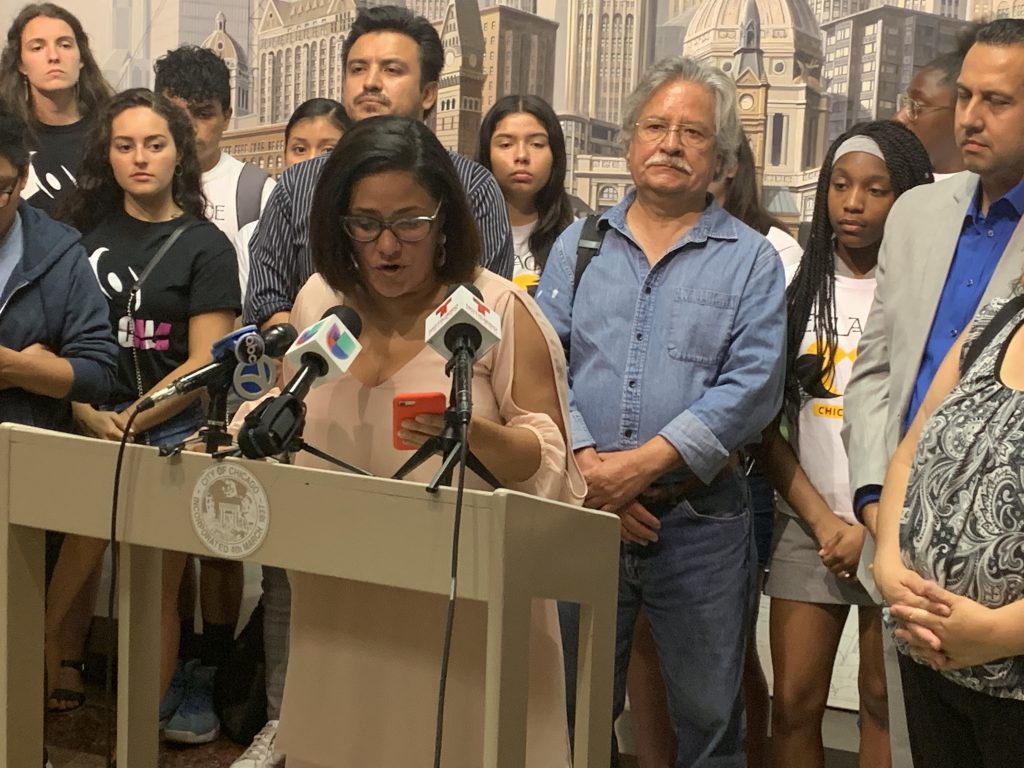 Ald. Rossana Rodriguez Sanchez (33) said the threat of raids had created “an emergency” in immigrant communities and said Mayor Lori Lightfoot needs to act immediately. [Heather Cherone/The Daily Line]
-
 “We want to be partners,” Chicago Teachers Union Vice President Stacy Davis Gates said. “And if our partnership continues to go ignored, we reserve the right to stop providing our work. That is the bottom line.”
Leaders of the 25,000-member Chicago Teachers Union started 2019 hopeful that Mayor Rahm Emanuel’s decision not to seek a third term gave them a clear shot at electing their pick for mayor and end an era marked by confrontation, a seven-day strike in 2012 and tense negotiations in 2016. -
Chicago employees who are paid the city's minimum wage will find a fatter paycheck than usual starting Monday, when they will get a $1 per hour raise.
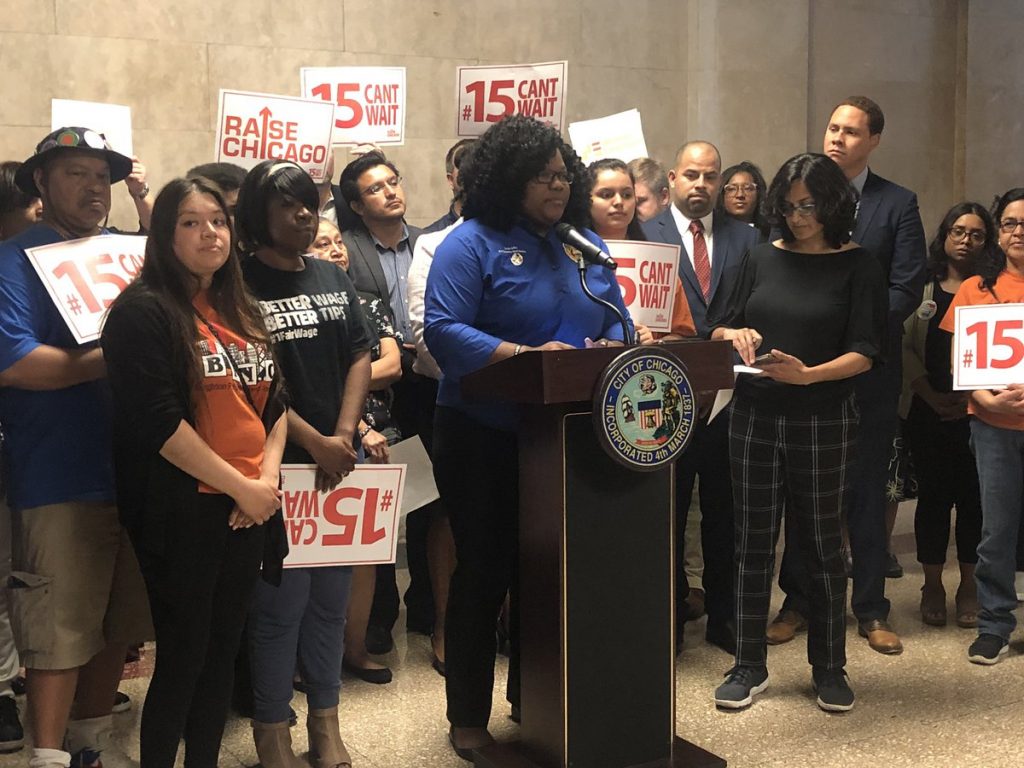 Cassie Collins, a customer service assistant at CTA, says she and her coworkers have been left behind by Chicago’s existing minimum wage rules. [A.D. Quig/The Daily Line]
-
-
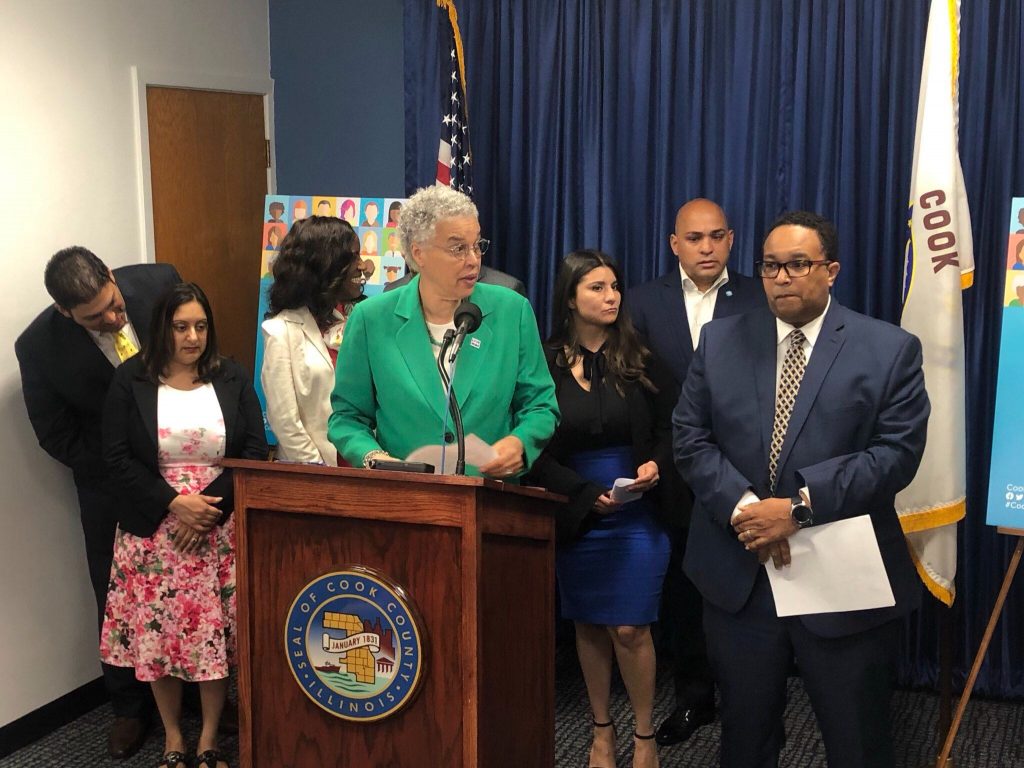 “We don’t know what the administration will try next, but we’re not going to stand up for it. We’re going to resist his efforts,” Cook County Board President Toni Preckwinkle said.
The Cook County Board finalized the appointments of 13 members to its 2020 Census commission on Thursday designed to increase participation and outreach.
-
 A Divvy bike dock.
ALISA HAUSER/BLOCK CLUB CHICAGO
Mayor Lori Lightfoot’s administration said Thursday it would no longer require letters of support from aldermen on a host of issues ranging from the location of Divvy stations to the construction of off-site units to fulfill the city’s affordable housing rules.
Members of Lightfoot’s administration briefed aldermen on how she plans to implement the executive order issued just hours after she took office, which will go into full effect July 19. The change is part of her effort to root out corruption at City Hall.
Lightfoot’s Chief of Policy Dan Lurie told The Daily Line that if an alderman and department leaders disagree, the alderman will not have the final say — a change that Lurie acknowledged would fundamentally change how City Hall has operated for “generations.”
“The mayor ran on changing the system, and that is exactly what she is doing,” Lurie said. “The kind of corruption we are seeing is a real concern.”
Related: Aldermen push back as Lightfoot starts to roll back aldermanic prerogative
Ald. Raymond Lopez (15) — who has emerged as one of Lightfoot’s leading critics on the City Council — said the proposal to unwind the unwritten rule of aldermanic prerogative does not go after the “meat and potatoes” that causes corruption in Chicago.
The changes address only “odd low hanging fruit” that serve only to give the mayor “political cover” to claim she is fulfilling her promise to end the practice of allowing aldermen to veto — or green light — projects in their wards, Lopez said.
The changes are “dangerous” because they will “centralize” decisions at City Hall and empower officials who know nothing about Chicago’s varied neighborhoods, Lopez said.
“Aldermen are now being made to wear the jacket” and treated as if all are corrupt, Lopez said.
Ald. Nicholas Sposato (38), who endorsed Lightfoot in the runoff, said he was also put off by the tone of the proposal, which he said was “accusatory” and presented by Lightfoot’s staff as “my way or the highway.”
“I don’t see it flying,” Sposato said, adding that he had asked to meet with Lightfoot one-on-one to discuss the change.
Under the new policy, aldermen “will be notified of items affecting their wards” and will be “encouraged to continue to provide meaningful feedback based on their knowledge of the needs facing their communities.”
“Departments will thoroughly review any input offered by an alderman,” according to the policy.
Aldermen could introduce an ordinance to the City Council to override the administration’s decision.
Lurie said he hoped that it would not come to that, but acknowledged that it could happen.
While Lopez and Sposato said the aldermanic briefings were “very tense,” Lurie disputed that characterization.
“The discussions were really productive, with good back and forth between aldermen and department heads,” Lurie said.
The new policy is designed to end a “very opaque system that doesn’t work for residents and businesses,” Lurie said.
Related: ‘I plan to deliver change:’ Lightfoot takes office and ‘ends’ aldermanic veto
Lightfoot’s policy is designed to spur development on the South and West sides, which have suffered from disinvestment for decades, Lurie said.
“There should be a clear path to development,” Lurie said. “But there is not one right now. They have to go through the alderman.”
Chicago’s culture has “strangled” development by forcing developers and investors to navigate 50 different systems in 50 different wards, Lurie said. Lightfoot intends to ensure one set of rules applies to everyone, he added.
“This is a significant and important step,” Lurie said. “But it is not the end.”
More changes that will require City Council approval are in the works, Lurie said. That will include changes to the city’s Zoning Code, which determines what can be built and where — and is at the heart of aldermen’s power.
“That will require real collaboration” between the administration and aldermen, Lurie said, declining to speculate on a timeline.
Related: Zoning code reform to root out aldermanic prerogative coming, Lightfoot says
Based on plans crafted by city departments and vetted by the mayor’s office, letters of support from aldermen will no longer be required to approve:- Landmark designations, Landmark permit fee waivers
- Class L property tax breaks
- Demolition applications
- Plan Commission action
- Land sales
- Lease of city property
- Designations, redevelopment agreements and intergovernmental agreements
- Small Business Improvement Fund grants from Tax-Increment Financing districts
- Neighborhood Opportunity Fund grants
- Special Service Association appointments and budgets
- Permission to build off-site units to fulfill the Affordable Requirements Ordinance
- New Divvy stations
- New People Spots
- Open Space Impact Fee expenditures
- Preserving Communities Together grants
- City Lots for Working Families grants
- Parade of Homes grants
- Multifamily financing grants
- Outdoor special event permit
- Tax-Increment Financing district designations and redevelopment agreements
In addition, aldermen can no longer make a call to replace a resident’s black garbage cart, a service aldermen delight in reminding voters of at election time.
The policy will also change the way tree trimming requests are handled. No longer will aldermen be able to call on city crews to remove as many as 20 trees annually at his or her discretion, according to the policy.
Instead, all requests will be entered into the city’s system and aldermen should notify the Department of Streets and Sanitation of “particularly urgent needs related to public, health, safety, etc.”
However, aldermen will still have the sole authority to grant permits for block parties, Lurie said. Officials decided they were best equipped to resolve any disputes that arise between neighbors, Lurie said. -
Health officials faced county commissioners for the first time since Inspector General Patrick Blanchard released a report finding the health system had $701 million in unpaid healthcare liabilities Wednesday. Officials disagreed with Blanchard’s findings and defended the transparency of their reporting, but said it could take several weeks to respond fully.
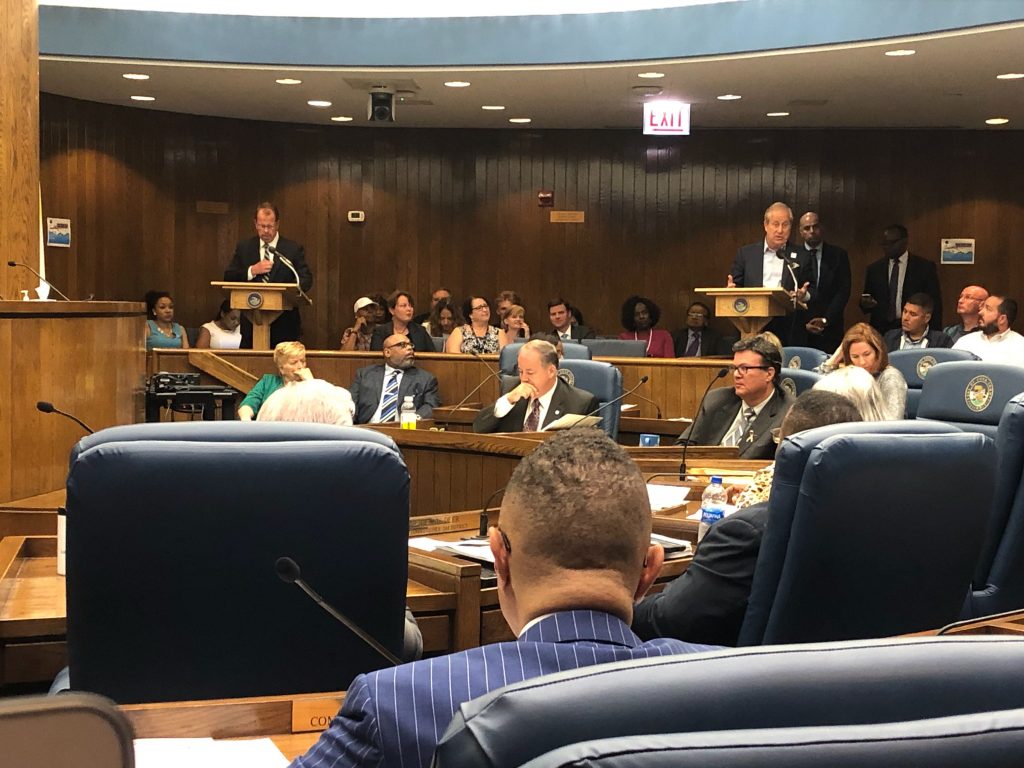 “This is more kabuki math,” Comm. Jeffrey Tobolski (D-16) said of a report that the Cook County hospitals system owes $701 million. [A.D. Quig/The Daily Line]
-
With the city’s agreement with ComEd to provide electric service to 1.2 million Chicago residents set to end on Dec. 31, 2020, aldermen will get a chance on Thursday to press company officials on their plans for the future — and to ensure service during the hot summer months.
-
In a nod to Pride Month and the 50th anniversary of the Stonewall uprising that launched the modern LBGTQ+ rights movement, commissioners approved measures in support of the federal Equality Act, and doubled down on protections against discrimination in public facilities like bathrooms and dressing rooms.
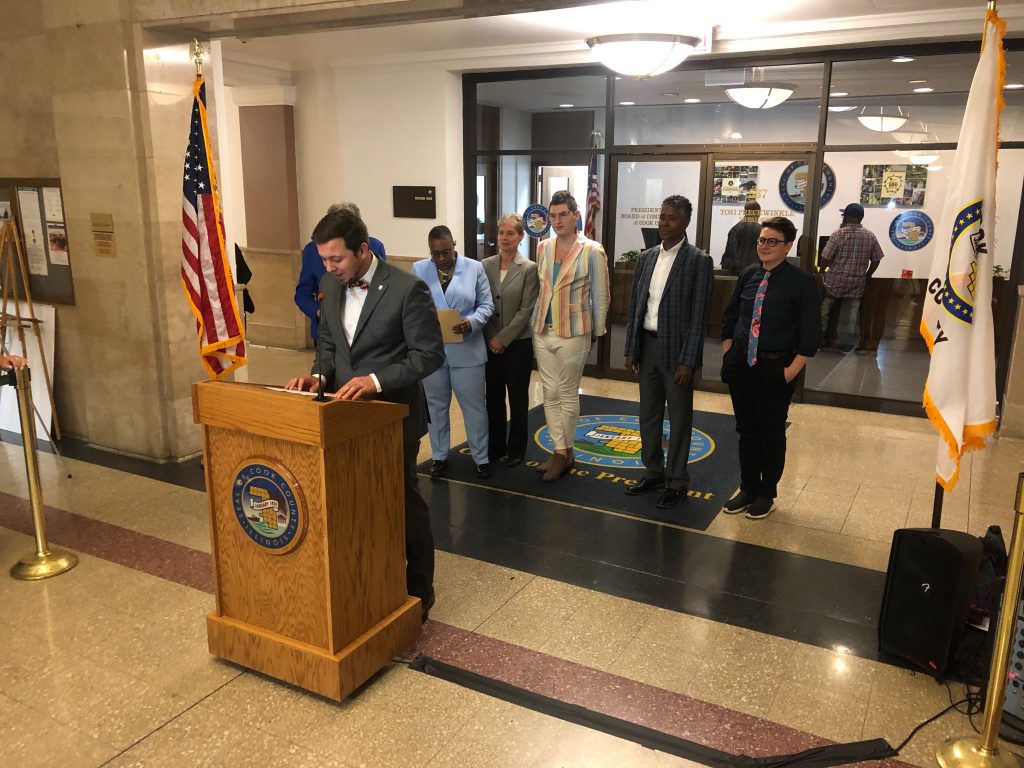 “This is an important step forward for the county and taking away potential barrier for gender non-conforming residents,” Comm. Kevin Morrison (D-15) said. [A.D. Quig/The Daily Line]


