Chicago News
-
JUL 28, 2020


 Cook County is setting aside $5 million from its cash-starved budget to extend the reach of a street-level violence prevention program, but one Chicago alderman is casting doubt on the investment.
 Cook County Board President Toni Preckwinkle on Friday; Ald. Chris Taliaferro (29) in 2018 [Facebook]
 -
JUL 27, 2020
-
JUL 24, 2020
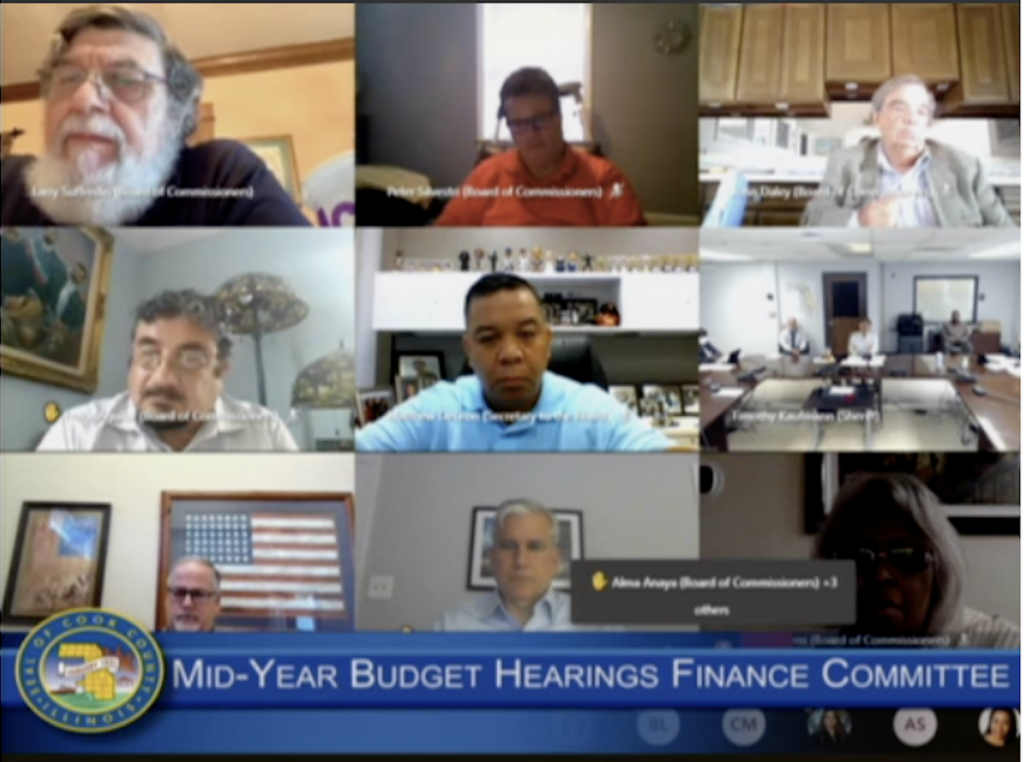 Cook County Sheriff Tom Dart speaks during a county budget hearing on Tuesday.
A proposed resolution up for consideration next week that calls on Cook County leaders to “redirect” money away from arresting and jailing people does not say anything about draining tens of millions of dollars from the county’s mammoth jail and court system right away. But facing a $410 million budget gap heading into next year, commissioners may not have a choice. -
JUL 23, 2020
UNLOCKED
If you have a passion for state and local political news along with experience investigating the work of government at either the state or local level, then an opening at The Daily Line may be of interest to you.
We are looking for a reporter to join our team in our pursuit to cover policy and politics throughout the state. This person should have a keen understanding of Chicago, Cook County and Illinois politics and must be able to produce original reports focusing on the development of legislation and those who engage and influence the process. Applicants must be attentive to emerging stories, digitally engaged and capable of delivering thoughtful commentary across print, digital, radio, social and other channels.
If this is you or someone you know, please review or share the job description.
Job Title: Reporter
Job Summary:
This team member is responsible for the enterprising, development, and production of insightful and detailed content for The Daily Line news platforms.
Responsibilities- Produce content for weekday digital newsletter, website and social platforms.
- Support the creation of special reports, guides and other member exclusive content.
- Work with team members to provide necessary coverage and enterprise stories daily.
- Curate a network of sources.
- Represent The Daily Line on television, radio, and at public/private events.
- Participate in collaborations with other news organizations.
- Help in the development news partnerships.
Qualifications- Proficient in AP Style.
- Exemplary story sense.
- Strong writing and copy-editing skills.
- Strong social presence.
-
4+ years experience covering government with a recognized media outlet that publishes daily.
-
Proven ability to enterprise stories involving often complex issues involving ongoing narratives.
- Ability to meet expectations of daily deadlines.
Compensation and Benefits
Salary is commensurate with experience and benefits offered will be discussed during the interview process.
How to apply
Interested applicants should submit a resume and a brief statement of interest to [email protected]. Put “Reporter Job Application” in the subject line.
About The Daily Line:
The Daily Line (TDL) is an essential news resource for professionals across Illinois. Since 2007, we have reported on the contours of power in city, county and state government. Our detailed newsletters, published every weekday, provide an inside look at the actions taken by decision-makers that can only be gleaned by monitoring the committee meetings and commission hearings where the rigorous work of governing is done. -
 Ald. Tom Tunney presided over the zoning committee Tuesday.
The City Council is poised on Wednesday to place new requirements on implosion demolitions, ratify a new contract with police supervisors, add new protections for renters and approve a settlement that would keep a half-century of police misconduct files under wraps, among dozens of other measures. -
JUL 22, 2020
UNLOCKED
After dozens of tense community meetings, months of shut-it-down protests and nearly a year of City Council politicking, city officials and Woodlawn residents have struck a deal to secure the future of their neighborhood.
“It looks like we might have an ordinance that I might co-sponsor,” Ald. Jeanette Taylor (20) told The Daily Line last week. -
JUL 21, 2020
Developers would have to work harder to notify neighbors before planning a demolition by implosion under an ordinance set to be considered by aldermen Tuesday.
 Dust runoff from Hilco Redevelopment Group’s April 11 demolition of a smokestack near Little Village. [YouTube/Alejandro Reyes]
 -
JUL 21, 2020
UNLOCKED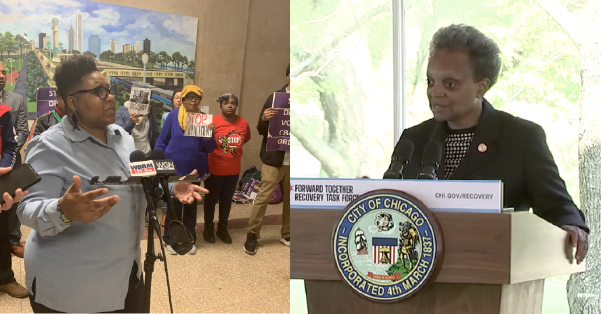 Ald. Jeanette Taylor (20) and Mayor Lori Lightfoot
Ald. Jeanette Taylor (20) is backing an ordinance proposed by Mayor Lori Lightfoot laying out a suite of affordable housing programs for Woodlawn, putting to rest a year-long feud between the two leaders over how to protect residents from potential displacement spurred by the Obama Presidential Center.
City leaders struck a deal with Woodlawn community groups on Sunday to amend a proposal developed by the city’s housing department earlier this year by adding heavier protections for low-income renters, a key priority for Taylor and members of the Coalition for a Community Benefits Agreement. The ordinance is set to be formally introduced during Wednesday’s City Council meeting. -
JUL 20, 2020
-
 Chicago Mayor Lori Lightfoot spoke to the Executives’ Club of Chicago last week.
A week after unveiling a comprehensive Covid-19 recovery plan intended to reduce decades of disparities in Chicago’s poorest neighborhoods, Chicago Mayor Lori Lightfoot turned to the city’s business community to ask them to do their part.

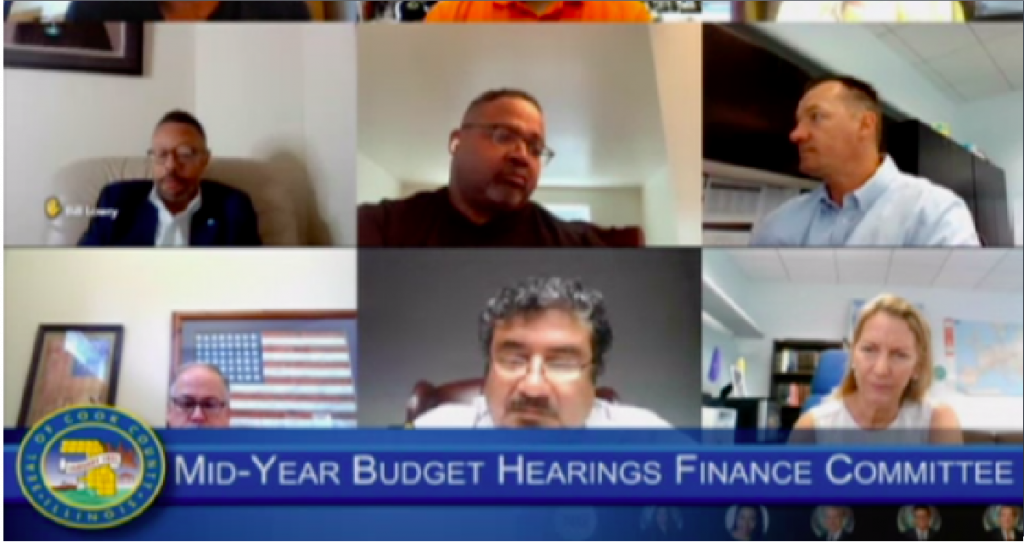 Cook County Public Defender Amy Campanelli speaks to county commissioners during a budget hearing on Wednesday.