


Chicago News
-
Mayor Lori Lightfoot’s nomination of Marisa Novara to lead a resurrected Department of Housing sailed through the City Council’s Committee on Housing and Real Estate, with many aldermen applauding her work as an affordable housing advocate.
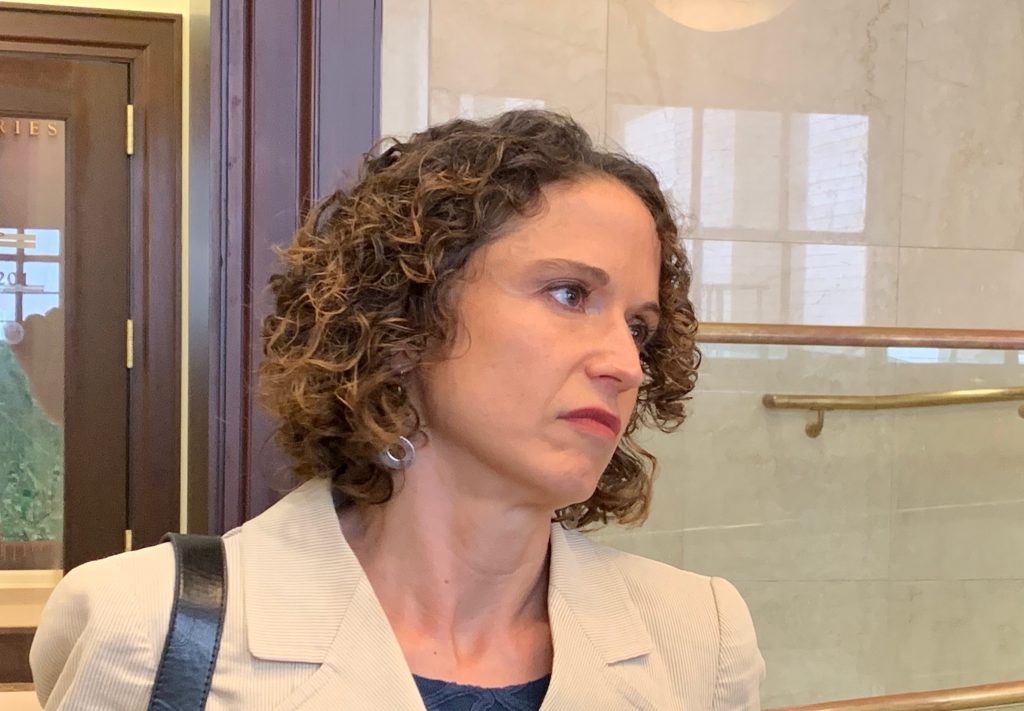 Acting Housing Commissioner Marisa Novara listens to affordable housing advocates after her confirmation hearing. [Heather Cherone/The Daily Line]
-
The Cook County Board of Review — a three-member quasi-judicial body that hears property tax appeals — just closed the books on a record year.
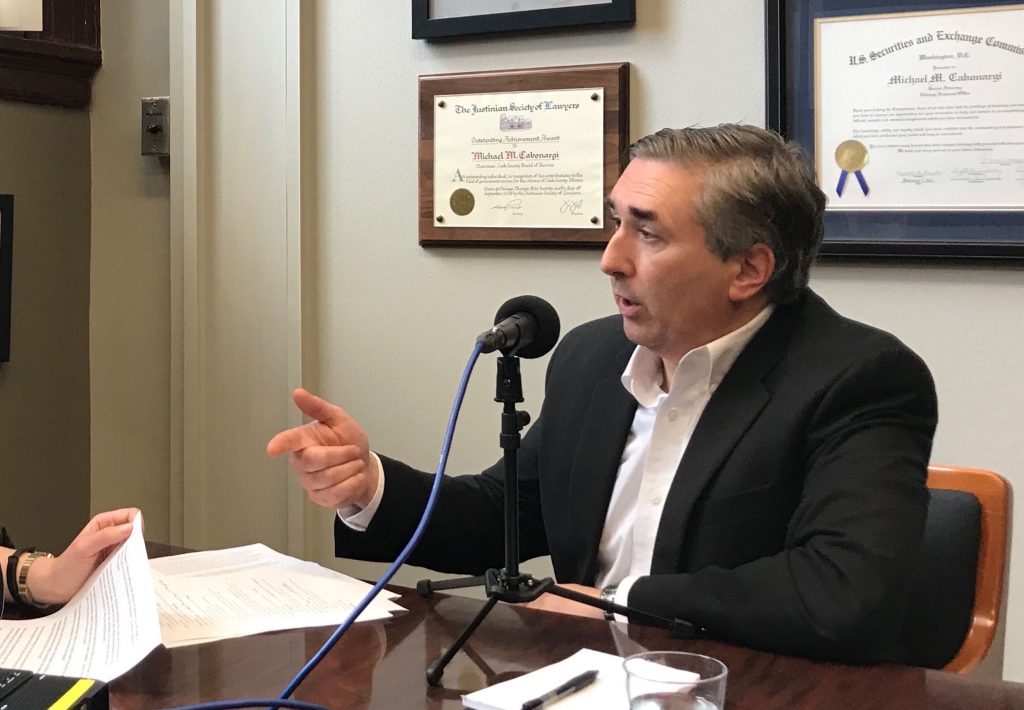 Board of Review Commissioner Michael Cabonargi records The Aldercast. [Don Vincent/The Daily Line]
With property tax bills are expected to go out on time, the office is likely staring down the barrel of more record appeals, as Cook County Assessor Fritz Kaegi picks up the reforms launched at the tail end of former Assessor Joseph Berrios’ tenure in the wake of ProPublica and the Chicago Tribune’s reporting on assessment inequities.
The board ruled on a record number of appeals in 2018, which are based on 2017 assessments, and encountered “more record volume” during this most recent cycle — about 245,000 appeals, Commissioner Michael Cabonargi said on The Daily Line’s Aldercast.
[audio mp3="http://thedailyline.net/wp-content/uploads/2019/06/cabonargi-aldercast_mixdown.mp3">[/audio]Podcast: Play in new window | Download Subscribe: Apple Podcasts | Android | RSS
Cabonargi blames two things: the ease and access of bringing a complaint to the board on its online appeal system, known as DAPS, and that “property taxes are in the news a lot more. Every time during campaign season, when folks talk about high property taxes I think it makes people look at their bill and think maybe I should appeal it.”
“The curve and the volume of appeals we’re getting is unsustainable, it really is,” Cabonargi said, echoing claims he and colleagues have made during past budget hearings.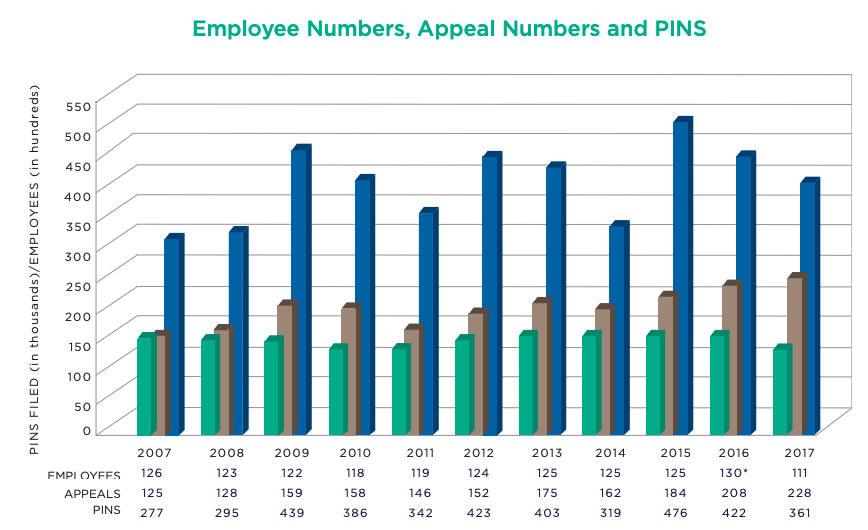
Source: Board Of Review Annual report, 2017-18 — spikes in 2009, 2012, and 2015 denote city reassessments, which are more complicated than those in the suburbs.
Cabonargi did not criticize Berrios but did say that better assessments “will give people more confidence in the system and they will be less likely to file.”
However, reform will take time, Cabonargi said, and nothing indicates appeals will slow in the upcoming 2019 assessment session, which launches Aug. 1.
“As long as people are receiving a tax bill, they’re going to want someone to take a look at it,” Cabonargi said.
Cabonargi said his office has not looked at the assessor’s new model, nor the old model, nor at any 2019 assessment year properties.
“I know nothing more of what I’ve read in the papers… That’s his office and it’s his model,” Cabonargi said.
The Board’s review involves the assessor’s initial assessment, plus evidence provided by property owners and marketing data. While the assessor should incorporate the board’s findings into its later assessments, “The assessor can change it back if the assessor wants to,” Cabonargi said.
The Tribune investigation found a reliance on appeals only made the assessment system less fair, and for many commercial buildings, assessments did not change from year to year.
“Wealthier neighborhoods appealed at much higher rates and regularly received significant assessment reductions even though homes in those areas were more likely to be undervalued,” the Tribune wrote. “In poorer neighborhoods, homeowners not only are more likely to have their properties overvalued by the assessor, they are less likely to appeal.”
The Board says it performed more than 130 outreach events in 2018 to help address the gap between rich and poor neighborhoods, where property tax attorneys might not be proactively reaching out.
The year before Berrios was elected, the Tribune reported 27 percent of successful appeals included relief granted by the assessor. In 2015, it was 61 percent.
Even before Berrios took office, the Board of Review granted reductions in more than 60 percent of the cases brought before it.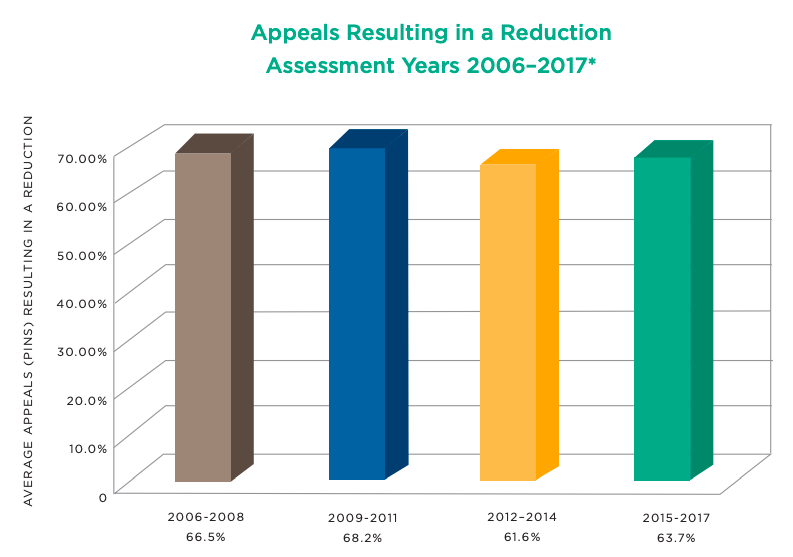
The Board stayed silent on Kaegi’s fight in Springfield for a data modernization bill, SB 1379, which did not win passage this past session. Kaegi has pledged to return to fight for it this fall. He argues the data he wants is much of what property owners bring to the Board of Review.
“We have to respect each other’s sovereignty,” Cabonargi said, but suggested Kaegi might be able to pursue other fixes. “Better data makes better assessments, but better technology, better talent makes better assessments as well.”
More than anything, Cabonargi said he’d “like to make it boring, where people know that they can go in and see the Board of Review’s results and see how we came to our conclusions, how they can challenge those to the board, or [Property Tax Appeal Board] or elsewhere and they feel engaged in it.”
On this episode of the Aldercast, Cabonargi also discusses the upcoming 2020 Democratic Convention in Milwaukee and the Democratic Party of Illinois’ delegate process, why we can blame the Great Depression on the Board’s wonky schedule, and employee burnout. -
Mayor Lori Lightfoot said Wednesday she plans to propose changes in the city’s zoning code — signaling she was prepared to launch a full-fledged battle to end aldermanic prerogative that could put Chicago’s first ever black female chief executive at loggerheads with 50 aldermen.
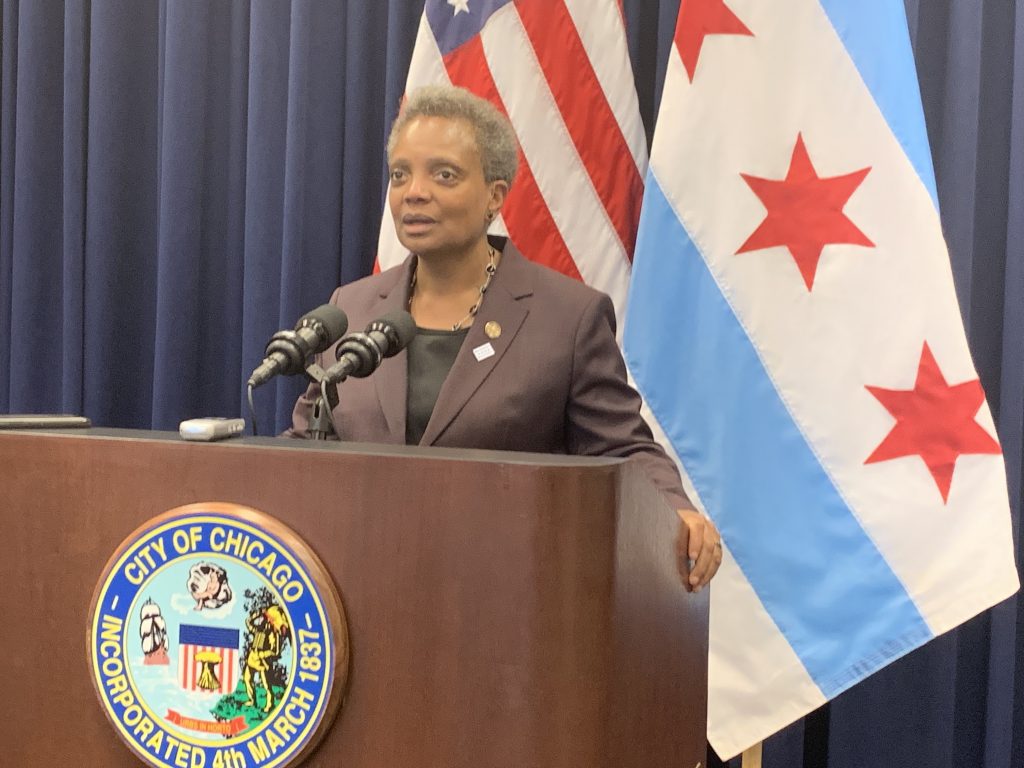 Mayor Lori Lightfoot addresses reporters. [Heather Cherone/The Daily Line]
“In the coming months, the new administration will also seek to work with the City Council to bring forward new legislation that increases transparency in city zoning processes,” Lightfoot said in a statement announcing a new package of ethics reforms.
-
Commissioners quickly agreed to pay $486,000 to fight several lawsuits brought by female county employees — including sheriff’s deputies and public defenders — exposed to masturbating detainees, bringing the total cost of the legal fight to approximately $2.2 million.
-
Ald. Ed Burke (14) had the first of what promises to be many days in court on 14 counts of charges of racketeering, bribery and extortion. Mayor Lori Lightfoot continued to fill out her administration, naming a chief engagement officer.
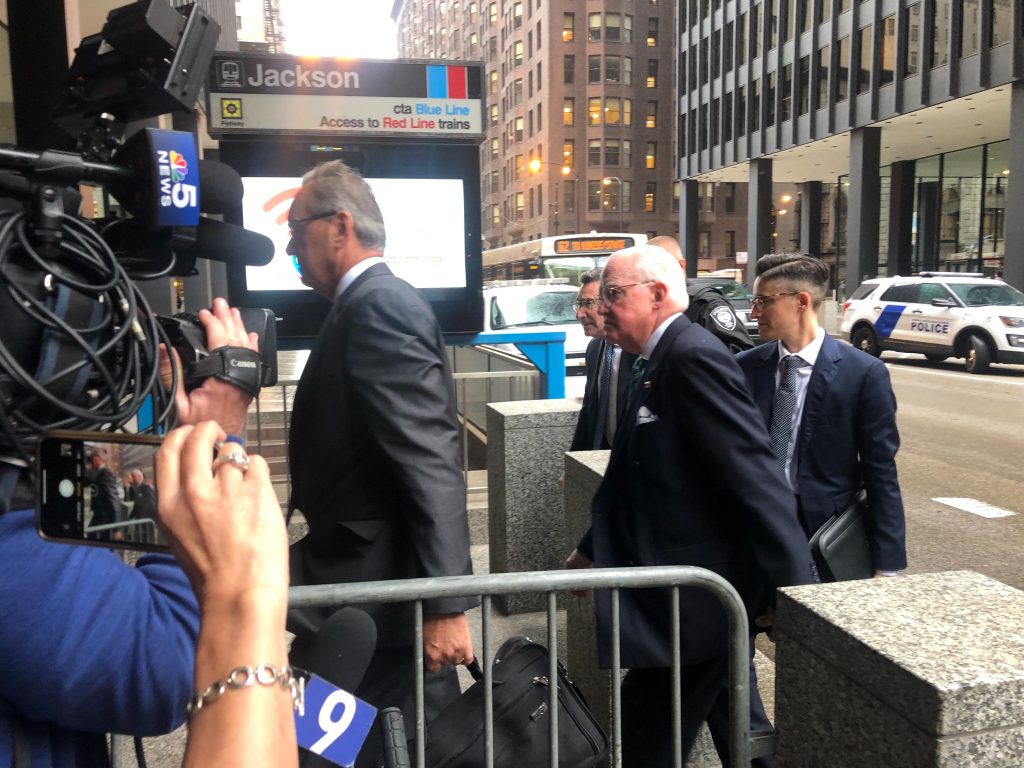 Ald. Ed Burke (14) arrives for his arraignment at the Dirksen Federal Building. [A.D. Quig/The Daily Line]
-
The team lead by independent monitor Maggie Hickey that will be charged with reforming the Chicago Police Department laid out a plan for its first year to Judge Robert M. Dow, who will oversee the overhaul.
 Maggie Hickey will monitor efforts to reform the Chicago Police Department. [Schiff Harden]
-
Cook County officials will consider paying another $486,000 to fight several lawsuits brought by female county employees — including sheriff’s deputies and public defenders — exposed to masturbating detainees, bringing the total cost of the legal fight to approximately $2.2 million.
-
Chicago Police Supt. Eddie Johnson’s job is safe — despite the fact that 52 people were shot during the weekend — 10 fatally, Mayor Lori Lightfoot said.
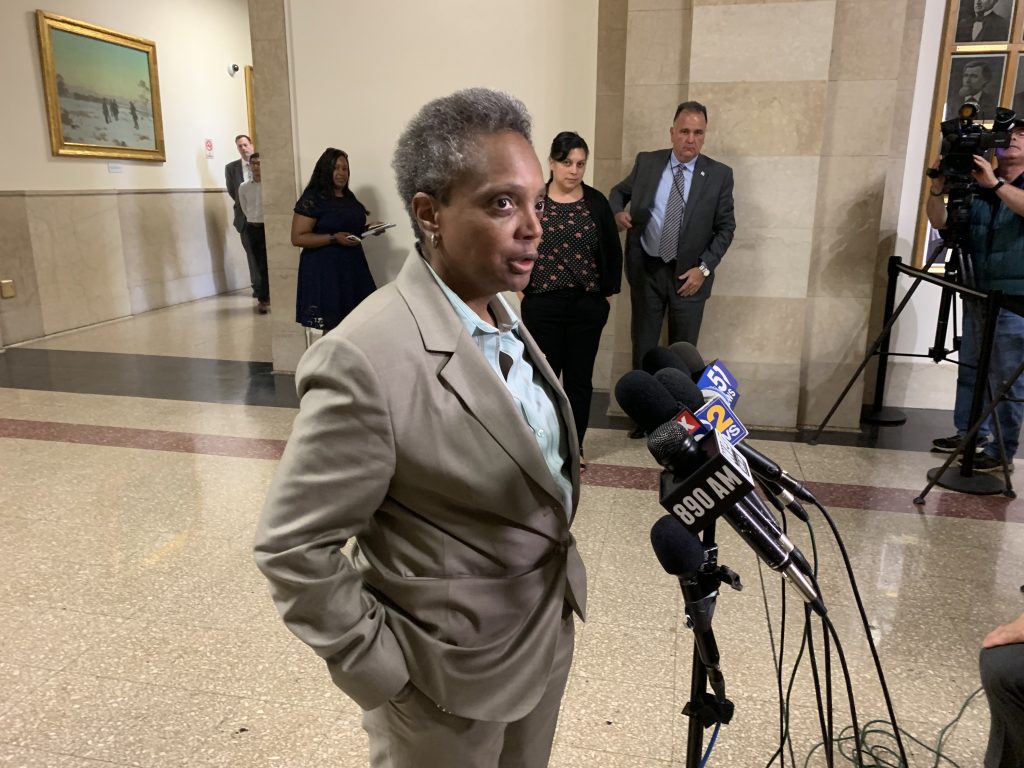 Mayor Lori Lightfoot told reporters there was not a need to replace the police department's leadership "at this time." [Heather Cherone/The Daily Line]
-
Inspector General Joseph Ferguson said Monday former Mayor Rahm Emanuel failed to follow the road map he laid out to fix the city’s tax-increment financing system — and urged Mayor Lori Lightfoot to reform the controversial program.
 Inspector General Joseph Ferguson, right, chats with Ald. Scott Waguespack (32.) [Heather Cherone]
-
-
Amid the high-profile and big-ticket legislative victories Gov. JB Pritzker and Illinois Democrats reveled in Sunday night, at least one big task was left undone.
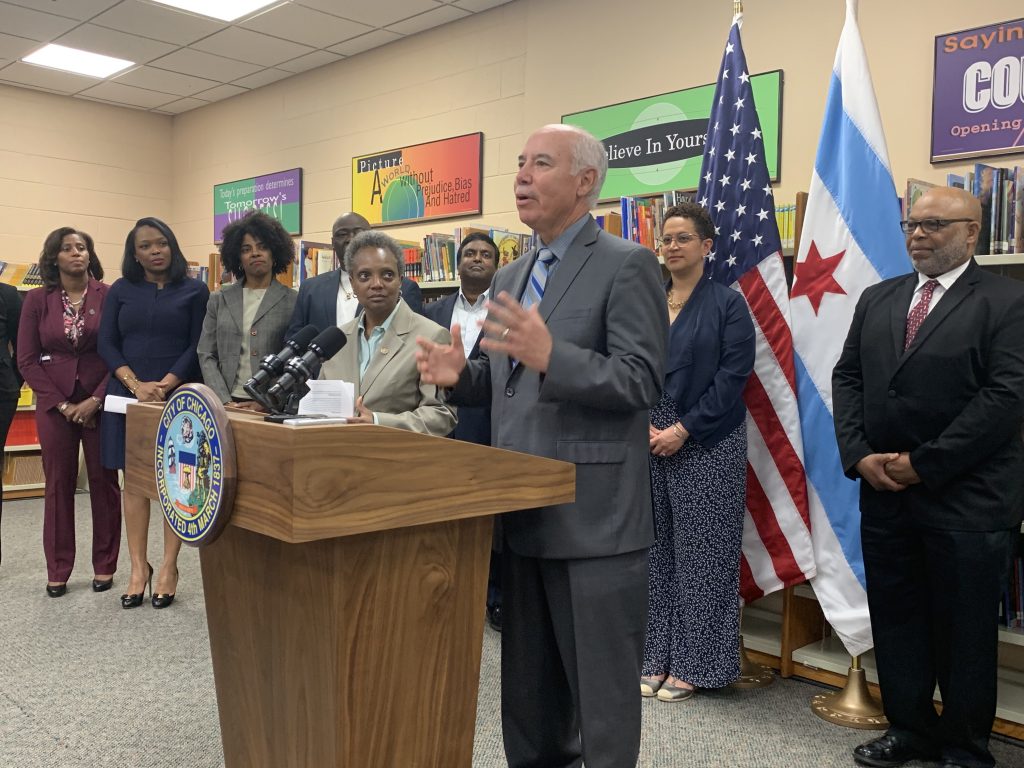 Mayor Lori Lightfoot looks on as newly appointed Chicago School Board President Miguel Del Valle speaks to reporters. [Heather Cherone/The Daily Line]
For the third time in as many years, a measure that would have ended mayoral control of Chicago’s schools failed. HB 2267 — which passed the Illinois House 110-2 on April 4 — failed to even be heard by a committee in the Illinois Senate amid opposition from Mayor Lori Lightfoot.
-
As Mayor Lori Lightfoot presses Ald. Ed Burke (14) to resign in the wake of allegations he ran a racketeering scheme from his City Hall office, a road map to reform crafted by the city’s Ethics Board awaits her review.
The plan, from the Chicago Board of Ethics, landed on Lightfoot’s desk just hours before Burke was indicted on 14 counts of racketeering, bribery and extortion. It includes a recommendation that the maximum fine for violating the ethics ordinance jump from $2,000 to $20,000.
-
The mood in the Capitol building did a complete 180 from the malaise of Friday — when session was extended into the weekend and closed-door meetings continued into the night — to 8 p.m. Saturday when official House legislative action wrapped up for the summer, just one day later than originally scheduled.
 The Illinois State Capitol. [Hannah Meisel/The Daily Line]


 Inspector General Joseph Ferguson. [Heather Cherone/The Daily Line]
 Marisa Novara [Submitted]

