


Chicago News
-
A Muslim woman who said a handful of officers assaulted her near a Downtown train platform in 2015 after assuming she had a bomb should be paid $160,000, city lawyers recommended Friday.
Police officers detained Itemid Al-Matar while she climbed the stairs of the State/Lake "L" station on July 4, 2015. CTA surveillance footage showed the officers tackling her from behind and ripping off her hijab and face veil.
Al Matar’s lawsuit claimed that she was taken to a nearby police station, where she was unlawfully strip searched. That federal lawsuit alleged excessive force, unlawful search, and a violation of her constitutional rights by the Chicago Police Department. She is being represented by Phillip J. Robertson, the trial attorney for the Council on American Islamic Relations.
Police charged Al Matar with disorderly conduct, reckless conduct and resisting police in connection with the incident, but was acquitted on all counts, according to the complaint.
City lawyers have also recommended paying $1 million to the family of Charles Edward Jones, who died in August 2015 while being held in the lockup at the Grand Crossing Police District Headquarters.
The lawsuit filed by Jones’ family said he asked for medical care and was ignored by officers.
In addition, aldermen will consider a recommendation from lawyers to pay $200,000 to former Chicago Fire Department Battalion Chief Ernie Pinkston, who claimed he was discriminated against because of his race and disability before being terminated in 2011.
The fire department has long faced allegations that racism is rampant within the department’s ranks, and that officials have not done enough to hire and promote African Americans.
The City Council's Finance Committee is scheduled to consider all of the settlements at its meeting set for Tuesday. The full council could approve the settlements Wednesday.
-
-
JAN 18, 2019

UNLOCKEDAld. Patrick Daley Thompson (11) promised to add an important bit of information to some of his window signs after a complaint was filed by his opponent with state officials. Former Cook County Clerk David Orr backed a slate of "independent" candidates and mayoral candidate Bill Daley saw a familiar face around the office Thursday.-
Sign complaint — David Mihalyfy, who is running against Ald. Patrick Daley Thompson in the 11th Ward, filed a complaint with the Illinois State Board of Elections, alleging that Daley Thompson’s campaign signs do not include a required notation that indicates what entity paid for them. “Everyone’s saying we can do better in the ward,” Mihalyfy said. “That’s about big picture stuff like youth and helping people with cost-of-living, but we also deserve an alderman who pays attention to everyday details, not to mention basic legal boundaries.” Daley Thompson said an error by the printer left off the notice on his campaigns’ English-language signs, and would be corrected immediately.
-
Orr endorses slate of aldermanic challengers – Former Cook County clerk and 49th Ward alderman David Orr endorsed a group of aldermanic challengers at a City Hall press conference Thursday. Orr backed Rafael Yañez (15), Mike Rodriguez (22), Jessica Washington Gutierrez (30), Tara Stamps (37), Robert Murphy (39), Dianne Daleiden (40), Erika Wozniak Francis (46), Matt Martin (47), and Maria Hadden (49). Orr said he was encouraged by the group’s commitment to “efficient” government and said he expected them to pursue a long list of reforms – from TIF reform to police abuse, zoning scandals to school closures. “These candidates are independent, they’re proactive, and will demand change, accessibility, transparency and to make council a real legislative body,” Orr said.
-
Daley joins Daley — Thursday was John R. Daley’s first day as the political director for Bill Daley’s campaign. Bill Daley, the brother of John R. Daley’s father, Cook County Comm. John P. Daley (D-11), the uncle of Ald. Patrick Daley Thompson (11), the brother of former mayor Richard M. Daley and the son of former mayor Richard J. Daley, denied the existence of a family business in his interview with the Tribune’s editorial board. “Yes, my brother, my father were career politicians,” he said. “Yes I was a political advisor and ran Rich’s campaigns, but I never had any business at City Hall.” Bill Daley pledged in October that if elected, he would bar family members from benefiting from his position — including bidding, lobbying, or managing public pension funds at the city or its sister agencies. John R. Daley said his role will be in a “small advisory capacity” and “as was stated in the ethics roll out, I will not lobby a Daley administration.” John R. Daley is on leave from his lobbying role at Reyes Kurson, where he abstained from lobbying the county.
- Vallas focuses on pensions — Mayoral candidate Paul Vallas held a jam packed press conference Thursday to offer a blueprint to end the city’s pension woes. Vallas said he could find the roughly $300 million that the city will owe in 2020 by cutting the, including a 5 percent reduction in base expenditures. Vallas also pledged to cap property tax increases, “depoliticize” pension fund investment decisions and pursue a state legislative agenda that reverses the hundreds of millions of dollars he says the city is being “short-changed.” Vallas’ statements Thursday echo many he made in a speech about his financial plan in at the City Club in October.
- Preckwinkle and Mendoza applaud Pritzker — Mayoral candidates Toni Preckwinkle and Susana Mendoza praised Gov. JB Pritzker for signing SB 337, which requires gun dealers to be licensed by the state. Former Gov. Bruce Rauner vetoed the bill, which had been championed by Mayor Rahm Emanuel. “This bill will have a tremendous impact in the city of Chicago, as strengthening gun dealer licensing requirements will reduce the number of guns that come into the wrong hands,” Preckwinkle said in a statement. Both Mendoza and Preckwinkle said they looked forward to working with Pritzker on future gun control bills. “It is so incredible to finally have a governor who recognizes the effects of gun violence on our communities and has the courage to sign the Gun Dealer Licensing bill,” Mendoza said.
-
Sign complaint — David Mihalyfy, who is running against Ald. Patrick Daley Thompson in the 11th Ward, filed a complaint with the Illinois State Board of Elections, alleging that Daley Thompson’s campaign signs do not include a required notation that indicates what entity paid for them. “Everyone’s saying we can do better in the ward,” Mihalyfy said. “That’s about big picture stuff like youth and helping people with cost-of-living, but we also deserve an alderman who pays attention to everyday details, not to mention basic legal boundaries.” Daley Thompson said an error by the printer left off the notice on his campaigns’ English-language signs, and would be corrected immediately.
-
Seventeen employees failed to complete the city’s required online ethics training course on time — and six have yet to do it all, the Chicago Board of Ethics announced Thursday. About a month after the first charter-school strike took place in Chicago, another looms.
-
Some seniors displaced by renovations or rehabilitations in large affordable housing buildings are on their way to receiving more notice and coordination from building owners, after the Housing Committee unanimously endorsed the Chicago Relocation Plan Ordinance.
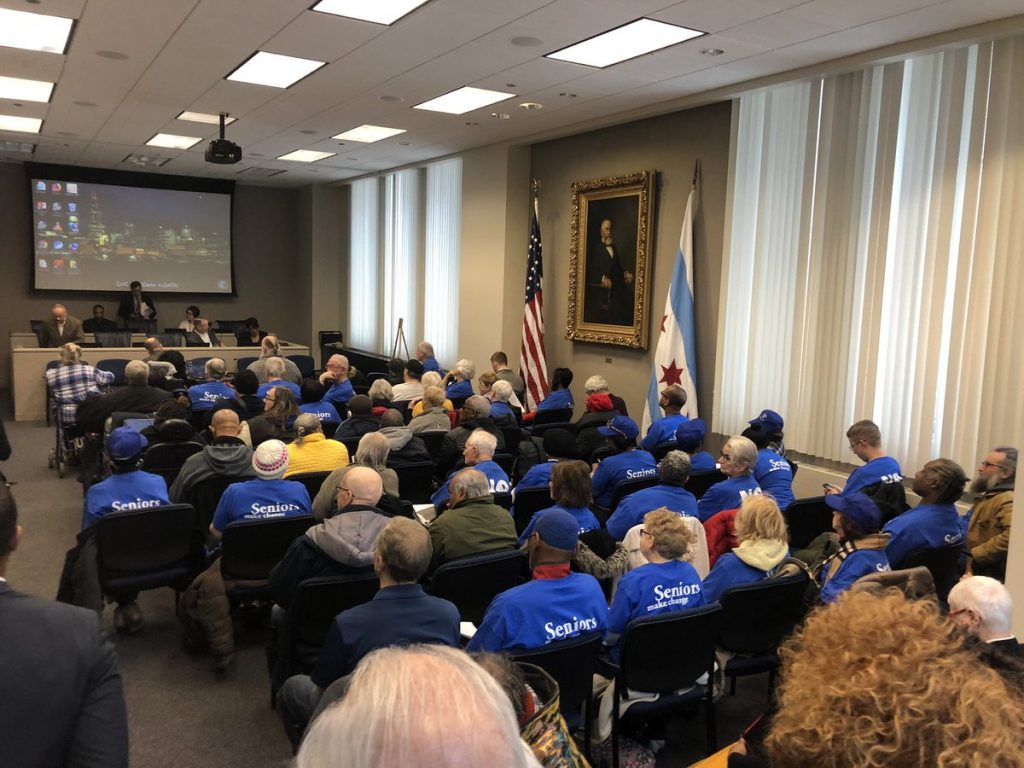 Members of the Jane Addams Senior Caucus dressed in blue pack the Housing Committee hearing. [A.D. Quig/The Daily Line]
 -
JAN 17, 2019

-
JAN 17, 2019
-
Aldermen will weigh Mayor Rahm Emanuel’s call to expand the city’s transit-oriented development ordinance to include buildings planned near busy bus routes.
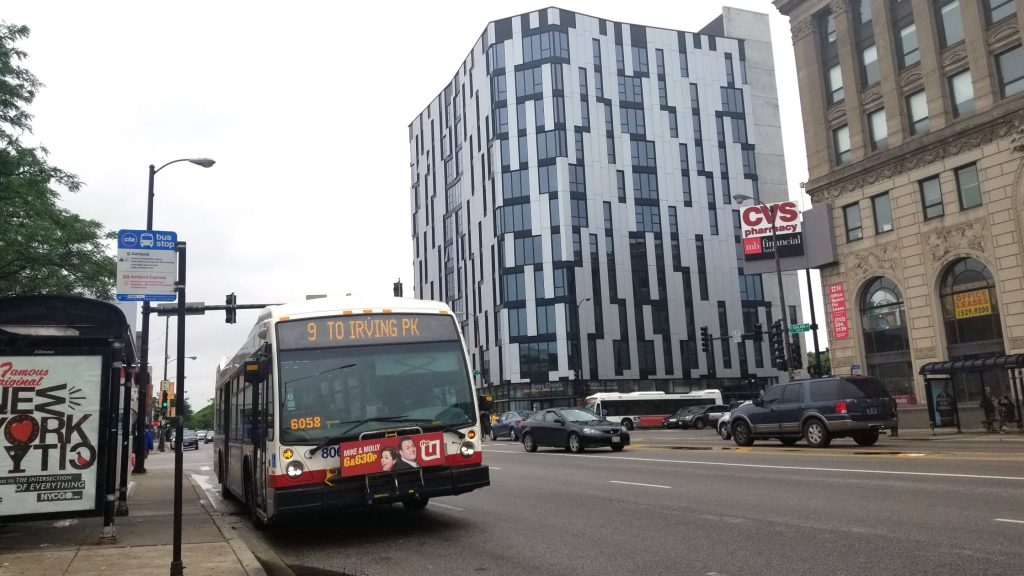 Under a new proposal, developments near busy bus lines could qualify for transit-oriented development benefits from the city.
ALISA HAUSER / BLOCK CLUB CHICAGO
-
Aldermen moved Wednesday to undo one of the most controversial City Council votes in recent years by endorsing a plan to create a task force to determine whether to reopen the mental-health clinics closed in 2011 under Mayor Rahm Emanuel’s first budget.The unanimous vote of the Committee on Health and Environmental Protection — which is expected to be approved Jan. 23 by the full City Council — came over the objections of Chicago Department of Public Health Dr. Julie Morita, who accused the aldermen of playing politics.
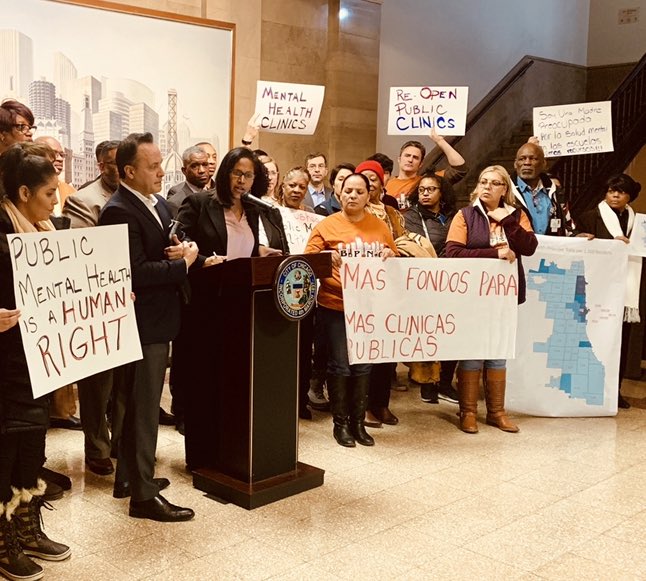 Supporters of task force rallied before the committee meeting. [Submitted]
Attendance: Chairman George Cardenas (12); Pat Dowell (3); Sophia King (4); Leslie Hairston (5); Willie Cochran (20); Scott Waguespack (32); Deb Mell (33); Carlos Ramirez-Rosa (35); Emma Mitts (37); John Arena (45); James Cappleman (46); Harry Osterman (48)
Morita, who was not present because she is traveling out of state with her family, sent a letter to be read by Chief Medical Officer Allison Arwady to the committee that expressed her “disappointment” that the hearing was not rescheduled — and urged aldermen to rethink their effort.
“We must be careful not to politicize a taskforce,” Morita wrote. “We must not be handicapped by forcing ill-conceived, political-driven recommendation on the task force before members are even selected.”
Ald. George Cardenas (12) — who is facing four challengers, all of whom are still facing objections to their nominating petitions — said the effort was not designed to “harp on the past, but to look to the future.”
More than seven years after all 50 aldermen went along with Emanuel’s proposal to close six of the city’s 12 mental health clinics, triggering vehement protests and national attention, several aldermen have said they regret that vote — and have been working to reopen the clinics over the administration’s objections.
Ald. Sophia King — who authored the measure (R2018-1398) to create the Public Mental Health Clinic Service Expansion Task Force — said the closures of the mental health clinics had led to “increased 911 calls and jailings.”
“We all know what’s been happening,” said King, who was appointed by Emanuel to the City Council in 2016. “We need to take a hard look at the decisions that were made and decide how to move forward.”
Dr. Arturo Carrillo, the manager of the St. Anthony Hospital Community Wellness Program, told aldermen that his clinic’s wait lists had grown by 80 percent — and would not be reduced by the creation of a task force.
More than 250 privately-run clinics vetted by the federal government provide both primary health care and mental health care to Chicago residents as part of an “ideal” model, Arwady said.
The clinics were on “a path to failure” when they were closed because of 90 percent cut in state funding, Arwady said, calling the clinic’s closures “the right decision.”
“We believe there are ways to strengthen Chicago’s mental health system,” Arwady said. “However, moving the clock back and re-opening stand-alone clinics are not the answer.”
Ald. Carlos Ramirez-Rosa (35) — who became the measure’s 43rd co-sponsor Wednesday — bristled at Arwady’s remarks and Morita’s letter, calling their statements “very aggressive” and said the accusation that aldermen were motivated by politics was not appropriate.
The Collaborative for Community Wellness, led by Carrillo, found that only 59 percent of the agencies identified by city officials as offering mental health services responded to a request for information from the group.
Another 11 percent had a disconnected or not in service phone line, 8 percent were actually duplicate listings, 18 percent did not respond to two voicemail messages and another 4 percent had closed, according to the survey presented to aldermen.
“This shows major, major gaps in service,” Ramirez-Rosa said. “The data does not support your conclusions.”
King said she would urge Morita — or whoever represents the Chicago Department of Public Health — to keep an open mind on the question of whether the clinics need to be reopened.
The task force would include two aldermen from wards which contained one of the six mental health clinics closed in 2012, two representatives of the Chicago Department of Health, two representatives of American Federation of State County and Municipal Employees Council 31, and two representatives of the Chicago Community Mental Health Board.
The measure requires the Health Committee to hold a public hearing in 45 days — which would be just about the same time aldermen are up for re-election — to allow Chicagoans to weigh in on the need to reopen the clinics. The task force will have 180 days to report its findings to aldermen. -
Mayoral candidate Toni Preckwinkle backed a push to raise the minimum wage in Chicago to $15 by 2021, winning applause from some of her union supporters. Amara Enyia will start the home stretch of the campaign flush with cash thanks to a massive donation from Chance The Rapper. Susana Mendoza rolled out a new Spanish-language ad, and a new union endorsement, while Ald. Matt O’Shea (19) backed lifelong friend Jerry Joyce in the mayor’s contest.
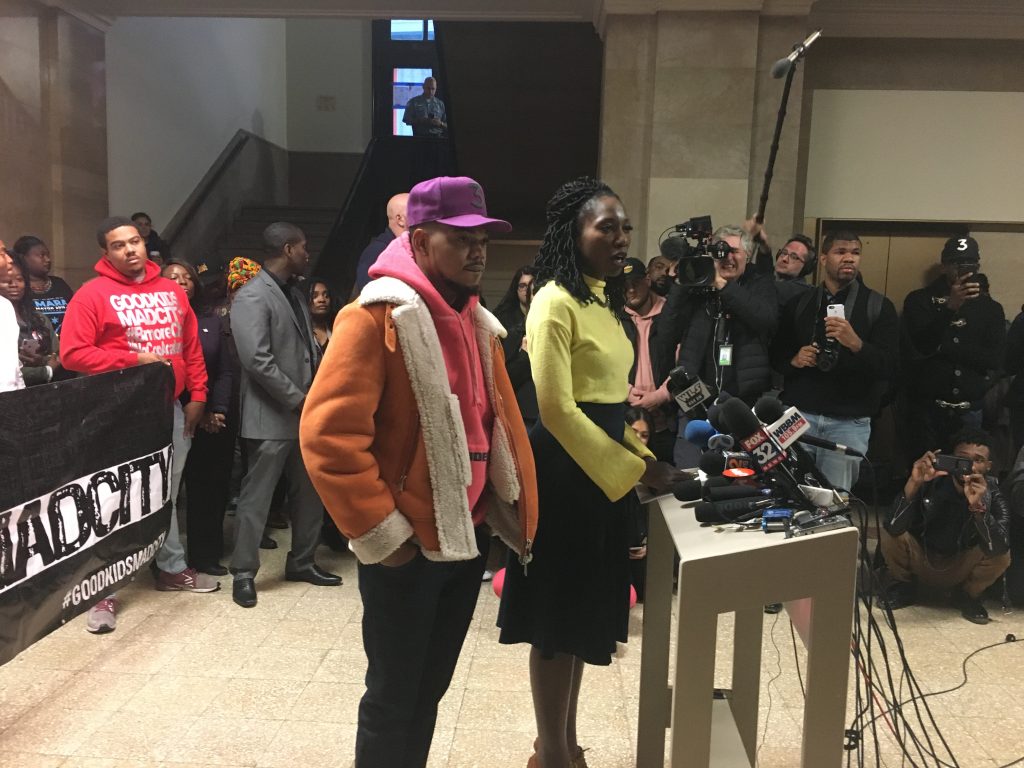 “I’d like to say very narcissistically, if I back you, you have a chance — absolutely,” Chance The Rapper said at City Hall. [Heather Cherone/The Daily Line]
 -
JAN 16, 2019
More than seven years after all 50 aldermen went along with Mayor Rahm Emanuel’s proposal to close six of the city’s 12 mental health clinics, triggering vehement protests and national attention, aldermen will call for a new task force to consider reopening some of the clinics.
-
Gov. JB Pritzker’s first official acts in office Tuesday benefited the labor unions and progressive groups that helped get him elected, and a reversal of policy of his predecessor, former Gov. Bruce Rauner.
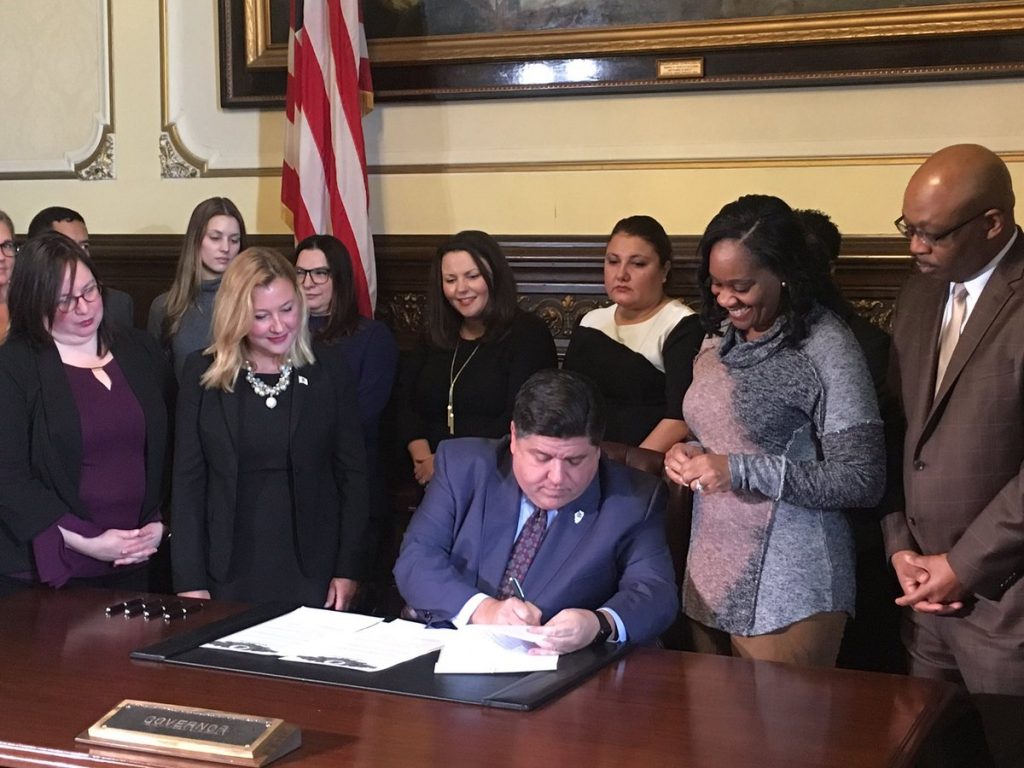 Gov. JB Pritzker signs an executive order on his first day in office. [Hannah Meisel/The Daily Line]
-
A lawsuit over the city’s home-sharing rules was given new life by an appellate court decision, while the Chicago Teachers Union laid out their demands for a new contract — and city officials celebrated a continuing decline in the number of babies born to teens.
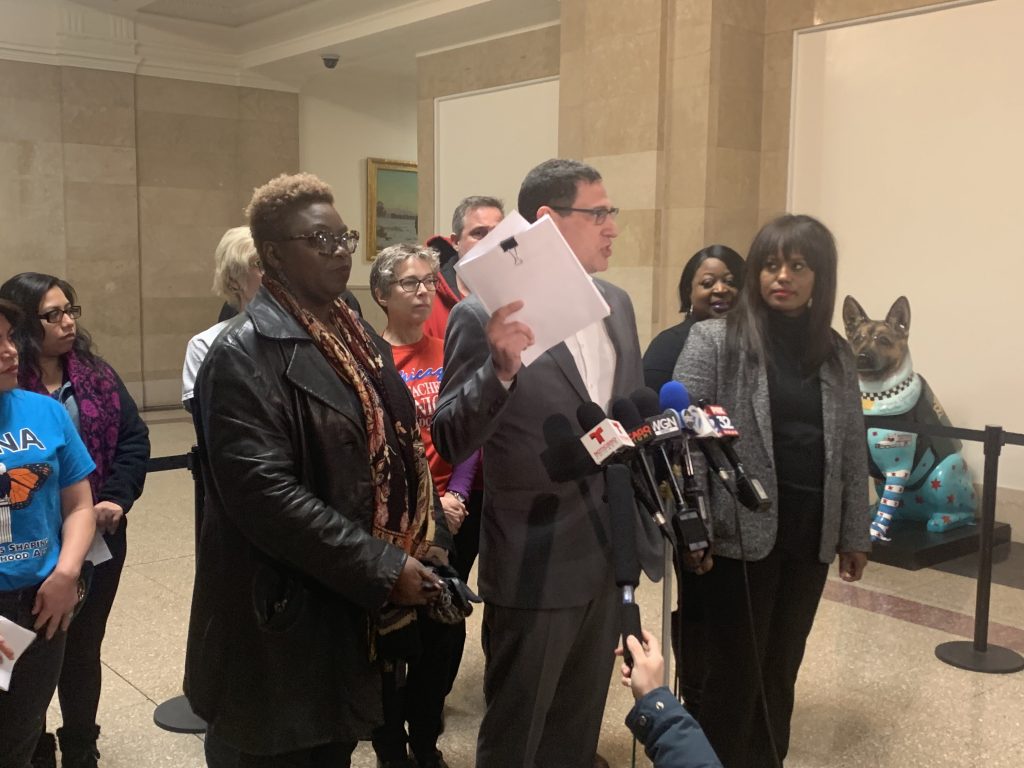 Chicago Teachers Union President Jesse Sharkey displays the unions demands for a new contract. [Heather Cherone/The Daily Line]


