Chicago News
-
 A sweeping ordinance designed to protect vulnerable Woodlawn residents from displacement stemming from the planned Obama Presidential Center is set for a City Council committee hearing on Wednesday, setting it on a course for final adoption early next month.
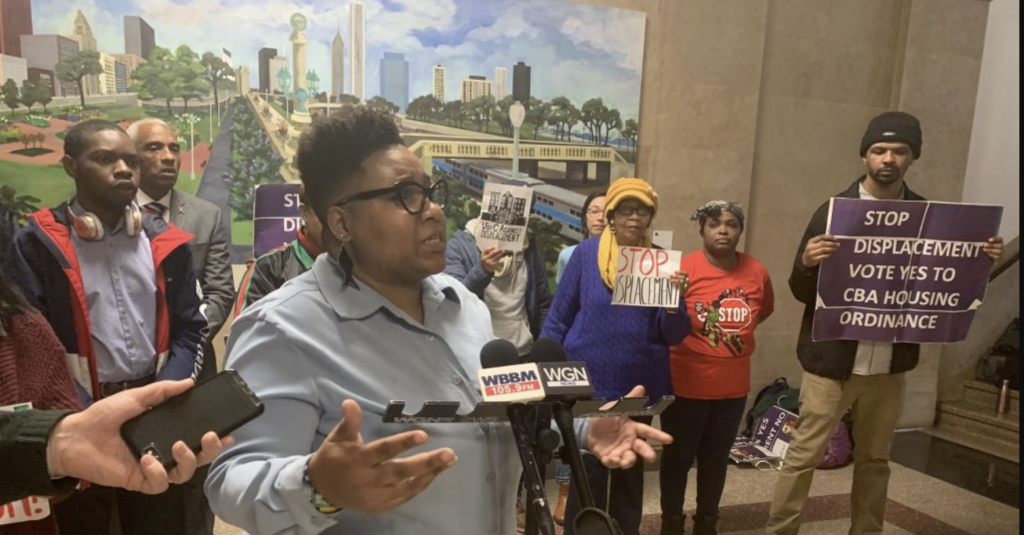 Ald. Jeanette Taylor (20) speaks during a press conference in February. [The Daily Line/Heather Cherone]
 -
AUG 25, 2020

UNLOCKED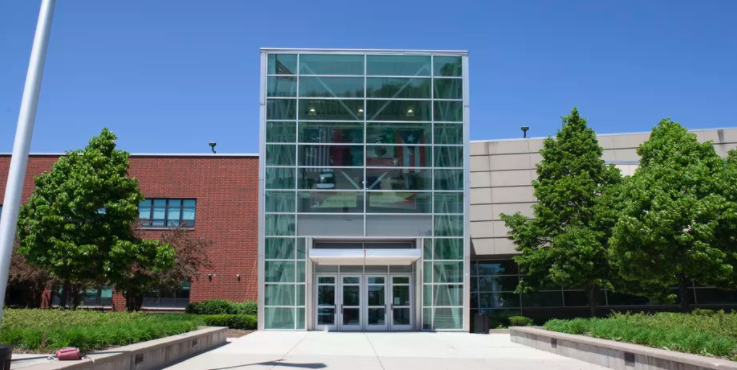 North-Grand High School in Chicago is one of the schools whose council voted unanimously to keep officers this summer. Stacey Rupolo/Chalkbeat
With a whirlwind summer of police votes coming to an end, the future of Chicago’s school police program now goes to the board of education. -
AUG 25, 2020
UNLOCKED
An Airbnb listing in Chicago. An ordinance set for consideration on Tuesday would tighten local regulations on home-sharing platforms like Airbnb and HomeAway. [Airbnb]
Travelers would no longer be able to book single-night stays at home-sharing rentals and hosts could be fined $10,000 for throwing parties under an ordinance set for consideration Tuesday meant to crack down on the city’s short-term rental industry. -
AUG 24, 2020

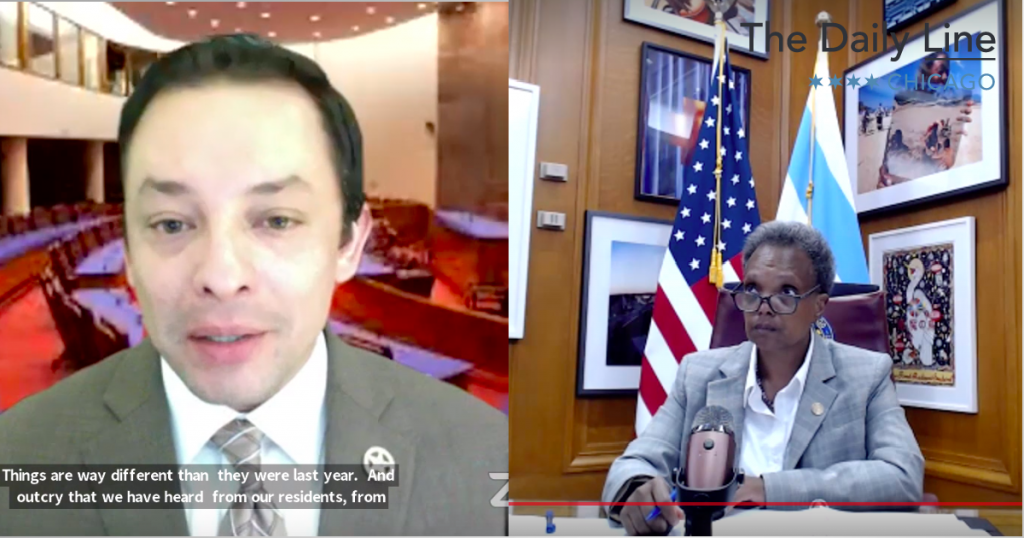 Mayor Lori Lightfoot and Ald. Raymond Lopez (15) during a Friday City Council meeting
The City Council voted on Friday to shelve two proposals and ignore a third posed by critics of Mayor Lori Lightfoot during a special meeting designed to force the mayor’s hand on the city’s mounting financial and public safety crises.
Ald. Raymond Lopez (15), Ald. Anthony Beale (9), Ald. Leslie Hairston (5) and Ald. Anthony Napolitano (41) invoked a rarely-used rule to schedule the meeting, saying they were being left in the dark about the city’s plans to tamp down crime and fill a $700 million gap in this year’s budget. -
AUG 24, 2020

Before and during this pandemic, I’ve seen how much University of Illinois-Chicago (UIC) management depends on us. Despite the need for our labor to continue functioning, they show no respect for our livelihoods.
I'm not the only one who thinks this. My union brothers and sisters and I have had to fight for personal protective equipment (PPE) like N95 masks, which are still not readily accessible to workers. We had to fight for much needed hazard pay, which was eventually removed by management. Despite the struggles we continue to face we are ready to come together and take our battle with management to the next level. -
AUG 21, 2020
UNLOCKED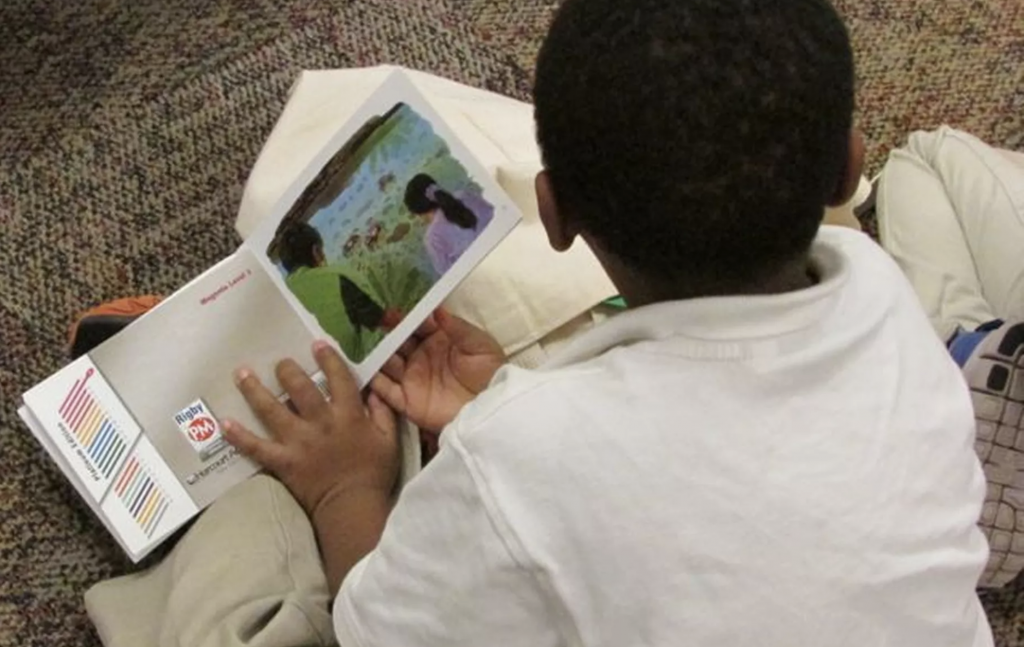 The federal government will open up competition for Chicago’s Head Start grants in September. Scott Elliott
Left alone on a bus somewhere on Chicago’s South Side last January, a 4 year old contracted frostbite on a foot. The weather was “very cold,” a report would later read, and the child was “unattended on the bus for an undetermined period of time.”
At a different child care center on the West Side, a master teacher slapped a child, leaving a red mark. Elsewhere in the city, a preschool teacher hit a toddler and pulled the child’s hair.
The federal government says Chicago has not done enough to correct health and safety problems in the child care programs it oversees for some 11,000 children. That has sparked a chain of events that could curtail Chicago’s early learning powers and threaten its universal prekindergarten expansion, Chalkbeat has learned.
After parents and teachers reported seven serious incidents across the past 16 months in Chicago’s child care facilities, the U.S. Department of Health and Human Services notified the city that it will rebid $176 million in grants that previously went straight to City Hall. The grant posting says the government will open up competition in September.
At stake is the city’s largest chunk of early childhood dollars — money that currently funds programs for low-income children, mostly on the South and West sides. The amount could end up getting divided among up to 29 grantees, the agency says.
“These are pretty serious issues,” said Lauri Morrison-Frichtl, the executive director of the Illinois Head Start Association, a membership organization of providers statewide. “The city based its new structure on Head Start funding and now they are going to lose some of those dollars and some of those children. It now throws a wrench in their planning.”
The federal government’s move could potentially carve up Chicago’s largest early education funding source. If that happens, it would be just the latest disruption to the city’s early childhood system, which has been poised for broad expansion under an ambitious universal prekindergarten plan. Under the original plan, developed by former Mayor Rahm Emanuel’s administration, the city intended to create a program that would provide every 4-year-old in the city a free, full-day spot in a prekindergarten classroom by 2021.
Community providers were a core part of the strategy. Predicting many would lose 4-year-olds to schools, the city said it would help fund more seats in community day cares for children 3 and under, effectively creating a high-quality education pipeline for thousands more families.
 That didn’t exactly happen. The architects of the original plan departed City Hall after Mayor Lori Lightfoot took office, a funding shake up sowed distrust between providers and the new administration, schools and community providers did not coalesce around a single path forward, and now two lawsuits take aim at how the city decided whom to fund and for how much.
A spokeswoman for the city Department of Family and Support Services, which oversees community-based early programs, said that Chicago “takes very seriously its role in supporting community-based organizations to provide high-quality services and care.”
It is primed to respond and implement corrective action, if needed, she said.
“Upon learning of any infractions, (the agency) immediately responds and partners with (the federal Head Start administration) to implement the best possible corrective action,” she wrote, adding that Chicago provides supplemental training and technical assistance for the organization when incidents occur.
Chicago says it will rebid for the grant. It’s possible it could edge out potential competitors and receive the full amount.
The power flickers
Cities like New York and Los Angeles used to have more control over early learning, but in recent years, the federal government similarly carved up Head Start funds, spreading the grants among multiple agencies.
Head Start programs are among the most respected in the child care world. They are regularly monitored for quality, require teachers to have certain classroom credentials, and must involve parents in the program.
By cutting out cities as the sole middlemen, some argued, more dollars went directly to agencies that operate programs for children and families, instead of bureaucracies. But there were downsides: By losing a monopoly over early learning money, cities also lost valuable leverage that they used to set high-quality benchmarks and to steer ambitious initiatives such as universal pre-kindergarten, which can require buy-in from both community providers and school districts.
In New York, the carve-up affected “what level of planning the city can do,” said Gregory Brender, the director of children and youth services at United Neighborhood Houses in New York City. “Because there’s no guarantee that any neighborhood that has high need has a high quality provider. There are organizations that have developed excellent programs but there’s not a system behind it that ensures that every low income neighborhood would have it.”
While each city is still responsible for the care of thousands of children, more agencies now share that role, which means they can determine how many seats they offer — and where — by deciding which centers receive funding and how much.
The impact of the grant shakeup on Chicago’s universal pre-kindergarten rollout remains to be seen. If agencies are able to contract directly with the federal government to provide services, they may have less incentive to serve younger children, as the plan originally intended, and continue to compete with schools.
Last school year, Chicago had about 1,800 preschool openings in school-based programs but more than 6,000 children on waitlists, a mismatch that can partly be explained by geographic demand in some neighborhoods exceeding that of others and by a high demand for seats for 3-year-olds who technically only qualify for limited seats.
In all, about 23,000 children were enrolled in programs across community centers and school prekindergarten classrooms — but experts have said that’s only a fraction of those who qualify. And if the system faced challenges before the pandemic, coronavirus has made it doubly hard by threatening the livelihoods of child care centers and school district budgets. The CEOs of 14 Chicago child care organization recently wrote a letter to the mayor asking for a financial injection as they battled rising costs and declining enrollment.
The school district, meanwhile, is moving ahead with a scaled-back preschool expansion. Chicago’s $8.4 billion school budget proposal, which will go before the Board of Education for a vote Aug. 26, says the district will invest $100 million in opening new classrooms and that 43 additional rooms are on the docket for the coming year.
Lightfoot has so far said she’s still moving ahead with universal pre-kindergarten. As for concerns that the city’s reshuffling of early money has been characterized by delays, technical glitches, poor communication, and a lack of transparency, City Hall earlier this summer released the results of an audit by a prominent law firm that concluded the city’s last funding process was “appropriate, fair, and unbiased.”
Parents at some centers that lost money in the shake-up, meanwhile, have had to face classroom closures and educator layoffs. In June, a few hundred parents gathered at City Hall to protest the city’s decision making.
Asucena Gaona marched with her three children, ages 10, 3, and 1, and said she was worried about finding an alternative day care center as hers faced closure. “Without them, how do I find education for my kids?”
Fallout from ‘deficiencies’
The federal government, however, appears to be using a different lens to re-evaluate Chicago’s ability to steer early childhood funding. The question, simply, is whether Chicago can sufficiently oversee a program that spans many sites and thousands of children.
“The City of Chicago is currently forecasted to need to compete for continued funding, because of the deficiencies identified,” according to a federal administration spokesman.
According to federal Head Start records, the program flagged at least 7 major infractions at city-funded agencies dating back to January 2019. The most egregious — accounting for 5 of the cases — were leveled at an All About Kids center in Chicago’s Greater Grand Crossing neighborhood on the city’s South Side. A child there was left on a bus “in very cold weather” in January 2019, according to reports, and a pediatrician subsequently diagnosed frostbite.
A few months later, the same child was injured in a bus accident, and center staff did not immediately administer medical treatment or notify the mother.
The reports say no one followed proper protocols for reporting the incidents to the authorities — not the center, nor a delegate organization overseeing the center, nor the city itself, which was supposed to alert the federal Head Start agency.
“The grantee did not report, as appropriate, to the responsible Health and Human Services official immediately or as soon as practicable, any significant incidents affecting the health and safety of program participants,” the report reads. “Therefore, it was not in compliance with the regulation.”
If Chicago loses any part of its federal grant, it would change the landscape of early learning in the city, said Morrison-Frichtl, of the Illinois Head Start Association.
“Things have been turned upside down,” she said.
What happens next remains to be seen. Dana Garner, a Chicago child care advocate, said that whatever happens next, children need to be at the center of the conversation.
“At this moment, our children deserve everything we can give,” said Garner. “These children have been traumatized enough in the City of Chicago. We need a stable early childhood system that our families can trust and where our children can grow.”
This story was published as part of a collaboration of seven Chicago newsrooms examining Mayor Lori Lightfoot’s administration. Partners are the BGA, Block Club Chicago, Chalkbeat Chicago, The Chicago Reporter, The Daily Line, La Raza and The TRiiBE.

-
AUG 21, 2020
UNLOCKEDSouth Shore residents took state officials on a tour of the neighborhood’s lakefront Wednesday as they try to secure funding to protect private homes from worsening erosion and rising lake levels.
Officials with two programs within the Illinois Department of Natural Resources, the Coastal Management Program and the Office of Water Resources were on hand for the tour. -
AUG 21, 2020
UNLOCKED
Chicago Deputy Planning Commissioner Kathy Dickhut gives a presentation on the “We Will Chicago” plan during a meeting of the Chicago Plan Commission.
Chicago city planners of the mid-20th Century hardened lines of racial segregation by dividing neighborhoods with expressways and demolishing others under the guise of “slum clearing.” Now city officials are hoping a new plan can undo the damage.
Leaders of the city’s Department of Planning and Development on Thursday pinned high hopes on the “We Will Chicago” plan, a master document intended to “guide future budgeting, policy, and development decisions citywide” for decades to come. Once adopted in late 2022, they said it could unite a fractious city toward a more just future. -
AUG 20, 2020
UNLOCKED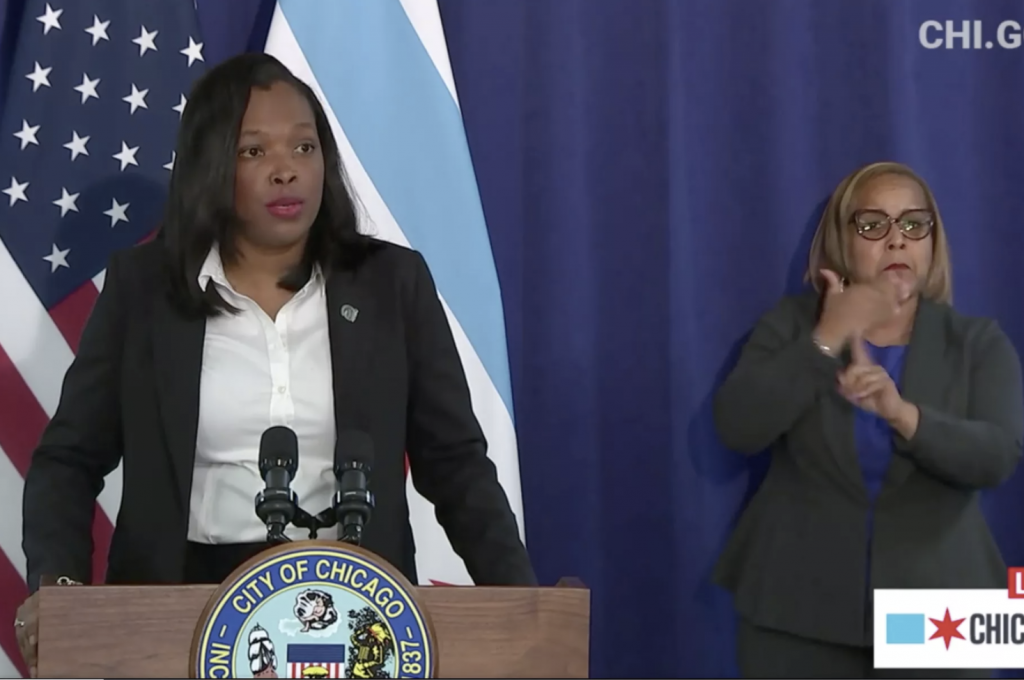 Chicago schools chief Janice Jackson said student activism helped fuel some of the changes announced on Aug. 19.
By Cassie Walker Burke
With Chicago’s school police program under the microscope during a tense summer, Mayor Lori Lightfoot says the city now will put more strict protocols on which police officers serve on campuses and pull out school-based computer terminals that previously connected officers with centralized criminal databases.
Those changes are part of a slate of proposed new reforms announced Wednesday, nearly a year after Chicago Public Schools and the Chicago Police Department began complying with a federal mandate to address long-standing problems in the program. Officers last school year served on more than 70 campuses, with more mobile officers in cars assigned to schools.
A Chalkbeat Chicago investigation in February showed that six months after school police reforms were initially supposed to be implemented, they were still a work in progress, with many items on the list incomplete. Concerns over the program, and a perceived lack of oversight, helped fuel heated school council meetings this summer over whether or not to keep police on campus. In all, 55 councils voted to keep police and 17 voted to remove them.
Lightfoot and schools chief Janice Jackson now say they are working with the city’s police department to address unresolved issues. Principals will now have the explicit power to hire or reject candidates for the jobs on their campuses — an authority that had been promised earlier but not uniformly delivered — and the city will partner with the Center for Childhood Resilience at Lurie Children’s Hospital of Chicago and the student-focused organization Mikva Challenge to better train officers in how to work with youth.
Chicago will also set up a more formal complaint process that parents, students, and educators can follow in case of concerns about officer wrongdoing.
At several youth-led protests throughout the summer, several students described often fraught relationships with campus officers and how the presence of police made them feel targeted and brutalized in buildings where they were supposed to be learning.
“We have heard our students loud and clear. The reforms today are a direct result of their tenacious spirit,” said Jackson.
But one prominent organization of student activists said the reforms announced Wednesday fell short.
“What students need most is support not criminalization,” said Derrianna Ford, a rising senior and youth leader in the group VOYCE. “In order to truly create a safe environment in all of our schools, we need trauma-informed approaches that support students’ mental health such as social workers, counselors, restorative practices. We cannot expect the same police officers who brutalize us on the streets to be our mental health workers inside our schools.”
The new slate of reforms comes on the same day that Chicago publicly released student arrest data. While the data show an 80 percent decline in the number of arrests on school campuses from 2012 to 2019, the numbers show that Black students are still disproportionately detained on campuses. Last school year, of the 651 students that the district reported as arrested on campus, 526 of them — or 80 percent— were identified as Black, 107 were Latino, and 16 were white.
Community leaders and parents have long voiced concerns about the “school-to-prison pipeline,” an issue Jackson addressed directly on Wednesday.
“Rates of arrests among Black students remain unacceptably high, and we must remain focused on addressing this as a school district,” she said. “We will do that.”
Perhaps the most sweeping change: The city will more closely examine misconduct allegations for officers who serve on campuses and raise the bar on the disciplinary record on who can serve. No officers with sustained allegations of excessive force in the past five years will be allowed to serve on campuses, nor will officers who’ve had sustained complaints about verbal or physical alterations with youth.
A Chalkbeat review of school-based officers who served last year showed that 96 percent faced allegations of misconduct, according to the Citizens Police Data Project, a database of police disciplinary records.
Those allegations range from excessive force, searches without a warrant, and physical domestic altercations to more minor accusations like traffic violations. The alleged violations were sustained — found to be true — for 41 percent of officers serving in schools this year.
“A lot of feedback we received during (the reform) process was that we need to strengthen our selection criteria. This year we are moving to excellent disciplinary history — we are tightening those parameters,” said Jadine Chou, chief of safety and security for Chicago Public Schools.
As for whether Chicago can implement the latest round of reforms in the next three weeks before school starts, Chou said the all-virtual start to school gives the school district and police department more time for additional training.
Leaders also said they plan to put authority over school police officers under the third in command at the police department. Previously, the system was decentralized, with district commanders largely making decisions about who serves on campuses, oftentimes with little input from schools.
Chicago last year began embarking on the biggest overhaul of its school policing program in a decade as part of broader police reforms. In 2014, the cover up of the fatal shooting of teenager Laquan McDonald provoked widespread outrage and protests, which culminated in a civil rights lawsuit that the city ultimately settled. Schools were included in a resulting federal consent decree.
However, many of the promised reforms had not materialized by the time school campuses shut down in March amid the coronavirus pandemic. Officers did undergo a 40-hour training program, and a formal $33 million contract was signed between the school district and the city’s police department — a contract that will now likely be cut in half, once the school board votes on a new budget proposal next week.
But despite a formal requirement to screen officers, nearly half had misconduct allegations sustained against them. Schools still lacked a system to register complaints. Some principals remained confused about which situations in which police can and can’t get involved. And some students, teachers, and Local School Council members said they knew little to nothing about any overhaul in school policing.
Exactly who had responsibility and oversight over the program and vague details about the officers’ backgrounds and responsibilities still left parents, students, and educators worried.
Then summer brought a significant sea change, with a wave of youth-led activism following the killing of George Floyd in Minneapolis at the hands of a white police officer. Scrutiny of school police became a central theme in Chicago. And as the mayor and schools chief pushed the decision-making down to school councils, the local groups took votes. In the end, the majority voted to keep officers, though many community members said the process was flawed and too many councils lacked enough membership to take a formal vote. About 1 in 4 schools voted them out.
Asked about transparency problems and reported violations of the Open Meetings Act that were documented during the votes — a review of multiple meetings by Block Club Chicago and Chalkbeat showed some councils didn’t follow the rules governing public access and participation — Jackson said Wednesday that the district had begun tracking the meetings and votes centrally and was helping ensure councils be more publicly accountable.
Some community organizers say the district’s efforts to build more transparency within councils have not gone far enough and that too much responsibility suddenly was thrust upon the public bodies made up of parents, educators, and community members.
In addition to cutting back the budget for the police program, the city’s school board will vote next week on the proposed reforms, part of a broader revised agreement between the district and the police department.
This story was provided by Chalkbeat Chicago, a nonprofit news organization committed to covering the effort to improve schools for all children, especially those who have historically lacked access to a quality education. -
AUG 20, 2020
UNLOCKED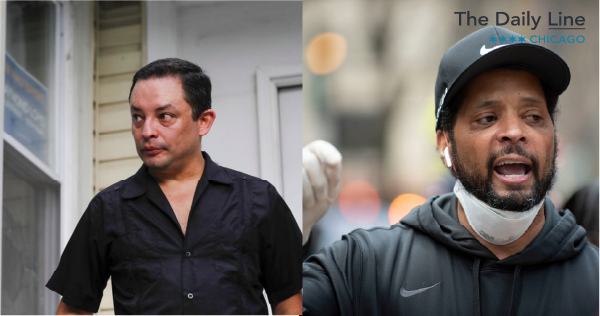
Ald. Anthony Beale (9) and Ald. Raymond Lopez (15) [Block Club Chicago/Colin Boyle; Facebook/Alderman Raymond Lopez]
Four aldermen including two of Mayor Lori Lightfoot’s loudest City Council critics invoked a rarely-used rule on Wednesday to schedule an impromptu meeting they say is needed to address recent looting and violent crime, in part by demanding the deployment of National Guard troopsto the city.
Ald. Raymond Lopez (15), Ald. Anthony Beale (9), Ald. Leslie Hairston (5) and Ald. Anthony Napolitano (41) announced in a press release Wednesday that they had written a letter to Clerk Ana Valencia requesting that she schedule a virtual meeting at 10 a.m. Friday “to address some of the safety concerns businesses and residents and vote on possible solutions moving forward.” Notice of the meeting was posted to the clerk’s website on Wednesday. -
AUG 20, 2020
UNLOCKED City planning officials are lining up the “We Will Chicago” plan for final adoption in late 2022.
Chicago planning officials under Mayor Lori Lightfoot will formally kick off a multi-year process on Thursday to create a centralized plan intended to guide the city’s construction, transportation and greening priorities for decades to come.
Leaders of the Department of Planning Development are scheduled to open Thursday’s meeting of the Chicago Plan Commission by giving a presentation on the “We Will Chicago” plan, a long-range document envisioned as a “framework to justify and guide future budgeting, policy, and development decisions citywide.”