


Chicago News
-
Cook County health officials are targeting young suburban residents with new education outreach and treatment efforts in an effort to curb the years-long uptick of cases of sexually transmitted infections reported across the county.
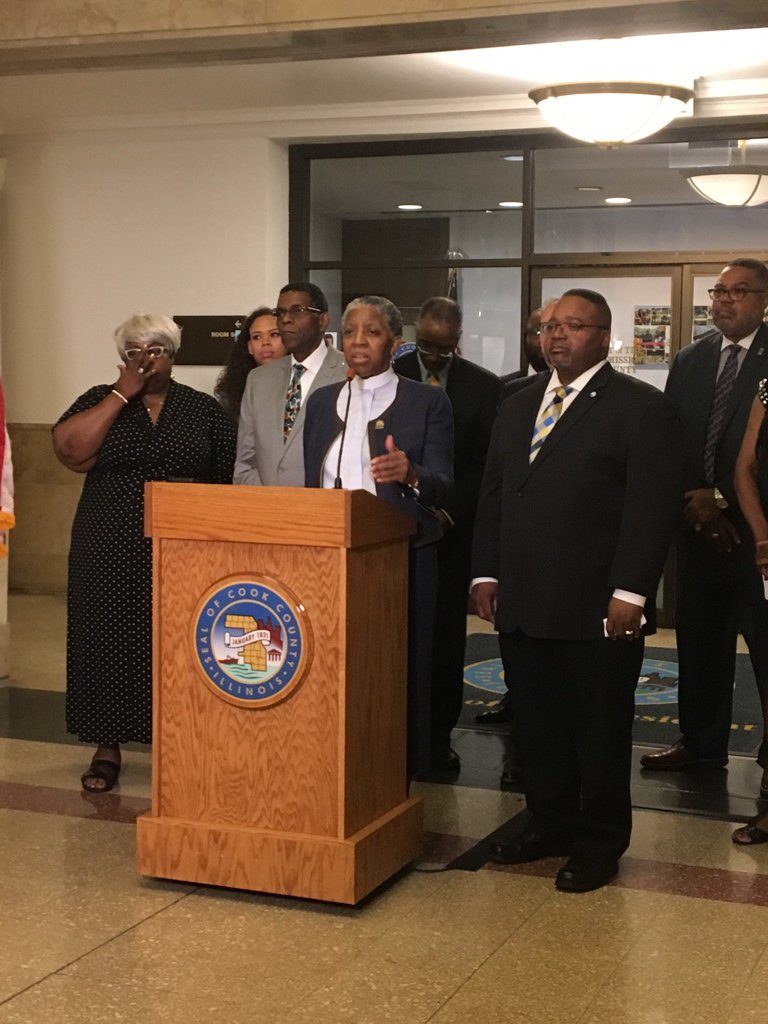 County officials back a resolution declaring racism a public health crisis. [Kim Bellware/The Daily Line]
-
-
-
Mayor Lori Lightfoot is set to notch victories on two of her biggest priorities Wednesday, allowing her to point to high-profile legislative wins during her first 100 days in office.
The City Council is poised to take its annual August recess after Wednesday’s meeting, and will not meet again until Sept. 18 — after Lightfoot will have passed the largely symbolic 100-day mark.
Before aldermen head on vacation, Lightfoot will ask the council to back her effort to make good on her signature campaign promise and root out corruption at City Hall by approving a package (O2019-5305) of ethics reforms.
The change, unanimously endorsed by the Committee on Ethics and Government Oversight last week, that would ban aldermen from working as property tax attorneys or in any capacity “that poses a potential liability or a conflict of interest with City of Chicago business.
Related: Aldermen advance Lightfoot’s ethics reform package despite concerns over expanded lobbyist rule
The package is squarely targeted at Ald. Ed Burke (14), who faces a 14-count indictment that he repeatedly — and brazenly — used his powerful position at City Hall to force those doing business with the city to hire his private law firm in mind. Burke has pled not guilty.
The proposal also expands the powers of Inspector General Joseph Ferguson to investigate aldermen and “audit council administrative procedures.”
A similar proposal was defeated by aldermen in February 2016 after being thwarted by Burke.
The proposal would also hike the fine for violating the ethics ordinance from $500 to $1,000 for low-level violations and from $2,000 to $5,000 for high-level violations.
In addition, Lightfoot proposed expanding the definition of lobbyists to include non-profits.
Aldermen will also consider a revised ordinance approved Tuesday that would force Chicago employers to give their workers two weeks notice of their schedules in an effort to reduce the stress caused by unpredictable shift work.
Related: Lightfoot-backed ‘Fair Workweek’ ordinance set for final vote after business groups drop opposition
Business groups dropped their opposition after Lightfoot made several changes, including an agreement to exclude workers who earn more than $26 per hour. Salaried workers who earn more than $50,000 are also excluded.
Business groups also convinced city officials to remove a provision that would have restricted employers’ ability to limit hours worked by employees on the cusp of moving from part-time to full-time status.
In addition, the proposal no longer prohibits a firm from hiring a new employee unless its owners determine that they consistently have shifts available that their workers do not want to fill.
However, the proposed law would require employers to offer additional shifts to existing workers before offering the shifts to temporary or seasonal workers and before hiring new employees.
The meeting on Wednesday will also feature changes crafted by Rules Committee Chair Ald. Michelle Harris (8) to the 30-minute public comment period.
Instead of allowing people to speak for three minutes at a time on a first-come, first-served basis, everyone who signs up to speak between 9 and 9:35 a.m. will be entered into a drawing, Harris said.
That random draw will determine the order of speakers — and if more people sign up than can be heard within 30 minutes, the order will determine who gets to speak, Harris said.
Since the City Council began allowing public comment at its meetings in June 2017 to settle a lawsuit filed by activists alleging the city had been violating the Open Meetings Act, many of the slots have been taken by the same people voicing the same concerns week after week.
“This is an effort to get diversity in our speakers,” Harris said, noting that some people line up as early as 6 a.m. “It evens the playing field.”
A number of high-profile ordinances are also set to be introduced Wednesday in advance of the summer break.
Aldermen will resurrect a measure to raise the city’s real estate taxes to expand efforts to end homelessness in Chicago by putting a measure on the November 2020 ballot.
Facing opposition from former Mayor Rahm Emanuel, the measure that stalled in March would have kept the current tax rate of $3.75 for every $500 of the purchase price up to $1 million. The rate would increase to $9.75 for every $500 of homes sold for more than $1 million.
Related: Don’t use Chicago homeowners ‘as an ATM machine:’ Emanuel opposes plan to raise real estate taxes to raise money for homeless services or lead pipe replacement
Raising the transfer tax on homes sold for more than $1 million would help the more than 86,000 Chicagoans afflicted by homelessness, according to backers of the Bring Chicago Home effort.
During the campaign, Lightfoot backed the effort but was noncommittal Tuesday, telling reporters she was first working to bridge the city’s 2020 budget gap, which is expected to be more than $700 million.
In addition, Ald. Carlos Ramirez-Rosa (35) plans to re-introduce a measure that was stymied during the Emanuel administration that would close what he calls “loopholes” in the city’s Welcoming Ordinance.
During the campaign, Lightfoot endorsed that move but has clashed with Ramirez-Rosa and immigration rights activists after she declined to issue an executive order to ban city officials from working with Immigration and Customs Enforcement.
Related: Lightfoot declines to issue order banning all CPD cooperation with ICE as raids loom
Alds. Leslie Hairston (5) and Jeanette Taylor (20) will also introduce a measure designed to protect affordable housing and prevention displacement near the planned Obama Presidential Center in Jackson Park.
The ordinance would impose a community benefits agreement on the area within 2 miles of the center that calls for 30 percent of new housing to be set aside as affordable; earmark all city-owned vacant land for affordable housing and local homeownership; establish a right of first refusal for tenants in the area; and setup a fund to support property tax relief, other affordable housing strategies and job training, according to a release from the aldermen.
In February, Woodlawn and Washington Park voters overwhelmingly urged officials to impose such an agreement.
Related: South Side voters tell city officials the Obama Center needs a community benefits agreement
Former President Barack Obama and the Obama Foundation have resisted calls to sign a community benefits agreement that would include independent monitoring and local hiring, support for neighborhood schools and a community trust fund to support the initiatives.
During the campaign, Lightfoot supported a community benefits agreement but on Tuesday declined to endorse the aldermen’s proposal.
Related: Chicago mayor proposes reforms that would make life easier for thousands of black and low-income drivers
Other items set to be considered by the City Council:- O2019-3944 — A measure to ban drifting and allow city officials to hit drag racers with fines starting at $5,000 and rising to $10,000. [Our coverage]
- O2019-3923 — A measure to ban peddling in parts of the 4th Ward.
- O2019-3860; O2019-3858 — Two measures that would allow booze to be served at a 35th Ward esports gaming bar and a 2nd Ward yoga studio. [Our coverage]
- R2019-423 — A measure to endorse a property tax break worth $1.2 million for Greyhound, which plans to spend $28 million to build a new bus maintenance facility on eight acres of land at 3900-46 S. Normal Ave. in the 11th Ward that have been vacant for decades, city officials said. [Our coverage]
- O2019-4143; O2019-4155; O2019-4233 — Three proposals as part of the city’s Resilient Corridors project, which is designed to reduce stormwater runoff. [Our coverage]
- O2019-2834; O2019-4240; O2019-4164; O2019-4159; O2019-4179; O2019-4250 — Six sales of city land. [Our coverage]
- O2019-4100; O2019-4102; O2019-4212; O2019-4214 — Four development agreements funded by Tax-Increment Financing districts. [Our coverage]
- Two lawsuit settlements totaling $4.65 million. [Our coverage]
- The creation of a Special Legislative Committee on the Census to be chaired by Ald. Ariel Reboyras (30) and have an annual budget of $111,500.
Developments set to be considered by the City Council:- O2018-7770 — A nine-story glassy tower in the Fulton Market District that will wrap around two sides of an historic three-story brick building near Washington Street and Willard Court known as the Prairie Farmer building, which once housed the WLS Studios. [Our coverage]
- O2019-1373 — A five-story building Fulton Market office tower at Ogden Avenue and Fulton Street that will include 12,600 square feet of retail space and 30,200 square feet of office space.
- O2019-3406 — A 72-unit development and 60 parking spaces at 3111-19 N. Broadway in the 44th Ward.
- O2019-331; O2019-332 — A proposal from Tucker Development to transform the Sears store at North and Harlem avenues into a mixed-use development featuring 311 homes, a grocery store and fitness center.
- O2019-3170 — A four-story, 12-unit building at 1445 N. Ashland Ave. in the 2nd Ward with 10 parking spaces.
- O2017-143 — A proposal to build three, three-story buildings with nine units and no parking would be built at 3201 W. Belmont Ave. in the 35th Ward. The complex is set to be built near the Belmont station on the CTA Blue Line.
- O2019-4023 — A proposal from Sterling Bay to build 46-story glass tower designed by bKL architects at 300 N. Michigan Ave. that will feature a 280-room hotel and 289 residential units on what is now a vacant four-story building.
- O2019-2728 — A proposal to build a 12-story hotel and a six-story office building at 1043 W. Fulton Market with shops on the ground floor and 15 parking spaces.
- O2019-4213 — A proposal from Yeti — a Texas-based high-end cooler and camping gear company — to open a new store at 1572 N. Milwaukee Ave., the former home of the Double Door club.
-
JUL 23, 2019

UNLOCKEDProPublica Illinois is an independent, nonprofit newsroom that produces investigative journalism with moral force. Sign up for The ProPublica Illinois newsletter for weekly updates.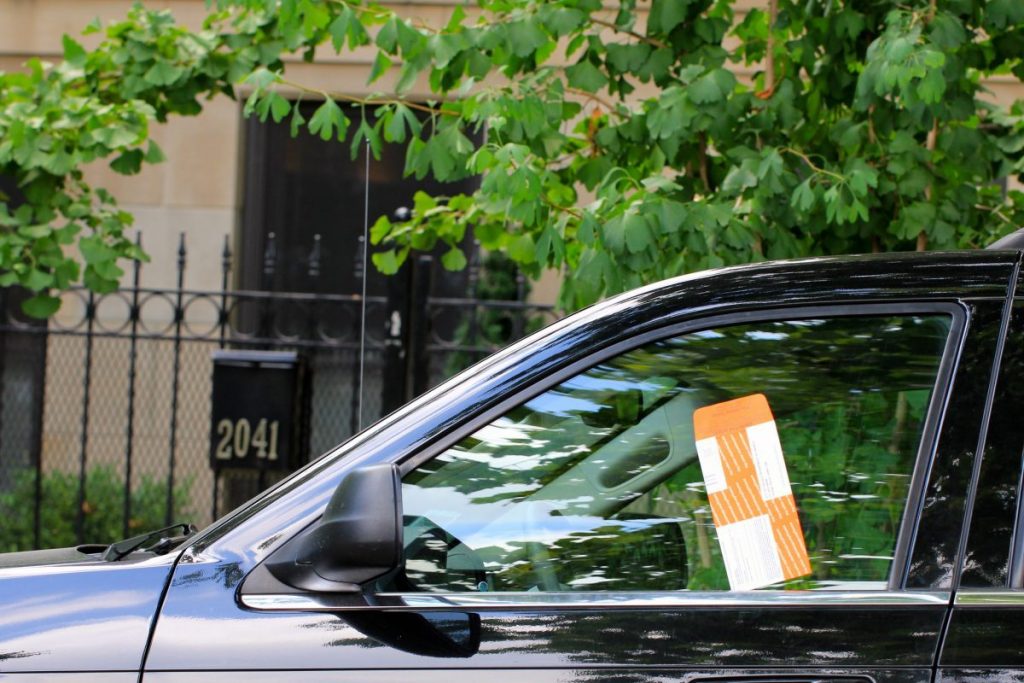 Increasing the price of sticker tickets came at a devastating cost for thousands of Chicago’s poorest residents. [Flickr/Dan X. O'Neil]
Chicago Mayor Lori Lightfoot proposed Tuesday an end to the city’s punitive practice of suspending driver’s licenses over unpaid parking tickets and said she would support legislation to change state law, moves that are likely to bring relief to tens of thousands of mostly black, low-income motorists and lead to a reduction in bankruptcy filings here.
Lightfoot unveiled an array of significant reforms to the city’s system of ticketing and debt collection, beginning to fulfill a campaign promise to stop balancing the budget on the backs of those least able to bear the burden.
“We know this hurts black and brown families the most,” Lightfoot said during a press conference on the city’s West Side, alongside dozens of advocates and elected officials. “It doesn’t make sense to punish people for not paying for their fines by taking away their ability to pay their fines.”
Tuesday’s announcement is significant as it marks the first time any proposed reforms have the weight of the mayor’s office and a likely fast-track through the City Council. The proposals go to the City Council on Wednesday but aren’t expected to get final approval until September, given they first must pass through a committee and August is a recess month.
Some of Lightfoot’s other proposals seek to make city-sponsored payment plans more attractive and affordable than filing for bankruptcy. In addition, she is proposing to reduce late penalties tied to city sticker tickets and provide some debt relief for motorists who come into compliance by purchasing vehicle stickers.
The reforms seek to address problems uncovered in reports by ProPublica Illinois last year that showed how the city’s punitive ticketing was sending tens of thousands of low-income, mostly black motorists into bankruptcy as a way to lift license suspensions or recover impounded vehicles. The Driven into Debt investigative series, later continued in collaboration with WBEZ, also showed how a 2011 decision to raise the price of tickets for not buying a vehicle sticker — already one of the costliest in the city — led to significantly more debt for motorists and little additional revenue.
A coalition of community groups has led the public call for an overhaul of the city’s ticketing and debt collection system. Among them: Community Organizing and Family Issues, or COFI, which last year issued a series of recommendations to the city on how to make ticket debt less punishing for low-income families; the Chicago Jobs Council, which has headed advocacy efforts to change state law around license suspensions for non-driving related offenses; and the Woodstock Institute, which last summer published a research report on racial disparities tied to ticketing.
Late last year, some aldermen, including Gilbert Villegas, of the Northwest Side’s 36th Ward, introduced proposals to begin fixing the problems. But there was little political traction until December, when City Clerk Anna Valencia, who had already ushered in some minor reforms through her own office, formed a citywide task force to study the issues.
During the heated race for mayor this year, all 14 candidates promised reforms. Last month, the task force issued its series of recommendations.
Lightfoot’s promise to support a bill to end license suspensions tied to unpaid parking tickets has the potential to change the lives of tens of thousands of families across Illinois. Ten unpaid parking tickets can trigger a driver’s license suspension. Some 55,000 licenses are currently suspended because of parking ticket debt, Illinois secretary of state officials said Tuesday. ProPublica Illinois has previously reported that the vast majority of these suspensions are in low-income, black neighborhoods in Chicago and its suburbs.
Lightfoot’s support will most likely revive efforts to bring to a vote this fall a bill in the General Assembly to lift suspensions. That bill had previously stalled in the House. In the meantime, Lightfoot’s proposal would immediately stop the city’s practice of seeking suspensions tied to parking ticket debt.
“Today marks a turning point in the fight to pass that bill,” said Eric Halvorson, of the Chicago Jobs Council. “When our scrappy coalition first tried to get the License to Work Act passed, we were told that we were asking for too much. Now, for the first time, the mayor of Chicago is joining us in the effort to end license suspensions for parking and compliance tickets.”
If passed, the legislation would apply retroactively, meaning some 55,000 motorists’ driving privileges could soon be restored. Lightfoot said she would work with community groups and state officials to simplify the reinstatement process and potentially eliminate the fees motorists pay to lift license suspensions.
The legislation, however, would not affect suspensions for unpaid red-light or speed-camera tickets. Officials from the mayor’s office said they prioritized the parking ticket suspensions but would consider those for camera tickets in the future.Reforms of Payment Plans and City Sticker Tickets
Another one of Lightfoot’s proposals would dramatically lower the down payment requirements for motorists who want to enter a city-sponsored payment plan for their ticket debt. Currently, low-income motorists with significant debt have to pay up to $1,000 to get on a payment plan. ProPublica Illinois has reported that thousands of motorists who can’t afford the down payment turn to Chapter 13 bankruptcy because it’s cheaper; many large bankruptcy firms here will file for no money down.
Lightfoot’s proposal would reduce the required down payment to as little as $35 to $100 for low-income motorists, depending on whether their vehicles have been impounded or their licenses suspended.
“Nobody should be forced to choose between unaffordable payment plans or bankruptcy,” Lightfoot said.
What’s more, low-income motorists on payment plans would have as long as 60 months to pay off their debts. Currently, payment plans are capped at 36 months.
In addition, motorists would have the option of paying off a single ticket within six months before incurring additional late penalties or fees. Tickets that aren’t paid eventually double and go on to accrue an additional 22% fee when sent to collections.
Several proposed reforms focus on vehicle city sticker citations, which can rise to $488 each with late penalties and collections fees. ProPublica Illinois and WBEZ have reported on how unpaid vehicle sticker citations are the single largest source of outstanding ticket debt and the most likely to be tied to notices of pending license suspensions.
Lightfoot is proposing to cap late penalties on these tickets at $50, plus the 22% collections fee, and reinstate a 15-day grace period after stickers expire so motorists have more time to come into compliance. Lightfoot had campaigned on reinstating the policy, which was included in Valencia’s task force report. City stickers cost between $88 and $139 per year, depending on the weight of a vehicle.
Another proposal would involve wiping out some portion of old debt tied to sticker tickets when motorists come into compliance. The debt relief will be timed to overlap with a monthlong amnesty planned for this fall by the clerk’s office to forgive late fees tied to sticker purchases.
Details on the ticket debt relief plan are still being worked out, officials from the mayor’s office said, but records obtained by ProPublica Illinois and WBEZ show that there was more than a half-billion dollars in outstanding sticker ticket debt as of last summer.
“As government, we must be and have to be reflective about our past practices and be OK with thinking differently and critiquing our previous policies,” Valencia said Tuesday. “We also realized we needed to reframe our thinking. What if people weren’t trying to skirt the law but simply couldn’t comply with it in the first place?”
Under Lightfoot’s proposals, the city would also stop issuing multiple tickets for compliance violations to motorists on the same day or consecutive days in order to give them more time to get into compliance. City sticker violations and expired plates are the most common compliance citations. ProPublica and WBEZ previously reported that the city had issued some 20,000 duplicate sticker ticket violations, issuing multiple tickets to the same vehicle on the same day, between 2007 and 2018, a practice that appeared to violate city code. In November, the city agreed to refund drivers for duplicate sticker ticket violations.
The proposal to end duplicate ticketing for additional types of violations on the same or consecutive days promises to affect tens of thousands more motorists.
Another proposal would give motorists the ability to ask for an additional 24 hours to pay off boot fees or get on a payment plan before their vehicles are impounded over unpaid tickets. This would double the current 24-hour window.Promises of More to Come
Lightfoot’s proposed reforms did not address a number of other related issues, such as Chicago’s various tow and sale programs, which sell vehicles of indebted drivers or of those arrested in some crimes to a private towing company — sometimes for as little as $200 each, as WBEZ has previously reported.
The city is currently facing a class-action lawsuit challenging the constitutionality of some arrest-related tows.
In her election campaign, Lightfoot proposed a series of reforms, which included scaling back some of the red-light cameras. She had also campaigned on ending the city’s “anti-scofflaw” policy for taxi and ride-share drivers in limited cases.
But she and her staff promised more reforms are coming.
“We want to make sure that we start the process of untangling this big, massive problem, and it is substantial, and it’s not going to be easy to fix overnight,” Lightfoot said. “We wanted to make sure that we took the first steps to give people hope.”
-
Ald. Roberto Maldonado (26) is set to ask the members of the Zoning Committee Tuesday to approve another batch of measures designed to douse the red hot real estate market that some say is fueling gentrification in predominantly Latino neighborhoods along the 606 trail.
-
The 2-½ year battle over whether Chicago employers should be forced to give their workers two weeks notice of their schedules in an effort to reduce the stress caused by unpredictable shift work will last for at least another day as negotiations continued over the measure opposed by business groups.
-
-
Chicago aldermen no longer enjoy unlimited power in their wards as Mayor Lori Lightfoot’s initial attempt to roll back aldermanic prerogative took full effect Friday.
Lightfoot issued the executive order just hours after she took office in May, giving city departments and aldermen 60 days to weigh in on the change designed to root out corruption at City Hall, where at least three apparently separate corruption investigations are underway.
Lightfoot’s administration will no longer no longer require letters of support from aldermen to issue a host of permits and licenses, ranging from the location of Divvy stations to the construction of off-site units to fulfill the city’s affordable housing rules.
Lightfoot’s Chief of Policy Dan Lurie told The Daily Line that the change will fundamentally change how City Hall has operated for “generations.”
After Lightfoot briefed aldermen on the change, several complained that it went too far, even as administration officials said the new rules required them to notify aldermen “of items affecting their wards” and encourage them to “continue to provide meaningful feedback based on their knowledge of the needs facing their communities.”
Related: ‘I plan to deliver change:’ Lightfoot takes office and ‘ends’ aldermanic veto
“These reforms under the order are the first step in a series of good governance reforms led by the mayor, and her team is committed to working with the City Council to make city government more responsive and to ensure fair and efficient services for residents and businesses in every community,” said spokesperson Lauren Huffman.
More changes that will require City Council approval are in the works, Lurie said. That will include changes to the city’s Zoning Code, which determines what can be built and where — and is at the heart of aldermanic power.
Related: Zoning code reform to root out aldermanic prerogative coming, Lightfoot says
Based on plans crafted by city departments and vetted by the mayor’s office, letters of support from aldermen will no longer be required to approve:- Landmark designations, Landmark permit fee waivers
- Class L property tax breaks
- Demolition applications
- Plan Commission action
- Land sales
- Lease of city property
- Designations, redevelopment agreements and intergovernmental agreements
- Small Business Improvement Fund grants from Tax-Increment Financing districts
- Neighborhood Opportunity Fund grants
- Special Service Association appointments and budgets
- Permission to build off-site units to fulfill the Affordable Requirements Ordinance
- New Divvy stations
- New People Spots
- Open Space Impact Fee expenditures
- Preserving Communities Together grants
- City Lots for Working Families grants
- Parade of Homes grants
- Multifamily financing grants
- Outdoor special event permit
- Tax Increment Financing district designations and redevelopment agreements
In addition, aldermen can no longer make a call to replace a resident’s black garbage cart, a service aldermen delight in touting at election time.
The policy will also change the way tree trimming requests are handled. No longer will aldermen be able to call on city crews to remove as many as 20 trees annually at his or her discretion, according to the policy.
Instead, all requests will be entered into the city’s system and aldermen should notify the Department of Streets and Sanitation of “particularly urgent needs related to public, health, safety, etc.,” according to the policy.
However, aldermen will still have the sole authority to grant permits for block parties, Lurie said. Officials decided they were best equipped to resolve any disputes that arise between neighbors, Lurie said. -
-
Mayor Lori Lightfoot’s announcement Wednesday that she had asked a consultant to study the feasibility of building Chicago’s casino at one of five locations on the South or West sides was immediately rejected by 3rd Ward Ald. Pat Dowell and 4th Ward Ald. Sophia King.

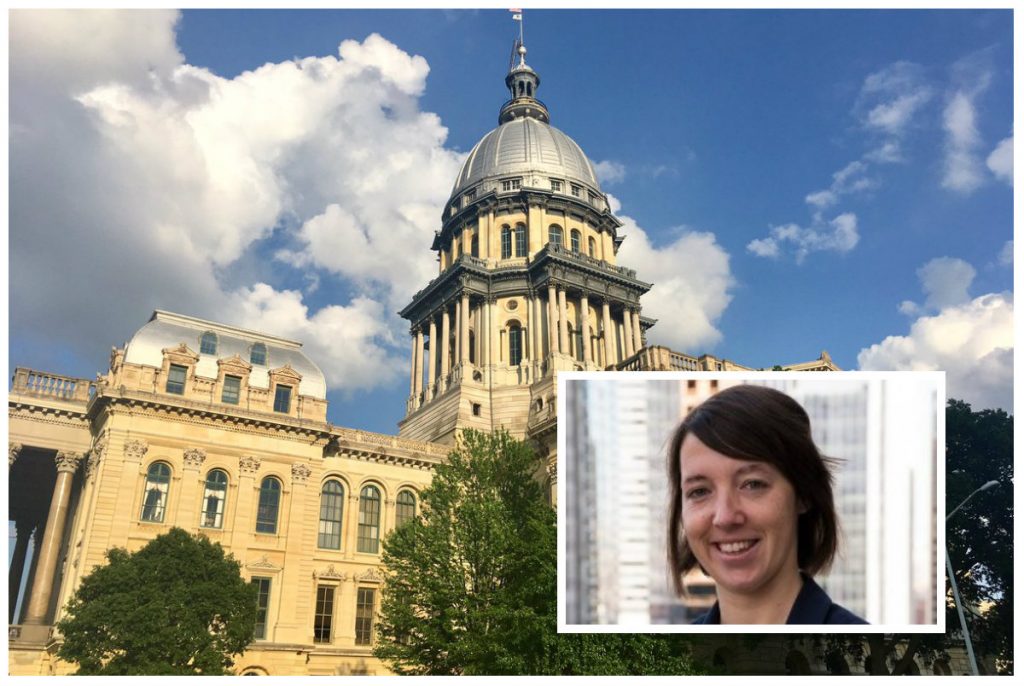 State Rep. Lindsey LaPointe (D-Chicago) [Submitted]
 Sterling Bay's 46-story glass tower designed by bKL architects at 300 N. Michigan Ave. [Department of Planning and Development]


