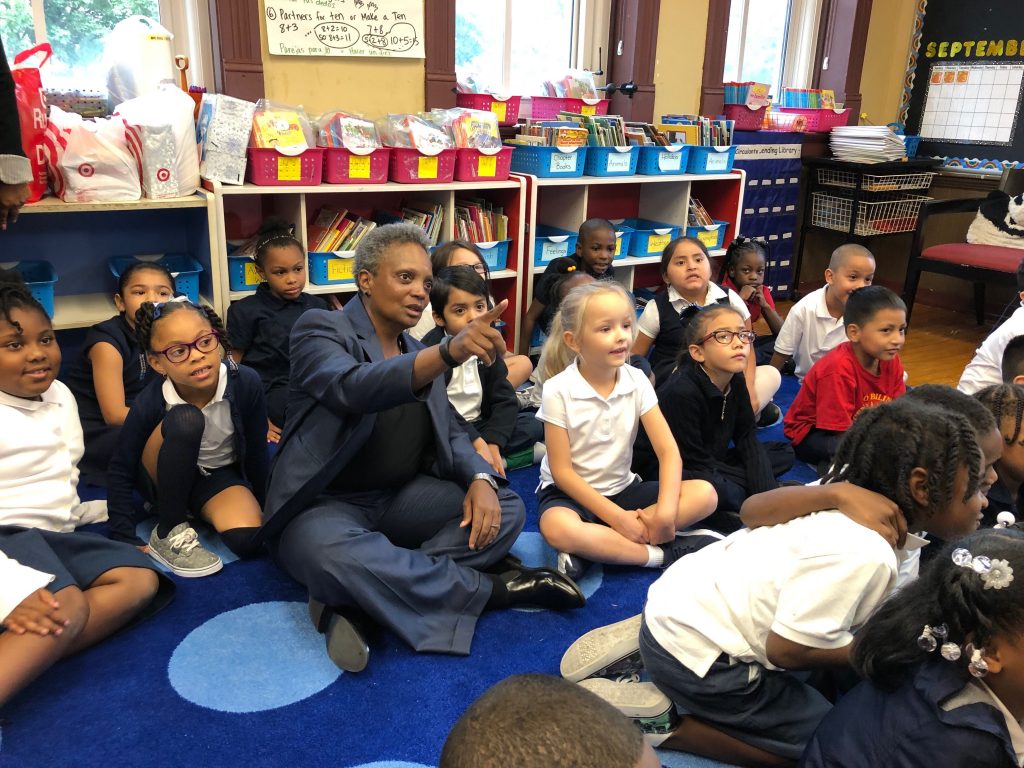
 Chicago Mayor Lori Lightfoot sits with students on the first day of school at Salazar Elementary Bilingual Center. If teachers walk out this fall, some 361,000 Chicago students would be affected.
[Yana Kunichoff / Chalkbeat Chicago]
By Heather Cherone and Yana Kunichoff, of Chalkbeat ChicagoMayor Lori Lightfoot took office vowing to chart a different course from that of her predecessor,
Rahm Emanuel.
But in two key ways, Lightfoot’s first months are replaying Emanuel’s: The mayor faces a huge budget gap and a Chicago Teachers Union on the verge of calling a strike, closing Chicago schools, and imperiling her political agenda.
Rank-and-file members
began voting Tuesday on whether to authorize a walkout. Their efforts are getting a jolt of national celebrity, with Democratic presidential candidate Bernie Sanders traveling to the city to rally alongside them and supportive tweets from Democratic presidential candidates Elizabeth Warren and Joe Biden.
The results of the vote could be announced as early as Thursday, and teachers could walk out as soon as Oct. 7.
Lightfoot, meanwhile, stressed on Tuesday that her message to teachers is, “We value you,” adding that her latest offer, if accepted, would be the most lucrative package in the union's history. "We have heard the response and concerns of teachers about additional supports in classrooms. We have baked those into the budget for this year."
Chicago has been here before, with a seven-day strike in 2012.
Four years later, a last-minute settlement averted another full-fledged walkout.
In some ways, 2019 has echoes of 2012 and 2016. But in other ways, events could play out differently. How can Lightfoot avoid previous pitfalls? We take a look.
The similaritiesCTU’s aggressive maneuvering: Political neophyte Lightfoot has encountered a union on the move. Teachers at five charter networks represented by CTU’s charter arm went on strike last spring, winning raises and improved benefits and working conditions. And all summer, the Chicago Teachers Union has ramped up its visibility and rhetoric demanding concessions.
It all echoes the year after Emanuel first took office in May 2011.
Led by the outspoken CTU
President Karen Lewis, the union honed a playbook that became
a roadmap for unions across the country. By focusing on issues beyond pay and benefits, and tying them to racism, poverty and criminal justice reform, leaders crafted a broader social issue platform.
Teachers walked off the job for the first time in 25 years, even surmounting a new state threshold that required a minimum of 75% of union members to approve a strike. The strike in September 2012 was all but certain, particularly after Emanuel told Lewis “
f--- you, Lewis.”
This year, the union has demanded adding case managers, nurses, mental health workers, special education services, other workers, and additional teachers — driving home the argument that it is seeking gains not just for teachers, but also improvements to benefit students.
By sharing the spotlight with the union’s No. 2,
Stacy Davis-Gates, the current union president,
Jesse Sharkey, has kept a lower profile than Lewis, who proved so popular she launched a run for mayor before falling ill to brain cancer. But the group has still pumped up its national profile with its victories in charter strikes and hard line in bargaining.
Reflecting last year in a radio interview for
WBEZ, Emanuel said Chicago Public Schools, under his direction, "should have sat down with [teachers] and said, 'You’ve gotta be part of the solution.' I kind of said that they would never really want to do that, and we did it the wrong way."
Issues beyond pay: Lightfoot’s victory party was still thumping last spring when teachers union leaders warned that she had “her work cut out for her on day one” and issued a call for more support staffing in schools, from nurses and librarians at every campus, to counselors and social workers at recommended ratios.
Lightfoot, who had promised to boost investments in neighborhood schools, pledged to add hundreds of social workers, special education case managers, and nurses at schools over five years. But she stopped short of putting them in a contract, saying her schools budget demonstrates her commitment.
The union fired back that putting new positions in the contract would ensure that hired staff would be fully licensed, and that the work would be kept in house and not contracted out.
In 2012, a different non-wage issue derailed contract talks. Emanuel wanted to tie teacher pay to test-based performance ratings. Union leaders vehemently objected,
countering that test scores didn’t accurately reflect teacher ability or effort. That was one of a host of education reform measures teachers saw themselves confronting under Emanuel’s leadership of Chicago schools.
Teachers walked out, and Emanuel went to court and argued the strike was illegal, because state law prohibits unions from striking over non-economic issues. He lost, the strike lasted seven days, and the teachers claimed victory.
They won a 17.6% raise over four years and a diminished emphasis on test scores in their evaluations.
In contrast, in 2016, when observers saw a strike as all but inevitable, district officials made several concessions, including hiring more teachers assistants for kindergarten through second grade classes with more than 32 students. Union leaders hailed the move as the first enforceable limits on class sizes in 20 years.
Fact-finders siding with the city: In August a neutral fact-finder largely sided with City Hall, much as mediators did during Emanuel’s tenure. But regardless of how much an independent agent has tried to focus the conversation on pay and benefits, the union has brushed it off and instead pushed a broad-based progressive agenda that reached far beyond schools’ front doors.
The differencesA progressive mayor: Where Emanuel took office ready to wage battle to create a longer school day and extended school year during his first term, Lightfoot won a sweeping victory after campaigning on a progressive agenda that, when it came to schools, largely echoed the union’s own platform. She championed an elected school board and pledged more resources to neighborhood schools.
While Emanuel dealt aggressively with the union in public, Lightfoot said she would sit down with union chief Sharkey and try to work out a deal.
“If my presence at the bargaining table to push forward and forge a deal is productive, I’m ready to do it. I will clear the decks on my schedule and make it happen,” Lightfoot told reporters at a news conference last week.
In response, Sharkey said that day he felt it was premature for the mayor to come in while, he claimed, the city’s bargaining team hadn’t substantively responded to teacher contract proposals.
Credibility in CPS leadership: Lightfoot also has another asset that Emanuel didn’t have: Schools chief Janice Jackson is popular with rank-and-file educators and has navigated sticky labor conflicts before.
In 2016, with the district in budget crisis mode and Illinois Gov. Bruce Rauner pressuring Chicago Public Schools to declare bankruptcy, Jackson and the union’s Lewis negotiated a last-minute deal that averted a strike. Jackson was then the district’s No. 2, under career bureaucrat Forrest Claypool. The deal awarded only small raises for teachers, but it did parcel out the payments for pension costs among new hires and veterans.
Jackson now has the top job at Chicago Public Schools, and in recent weeks she and Lightfoot have appeared publicly side-by-side to tout upgrades to neighborhood schools, expansions to arts programs, and sustained gains in its graduation rate and other academic metrics.
Financial stability: In 2012, Illinois’ budget was in the red, and by 2016, the state was in a full-blown crisis. It still has an outstanding backlog of bills, but a new education funding formula has awarded additional funds to Chicago schools, putting it on more solid financial footing.
The union has argued that the funds should go toward raises and additional staff, to the tune of nearly 5,000 teachers, professionals and aides the union asked for in its contract proposals.
Lightfoot has acknowledged the needs of schools and educators, while laying bare the budget realities facing the city and its schools.
Her latest public offer — a 16% cost-of-living raise across five years — reflects the critical role teachers play in classrooms, she has said, while also acknowledging that even added resources have limits. “The fortunes of CPS absolutely have improved,” said Lightfoot. “We feel comfortable this will fall within the resources we have.”
That begs the question: Will Lightfoot take a page from her predecessor’s playbook and raid a surplus of city funds? One of the ways Emanuel paid for the concessions he made in 2016 was to raid a city account intended to help spur the redevelopment of blighted areas. The extra $88 million helped seal the deal.
Lightfoot has a similar tool at her disposal. The mayor could sweeten the city’s offer to the union by using some of the additional $181 million that flowed into the city tax-increment financing accounts last year, a 27.4% jump as compared with 2017, according to a report from Cook County
Clerk Karen Yarbrough. However, Lightfoot has so far declined to say how she will spend those funds.
Publicly, the mayor is staying confident. She said again Tuesday there was no reason for a deal not to be reached to avert a strike. "We owe that to our children to get a deal done and quickly.
If the past two contract negotiations serve as prologue for this round of talks, don’t expect a decision — if one is reached — to come long before teachers are set to walk off the job the weeks to come.
This story was produced in collaboration and copublished with Chalkbeat Chicago.


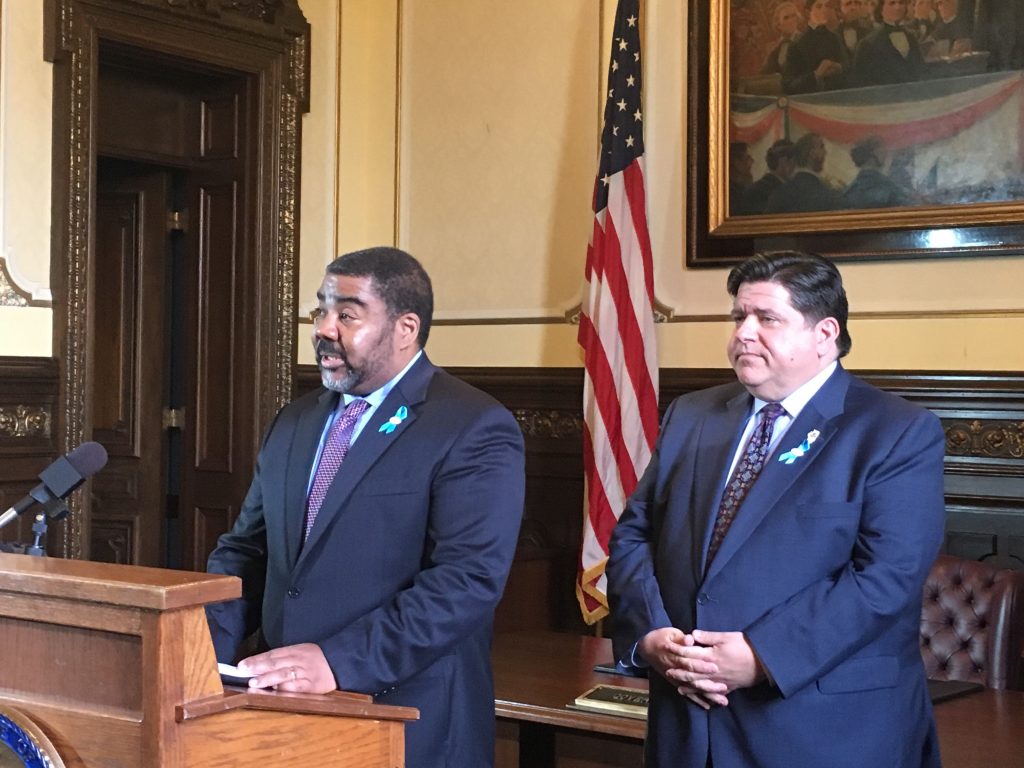 Department of Children and Family Services Director Marc Smith addresses reporters. [Hannah Meisel/The Daily Line]
 A diverse array of business, labor and transportation advocacy groups threw their weight on Wednesday behind county leaders who are calling for the three Chicago-area transportation agencies to converge on a plan to boost transit access on the city’s South Side and south suburbs.
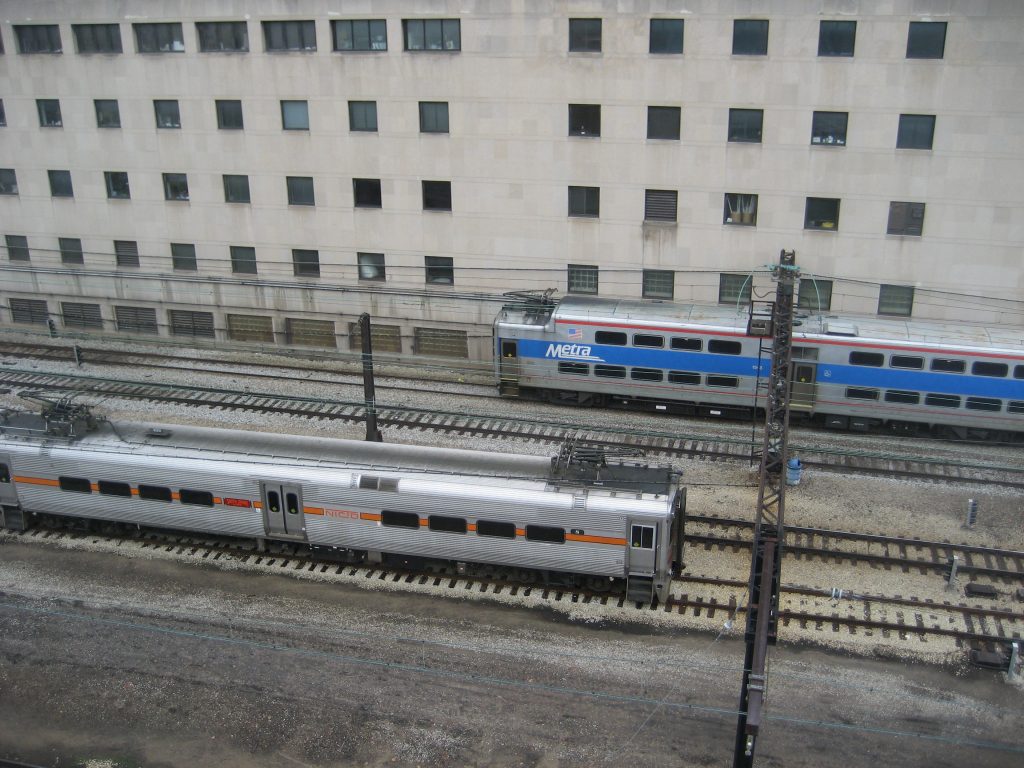 The Metra Electric and South Shore lines. [Airbus777/Flickr]
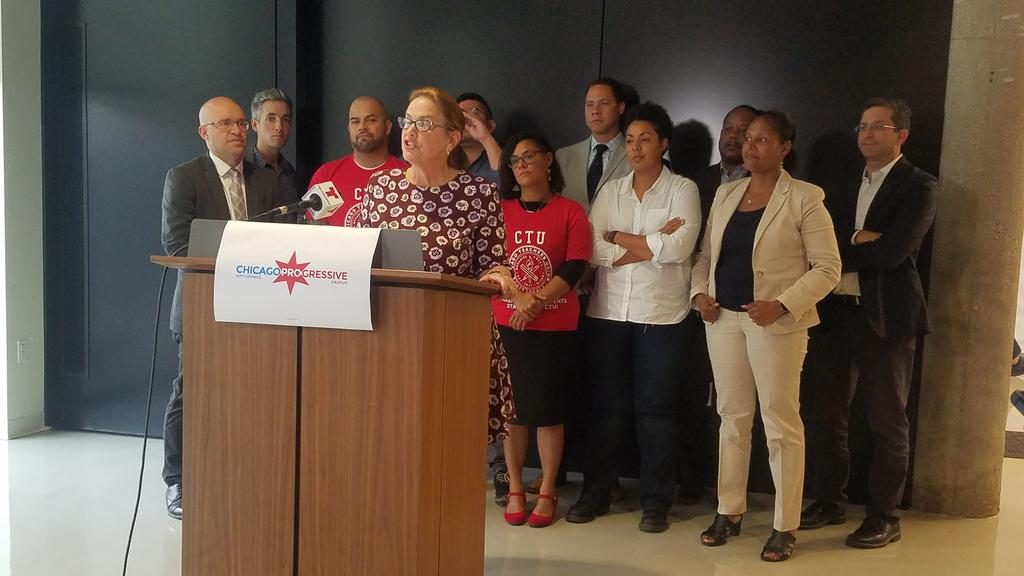 Ald. Susan Sadlowski Garza (10), the chair of the Progressive Caucus details the group's budget proposals. [Twitter/@MattMartinChi]
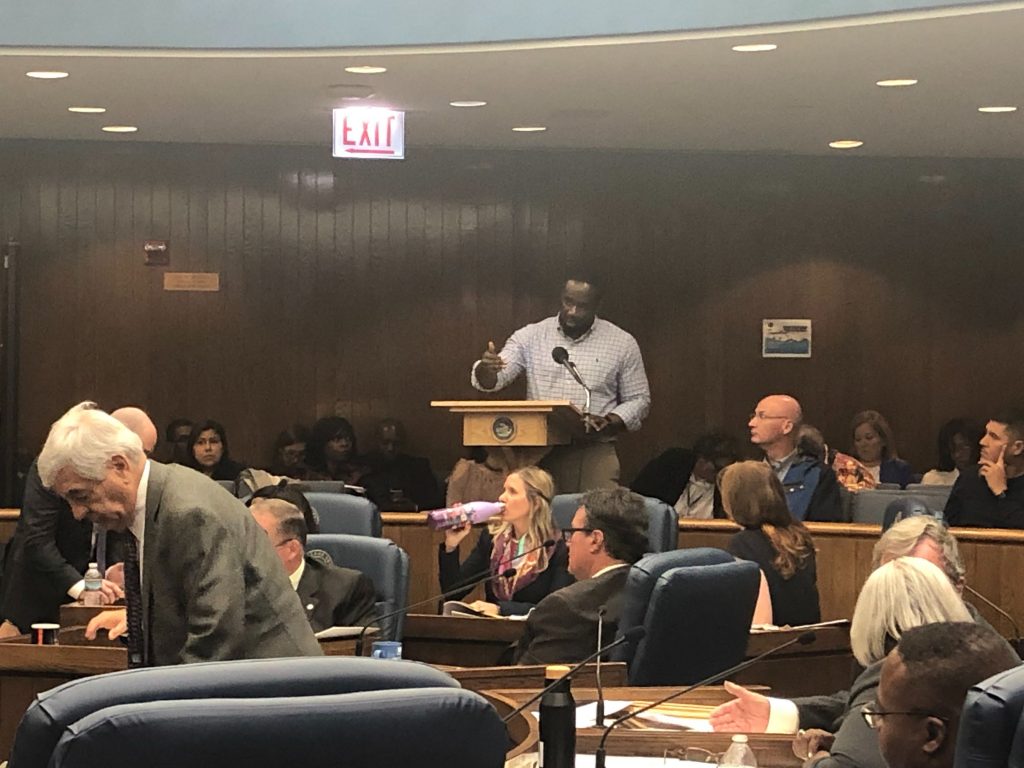 Ahmadou Drame, of the Safer Foundation, addresses the Cook County Board. [Alex Nitkin/The Daily Line]
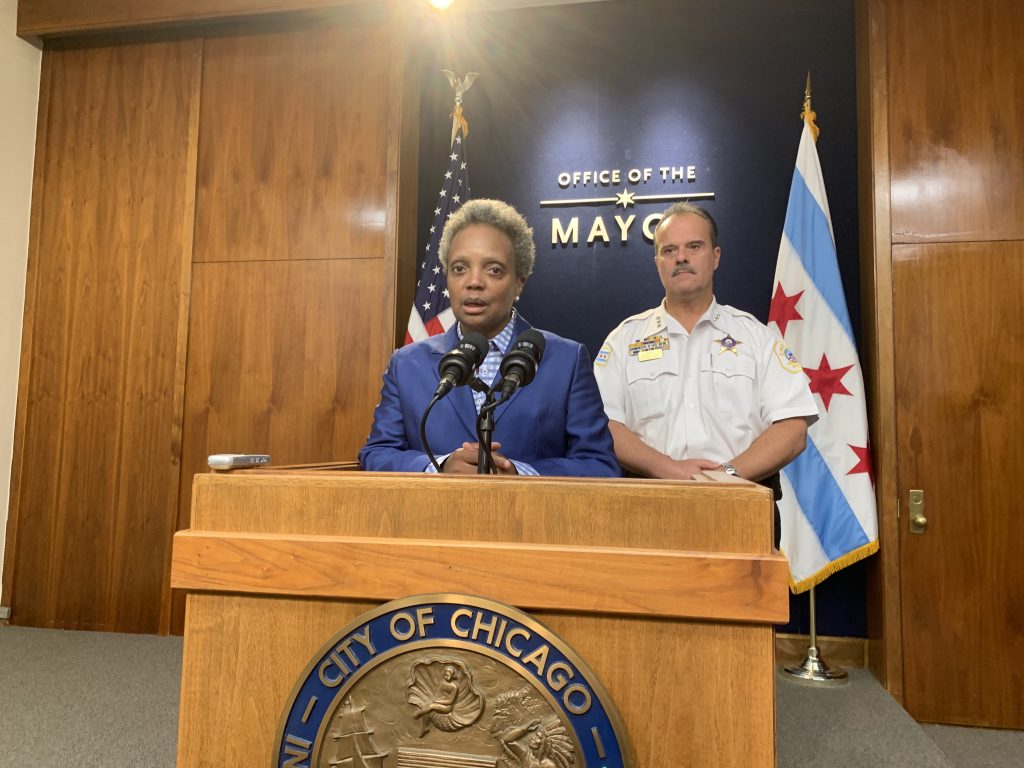 “Given what we feared over the summer, my sense is very little has actually materialized and I think part of that is because we have cut off ICE’s access to CPD, so that is why obviously we’re taking what happened today very, very seriously,”
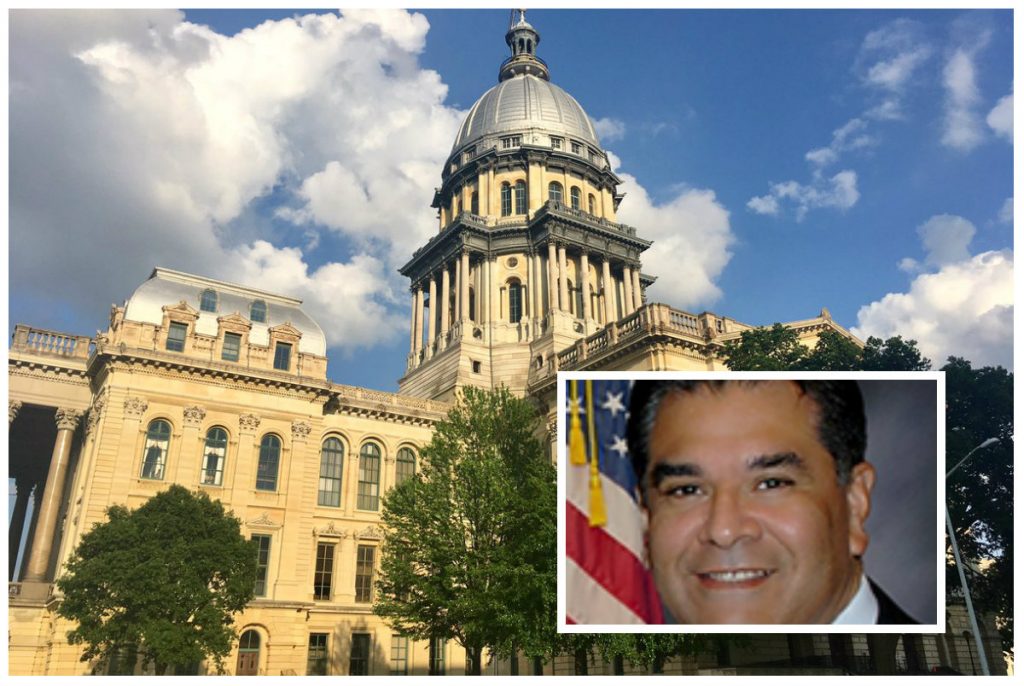 State Sen. Marty Sandoval (D-Chicago).

