Chicago News

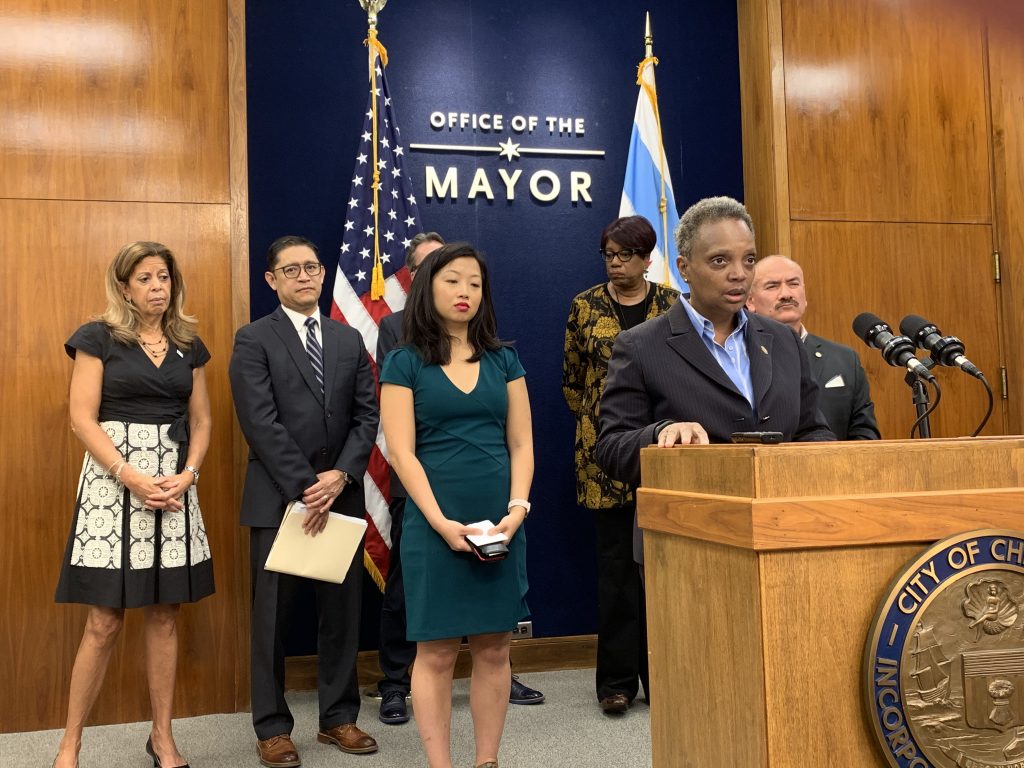
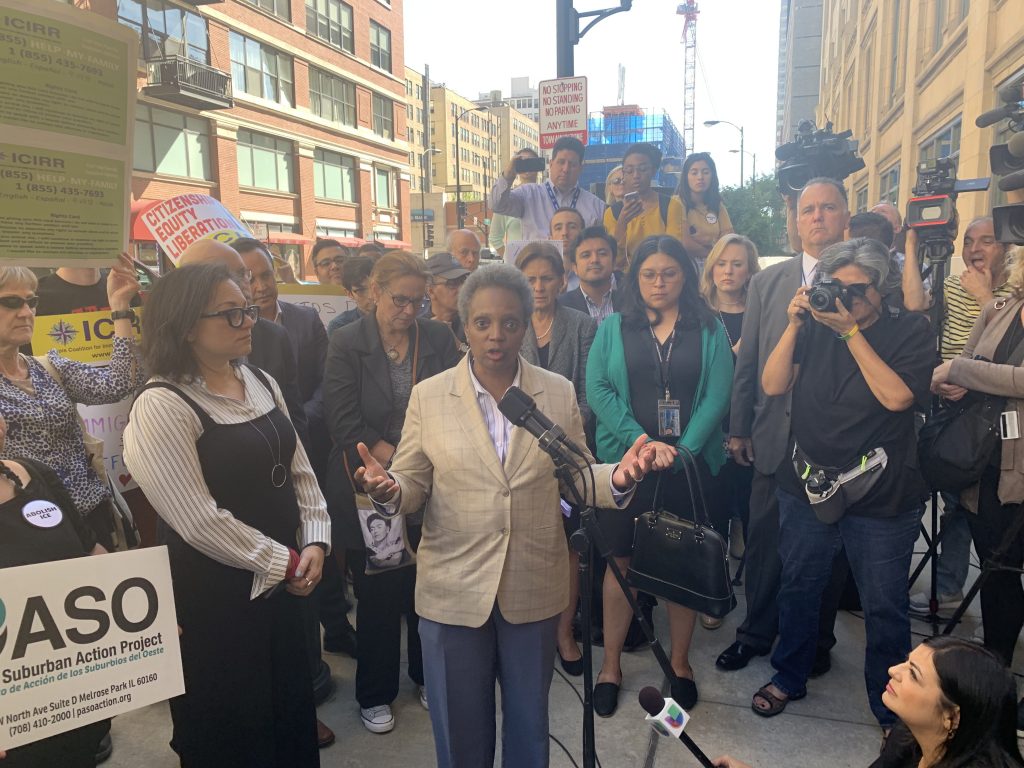
  • “Take a water hose and clean out the water department,” attorney Victor Henderson said. [Heather Cherone/The Daily Line]
    The Chicago Water Department remains plagued by bias and discrimination more than two years after Inspector General Joseph Ferguson determined that an "unrestricted culture of overtly racist and sexist behavior and attitudes" infested the city department, six former employees suing the city said Thursday.

    To Read More Please Login or Join
  • “Some elected officials use it like a piggy bank,” Cook County Clerk Karen Yarbrough said. “As taxpayers, we should be concerned. We should pay attention.” [Heather Cherone/The Daily Line]
    Chicago’s 138 tax increment financing districts claimed 35 percent of the property taxes collected by the city, according to a new report by Cook County Clerk Karen Yarbrough.

    Demolishing the record set the previous year, $841 million poured into the city’s TIF funds in 2018 — approximately 35 percent of the nearly $2.4 billion in property tax revenue banked by city officials. In 2017, 31 percent of the city’s property tax revenue ended up earmarked for use in a TIF district.

    Yarbrough was elected in November to replace veteran Clerk David Orr who made TIF reform a centerpiece of his 28 years in office. Yarbrough said she was “brushing up” on how the county’s special taxing districts operate. Chicago’s TIF districts are controlled by the mayor and City Council.

    “Some elected officials use it like a piggy bank,” Yarbrough said. “As taxpayers, we should be concerned. We should pay attention.”

    In all, Chicago’s TIFs took in $181 million more in 2018 than they did in 2017, a 27.4 percent increase, according to the report. That surge was driven in part by a 12.5 percent jump in the equalized assessed value of all properties in the city as part of the 2018 reassessment.

    The jump was also fueled by the $588 million property tax hike approved in 2015 by the City Council to shore up the city’s police and fire pensions as well as a development boom in the Loop and North Side.

    The burst of additional TIF revenue could ease the city’s budget crisis by allowing Mayor Lori Lightfoot to declare more TIF funds to be in surplus — returning them to the city, Chicago Public Schools and other taxing districts.

    Related: Facing ‘significant deficit,’ Lightfoot gives her team another month to close gap

    As part of Chicago’s budget for the 2019 fiscal year, former Mayor Rahm Emanuel declared a $175 million TIF surplus, which allowed $97 million to be redirected to CPS.

    TIF districts capture all growth in the property tax base in a designated area for a set period of time, usually 20 years or more, and divert it into a special fund for projects designed to spur redevelopment and eradicate blight.

    The leadership of the Chicago Teachers Union wasted no time Wednesday in laying claim to the additional funds — calling for “every penny” to be spent on neighborhood schools.

    “If the mayor is serious about real equity for South and West Side neighborhoods and real educational justice for our students, she'll do what's right — and direct those funds to settle our contract demands to create the schools our students deserve," said Chicago Teacher Union President Jesse Sharkey said in a statement.

    CTU was highly critical of Emanuel’s use of TIF funds, saying they improperly moved money from schools to private developments.

    The new Transit TIF district formed by the city in the waning days of the Obama Administration to fund the renovation of the CTA’s Red and Purple Train Lines accounts for approximately one-third of the overall increase in TIF revenue, according to the report.

    Of the $115.7 million generated in 2018 by the Transit TIF in 2018 — up from $40.2 million in 2017 — $60 million is earmarked for CPS under a unique provision of the state law that created the first, and so far only, Transit TIF district.

    That is in addition to any funds CPS could get from the city or from a Lightfoot-declared TIF surplus, perhaps giving Lightfoot a pool to draw from to ink a contract with the CTU. The union’s leaders have been pressing for pay raises and additional investments in schools.

    While most of Chicago’s highest performing TIFs are in or near Downtown, revenue collected by the Pilsen Industrial Corridor TIF increased 26 percent, adding $20.6 million to its coffers. City officials have been working to combat gentrification in Pilsen, which was once a primarily Mexican American neighborhood.
  • article-image
     Chance will depart the city as early as Thursday, according to Animal Control. He’s headed to the St. Augustine Alligator Farm in St. Augustine (pictured on the left), Florida, which is actually a part of his species’ native range, unlike Chicago. [Facebook/City of Chicago]

    The final tab to save Humboldt Park’s beloved alligator from the murky depths of the lagoon was $33,649.17, city officials revealed Wednesday in response to a Freedom of Information Act request filed by The Daily Line.

    Frank Robb, the gator trapper who caught the alligator dubbed Chance The Snapper on July 16, was paid $2,500 for the work that made him a Chicago superstar, and reimbursed for $2,166.34 in travel and lodging costs, records show.

  • Chicago Police lieutenants in seven districts failed to check whether officers were following department rules by using their body-worn cameras between November 2017 through March 2018, a new audit by the city’s watchdog found.

    To Read More Please Login or Join
  • “There is no question that we are going to come to the taxpayers and ask for additional revenue," Mayor Lori Lightfoot said Wednesday. [Heather Cherone/The Daily Line]
    Mayor Lori Lightfoot announced Tuesday she would give her finance team another month to complete its annual financial analysis that will detail the “significant deficit” facing the city in 2020.

    To Read More Please Login or Join
  • Mayor Lori Lightfoot called the women's deaths "sad and horrifying." [Heather Cherone/The Daily Line]
    Mayor Lori Lightfoot called the shooting deaths of two women who volunteered for an anti-violence group that protected a corner in Auburn Gresham is “horrifying” — but should not deter Chicagoans from helping police fight crime.

    “Today is a sad and devastating day,” Lightfoot said. “Sad and horrifying.” 

    There is no evidence that 26-year-old Chantell Grant and 35-year-old Andrea Stoudemire were targeted by the shooters who fired from a car that drove by 75th Street and Stewart Avenue around 10 p.m. Monday night, Chicago Police Supt. Eddie Johnson said. The intended target was a man who was recently released from prison and was wounded in the incident.

    “It is critically important that we continue to push forward anyway,” Lightfoot said. “If we let people who don’t care about the sense of community, about civility, about the consequences of gun violence push us into the shadows and push us into our homes for fear of what will happen, we will never get a head of this tide. The Police Department can not fight this fight alone.”

    Both women volunteered with Mothers Against Senseless Killings, whose members have sat on the corner every day during the summers since 2015 in a bid to stop shootings in the area. They often bring out neighborhood children, playing games and hosting barbecues.

    An online fundraiser launched by group founder Tamar Manasseh to raise a $5,000 reward for information leading to the arrest of the shooters brought in nearly $10,000 by early Tuesday afternoon.

    “We have nothing to suggest they were targeted because of their work with MASK,” Johnson said, adding that Chicagoans should not allow criminals to “hold us hostage.”

    After 2 Moms Killed On Corner Patrolled By Anti-Violence Group, Women Demand Justice: ‘They Came For All Of Us’ [Block Club Chicago]

    Block Club Chicago's Kelly Bauer contributed to this story.
  • A rendering of the proposed Obama Presidential Center. [City of Chicago]
    Plans to build the Obama Presidential Center in Jackson Park will have an “adverse impact” on the park, which is listed on the National Register of Historic Places, according to a federal review released Monday.

    The finding could further delay the construction of the $500 million center designed by former President Barack Obama to house his presidential library. The foundation also promises to transform the South Side by attracting tourists — wallets at the ready — and creating hundreds of jobs.

    The proposed center would include a four-building campus, underground parking facility, plaza, play areas, pedestrian and bicycle paths and landscaped open space. But the federal review under the National Historic Preservation Act found the Obama Presidential Center would diminish “the historic property’s overall integrity by altering historic, internal spatial divisions that were designed as a single entity” by famed landscape architect Frederick Law Olmstead to host the 1893 World's Columbian Exposition. 

    The review, formally known as a Section 106 Assessment of Effects under the National Historic Preservation Act, studied the center’s potential impact on three dozen historic properties, and found it would have “an adverse effect” on the Jackson Park Historic Landscape District and Midway Plaisance.  

    “The combined changes diminish the sense of a particular period of time within the historic property and impact the integrity of feeling,” according to the review. “The changes impact how Jackson Park and the Midway Plaisance reflect conscious decisions made by the Olmsted firm in determining the organization, forms, patterns of circulation, relationships between major features, arrangement of vegetation, and views.”

    Those changes to Jackson Park would alter the “characteristics of the historic property that qualify it for inclusion in the National Register,” and require “deviating from the simple formality of open space that reflects the historic design principle of informal symmetry and balance in design,” according to the review.

    The release of the report triggers a 30-day comment period, after which the findings will be finalized and an effort started to “resolve adverse effects,” according to a letter released by the Federal Highway Administration, which conducted the review. That process will likely result in a memorandum of agreement to resolve the issues, according to a statement from city planning officials.

    “The city is committed to the long-term preservation of Jackson Park and mitigating adverse effects to area historic properties,” city planning officials said in a statement.

    An open house to discuss the findings and gather feedback will take place from 6 to 8 p.m. Monday at the Logan Center for the Arts, 915 E. 60th St. In addition, feedback on the results of the federal review can be sent to [email protected] until Aug. 30.

    In response to the findings of the federal review, the Obama Foundation released a statement promising to work with members of the community.

    “Jackson Park is a majestic place with a rich history that we have embraced throughout our design process,” according to the foundation. “We look forward to hearing from the community about ways we can continue to work together to honor the history of Jackson Park and bring the Obama Presidential Center to Chicago’s South Side.”

    The center had been scheduled to break ground next year and open in 2022. 

    The City Council approved the master agreement, use agreement and environmental agreement between the Obama Foundation and the city in November. The agreement turns over 19.3 acres of city land to the foundation for 99 years for the nominal cost of $10. The city will own the center once it is built, according to the agreement.

    That agreement includes plans to close the southern portion of Midway Plaisance Drive and Cornell Drive and widen south Stony Island Avenue and the northern portion of Midway Plaisance Drive. It also calls for the installation of barrier walls and stop lights on Hayes Drive.

    The state budget approved in May 2018 included $172 million to cover the cost of closing the roads through Jackson Park to make way for the center.

    The federal review found that the proposed changes to the Midway Plaisance, the development of the site for the center and certain roadway closures would have a “negative effect on the historic landscape.”

    In addition, the reconfiguration of Hayes Drive and the changes along Marquette Drive and Cornell Drive “deviate from the historic design and have primarily negative effects,” according to the review.

    The federal report also found that the design for the center would alter the park’s balance between open space and buildings, and plans for a play area on the Midway Plaisance would “alter the setting and feeling of the historic Cheney Goode Memorial."

    “The size and scale of new buildings within the historic district diminish the intended prominence of the Museum of Science and Industry building and alter the overall composition and design intent of balancing park scenery with specific built areas,” according to the review.

    The review also objected to the realignment of the intersection of Hayes Drive with Richards Drive, finding that it was not consistent with the Secretary of the Interior standards because “the new design of the roadway bypasses the Statue of the Republic that is the focal point of the historic intersection.”

    “Rising above a circular traffic island, the statue marks the center of the triangular intersection of Hayes Drive and Richards Drive and commemorates the twenty-fifth anniversary of the 1893 World’s Columbian Exposition in 1918,”  according to the federal review. “The historic design is arranged to highlight the statue as the central focal point of surrounding roads and position the monument to be viewed from vehicles or at a distance from walks. The relationship between viewers and the statue is balanced by distance and speed.”

    Plans for a pedestrian plaza near the landmark statue alter “the historic character of the design,”  according to the federal review. “The realignment will introduce visual elements that diminish the integrity [of] the Statue of the Republic.”

    However, the federal review found that changes proposed to Lake Shore Drive as well as plans for expanded paths for pedestrians and bicyclists, including refuge islands and underpasses, would not have adverse impacts on the park’s historic character. 

    In addition, plans to close roadways within Jackson Park would not significantly increase traffic volumes along Lake Shore Drive, east 67th Street, east 56th Street, South Shore Drive and roads north and south of the Midway Plaisance, according to the federal review.

    Plans to realign the intersection of Hayes Drive and Cornell Drive and change the route of Hayes Drive between Richards Drive and Lake Shore Drive is consistent with standards set by the federal government, according to the review. 

    Proposed changes to Stony Island Avenue also do not create an adverse effect in the area around the park by adding traffic noise, according to the federal review.
  • Mayor Lori Lightfoot addresses reporters. [Heather Cherone/The Daily Line]
    Mayor Lori Lightfoot tapped equal numbers of men and women to serve on citywide boards and commissions and head up city departments during her first 100 days in office, according to an analysis by The Daily Line.

    In addition, the 20 appointments Lightfoot made between her inauguration and the City Council’s August recess that must be confirmed by aldermen were nearly equally divided between white appointees and people of color.

    Eleven of the appointees are white, four are black, three are Latino and two are Asian, records show.

    “Whether it is in her cabinet or across her staff, Mayor Lightfoot is committed to ensuring that those working in city government speak to the different backgrounds and experiences of our communities as we strive to make Chicago a stronger, safer and more equitable city for all residents,” mayoral spokesperson Lauren Huffman said.

    However, Lightfoot made more than 60 percent fewer appointments in her first 100 days than former Mayor Rahm Emanuel did after his 2011 inauguration. Emanuel submitted 53 appointments to the City Council for consideration by Aug. 1, 011, city records show.

    Emanuel, who avoided a runoff, had an 83-day transition period to prepare to take office, made 53 appointments in his first 100 days in office. Lightfoot’s transition was 48 days. Emanuel also presided over four meetings of the City Council during his first 100 days, while Lightfoot presided over three sessions where she could introduce appointments.

    Related: Emanuel appointees to boards, commissions mostly black, mostly male during 2nd term

    TDL’s analysis does not include hundreds of appointments to neighborhood commissions, including those that oversee Special Service Areas, because those picks are traditionally sent to the mayor by aldermen. In addition, the analysis does not include appointees to advisory councils, which have no voting power.

    Seventeen members of the mayor’s 25-person senior staff are African American, Latino, or Asian, including Chief Financial Officer Jennie Huang Bennett, Huffman said.

    That team is designed “to ensure that diversity actively informs the daily decisions made by our government,” Huffman said.

    Before taking office, Lightfoot named Candace Moore, a Black woman, to launch the Office of Equity and Racial Justice, which Lightfoot charged with making “government more fair and transparent for all residents.” In addition, Lightfoot tapped Tamika B. Puckett, a black woman, to serve as the city’s first chief risk officer and lead the new Office of Risk Management. Neither appointment required City Council confirmation.

    Lightfoot has also named an Asian man, a Black woman, a white woman and an Asian woman to serve as deputy mayors, whose appointments do not require City Council confirmation.

    In addition, Lightfoot tapped Andrea Telli, a white woman, to lead the Chicago Public Library, replacing former Commissioner Brian Bannon, and Nubia Willman, a Latina, to lead the city’s Office of New Americans. Neither post required City Council confirmation.

    The mayor’s office “will continue in its commitment to prioritizing the appointment of highly qualified candidates representing diverse backgrounds and experiences to serve in staff and cabinet roles,” officials said.

    Chicago’s population is approximately 32.6 percent white, 29.7 percent Latino and 29.3 percent African American, according to the most recent Census estimates.

    In 2016, Latinos officially became Chicago’s second-largest ethnic or racial group, surpassing African Americans, according to Census estimates. 

    Chicago’s African American population is continuing to drop, according to an analysis by the Chicago Metropolitan Agency for Planning, a regional organization.

    Related: The Daily Line’s Aldercast: Demographer Rob Paral on Chicago’s reverse Great Migration, Chicago without immigrants, and the growing ‘zone of affluence’

    Lightfoot has yet to replace several commissioners and department heads who departed along with Emanuel, and acting commissioners still lead the Department of Transportation, the Department of Planning and Development and the Department of Health.

    Some of the city’s highest profile leaders appointed by the mayor do not require City Council confirmation, and are not included in this analysis. Those positions include the chief executive officer of the Chicago Public Schools and the members of the Chicago Board of Education.

    Lightfoot has said she plans to keep CPS CEO Janice Jackson, appointed by Emanuel, in place permanently. Lightfoot asked for and received the resignations of all of the school board members appointed by Emanuel, replacing them with one white woman, one Latina, one Latino, one black man, one black woman, one Asian man and naming Miguel Del Valle, a Latino, as president.

    Lightfoot has also not moved to replace Chicago Police Department Supt. Eddie Johnson, City Colleges of Chicago Chancellor Juan Salgado; Chicago Transit Authority President Dorval Carter, Chicago Park District CEO Michael Kelly and Chicago Housing Authority CEO Eugene Jones.
  • An outside auditor will examine billing and accounting practices of the Cook County Health and Hospitals System after a disputed watchdog report found the health system owed $701 million in unpaid healthcare liabilities.

    To Read More Please Login or Join
  • Ald. Susan Sadlowski-Garza (10) and Mayor Lori Lightfoot celebrate the passage of the predictive scheduling ordinance with a bottle of "South Side hot sauce." [Heather Cherone/The Daily Line]
    Before she took office, Mayor Lori Lightfoot faced questions about how she would convince a majority of the Chicago City Council to back her effort to root out corruption and chart a progressive course while closing a massive budget deficit.

    Lightfoot, who had never held elected office before capitalizing on her outsider status to win an overwhelming victory in April’s mayoral race, silenced at least some of those whispers Wednesday by racking up overwhelming victories on two of her biggest priorities — protections for Chicago workers forced to work unpredictable schedules and an ethics reform package aimed squarely at indicted Ald. Ed Burke (14).

    The City Council’s annual August recess started after Wednesday’s meeting, and aldermen will not meet again until Sept. 18 — after Lightfoot will have passed the largely symbolic 100-day mark in office.

    Lightfoot said she had learned a lot since taking office in May, and was committed to working with aldermen and listening to their concerns while clearly communicating her priorities and goals.

    “I think we’ve done fine,” Lightfoot said. “But I think we can do better. I’m committed to that. My team is committed to that. We’ve got to make sure even where we don’t agree that we are talking to each other and communicating effectively.”

    Before Lightfoot graded her legislative accomplishments, she celebrated the City Council’s 50-0 vote to approve a new law that would force Chicago employers to give their workers two weeks notice of their schedules in an effort to reduce the stress caused by unpredictable shift work by 2022.

    Lightfoot said the measure, lauded by the Chicago Federation of Labor as “the most expansive predictive scheduling law in the country,” was a victory for all Chicagoans struggling to make ends meet.

    “It’s not a perfect ordinance,” Lightfoot said. “We haven’t made everybody happy. But I think that we’ve struck the right balance.”

    Business groups dropped their opposition after Lightfoot made several changes, including an agreement to exclude workers who earn more than $26 per hour. Salaried workers who earn more than $50,000 are also excluded.

    Business groups also convinced city officials to remove a provision that would have restricted employers’ ability to limit hours worked by employees on the cusp of moving from part-time to full-time status.

    In addition, the law does not prohibit firms from hiring a new employee unless its owners determine that they consistently have shifts available that their workers do not want to fill.

    However, the law does employers to offer additional shifts to existing workers before offering the shifts to temporary or seasonal workers and before hiring new employees.

    After 2 ½ years of negotiations, aldermen stood one by one to praise Lightfoot for muscling through the measure — and convincing skeptical aldermen and vehemently opposed business groups to get on board the train.

    "I've never seen this City Council turn out more important legislation for the people of this city,” Ald. George Cardenas (12) told the mayor. “And it's all thanks to you."

    Workforce Development Committee Chair Ald. Susan Sadlowski Garza (10) who shepherded the measure through the City Council grew emotional several times Wednesday.

    "We've just changed the lives of many people," Sadlowski Garza said, before telling Lightfoot from the floor of the City Council chambers that she wished she could give the mayor bottle of Champagne to celebrate.

    Instead, Sadlowski Garza offered Lightfoot a bottle of “South Side hot sauce” prompting loud cheers from other aldermen — and a shouted warning in jest from Ald. Nicholas Sposato (38.)

    “As long as it’s [worth] under $50,” Sposato said, prompting Ald. Michael Rodriguez (22) to confirm the bottle of Hienie’s famed orange hot sauce cost $4.99, below the threshold set by the city’s Ethics Ordinance for gifts to city officials.

    Aldermen also voted 50-0 — with nary a word of debate — to approve Lightfoot’s first attempt to end corruption at City Hall, where several federal investigations are looming amid raids by federal agents.

    The measure bans aldermen from working as property tax attorneys or in any capacity “that poses a potential liability or a conflict of interest with City of Chicago business.”

    That is aimed squarely at Burke, who has pled not guilty to a 14-count indictment that he repeatedly — and brazenly — used his powerful position at City Hall to force those doing business with the city to hire his private law firm in mind.

    Lightfoot reiterated her call for Burke to step down, and acknowledged he could face sanctions from the Chicago Board of Ethics if he continues to represent property owners looking for a break on their taxes — which comes at a cost to the city.

    “The chips will fall where they may,” Lightfoot said.

    The measure also expands the powers of Inspector General Joseph Ferguson to investigate aldermen and “audit council administrative procedures.”

    A similar proposal was defeated by aldermen in February 2016 after being thwarted by Burke.

    The proposal would also hike the fine for violating the ethics ordinance from $500 to $1,000 for low-level violations and from $2,000 to $5,000 for high-level violations.

    In addition, the law expands the definition of lobbyists to include non-profits.

    In addition, Lightfoot on Tuesday introduced a measure (O2019-5548) that would give Ferguson the authority to release confidential investigatory files and reports to the public “when the conduct investigated is associated with a death or a felony, generating high interest from the public.”

    “People have a right to question the decisions made by their government officials and to hold them accountable,” Lightfoot said in a statement. “Withholding all OIG reports only generates mistrust at a time when city government should be focusing its efforts on rebuilding trust and restoring the public’s faith.”

    Even as aldermen relaxed into their summer break, Lightfoot faces significant challenges in the weeks ahead.

    Members of the Chicago Teachers Union demonstrated Wednesday outside the Board of Education meeting to press the mayor to fulfill her campaign promise to boost staffing, cut class sizes and hike pay for teachers and staff members.

    Lightfoot is also at loggerheads with the Fraternal Order of Police Lodge 7, which represents rank-and-file Chicago Police officers, who have been working without a contract for more than two years amid reform efforts ordered by a federal judge in a wake of the murder of Laquan McDonald.

    As Patrick Murray, the union’s second vice president, stepped to the microphone to speak during the public comment portion of the meeting, Lightfoot could be heard on a live microphone calling him “this FOP clown.”

    Murray was there to tell the aldermen and the mayor that the union believed four officers fired earlier this month by the Police Board in connection with efforts to cover up McDonald’s death had been “scapegoated” and not treated fairly.

    In June, Lightfoot tangled with Murray during the City Council meeting, after he accused her of not consulting the union on reform efforts.

    After the meeting, Lightfoot acknowledged she made the remark, but declined to apologize to Murray or the union.

    “It was not appropriate for me to say that out loud,” Lightfoot said. “I’m sorry that I said it out loud."

    Lightfoot will also face pressure from progressive aldermen to make good on her promises to increase the supply of affordable housing in Chicago and make changes to the city’s Affordable Requirements Ordinance.

    Fourteen aldermen resurrected a proposal (O2019-5599) first introduced in June 2018 that would require city officials to approve projects that include affordable family housing units in wards where less than 10 percent of the housing stock is as dedicated to low- and moderate-income residents.

    The proposals would eliminate developers’ ability to pay into the city’s Low Income Housing Trust Fund and require them to build larger units with two, three and four bedrooms and set them aside for low- and moderate-income Chicagoans in perpetuity.

    In addition, developers would have to set aside 30 percent of new units in “high-rent zones” as affordable. In neighborhoods with moderate rents, 20 percent of the units would be set aside, under the proposal.

    While the current law only applies to developments of at least 10 units, the revised law would require to three- to nine-unit buildings to build at least one affordable unit if they request special permission from the city.

    Lightfoot promised to work with housing advocates.

    “We are at a crisis point, there is no doubt about that,” Lightfoot said.
  • County officials back a resolution declaring racism a public health crisis. [Kim Bellware/The Daily Line]
    Cook County health officials are targeting young suburban residents with new education outreach and treatment efforts in an effort to curb the years-long uptick of cases of sexually transmitted infections reported across the county. 

    To Read More Please Login or Join
  • State Rep. Lindsey LaPointe (D-Chicago) [Submitted]
    A game of political musical chairs on the Far Northwest Side has ended with the appointment of the first female state lawmaker in decades.

    To Read More Please Login or Join
  • Ald. Roberto Maldonado (26) on Tuesday withdrew a batch of measures designed to douse the red hot real estate market that some say is fueling gentrification in predominantly Latino neighborhoods along the 606 trail.

    To Read More Please Login or Join
  • The City Council is poised to approve a measure that would force some Chicago employers to give their workers two weeks’ notice of their schedules in an effort to reduce the stress caused by unpredictable shift work.

    To Read More Please Login or Join
  • Mayor Lori Lightfoot is set to notch victories on two of her biggest priorities Wednesday, allowing her to point to high-profile legislative wins during her first 100 days in office.

    The City Council is poised to take its annual August recess after Wednesday’s meeting, and will not meet again until Sept. 18 — after Lightfoot will have passed the largely symbolic 100-day mark.

    Before aldermen head on vacation, Lightfoot will ask the council to back her effort to make good on her signature campaign promise and root out corruption at City Hall by approving a package (O2019-5305) of ethics reforms.

    The change, unanimously endorsed by the Committee on Ethics and Government Oversight last week, that would ban aldermen from working as property tax attorneys or in any capacity “that poses a potential liability or a conflict of interest with City of Chicago business.

    Related: Aldermen advance Lightfoot’s ethics reform package despite concerns over expanded lobbyist rule

    The package is squarely targeted at Ald. Ed Burke (14), who faces a 14-count indictment  that he repeatedly — and brazenly — used his powerful position at City Hall to force those doing business with the city to hire his private law firm in mind. Burke has pled not guilty.

    The proposal also expands the powers of Inspector General Joseph Ferguson to investigate aldermen and “audit council administrative procedures.” 

    A similar proposal was defeated by aldermen in February 2016 after being thwarted by Burke.

    The proposal would also hike the fine for violating the ethics ordinance from $500 to $1,000 for low-level violations and from $2,000 to $5,000 for high-level violations.

    In addition, Lightfoot proposed expanding the definition of lobbyists to include non-profits.

    Aldermen will also consider a revised ordinance approved Tuesday that would force Chicago employers to give their workers two weeks notice of their schedules in an effort to reduce the stress caused by unpredictable shift work.

    Related: Lightfoot-backed ‘Fair Workweek’ ordinance set for final vote after business groups drop opposition

    Business groups dropped their opposition after Lightfoot made several changes, including an agreement to exclude workers who earn more than $26 per hour. Salaried workers who earn more than $50,000 are also excluded.

    Business groups also convinced city officials to remove a provision that would have restricted employers’ ability to limit hours worked by employees on the cusp of moving from part-time to full-time status.

    In addition, the proposal no longer prohibits a firm from hiring a new employee unless its owners determine that they consistently have shifts available that their workers do not want to fill.

    However, the proposed law would require employers to offer additional shifts to existing workers before offering the shifts to temporary or seasonal workers and before hiring new employees.

    The meeting on Wednesday will also feature changes crafted by Rules Committee Chair Ald. Michelle Harris (8) to the 30-minute public comment period.

    Instead of allowing people to speak for three minutes at a time on a first-come, first-served basis, everyone who signs up to speak between 9 and 9:35 a.m. will be entered into a drawing, Harris said.

    That random draw will determine the order of speakers — and if more people sign up than can be heard within 30 minutes, the order will determine who gets to speak, Harris said.

    Since the City Council began allowing public comment at its meetings in June 2017 to settle a lawsuit filed by activists alleging the city had been violating the Open Meetings Act, many of the slots have been taken by the same people voicing the same concerns week after week.

    “This is an effort to get diversity in our speakers,” Harris said, noting that some people line up as early as 6 a.m. “It evens the playing field.”

    A number of high-profile ordinances are also set to be introduced Wednesday in advance of the summer break.

    Aldermen will resurrect a measure to raise the city’s real estate taxes to expand efforts to end homelessness in Chicago by putting a measure on the November 2020 ballot. 

    Facing opposition from former Mayor Rahm Emanuel, the measure that stalled in March would have kept the current tax rate of $3.75 for every $500 of the purchase price up to $1 million. The rate would increase to $9.75 for every $500 of homes sold for more than $1 million.

    Related: Don’t use Chicago homeowners ‘as an ATM machine:’ Emanuel opposes plan to raise real estate taxes to raise money for homeless services or lead pipe replacement

    Raising the transfer tax on homes sold for more than $1 million would help the more than 86,000 Chicagoans afflicted by homelessness, according to backers of the Bring Chicago Home effort.

    During the campaign, Lightfoot backed the effort but was noncommittal Tuesday, telling reporters she was first working to bridge the city’s 2020 budget gap, which is expected to be more than $700 million.

    In addition, Ald. Carlos Ramirez-Rosa (35) plans to re-introduce a measure that was stymied during the Emanuel administration that would close what he calls “loopholes” in the city’s Welcoming Ordinance.

    During the campaign, Lightfoot endorsed that move but has clashed with Ramirez-Rosa and immigration rights activists after she declined to issue an executive order to ban city officials from working with Immigration and Customs Enforcement.

    Related: Lightfoot declines to issue order banning all CPD cooperation with ICE as raids loom

    Alds. Leslie Hairston (5) and Jeanette Taylor (20) will also introduce a measure designed to protect affordable housing and prevention displacement near the planned Obama Presidential Center in Jackson Park.

    The ordinance would impose a community benefits agreement on the area within 2 miles of the center that calls for 30 percent of new housing to be set aside as affordable; earmark all city-owned vacant land for affordable housing and local homeownership; establish a right of first refusal for tenants in the area; and setup a fund to support property tax relief, other affordable housing strategies and job training, according to a release from the aldermen.

    In February, Woodlawn and Washington Park voters overwhelmingly urged officials to impose such an agreement. 

    Related: South Side voters tell city officials the Obama Center needs a community benefits agreement

    Former President Barack Obama and the Obama Foundation have resisted calls to sign a community benefits agreement that would include independent monitoring and local hiring, support for neighborhood schools and a community trust fund to support the initiatives.

    During the campaign, Lightfoot supported a community benefits agreement but on Tuesday declined to endorse the aldermen’s proposal.

    Related: Chicago mayor proposes reforms that would make life easier for thousands of black and low-income drivers

    Other items set to be considered by the City Council:

    Developments set to be considered by the City Council:

    • O2018-7770 — A nine-story glassy tower in the Fulton Market District that will wrap around two sides of an historic three-story brick building near Washington Street and Willard Court known as the Prairie Farmer building, which once housed the WLS Studios. [Our coverage]

    • O2019-1373 — A five-story building Fulton Market office tower at Ogden Avenue and Fulton Street that will include 12,600 square feet of retail space and 30,200 square feet of office space.

    • O2019-3406 — A 72-unit development and 60 parking spaces at 3111-19 N. Broadway in the 44th Ward.

    • O2019-331; O2019-332 — A proposal from Tucker Development to transform the Sears store at North and Harlem avenues into a mixed-use development featuring 311 homes, a grocery store and fitness center.

    • O2019-3170 — A four-story, 12-unit building at 1445 N. Ashland Ave. in the 2nd Ward with 10 parking spaces.

    • O2017-143 — A proposal to build three, three-story buildings with nine units and no parking would be built at 3201 W. Belmont Ave. in the 35th Ward. The complex is set to be built near the Belmont station on the CTA Blue Line.

    • O2019-4023 — A proposal from Sterling Bay to build 46-story glass tower designed by bKL architects at 300 N. Michigan Ave. that will feature a 280-room hotel and 289 residential units on what is now a vacant four-story building.

    • O2019-2728 — A proposal to build a 12-story hotel and a six-story office building at 1043 W. Fulton Market with shops on the ground floor and 15 parking spaces.

    • O2019-4213 — A proposal from Yeti — a Texas-based high-end cooler and camping gear company — to open a new store at 1572 N. Milwaukee Ave., the former home of the Double Door club.