


Chicago News
-
APR 15, 2021


Cook County Board President joined leaders of the Cook County Land Bank Authority on Saturday for a ribbon-cutting ceremony at an Englewood home
Cook County Board President Toni Preckwinkle is set to introduce a measure on Thursday that would tighten her administration’s oversight of the Cook County Land Bank Authority, which is in search of a new executive director following the departure of Rob Rose last month.
The ordinance (21-2677) would empower Preckwinkle to appoint Rose’s successor, whose confirmation would still be subject to a vote by the land bank’s board. Existing rules say the director should be appointed by the land bank board, whose members are appointed by Preckwinkle.
-
APR 15, 2021
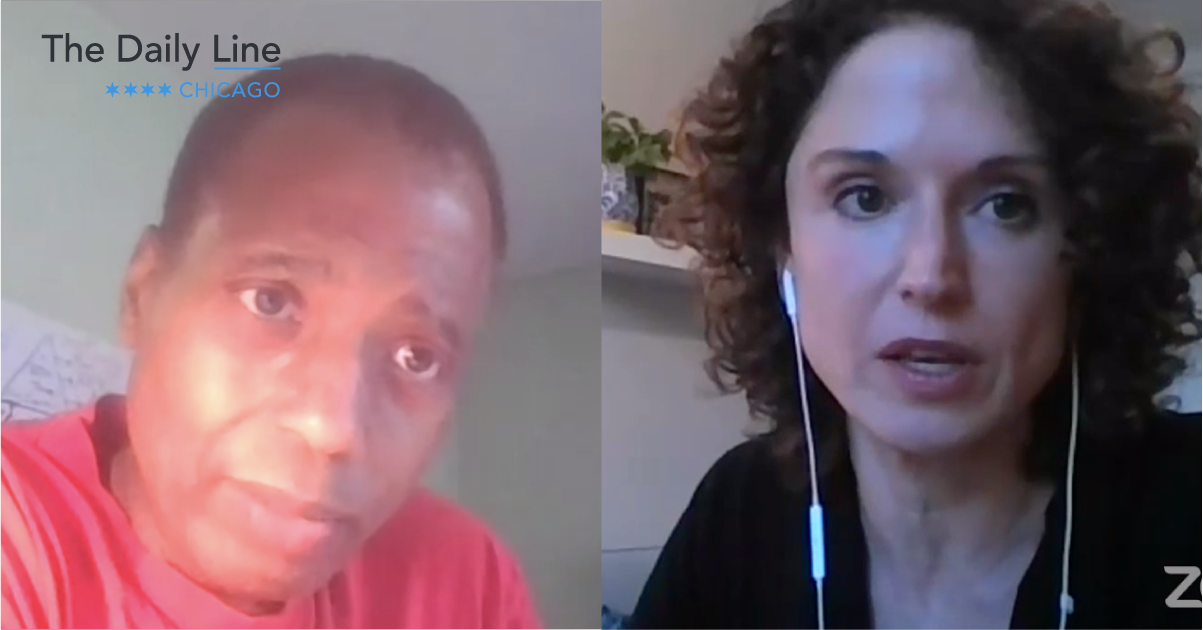
Chicago Housing Initiative executive director during a virtual news conference on Wednesday; Chicago Department of Housing Comm. Marisa Novara during a virtual committee hearing
A long-promised bid by Mayor Lori Lightfoot to overhaul one of the city’s signature affordable housing policies is set to meet its fate on Thursday, as stakeholders on all sides press to finesse last-minute concessions.
-
APR 15, 2021

A rendering of the first building proposed as part of the planned Lincoln Yards megadevelopment, viewed from the west. [Chicago Department of Planning and Development]
City planning officials are scheduled on Thursday to review plans for the first phase of construction at the 55-acre Lincoln Yards site, two years after the City Council blessed the overall project amid a storm of controversy and criticism.
Representatives of developer Sterling Bay will make a “courtesy presentation" to the Chicago Plan Commission during a 10 p.m. meeting on their plan to build a 9-story office building on “Parcel G.1” of the campus, but the commission will not take a vote on the matter. Department of Planning and Development staffers will decide whether to approve the sub-site plan after taking “comments from plan commissioners and the public into consideration,” a department spokesperson wrote in an email on Tuesday.
-
APR 15, 2021

Ald. Gilbert Villegas’ proposal to license tow truck operators stalled in committee Wednesday.
A proposal from Ald. Gilbert Villegas (36) to license towing companies in the city will sit in committee for at least one more month to allow for more discussion after the measure hit a wall on Wednesday.
Villegas told members of the City Council Committee on License and Consumer Protection during its Wednesday meeting that the ordinance (O2020-4817) he introduced last October to combat “rogue towers” has been “a labor of love.”
-
APR 15, 2021

City finance officials briefed aldermen on Wednesday on revenues and spending for the first two months of 2021.
Repaying more than $900 million in debt will likely be city budget and finance officials’ first priority for the estimated $1.9 billion in federal stimulus dollars Chicago stands to get from the American Rescue Plan, they said Wednesday.
Chicago Budget Director Susie Park and Chief Financial Officer Jennie Bennett briefed aldermen Wednesday on revenues and spending for the first two months of 2021 during a City Council Committee on Budget and Government Operations meeting. The presentation was described as the first quarterly report on the current year budget, but Park and Bennett only included data for January and February.
-
APR 14, 2021

Lincoln Towing, based at 4882 N. Clark St. in the 47th Ward, has kept its business license despite attempts by state regulators to shut it down.
Aldermen are poised on Wednesday to consider an ordinance designed to rein in towing companies that have long been accused of predatory or duplicitous behavior against drivers.
The City Council’s Committee on License and Consumer Protection is scheduled during its 2 p.m. meeting on Wednesday to consider an ordinance (O2020-4817) introduced late last year by Ald. Gilbert Villegas (36) that would require towing companies to apply for licenses with the city.
-
APR 14, 2021
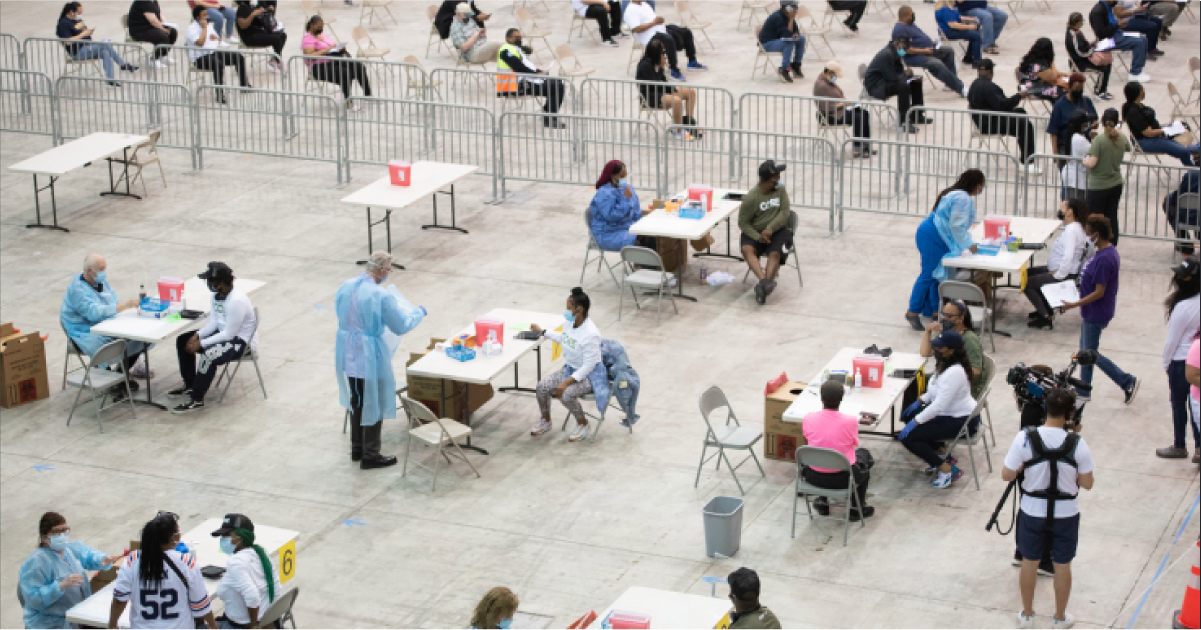
People gather to receive vaccines at the COVID-19 mass vaccination site at Chicago State University on April 7 [Colin Boyle/Block Club]
Aldermen swiftly and unanimously advanced a proposal by Mayor Lori Lightfoot on Tuesday designed to prevent workers from having to choose whether to keep their jobs or get a COVID-19 vaccine.
In addition to making it illegal for employers to punish workers who get shots during work hours, the ordinance (02021-1219) that cleared the City Council’s Committee on Workforce Development includes a handful of late revisions designed to sharpen the measure’s teeth.
-
APR 14, 2021

Aldermen approved an ordinance loosening restrictions on home businesses.
Aldermen gave unanimous support Tuesday to an ordinance designed to make it easier for entrepreneurs, many of whom have been hard-hit by the pandemic, to operate their business out of their homes.
The City Council Committee on Economic, Capital and Technology Development also approved three Class 6(b) tax incentive deals and nine reappointments to various Special Service Areas during its Tuesday meeting.
-
APR 14, 2021

Lakeview Pantry client Eustorgia Alcarav receives her first dose of Pfizer COVID-19 vaccine at the vaccination site next to Wrigley Field on April 5, 2021. [Colin Boyle/Block Club Chicago]
"As cases climb across the country, I encourage everyone to get vaccinated as soon as possible," Gov. JB Pritzker said.
CHICAGO — The state will send 50,000 doses of the Moderna and Pfizer vaccines to Chicago as the city suspends using its Johnson & Johnson doses.
The city and state announced Tuesday morning they’d temporarily halt vaccinating people with Johnson & Johnson doses “out of an abundance of caution.” The Centers for Disease Control and Prevention and the Federal Drug Administration are investigating if the doses are linked to reports of extremely rare but potentially dangerous blood clots found in a small number of women.
The pause is only expected to last several days, officials have said.
-
APR 13, 2021
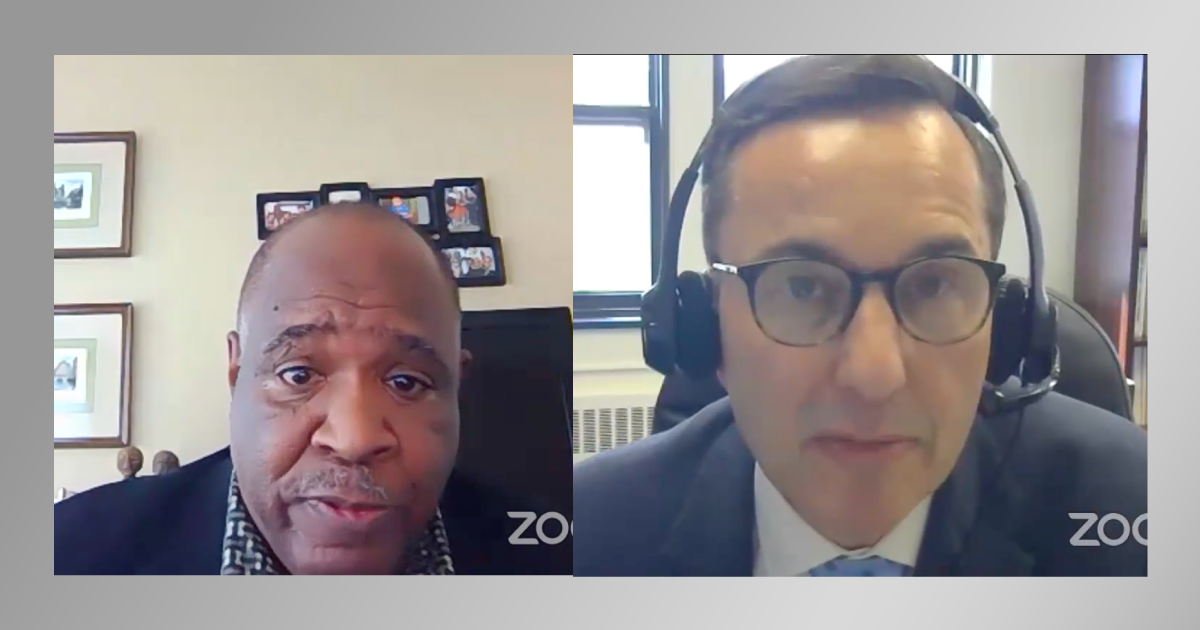
Horace Smith (left) and Steven Rothschild are among nine people nominated to the Chicago Board of Health.
Aldermen approved the appointment and reappointment of nine people to the city’s revamped Board of Health after grilling appointees on their stances on expanding mental health clinics, COVID-19 vaccinations and working as a “counterbalance” to the Chicago Department of Public Health.
The City Council Committee on Health and Human Relations during its Monday meeting also approved an ordinance advocates and aldermen say closes a loophole in a 2014 measure meant to ban so-called “puppy mill” dogs from being sold in Chicago, pushing the measure one step closer to council approval. Additionally, aldermen unanimously approved a resolution (R202184) condemning the remarks of U.S. Rep. Mary Miller from Jan. 5.
-
APR 13, 2021

Employers would have to compensate workers for time they spend to get COVID-19 vaccinations during the workday under an ordinance set for consideration Tuesday. [Colin Boyle/Block Club]
Aldermen are scheduled Tuesday to beef up COVID-19-related protections for workers, loosen restrictions on home offices and approve a pair of industrial tax breaks in parallel attempts to boost Chicago’s post-pandemic economic recovery.
The City Council Committee on Workforce Development is set at 11 a.m. Tuesday to take up Mayor Lori Lightfoot’s proposed ordinance (02021-1219) to ban employers from firing, demoting or otherwise punishing workers who take up to two hours off work to get a COVID-19 vaccination.
-
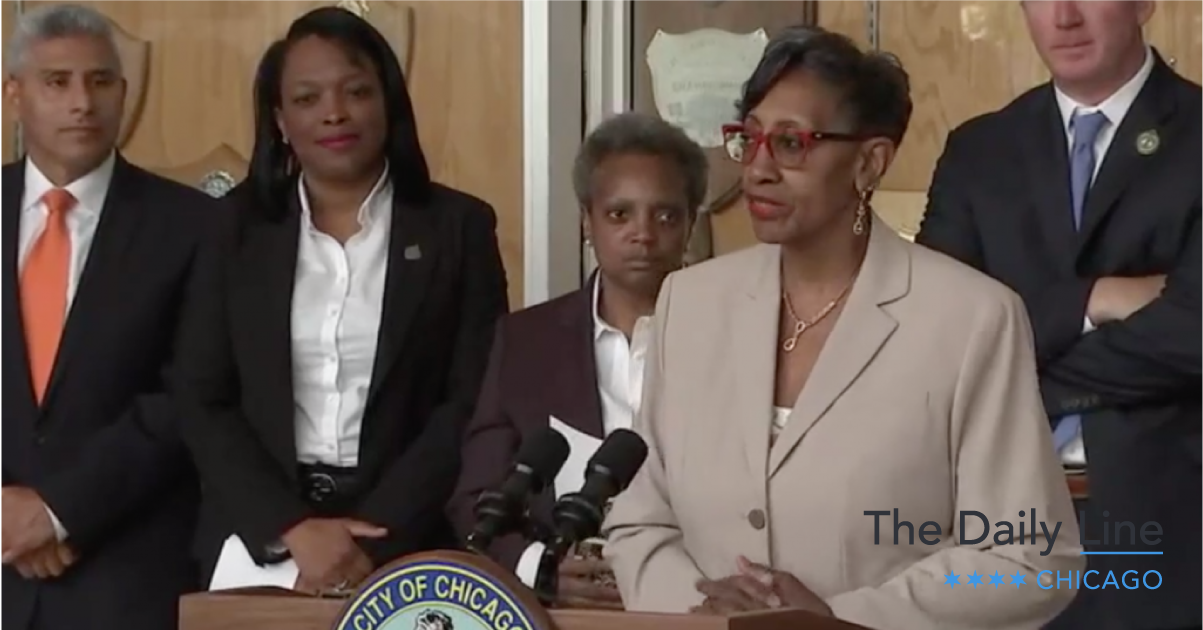
Ald. Carrie Austin (34) speaks during a 2019 news conference [Heather Cherone/The Daily Line]
Ald. Carrie Austin (34) must return an illegal donation she received in 2018 and pay a $5,000 fine or risk facing a stiffer penalty, the Chicago Board of Ethics ruled on Monday.
However, the “probable cause for a violation” notice, approved unanimously by the mayoral-appointed board, represents a fraction of the $145,000 fine the board had voted to impose earlier this year.
-
APR 12, 2021
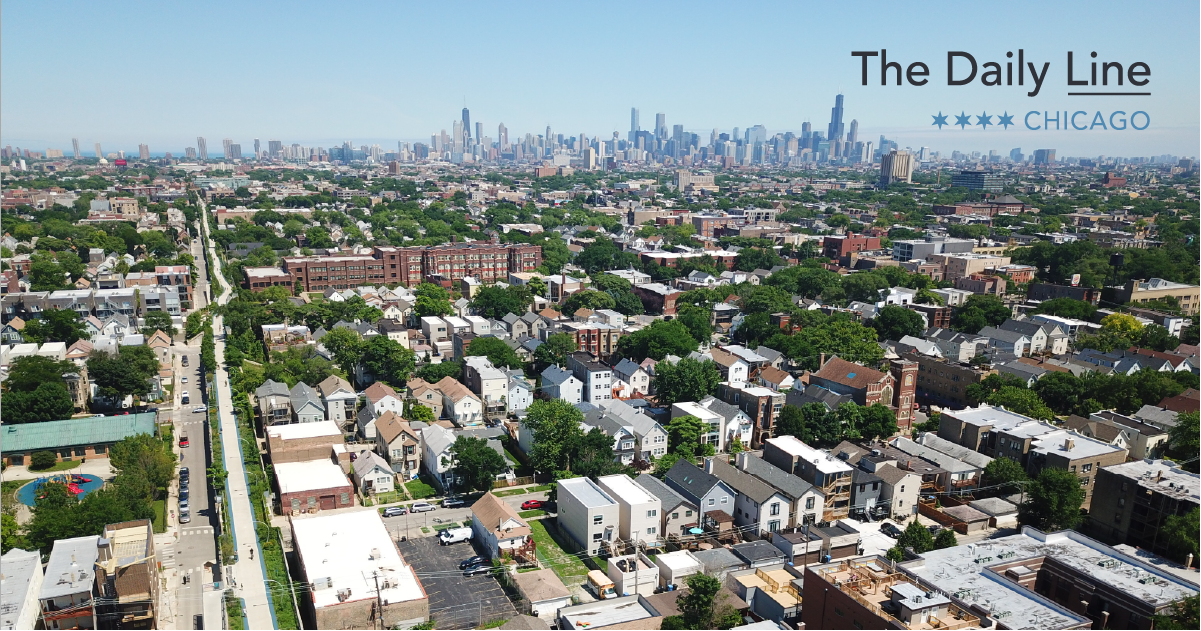
Small apartment buildings near the 606 Bloomingdale Trail in the Humboldt Park neighborhood [photo courtesy of Steven Vance]
Mayor Lori Lightfoot wants to root out systemic racism from Chicago’s housing landscape by encouraging construction of affordable new homes, reshuffling funding priorities and disrupting eviction patterns, according to a sweeping policy report published Friday.
The mayor’s Office of Management and Budget is set to hold a hearing at 5 p.m. Monday to delve into the details of the “Blueprint for Fair Housing,” a 67-page report that details eight goals to “address the City’s housing segregation, disparities in access to opportunity, and history of inequitable investment,” according to a Friday news release.
-
APR 12, 2021

Puppies advertised for sale by Pocket Puppies, one of three Chicago pet stores targeted by an ordinance set for consideration on Monday [Facebook/Pocket Puppies Boutique]
After months of animal welfare advocates urging for a vote — including during a meeting on reparations for Black Chicagoans — aldermen are scheduled Monday to consider an ordinance that would ban the for-profit sale of dogs, cats and rabbits in an attempt to put so-called “puppy mills” out of business
-
APR 09, 2021


