


Chicago News
-
FEB 18, 2020

UNLOCKED
A Chicago polling place. [Heather Cherone]
In 1995, candidates running for mayor of Chicago needed to gather 2,261 nominating signatures from residents to earn a spot on the ballot. But in the most recent election, candidates were required to collect 12,500 signatures just to be considered.
In the 2019 mayoral election, over 20 candidates vied to get the signatures within the 90-day window to secure their spot on the ballot, and many of them succeeded — at first. But then, rival candidates became embroiled in a bitter legal struggle to knock each other off the ballot by calling into question the validity of the signatures on the petitions. -
Mayor Lori Lightfoot vowed Friday to end “poverty in Chicago in a generation,” saying that government must act boldly to undo the policies it created that force tens of thousands of Chicagoans to struggle daily to find food, clothing and shelter.
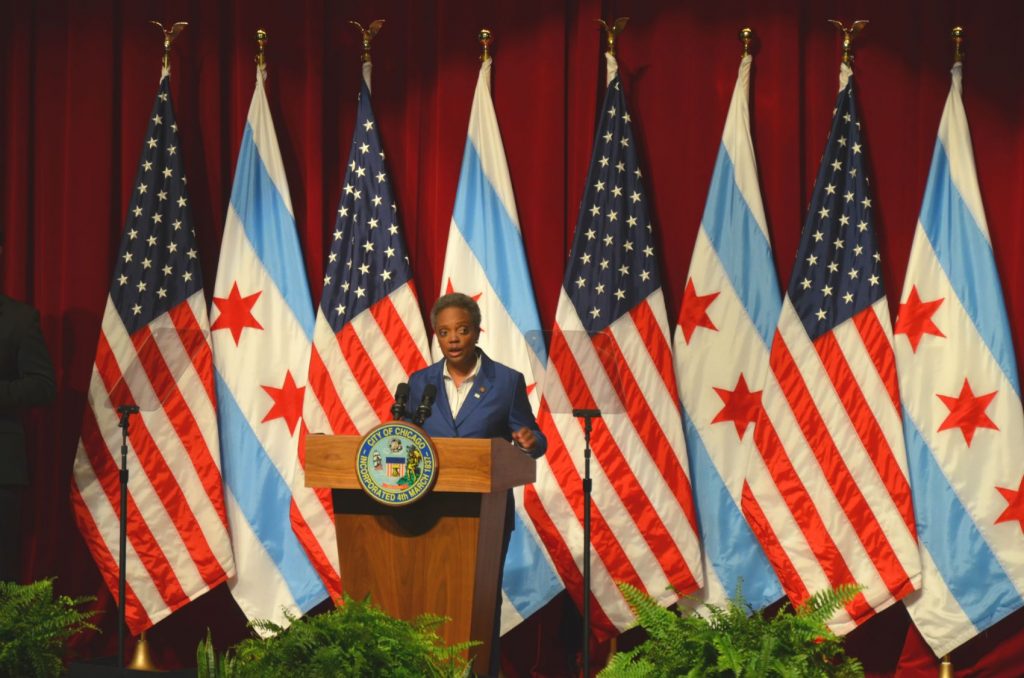 “I am called to this challenge because if I look away, I am denying a part of myself, a part of my story, my history," Mayor Lori Lightfoot said. [Hannah Alani/Block Club Chicago]
“Poverty is killing us,” Lightfoot said. “Literally and figuratively killing us. All of us.”
-
FEB 17, 2020
 As many as nine new recreational cannabis dispensaries could clear a crucial regulatory hurdle during a special meeting of the Chicago Zoning Board of Appeals scheduled for March 6, potentially almost doubling the number of pot shops allowed to operate in the city, according to officials.
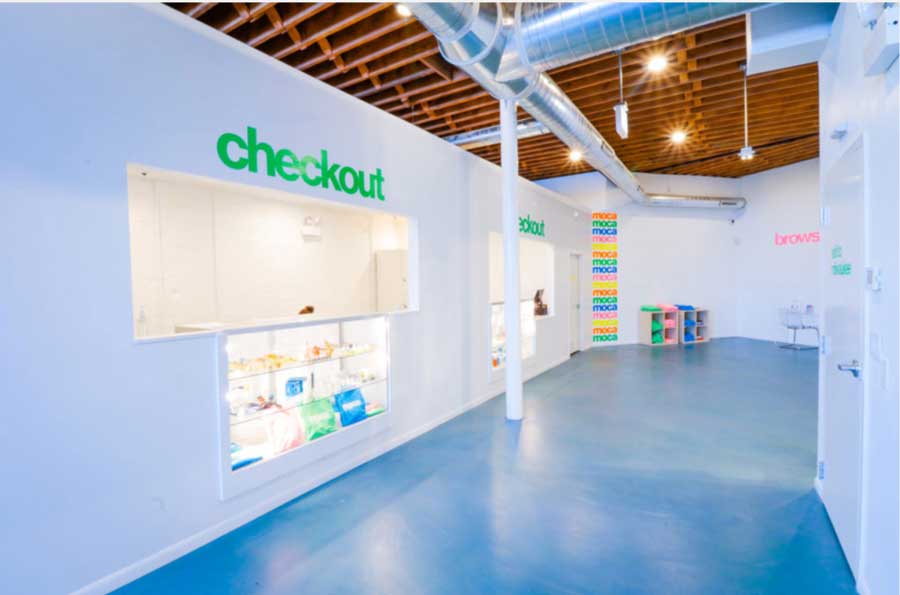 The interior of the MOCA Modern Cannabis dispensary. [Provided]
-
-
FEB 14, 2020
Ald. Tom Tunney (44) said he will delay introducing more than 200 proposed edits to the Chicago Construction Code following accusations from Mayor Lori Lightfoot’s two most persistent City Council critics that the mayor intentionally tucked substantive changes into what her administration billed as “technical corrections.”
-
Brunch aficionados — and soccer fans — are one step closer to no longer having to suffer through booze-free Sunday mornings.
The City Council’s Committee on License and Consumer Protection unanimously advanced the measure (O2020-123) sponsored by Alds. Brendan Reilly (42), Michele Smith (43), Tom Tunney (44) and Brian Hopkins (2) to permit restaurants that are allowed to sell alcohol to start pouring beer, wine and spirits at 9 a.m. Sunday rather than waiting until 10 a.m.
Smith said the proposal was prompted by requests from restaurants that wanted to serve soccer fans, who are often up early on Sunday mornings to watch their favorite European teams.
The measure would prohibit restaurants from serving alcohol between 2 and 7 a.m. Mondays through Saturdays and from 3 to 9 a.m. Sundays — provided that between 3 and 11 a.m. Sundays the sale of liquor is “incidental” to the serving of food.
A spokesperson for the Hospitality Association of Chicago said the measure was a “win for Chicago brunch customers and the city’s many brunch spots.”
In October, the City Council passed a law allowing more grocery stores to start selling beer, wine and spirits at 8 a.m., rather than at 11 a.m., on Sundays.
Aldermen also advanced a measure that would allow cab drivers who have their licenses revoked by the city to appeal that decision to Business Affairs and Consumer Protection Comm. Rosa Escareno.
The proposal (S2020-101), which would also apply to chauffeurs, comes after Mayor Lori Lightfoot promised to help Chicago’s beleaguered taxi cab industry, which has shrunk as ride-hailing services have swelled in popularity.
In other action, the City Council’s Committee on Pedestrian and Traffic Safety advanced a measure (O2020-122) from North Side Alds. Michele Smith (43) and Tom Tunney (44) that would allow nonprofit groups to purchase one-day permits to allow their employees to park in zones reserved for residents.
Final votes on the measures are set for Wednesday. -
A measure that would limit the ability of city officials and employees to work outside City Hall is set for a vote Thursday, marking the second time in as many months that aldermen have considered tightening the city’s ethics laws.
 A red-light camera. [DNAinfo Chicago]
-
FEB 13, 2020
Aldermen are scheduled on Thursday to advance a proposal for what could be the city’s first-ever legally sanctioned cannabis growing site, even as applications for several new pot dispensaries remain in regulatory limbo.
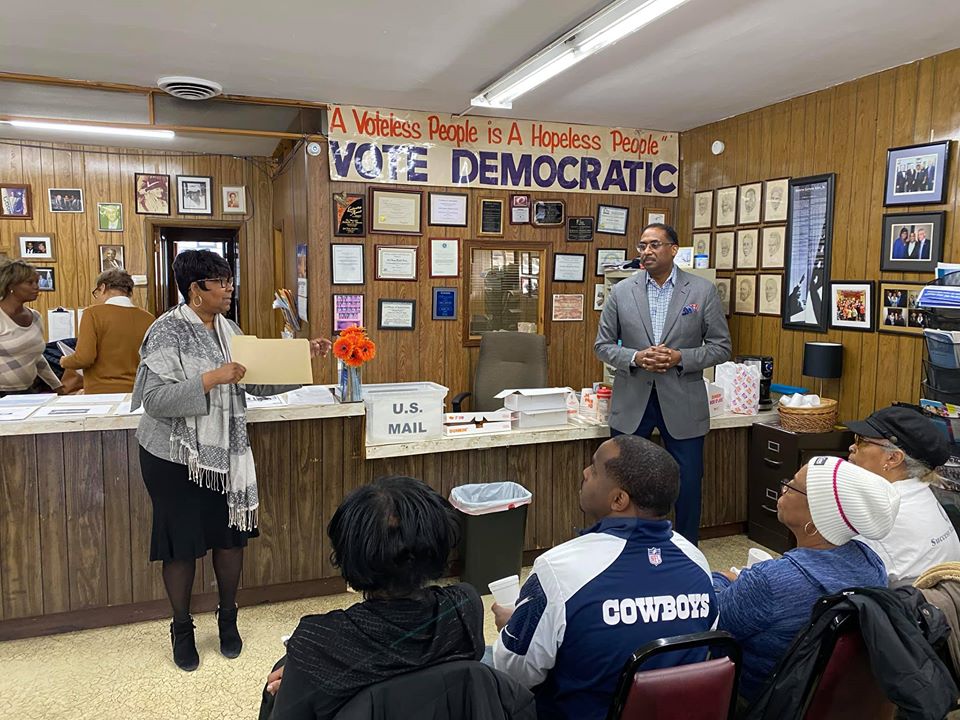 Ald. Michelle Harris (8) discusses plans for a cannabis cultivation facility in her ward at a community meeting. [Facebook]
-
-
FEB 12, 2020
-
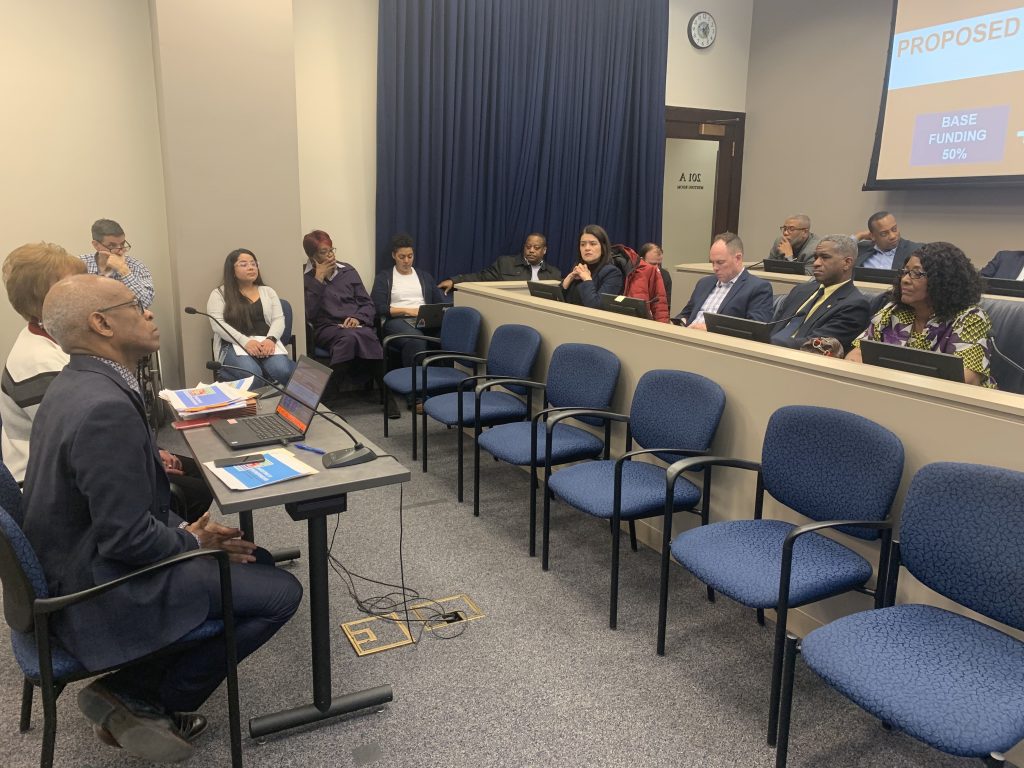 Planning and Development Comm. Maurice Cox urges aldermen to approve changes to the Neighborhood Opportunity Fund. [Heather Cherone/The Daily Line]
Mayor Lori Lightfoot’s plan to revamp the Neighborhood Opportunity Fund designed to reverse decades of disinvestment in the South and West sides cleared a key city panel Tuesday.
Lightfoot’s proposal (O2020-103) would allow the city to reimburse 50 percent of a project’s construction expenses. The current rules cap that amount at 30 percent for grants of $250,000 or less, even though a project can be reimbursed for 50 percent of the cost of rehabilitating an existing building under the current rules.
Related: After Emanuel’s ‘smoke and mirrors,’ Lightfoot claims Neighborhood Opportunity Fund as her own
The proposal would also give businesses that receive grants access to a pool of technical advisers to help them to bring together the capital and manage contractors.
The City Council’s Committee on Economic, Capital and Technology Development unanimously approved the changes, which head to final vote at the full City Council meeting set for Feb. 19.
Lightfoot has already moved to allow grants from the Neighborhood Opportunity Fund to be used to cover 100 percent of a project’s total cost — if both the owner and their employees are residents of the South or West sides. Otherwise, the grant is capped at 65 percent of total costs.
Ald. Walter Burnett (27) praised Planning and Development Comm. Maurice Cox and Lightfoot for the changes.
“I commend you for taking something that is good and making it better,” Burnett said. “It is like the Robin Hood thing without stealing.”
Mayor Rahm Emanuel created the Neighborhood Opportunity Fund in 2016 in an attempt to capitalize on the boom Downtown and in the West Loop by giving developers the green light to build taller and denser projects — for a price.
In addition, applicants can ask for as much as $25,000 before the project breaks ground to pay for appraisals, environmental surveys and architectural services. Under Emanuel, funding was limited to projects that were under construction.
Lightfoot has also changed the rules to allow more projects to qualify for grants up to $250,000 in order to reduce the need for bridge loans during construction. The new rules also permit the funds to be held in escrow for large projects, in an effort to help entrepreneurs qualify for other loans.
When Lightfoot took office, the Neighborhood Opportunity Fund had $57 million, but Emanuel awarded just $890,000 in grants, as the program was mired in red tape and confusing regulations.
In all, $202 million has been committed to the fund, with $53.8 million coming just from the approved but not yet started redevelopment of the River District/Tribune properties.
Lightfoot has also earmarked $30 million from the Neighborhood Opportunity Fund to be used by the Invest South/West initiative, which is designed to boost 10 neighborhoods that each have “at least one well-developed community plan with a commercial component” and “at least one active commercial area at a specific node or intersection,” according to the Department of Planning and Development.
Invest South/West will focus on Austin, Humboldt Park, North Lawndale, New City, Greater Englewood, Auburn Gresham, South Shore, South Chicago, Roseland/Pullman and the Quad Communities of Bronzeville, Oakland and Kenwood, according to the mayor’s office.
South and West side businesses and entrepreneurs can apply online for $10 million in grants through Feb. 29, as part of the first application period since Lightfoot took office. Officials can award grants of up to $250,000, while bigger projects have to win approval from the City Council.
Those who apply should get a decision by the end of March, with another application period set to open in July, according to the mayor’s office. -
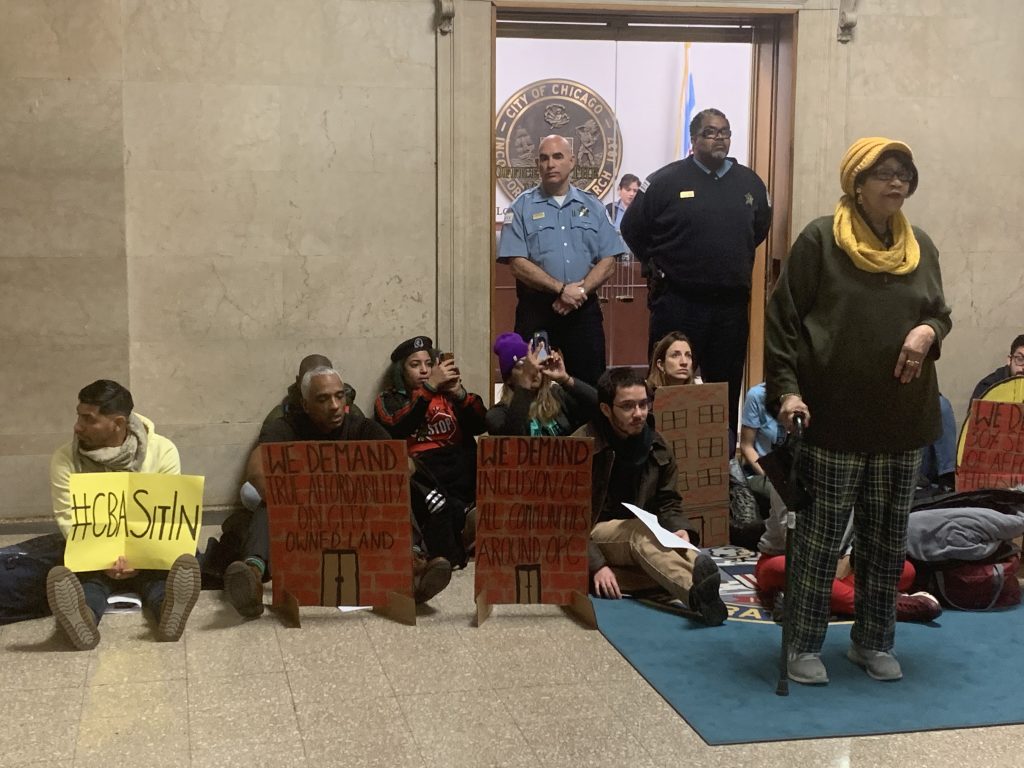
Woodlawn resident Patricia Hightower addresses the crowd during the sit-in outside the mayor's office. [Heather Cherone/The Daily Line]
Critics of a city-crafted plan designed to prevent longtime residents from being pushed out of gentrifying parts of Woodlawn near the planned Obama Presidential Center blocked the main entrance to Mayor Lori Lightfoot’s office Tuesday.
The protest was the latest effort by the Obama CBA Coalition, which comprises seven groups, to spur Lightfoot to take immediate action to protect low-income residents who fear the Obama Center will ratchet up housing prices and leave them homeless. -
Chicago housing officials spent less than $800,000 to subsidize apartments to make them affordable to low- and moderate-income Chicagoans between July and September 2019, a sharp drop-off as compared with previous months that could keep the city from meeting its self-imposed goal.
 [ShockinglyTasty]


