Chicago News
-
Municipal election turnout through Monday. [Source: Chicago Board of Election Commissioners]
Go vote, Chicago. The weather is still going to be on the chilly side for April, with a high of 54 degrees and a 20 percent chance of rain, according to the forecast, so grab a jacket and an umbrella as you head out to your polling place. Not sure where to vote, or for whom? Check chi.vote, which has you covered.- Early vote still trailing — Chicago Board of Election Commissioners Chairwoman Marisel Hernandez said officials are keeping their fingers crossed that the early vote rates meet or exceed February and April 2015 levels, even though they have so far fallen short. Those who plan to vote by mail should ensure their ballots are returned and postmarked by April 2, or turn it into election judges at their polling place, Hernandez said. In the first round of voting, 2,060 ballots were rejected, most often for being postmarked too late. Nearly 60,000 voters applied to vote by mail in 2019, compared to 42,000 voters in 2015, according to election data. Chicago has 1.59 million registered voters, 10.47 percent more than in April 2015 runoff. Although voters age 25 to 34 make up the biggest chunk of voters, they have the second lowest turnout in early voting in the city. Voters age 55 to 74 lead in early voting and voting by mail, officials said. A total of roughly 564,600 Chicagoans would have to vote to exceed February’s turnout, Hernandez said.
- What’s next for Vallas — Former Mayoral candidate and former CPS CEO Paul Vallas has been elected to the board of the Museum of Broadcast Communications, which is rolling out a new program for students on news analysis and literacy in 2020. Board Chairman Larry Wert, Tribune Co.’s president, said Vallas “will lend his expertise and resources to further our goals of reaching students and teaching them the intricacies of the media and news,” according to a statement. “It is a privilege and a pleasure to be joining the board of such a revered enterprise,” Vallas said. “I look forward to helping advance the Museum’s mission and contribute to its growth.”
-
APR 02, 2019

 Concerned that next year’s Census will miss Chicago’s hard-to-count populations, including African Americans, Latinos, Asian Americans, immigrants and non-native English speakers, homeless individuals, children younger than 5 and the elderly, Mayor Rahm Emanuel formed a new committee to keep tabs on the effort. Meanwhile, alderman OK’d two 11th Ward tax breaks.
-
Chicago will make history Tuesday, as voters choose between Toni Preckwinkle or Lori Lightfoot, the last two candidates standing after the free-for-all touched off by Mayor Rahm Emanuel’s announcement he would not run for a third term.
 Chicago's hottest fashion accessory. [DNAinfo/Alex Nitkin]
With an African American woman certain to win only the fourth open-seat contest for mayor in the last century, Chicago is entering a new epoch — one full of challenges that promises to put an end to business as usual at City Hall.
Here’s what the The Daily Line team will be watching as results roll in after the polls close at 7 p.m.
Were the polls in the mayoral race accurate?
Since the first round of voting, public polls have told a consistent story: Lightfoot is set to cruise to a convincing victory over Preckwinkle and become Chicago’s first gay mayor.
That prompted the Tribune’s editorial page to encourage voters to turn out for Lightfoot by a convincing margin to give Lightfoot a mandate to make good on her promises to fumigate City Hall, even as a federal corruption investigation continues behind the scenes.
Related: Dump aldermanic prerogative, clerk, treasurer, infrastructure trust: Lightfoot
If Preckwinkle does lose on Tuesday, she won’t be out of a job. Instead, she’ll keep her position as Cook County Board president and the chair of the Cook County Democratc Party — potentially forcing the two former rivals to work together for much of the next four years.
The Rev. Jesse Jackson may have had that outcome in mind when he pressed the two to agree to a post-election unity event — which will no doubt be tense after the deeply negative and bruising runoff campaign in which Preckwinkle cast Lightfoot as a wealthy corporate lawyer and Lightfoot painted her rival as a compromised product of the Chicago political machine.
Whomever wins will face a city budget swimming in red ink — thanks to the city’s massive pension debt — and new contracts to negotiate with teachers, police officers and firefighters.
What will the mayor’s relationship look like with the new City Council?
Although Chicago’s City Council was designed to wield the lion’s share of power at City Hall, it has served as a rubber stamp for decades — first under former Mayors Richard J. Daley and Richard M. Daley and then under Emanuel, who has given his aldermanic allies several hundred thousand dollars in an attempt to shape the city’s political future after his departure.
Related: Aldermanic alliances mapped
Regardless of whether Preckwinkle or Lightfoot emerges victorious Tuesday night, the new mayor will have to quickly figure out the new political landscape at City Hall — and prepare to figure out how to push her agenda through.
Both Lightfoot and Preckwinkle have said they will not pick committee chairmen but will work with the council to suss out new leadership. The two part on other ethics reforms — Lightfoot has said she will work to end aldermanic prerogative, which she blames for fostering the culture of corruption that has convicted 30 aldermen of corruption since 1973, ban aldermen from holding outside employment, and enforce term limits.
Preckwinkle, a former alderman, has leaned toward keeping the system much the same.
The next mayor will also have to cope with a police department under a consent decree to reform, as well as an activist community — nearly all of whom who endorsed Preckwinkle over Lightfoot, the former head of the Chicago Police Board — demanding rapid change.
Treasurer’s race: Conyears-Ervin v. Pawar
In the runoff for treasurer, Ameya Pawar, who served two terms as 47th Ward alderman, faces state Rep. Melissa Conyears-Ervin.
Pawar’s proposal to create a public bank has dominated much of the conversation around the race. Under his proposal, the bank would be limited to “refinancing student loans, funding affordable housing and banking cannabis.”
By contrast, Conyears-Ervin’s campaign has focused on a message of “accountability, transparency and efficiency” while highlighting the support of the Chicago Teachers Union, the Chicago Federation of Labor as well as Secretary of State Jesse White, U.S. Rep. Danny Davis and more than two dozen aldermen.
Conyears-Ervin is married to 28th Ward Ald. Jason Ervin, who won re-election in April. He is the vice chairman of City Council’s Budget and Government Operations committee.
If Pawar wins, he would be the first Asian American elected to citywide office — and the first non-African American since 1999, when former Treasurer Miriam Santos resigned in disgrace as part of a corruption scandal. If Conyears-Ervin wins, Chicago will have three women of color serving in citywide office. Clerk Anna Valencia's bid for a full term was uncontested in February.
Pawar’s decision to leave the City Council after two terms set the stage for a runoff between Michael Negron, who has the support of his former bosses Emanuel and Massachusetts Sen. Elizabeth Warren, who tweeted her support Monday, and Matt Martin, an attorney in the Illinois Attorney General’s office who has the backing of the Chicago Teachers Union.
Political dynasties in flux
As the Laurino era ends jn the 39th Ward — where Ald. Margaret Laurino (39) will retire and be replaced by Samantha Nugent or Robert Murphy — a new dynasty may take root in the 30th Ward.
Jessica Washington Gutiérrez is challenging Ald. Ariel Reboyras, a close ally of Emanuel.
Gutiérrez, the daughter of former U.S. Rep. Luis Gutiérrez, has promised to be a more progressive alderman would be one of a number of millenials that could be elected to the City Council on Tuesday.
In the 33rd Ward, Ald. Deb Mell — who replaced her father, former Ald. Dick Mell — is facing Rossanna Rodríguez-Sánchez, who could be one of five members of the Chicago chapter of the Democratic Socialists of America to join Ald. Carlos Ramirez-Rosa (35) on the City Council.
Veteran aldermen, Emanuel allies at risk
In addition to Reboyras, who as chairman of the Public Safety Committee helped shepherd the mayor’s police reforms through the City Council after the dashcam video of Laquan McDonald’s murder roiled the city, several of Emanuel’s other allies faced tough run offs.
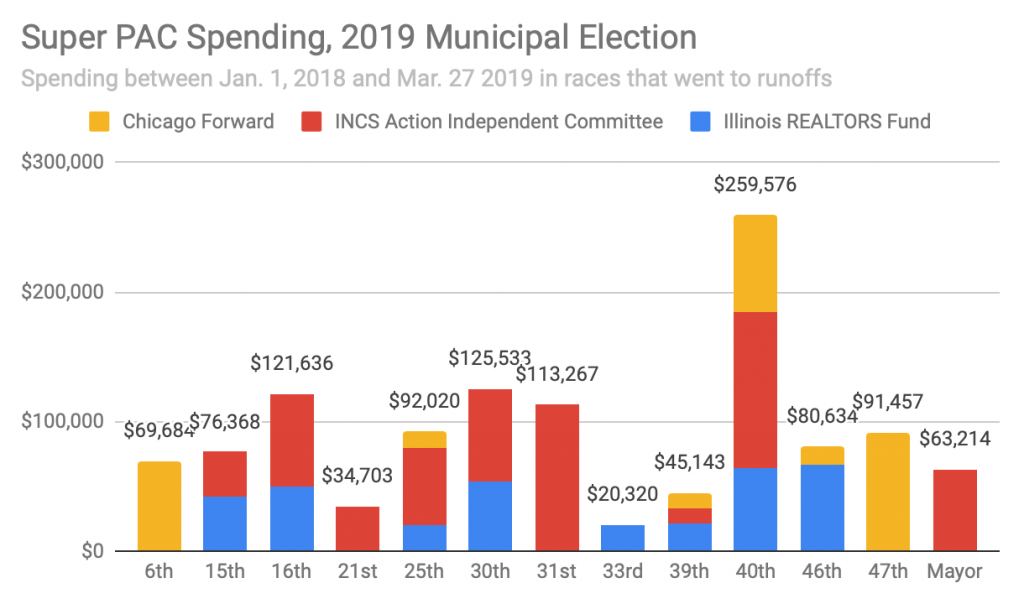
In the 40th Ward, Ald. Pat O’Connor faces a runoff against DSA-endorsed Andre Vasquez — the first since he was elected to the City Council in 1983. O’Connor has benefitted from more than $225,000 in spending by Super PACs aligned with Emanuel, charter school backers and Realtors.
Super PACs formed by charter school backers, Realtors, Rahm’s allies spending big bucks in last days of campaign
Other Emanuel allies at risk are:
- 5th Ward Ald. Leslie Hairston, who faces activist Will Calloway
- 6th Ward Ald. Roderick Sawyer, who faces accountant Deborah Foster Bonner
- 15th Ward Ald. Raymond Lopez, who faces Chicago Police Officer Rafael Yañez
- 21st Ward Ald. Howard Brookins, who faces retired city inspector Marvin McNeil
- 43rd Ward Ald. Michele Smith, who faces former Emanuel aide Derek Lindblom
- 46th Ward Ald. James Cappleman, who faces scientist Marianne Lalonde
20th, 25th Wards set for new aldermen after corruption allegations
Two wards at the center of corruption allegations will get new aldermen.
In the 20th Ward, DSA-endorsed Jeanette Taylor faces Nicole Johnson to take the seat left vacant in March when former Ald. Willie Cochran pled guilty to wire fraud after he was indicted for extortion and bribery.
In the 25th Ward, DSA-endorsed Byron Sigcho-Lopez faces nurse Alex Acevedo, whose father is former state Rep. Eddie Acevedo.
Progressive aldermen in 16th, 31st Wards face challenges
In the 16th Ward, Ald. Toni Foulkes faces Democratic Committeeperson Stephanie Coleman, the daughter of former Ald. Shirley Coleman.
In the 31st Ward, Ald. Milly Santiago faces Felix Cardona, a former aide to former Assessor Joe Berrios. In 2015, Santiago defeated longtime Berros’ ally Ald. Ray Suarez by 79 votes.
Veterans exit
Chicago City Council lost 132 years of combined experience in retirements and defeats in the first round — 155 years if you count 23rd Ward Ald. Mike Zalewski's early exit and replacement by Ald. Silvana Tabares.
Aside from younger members like Ald. John Arena (45), Ald. Proco Joe Moreno (1), Ald. Ameya Pawar (47) and Ald. Willie Cochran (20), more senior members like Ald. Margaret Laurino (39), Ald. Danny Solis (25), Ald. Joe Moore (49), and Ald. Ricardo Muñoz (22) are also exiting.
City Council has several senior members still standing. Aside from a weakened Ald. Ed Burke (14), first elected in 1969, Black Caucus members Ald. Carrie Austin (34), first elected in 1994, Ald. Walter Burnett Jr. (27), first elected in 1995, Ald. Anthony Beale (9), first elected in 1999, and Ald. Emma Mitts (37), first elected in 2000, have the most seniority. Other senior members Ald. Pat O’Connor (40), first elected in 1983, and Ald, Leslie Hairston (5), first elected in 1999, are facing stiff challenges.
Essential reads as Chicago votes
Issues facing the next administration:- Is Chicago’s legacy of segregation causing a reverse Great Migration? [Reader]
- Why Chicago Police Reform Could Hinge On This Expired Contract [WBEZ]
- Emanuel Soft on Chicago Polluters Despite Tough Talk [BGA]
- Diagnosing Chicago’s affordable housing shortage [The Daily Line]
- Chicago police solve one in every 20 shootings. Here are some reasons why that’s so low. [Tribune]
- My house is worth how much? Fixes to tax assessments bring dramatic changes for Chicago homeowners [Tribune]
- Chicago spent more than $113 million on police misconduct lawsuits in 2018 [Reporter]
- With CPS poised to release 2018-19 enrollment data, ‘astronomical’ decline expected to continue [The Daily Line]
Where Lightfoot and Preckwinkle differ:- Lori Lightfoot And Toni Preckwinkle Want An Elected School Board — But The Similarities End There [WBEZ]
- The Candidates Agree on Most Issues. Rent Control Isn't One of Them [Chicago Mag]
- Side-by-side: Lori Lightfoot’s and Toni Preckwinkle’s plans for Chicago [Sun-Times]
- How mayoral candidates Lori Lightfoot and Toni Preckwinkle have ducked details on Chicago's financial woes [Tribune]
- Preckwinkle, Lightfoot Talk Consent Decree, Policing Reform at Campus Forum [Maroon]
- Where do Lori and Toni part ways on transportation issues? [Reader]
- In Tribune meeting, Lori Lightfoot and Toni Preckwinkle clash over power of aldermen, City Hall corruption [Tribune]
City Council:- Veterans day or heavyweight prize fight? Longevity vs. change in ward races [Sun-Times]
- Runoff to the Finish [South Side Weekly]
- Super PACs formed by charter school backers, Realtors, Rahm’s allies spending big bucks in last days of campaign [The Daily Line]
- Unions contributed more than $9.7M to candidates since August: records [The Daily Line]
- Sawyer vows to make his case to voters after being forced into runoff by challenger [The Daily Line]
- As Laurino era ends, Murphy, Nugent vie for 39th Ward seat on the City Council [The Daily Line]
- Jeanette Taylor, Nicole Johnson Set To Advance To April 2 Runoff In 20th Ward Race To Replace Cochran [Block Club Chicago]
- 25th Ward Candidates Trade Jabs On Campaign Donations, Voter Fraud Investigation At Heated Pilsen Debate [Block Club Chicago]
- More money no problems [Reader]
- In Fight For 40th Ward Seat, Ald. Pat O’Connor And Andre Vasquez Trade Barbs Over Each Other’s Past [Block Club Chicago]
- In Lakeview, Cappleman And Lalonde Make Their Case To Condo Dwellers, Showing Divide In Policy — And The 46th Ward [Block Club Chicago]
- Hundreds Flock To Davis Theater To Hear 47th Ward Candidates Debate Affordable Housing, Taxes [Block Club Chicago]
-
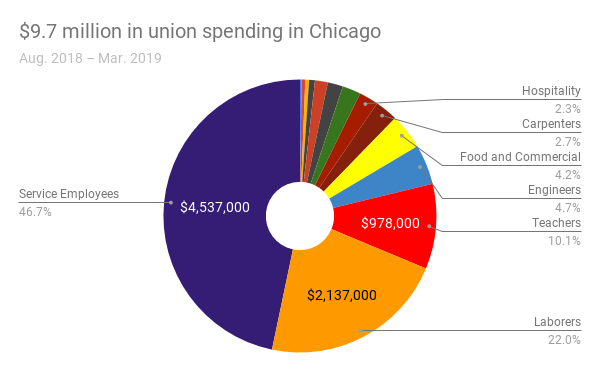
Chicago’s biggest and most politically active labor organizations spent approximately $9.7 million to sway voters, with various SEIU locals and associated political action committees accounting for close to half that amount in the past eight months, according to records filed with state officials.
-
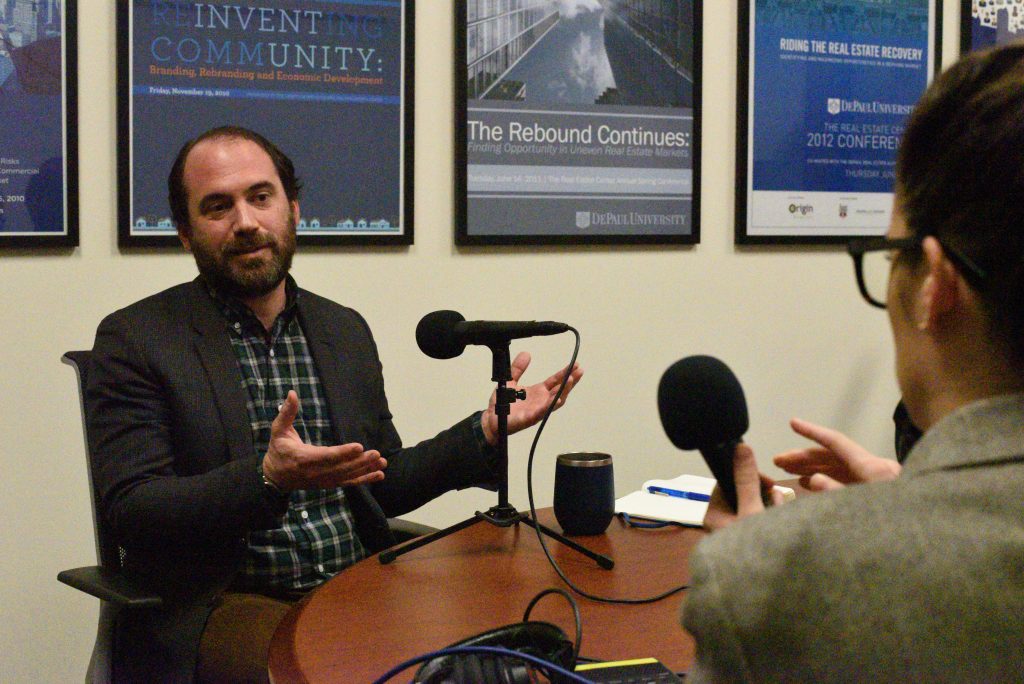 Geoff Smith, the executive director of the of The Institute for Housing Studies at DePaul University, speaks to A.D. Quig of The Daily Line.
One of Chicago’s experts on housing, gentrification and displacement lives at the heart of the debate — in Logan Square, about a block away from The 606 trail, which touched off a real estate boom after being transformed from a defunct railroad track.
“I’d like to say I was very prescient in my housing decision, but I wasn’t,” Geoff Smith, the executive director of The Institute for Housing Studies at DePaul University said on the latest episode of The Daily Line’s Aldercast podcast.
[audio mp3="http://thedailyline.net/wp-content/uploads/2019/03/Smith-final_mixdown.mp3">[/audio]Podcast: Play in new window | Download Subscribe: Apple Podcasts | Android | RSS
Smith went looking for “someplace affordable and interesting,” bought in 2006 and promptly faced the housing crash and found himself underwater on his mortgage.
The area is now one of the city’s hottest real estate markets, and prices are high along one of its main amenities, the 606, which is set to be extended as part of the Lincoln Yards development.
“Having had a front row seat to that whole process has been both professionally and personally interesting,” Smith said.
“Do I consider myself a gentrifier in Logan Square? I mean, some days maybe, some days not, because I’ve been there for a long time. I don’t know, it’s sort of a complicated question,” Smith said, adding that being a good, engaged neighbor can make a difference.
The institute’s 2016 analysis of the trail’s impact found buyers west of Western Avenue were “willing to pay a 22.3 percent price premium for properties within one-fifth of a mile of the trail, which translated to more than $100,000 of the area's average 2015 sales price.”
Several other neighborhoods are facing displacement pressure, the institute found. Not only do individuals face being priced out by buyers lured by new, expensive developments like Lincoln Yards and amenities like the 606, but homeowners are also fleeing Chicago because of disinvestment in their neighborhoods.
It’s a problem the new mayor and the City Council will have to grapple with in the years to come – here are five takeaways:
A grain of salt needed — A recent study and Crain’s headline, “Gentrification not a big issue in Chicago,” was the talk of the housing world this past week, Smith said. “The study itself, I think, has some problems, especially as it relates to Chicago,” he said. The study’s social and economic data were gathered under the U.S. Census American Community Survey program, covering the period starting in 2000 and until 2009-2013, “The bottom of the market, essentially,” Smith says. It only captures the beginning of Chicago’s recovery after the recession. “It’s old data that doesn’t capture a lot of the key changes that are happening in the city.”
Displacement v. gentrification — “It’s a spectrum of sorts,” Smith said of the difference between the two oft-used terms. “Gentrification is the investment in a place that causes property values — it causes change in the neighborhood that’s derived from that increased investment in the neighborhood. Displacement is the actual push, the market forces that might push out folks who’ve lived there for a long time.” While some neighborhoods like Logan Square and Pilsen have seen residents pushed out by rising values, “in Chicago you’ve also got this almost other bigger effect of displacement that’s a product of disinvestment,” Smith said. That is occurring on Chicago’s West and South sides, which have seen population losses. The institute built a map to serve as a leading indicator to warn when displacement might occur in Chicago neighborhoods. “We’re trying to look at the market, look at the demographics of a neighborhood and say, ‘Here are a mix of conditions that might help us get ahead of this type of displacement, gentrification if you’re going to build a new 606, or a new kind of big place-based strategy or built environment type project.’” Two projects housing activists are watching closely — the Paseo Trail and the Obama Presidential Center.
Affordable housing requirements for the next Lincoln Yards — “The big debate around Lincoln Yards was how much affordable housing to build on site. When you’re building an entire neighborhood,” the city’s affordable housing requirements ordinance might not be the best vehicle, Smith said, since the ordinance “was designed for single developments where you’ve got a few hundred units, maybe at most. This is thousands and thousands of units. I do think that, especially when city subsidy like [funds from tax-increment financing] money is involved,” requiring a “substantial portion” of affordable units on site would have helped create a more inclusive neighborhood, rather than one fully “oriented to higher income households.” Aldermen and Lincoln Yards developer Sterling Bay ultimately struck a deal to double the number of planned on-site affordable units from 300 to 600. Of the 6,000 apartments, condominiums and townhomes planned for Lincoln Yards, 1,200 must be set aside for low- and moderate-income Chicagoans. Sterling Bay also plans to pay $39 million into the city’s low-income housing trust fund.
How to tailor rent control for Chicago — While legislators in Springfield saw proposals to lift the state’s ban on rent control swatted down, some organizers and voters supportive of rent control measures are unlikely to drop the issue. “For me, at least, I have a lot of questions about how rent control can be applied in Chicago,” Smith said. It’s a complicated proposition that would deserve a unique ordinance, but “I understand it’s appeal, because when you think about the breadth and the size of the affordable housing challenge, no one solution is ever really going to cut it.” Smith has concerns — chief among them how rent control can apply in a city with as diverse a housing stock supply as Chicago. Cities with rent control usually face a uniform rise in values and rents across the board. There are many parts of Chicago where rising housing costs are not the challenge, disinvestment is, Smith said. “Is that going to inhibit investment, potentially, in other parts of the city? You can’t just target it to one neighborhood, it has to cover the entire city, it has ripple effects” on the broader market.
Where have all the two flats gone? — Chicago’s iconic two flats — a key source of affordable housing — are disappearing, Smith said. Preserving those homes is one key plank of maintaining the city’s affordable housing stock. In some neighborhoods, like North Center, Lincoln Square and Lakeview, two- to four-unit buildings are being converted into single family homes. In others, including on the South and West Sides, those homes are deteriorating, while new ones aren’t being built, Smith said. Part of the problem lies with banks — both single family homes and large multi-unit apartment buildings are relatively straightforward to finance, Smith said. Two to five-unit buildings are tougher. “Because it’s a hybrid homeownership rental model, in some cases the end user is a little less clear… it falls into a gray area,” Smith said, adding thathe’s watching how the city’s PEAR pilot – Preservation of Existing Affordable Rental – plays out. PEAR, one of several affordable housing programs Emanuel announced in 2018, “provides city financial assistance for the purchase or refinance of multi-family residential buildings in exchange for affordable rental covenants over a 30-year term.” -
Aldermen questioned Mayor Rahm Emanuel’s plan to ink an exclusive deal with Lyft to operate the city’s Divvy bicycle-sharing system on Thursday — and reject a proposal from Uber to offer dockless bicycles and scooters.
 A Divvy bike dock. [ALISA HAUSER/BLOCK CLUB CHICAGO]
-
Mayor Rahm Emanuel totaled up the overtime spent investigating the report by actor Jussie Smollett that he was injured in an attack he said was motivated by racism and bias. Emanuel sent the “Empire” star a bill, while a Cook County commissioner called for State’s Attorney Kim Foxx to answer questions about the high-profile case.
-
Aldermen will get their first detailed look at Mayor Rahm Emanuel’s plan to ink an exclusive deal with Lyft to operate the city’s Divvy bicycle-sharing system on Thursday — as Uber pushes a plan to offer dockless bicycles and scooters.
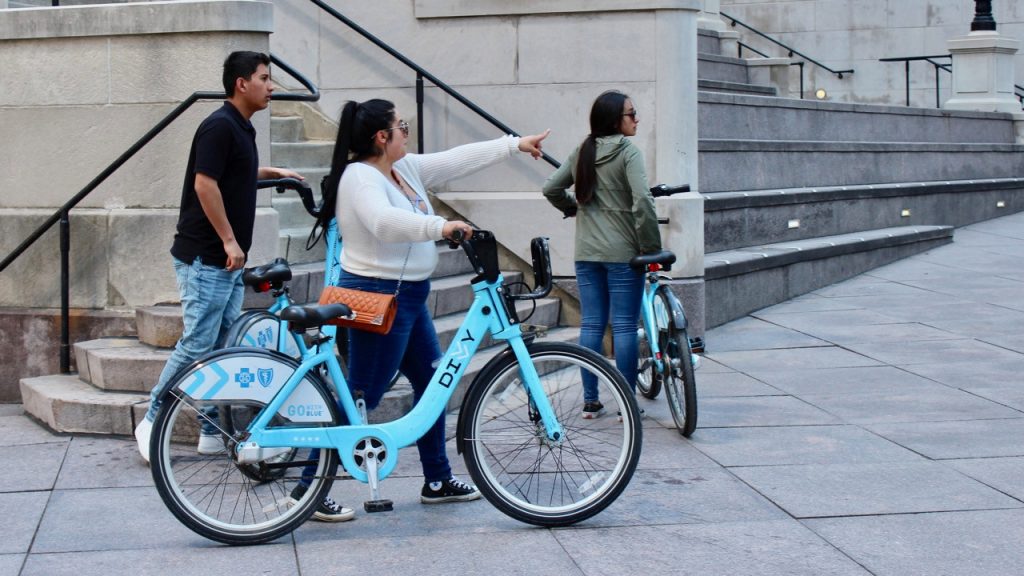 Divvy riders on the Riverwalk this past spring. [Alisa Hauser/Block Club Chicago]
-
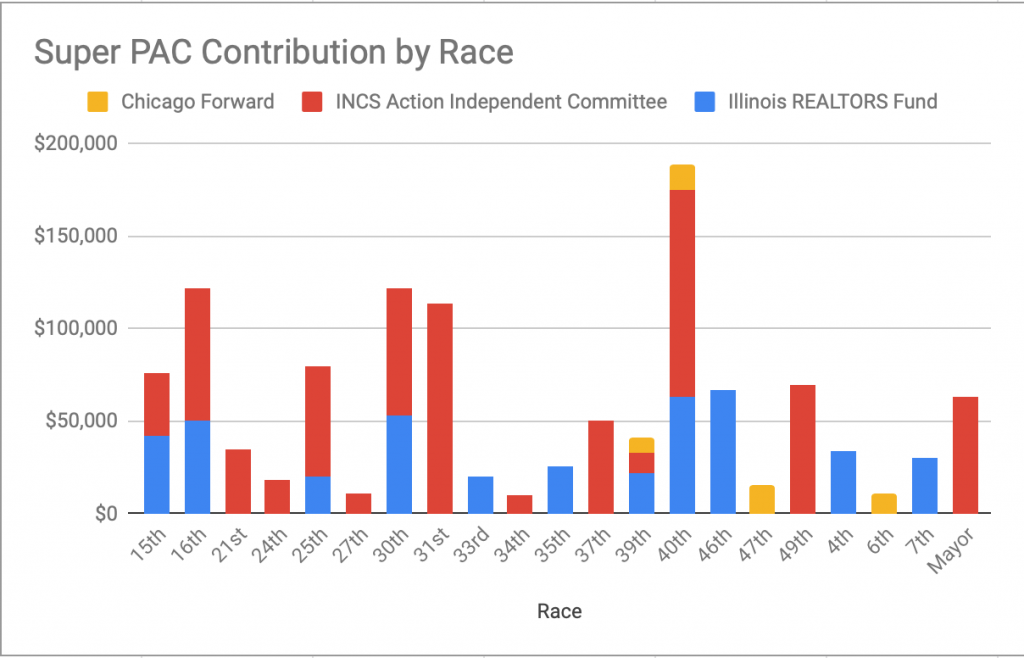
Three Super PACs — which are aligned with Mayor Rahm Emanuel, charter schools and real estate interests — are on track to spend at least $1.5 million in a runoff in an effort to elect supportive aldermen on Tuesday as Chicago enters a new political era after Emanuel’s retirement.
State law defines independent expenditures as any payment made to expressly advocate for or against a candidate. That spending cannot be made in coordination with a candidate, their committee, or the independent organization’s own political action committee.
Super PACs, known as independent expenditure committees in the Illinois Election Code, may raise unlimited sums of money from corporations, unions, associations and individuals, according to Reform for Illinois, a campaign watchdog group. Those committees can spend unlimited amounts to oppose or support candidates and issues — but are prohibited from donating money directly to political candidates, according to the watchdog group.
Two independent expenditure committees made big plays in the first round of voting.
Fight Back for a Better Tomorrow, which was aligned with IUOE Local 150, spent $1.2 million on ads against mayoral candidate Bill Daley in the campaign's waning days. The ads might have struck a chord — Daley unexpectedly came in third place, missing a shot at the runoff.
The Economic Freedom Alliance spent more than $200,000 on mail and a digital ad campaign against incumbent Ald. Tom Tunney in the 44th ward, but proved unsuccessful — the business owner won another outright.
Emanuel Allies
The resurrected Chicago Forward spent heavily defending Emanuel and his allies in 2015. Even with Emanuel out of the race, it’s back, supplementing hundreds of thousands in contributions from the mayor and longtime allies Michael and Cari Sacks to allied aldermen as Emanuel’s tenure winds down.
Related: Chicago Forward PAC is back
The group received $59,000 in seed funding from another Emanuel-supporting political action committee, Progress Chicago, on Monday, followed by a $75,000 infusion on Tuesday. Emanuel and the Sacks have also been personally contributing hundreds of thousands of dollars to allied aldermen and those in close races.
Ron Holmes, a spokesperson for Chicago Forward, said the political action committee had come back from the dead because there is “so much on the line for everyday Chicagoans” in the April 2 election.
“We’re confident that each of these candidates will fulfill Chicago Forward’s goals of creating high-quality school choices for families, safer neighborhoods, opportunities for businesses to grow and more good-paying jobs,” Holmes said in an emailed statement.
Although Chicago Forward’s new chair, Michael Forde, has fundraised for mayoral candidate Lori Lightfoot, the group will stay out of the mayoral race, Holmes said.
Instead, it will focus on television, digital, and mail in aldermanic races in the home stretch of the campaign, Holmes said.
The group has already disclosed nearly $50,000 in digital and television spending opposing Andre Vasquez in the 40th Ward, who is running against Emanuel’s floor leader Ald. Pat O’Connor, Matt Martin in the 47th Ward, who is challenging former Emanuel aide Michael Negron, 39th Ward candidate Samantha Nugent who is facing Robert Murphy and Ald. Roderick Sawyer (6), who voted more frequently with Emanuel as his second term progressed.TFW you're up twenty points and Rahm Emanuel's Super PAC comes after you. pic.twitter.com/SSOA5zU3gW
— Matt Martin (@MattMartinChi) March 26, 2019
Charter Interests
The INCS Action Independent Committee, the Illinois Network of Charter Schools’s political action committee, has taken in $1.45 million from Wheels, Inc. CEO Jim Frank and $1.7 million from Walmart heirs Alice and Jim Walton, according to the Illinois Sunshine database. The fund has more than $1.9 million on hand, according to the database.
Frank is also the chairman of the Intrinsic Network of Charter Schools, which operates a high school on the Northwest Side.
INCS has two funds active in the 2019 election — INCS Action PAC, which donates directly to campaigns, and the INCS Action Independent Committee, the Super PAC dedicated to independent expenditures.
INCS Action Independent Committee has spent more than $725,000 in the 2019 cycle so far on phone banking, mail, television and digital communications. INCS President Andrew Broy estimates independent expenditures alone will top $1 million by the end of the 2019 cycle.
After the general election, it celebrated helping “pave the way” for victories or runoffs for 11 of its 12 endorsed candidates — Ald. Joe Moore (49) was its only outright loss.
After dipping its toes in the 2015 race by spending in only two wards, the group plans to dive in fully in 2019.
“Stakes are high,” Broy said.
Neither of the two mayoral candidates — Toni Preckwinkle nor Lori Lightfoot — “could be deemed wholly supportive” of charter interests. Both have called for a charter freeze. Preckwinkle has the support of the Chicago Teachers Union, which is unionizing several charter networks citywide.
Charters depend heavily on the local aldermen to usher zoning changes through and to support for new locations with the Chicago Board of Education.
INCS has three different categories for races, Broy said — incumbent protects, incumbent persuades and replacements.
Ald. Pat O’Connor (40) and Ald. Ariel Reboyras (30) are in the “protect” category, and both are locked “in very tough races,” he said.
INCS is also looking to persuade voters to retain Education Committee Chairman Ald. Howard Brookins (21) and Ald. Raymond Lopez (15).
Ads opposing Vasquez and Lopez challenger Chicago Police Officer Rafael “Rafa” Yañez make no mention of charter support.
Several Vasquez mailers quote rap lyrics from his time in the underground hip-hop scene, describing them as “homophobic,” “offensive,” “just wrong,” “shameful,” and glorifying the domestic abuse of women. Vasquez has apologized and added a “regarding attacks” section to his website with commitments to fight for women and the LGBTQ community.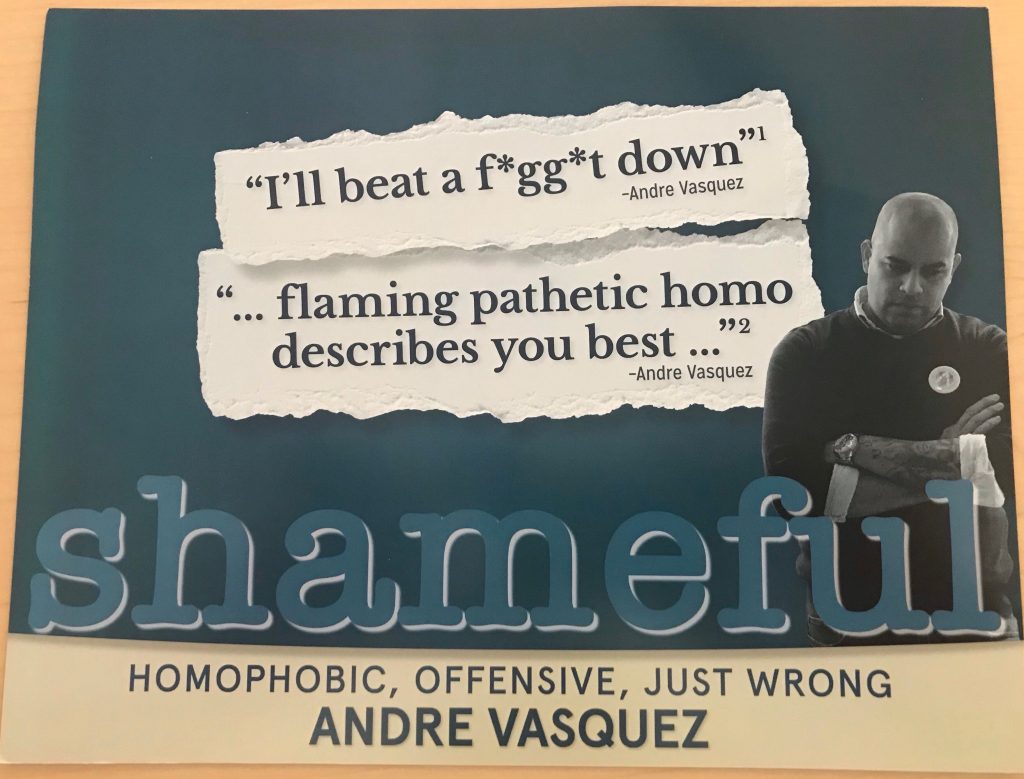
The Yañez mailers highlight comments Yañez has made against the police academy and his history as an officer. He received four complaints, including two related to illegal search. The department found those complaints either not sustained, exonerated or unfounded and no action was taken, according to the Invisible Institute's database of complaints. Yañez was not disciplined.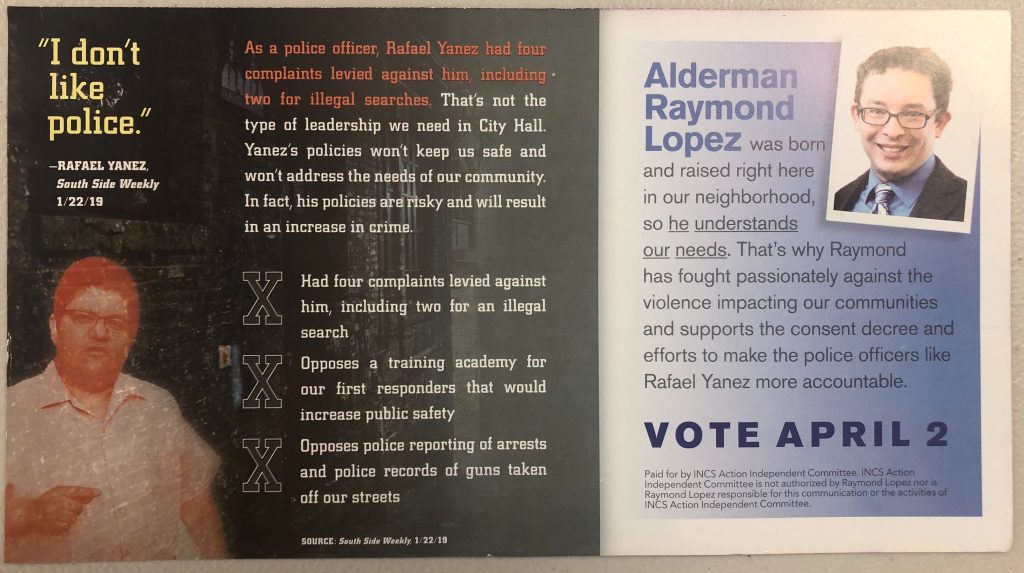
Broy acknowledged these issues do not relate to charter policy.
“I think we’re trying to influence the election,” Broy said. “We poll in these races, we look at what will move voters.”
In three other races, they are looking to flip or win open seats by electing Stephanie Coleman in the 16th Ward, Felix Cardona in the 31st Ward and Alex Acevedo in the 25th Ward.
Alds. Toni Foulkes and Milly Santiago are “bad on charters historically,” Broy said.
More than 100 canvassers will hit wards in three- or four-day shifts, Broy said.
The three “take out” race candidates are “almost all charter alums and charter parents who understand the power of a great public school,” Broy said, adding INCS will often microtarget charter households in those wards with canvassers or direct mail.
Among its questions for aldermen on this year’s endorsement questionnaire, INCS asked whether candidates would oppose future City Council resolutions on charter moratoriums.
Broy said his organization was preparing for big changes.
“Regardless of who wins, it looks like Lightfoot would win, we’re looking at weaker mayor vis-a-vis City Council,” Broy said. “We’re going to see some Council changes affecting that dynamic, that’s one big trend. Secondly, we’re fairly pragmatic in terms of what we’d like to see done by the City Council. We want to see progress made, high quality new options in schools built… we want centrists who will make the city work well for families.”
The INCS Action Independent Committee spent:- Approximately $115,000 in the 31st Ward supporting Cardona and opposing one-term Ald. Santiago. While Cardona supports an elected school board and has sent all four of his children to Chicago Public Schools, he told the Sun-Times he is “a strong supporter of giving parents the options to take their children out of under performing schools and allowing them to use tax dollars to send them to better schools. It is a fundamental platform of my campaign. And I feel even better about that since charter school teachers are now allowed to unionize.”
- More than $110,000 defending Ald. Pat O’Connor (40) and opposing challenger Andre Vasquez. O’Connor said he does not “blindly” support charter schools, but will not turn away any good school that wants to move to the ward.
- More than $70,000 supporting Stephanie Coleman (16) and opposing incumbent Ald. Toni Foulkes (16). Coleman attended both private and public schools and pledged to “fight to make sure our youth receive the high level education they deserve.”
- Approximately $70,000 supporting Ald. Ariel Reboyras (30) in his bid to hold on to his seat against Jessica Gutierrez.
- Approximately $70,000 supporting Ald. Joe Moore (49), who ultimately lost to challenger Maria Hadden.
- Approximately $60,000 supporting Alex Acevedo in the 25th Ward and opposing Byron Sigcho Lopez in the open race.
- $50,000 defending Ald. Emma Mitts (37) against Tara Stamps, a member of the Chicago Teachers Union. INCS helped Mitts in 2015 as well.
- Approximately $35,000 supporting Ald. Raymond Lopez (15) and opposing Rafael Yañez (15).
- More than $34,000 supporting Ald. Howard Brookins (21) in his bid against frequent competitor Marvin McNeil.
Real Estate Interests
The Illinois Realtors Fund — a state fund that operates with advice from Chicago members — has spent approximately $425,000 on aldermanic races this cycle, likely double what it has spent in past municipal elections, representatives said.
Its funding comes from the state, national and Chicago associations of Realtors and has roughly $725,000 on hand, according to the Illinois Sunshine database
The group opposes efforts to lift the statewide ban on rent control and a citywide proposal to increase the real estate transfer tax to pay for more affordable housing or services for the homeless, said Michael Scobey, the director of local advocacy for Illinois Realtors.
Preckwinkle supports lifting the ban on rent control, while Lightfoot has said there are other ways to address the city’s affordable housing shortage.
Realtors want city officials to allow property owners to turn garden units into affordable housing and to amend the city’s building requirements to “keep the costs down for new construction or renovation for housing that could be affordable.”
The group also supports state legislation from Rep. Sara Feigenholtz to provide a property tax incentive to owners of multi-family properties who have between 15 percent and 35 percent of units that are affordable.
Neither rent control nor a real estate transfer tax were prominent on mailers in aldermanic races, Scobey said.
The committee’s materials stick to “the issues that would be most salient or most interesting to voters in those wards,” he said. In most cases, that means mailers with positive messages and information about aldermen's biographies.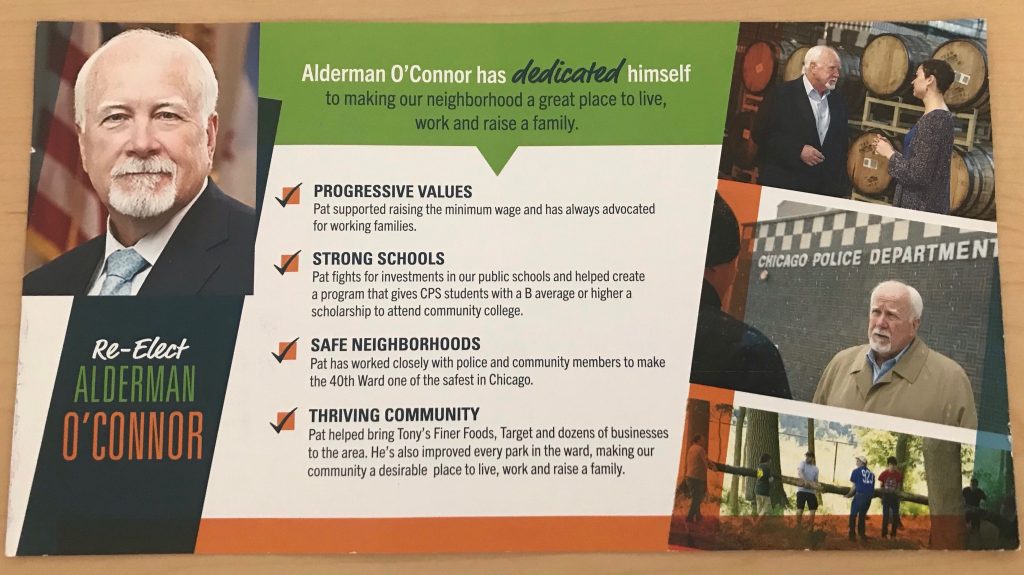
Brian Bernardoni, the senior director of government affairs and public policy at the Chicago Association of Realtors, said the group is “looking for [aldermen] we can communicate with that weren’t going to hardline, that were open to conversations on those policy matters.”
Its 2019 aldermanic questionnaire is extensive.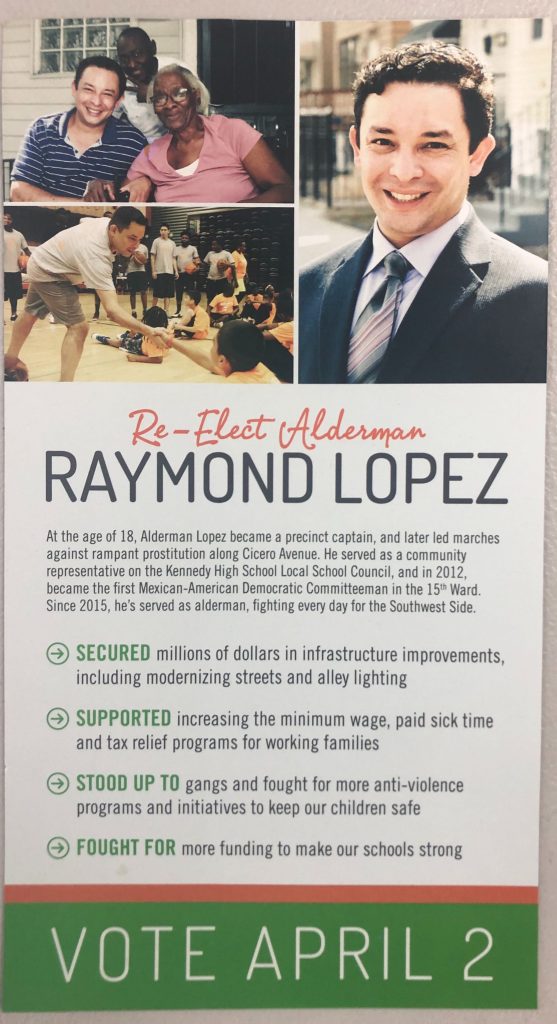
While the Chicago Association of Realtors PAC and independent expenditure fund operate independently of each other, Bernardoni said “there’s a level of alignment of trying to make sure we were concerned – as many business groups were – on the rise of Democratic Socialists, progressive types who were very very clear about being anti-real estate, pro-rent control. When you start off a conversation that we’re the bad guy for no reason, we’ve got to do what we can. I think it’s reflected in our spending.”
Compared to 2015, Scobey estimates Realtors “might’ve even doubled” their independent expenditure spend this year.
“I think some of the issues that have come up, candidates that we’re not supporting who favor things like rent control, there’s more of them this time around, and who favor a really steep increase in the real estate transfer tax, more of them are challenging incumbents,” Scobey said. “Some even identify as Democratic Socialists.”
The Illinois Realtors Fund spent:- More than $65,000 defending Ald. Pat O’Connor (40) and Ald. James Cappleman (46) each before and after the runoff election.
- More than $50,000 on mailers for Ald. Ariel Reboyras (30) and supporting Stephanie Coleman in the 16th Ward.
- Between $30,000 and $35,000 supporting failed 4th Ward candidate Ebony Lucas, as well as Ald. Gregory Mitchell’s (7) successful re-election bid and for Ald. Raymond Lopez (15).
- Spent between $20,000 and $26,000 supporting Alex Acevedo in the 25th Ward, Ald. Deb Mell in the 33rd, Amanda Yu Dietrich in the 35th Ward and Samantha Nugent in the 39th Ward.
-
The only Chicago Republican in the General Assembly said Tuesday he plans to introduce a bill that would yank state tax credits from any production that employs Jussie Smollett as the political firestorm over the Cook County State’s Attorney’s decision to drop all charges against the actor reached Springfield.
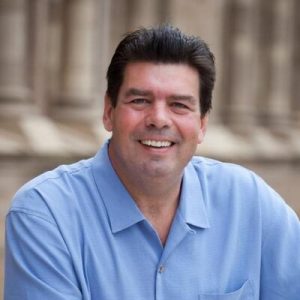 State Rep. Michael McAuliffe [Twitter]
-
MAR 26, 2019
UNLOCKED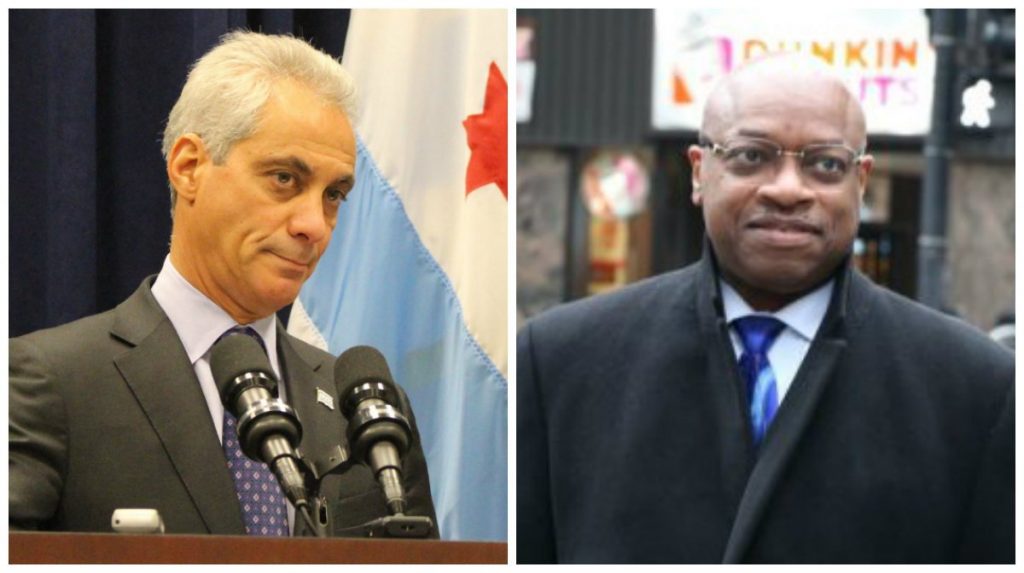
Mayor Rahm Emanuel will not ask the City Council to appoint a replacement for convicted Ald. Willie Cochran (20th) before the April 2 election.
TED COX/DNAINFO; KELLY BAUER/DNAINFODespite rumors in the 20th Ward, Mayor Rahm Emanuel will not ask the City Council to appoint a replacement for convicted Ald. Willie Cochran (20) before the April 2 election, sources in his office said Monday.
But Emanuel has not ruled out replacing Cochran before the mayor leaves office May 20. -
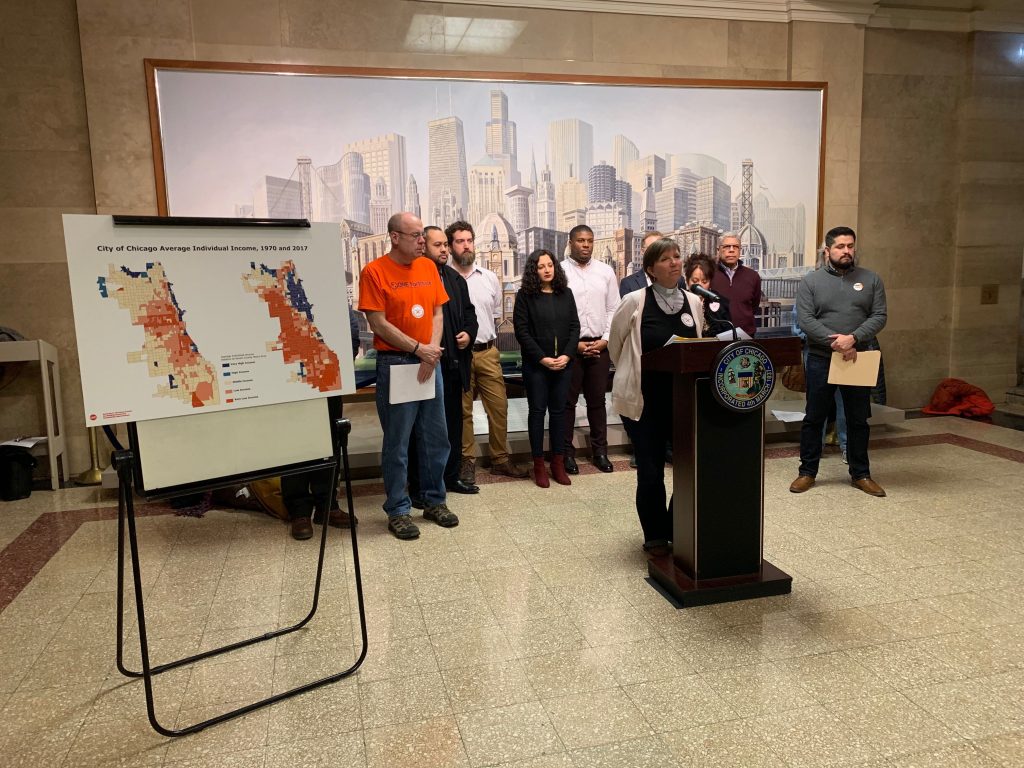 The Rev. Liala Beukema, the pastor of LakeView Lutheran Church, said the area between Bucktown and Lincoln Park slated to become Lincoln Yards is “hardly blighted and not in need of a city subsidy.” [Heather Cherone/The Daily Line]
A coalition of groups Tuesday called for city officials to delay plans to fuel two massive developments that will transform Chicago’s landscape with 16,000 new apartments and condominiums. The coalition wants to pause a vote on $1.6 billion in city subsidies until a study can determine whether it would “deepen inequity” in Chicago.
Sterling Bay’s Lincoln Yards, a $6 billion, 6,000-unit mega-project along the North Branch of the Chicago River relies on $900 million to be used for infrastructure from the proposed 168-acre Cortland and Chicago River Redevelopment Area (F2018-72).
Related Midwest’s plans for a new neighborhood between the South Loop and Chinatown dubbed “The 78” relies on $700 million to be used for infrastructure from the proposed 141-acre Roosevelt/Clark Tax Increment Financing Redevelopment Area (F2018-71).
The 78 and Lincoln Yards have been approved by the City Council.
Votes to create both tax-increment financing districts are expected to take place at the April 8 Finance Committee meeting, and the full City Council could act as soon as April 10 at Mayor Rahm Emanuel’s last regular City Council meeting as mayor.
The Rev. Liala Beukema, the pastor of LakeView Lutheran Church, said the area between Bucktown and Lincoln Park slated to become Lincoln Yards is “hardly blighted and not in need of a city subsidy.”
However, the Community Development Commission and the Chicago Plan Commission endorsed a report from the Department of Planning and Development that found the area was blighted with vacant buildings and a defunct steel mill.
The Racial Impact Equity Assessment would be conducted by Chicago United for Equity, a nonprofit group, that would compile data and hold community meetings.
Chicago United for Equity Executive Director Niketa Brar said the assessment would be similar to a traffic study or environmental impact report.
“Leaders and community members should understand the consequences before making a decision,” Brar said.
Related: Affordable housing becomes flashpoint in fight over Lincoln Yards, The 78 subsidies
Grassroots Collaborative organizer Marcos Ceniceros said the study is needed to determine whether the project will “lessen or exacerbate the divide.”
Only Ald. Roberto Maldonado (26) joined the coalition’s news conference. He was one of 14 aldermen to vote against approving Lincoln Yards earlier this month.
Related: Lincoln Yards approved 33-14 as aldermen get personal during debate
Supporters of the projects hope their approvals will signal the final transformation of Chicago from an industrial behemoth to a city poised for growth in the 21st Century, while critics contend the projects offers only “crumbs” to the rest of the city.
During the debate during the City Council meeting March 13, aldermen who voted against the project said it would but barely put a dent in Chicago’s affordable housing shortfall or reduce the economic or racial segregation plaguing the city.
“This is the rich getting richer,” Ald. Harry Osterman said during the debate. “The North Side getting north-er.”
Both Toni Preckwinkle and Lori Lightfoot have called for both projects to be delayed until after the new mayor and City Council are sworn in May 20.