


-
MAY 29, 2026

UNLOCKEDMayor says UChicago ShotSpotter study affirms contract cancellation was right call
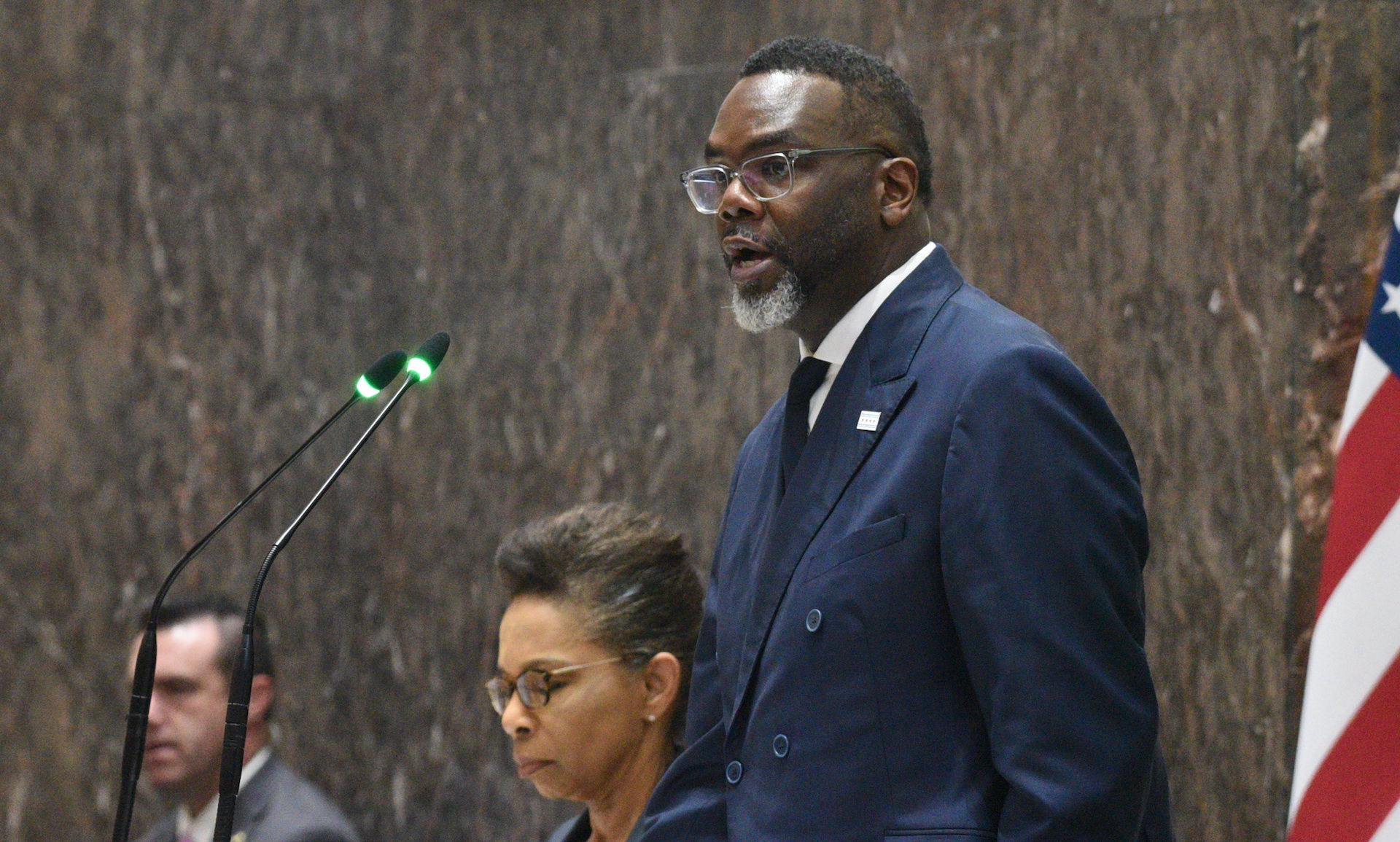
Mayor Brandon Johnson presides over a City Council meeting on April 15, 2026. [Don Vincent/The Daily Line]
Mayor Brandon Johnson this week touted new research that said his administration’s cancellation of a gunshot detection technology contract two years ago led to positive public safety results but offered no update on an ongoing procurement process to replace it.
The comments came on the heels of the release of a University of Chicago Justice Project analysis that concluded that crime and police response times did not increase following the mayor’s cancellation of the city’s contract for ShotSpotter acoustic gunshot detection technology in 2024.
“Beats in Chicago that formerly had ShotSpotter sensors saw an average response time improvement of 4.2 minutes [for the highest priority 911 calls] after ShotSpotter was removed,” said the study, which used data obtained via the public Chicago Data Portal and from a public records request.
The technology had been concentrated on the South and West sides.
“This suggests that officers previously tied up responding to ShotSpotter alerts could now prioritize Priority 1 emergency calls,” the study added.
It also said the beats that previously had ShotSpotter did not observe an increase in violent crime overall, experiencing an aggregated 11.3 percent decrease in violent crime and a 32.1 percent decrease in homicide — although some individual beats saw increases while others decreased.
Speaking at a general press conference Wednesday, Johnson said the data has affirmed that his decision to cancel the contract was the right call and that the city is moving in the right direction.
Upon the expiration of the contract, the city immediately launched a search for replacement technology. The procurement process specified the city was looking for “reliable and efficient forms of first responder technology to ensure immediate attention from first responders in emergency situations.”
The city’s request for information said the city was looking for a vendor for “outdoor law enforcement response technology that covers the entire 235 square miles of the city” and that allows Chicago police to “improve detection of violent crime, expedite response times, improve the likelihood of obtaining forensic evidence and speed up medical response and first aid for victims.”
Earlier this month, the City Council public safety committee found it difficult to get clear answers on when to expect the city to award a contract to a new vendor as well as other details about the open procurement process, which is now approaching its 20th month.
For instance, the committee wasn’t able to learn how the request for information influenced the request for proposals that was put out early last year and closed last April.
Ald. Anthony Beale (9), a proponent of the technology that was in his ward, said he thinks the mayor’s administration is “trying to run out the clock” and won’t select a replacement vendor.
The mayor canceled the contract amid criticism that the technology did not meaningfully improve public safety and instead contributed to overpolicing or sent police to respond to false positives. Johnson himself called ShotSpotter “walkie-talkies on sticks” and has repeatedly said he would only invest in technology that works.
On Wednesday, he reiterated that message.
“What my focus has always been is finding tools that strengthen my effort to build the safest, most affordable big city in America,” Johnson said. “I’ve never been opposed to technology. I’ve only been opposed to technology that is proven to be ineffective.”
Ralph Clark, president and CEO of ShotSpotter parent company SoundThinking, posted on social media that UChicago’s study lacked peer review and argued that six other studies showed ShotSpotter alerts increased response times.
The study has been criticized by some who have argued response times rise and fall as 911 call volume does with the seasons and that’s what researchers observed.
Rob Vargas, a UChicago sociology professor and the director of the Justice Project, told The Daily Line that the study doesn’t claim ShotSpotter’s removal directly caused that outcome.
“We acknowledge that there could be all sorts of reasons and causes for why the crime rates changed and for why the police response times changed,” Vargas said.
But Vargas did say that the study showed a lack of evidence for the concerns that increased crime or slower police response times would follow ShotSpotter’s decommissioning.
Most of the City Council disapproved of the mayor’s decision to terminate the contract and unsuccessfully attempted on two separate occasions in 2024 to override the decision. Many alderpeople have said the technology was favored by residents in their own wards and saved lives in some instances by speeding up response times or deploying police to the scenes of gun violence when there’s not an accompanying call to police.
“If somebody does need emergency services, [first responders] don't know where to go [without ShotSpotter],” Beale said. “They don't know what block they're on, they don't know what street they're on, and so people are just literally bleeding out in the streets, and it's unfortunate that we had a tool in place to save lives, and we no longer have that tool.”
At a council hearing just after the contract expired, ShotSpotter’s parent company and the Chicago Police Department presented data that showed ShotSpotter alerts that weren’t accompanied by 911 calls only were correlated with faster response times, not with higher rates of weapons recovered, gunshot victims rendered aid and suspects arrested compared to alerts that also included 911 calls.
Another hearing weeks later concluded the city would benefit from a full cost-benefit analysis of the impacts of the technology.


